
Dad. DHCP guy. Software engineer. I do open source for fun and profit. Hobbyist astronomer.
Gdansk, Poland
Joined September 2009
- Tweets189
- Following391
- Followers82
- Likes7.9K




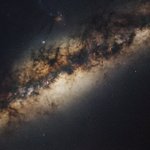


Sandqvist 149, better known as Dark Doodad, is a dark nebula in the Musca constellation that was catalogued recently, in the 1977. Located around 700 ly away, it's a prominent cosmic dust cloud stretching almost 30ly, but less than 3 degrees when observed from Earth.

11
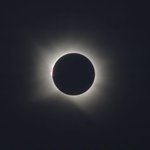
Detailed corona of the total solar eclipse, Spain'2026. HDR composite image of 10 frames, 1/100s to 8s, processed in PS and PixInsight.

1
1
23
Tomek Mrugalski retweeted

🚨The cosmic shooting gallery just gave us another extremely close shave! ☄️⚠️
On October 12, at approximately 15:28 UTC, a newly discovered asteroid designated 2026 TN77 silently screamed past Earth at a distance of just 0.14 lunar listances (LD). That is roughly 33,400 miles (53,800 km), meaning this rock flew so deep into our gravitational well that it practically grazed the ring of our highest geostationary satellites.
What are we dealing with? 2026 TN77 is a dense, rocky near-Earth object estimated to be around 13 meters wide. It ripped through our orbital neighborhood at a blistering 14 kilometers per second (over 31,000 mph).
But here is where orbital mechanics get wild: Earth's gravity actually bent its trajectory like a massive slingshot. This gravitational assist altered the asteroid's path so aggressively that 2026 TN77 is now diving deep into the inner solar system, setting up a close-approach flyby of Mercury in March 2028.
This is exactly why we must become a multi-planetary civilization. 2026 TN77 is a stark reminder that we live in a chaotic, active universe that doesn't care if we exist. Building an industrial-scale, spacefaring infrastructure isn't just an aspiration, it's the only insurance policy humanity has.
#asteroid #2026TN77

Marcin Siodelski's presentation about ISC Stork at #APNIC62. Covered many DHCP and DNS use cases.
youtu.be/JpNxCckbZSM?t=70

2
62
Tomek Mrugalski retweeted

AstroBin's Image of the Day: "IC4592 Blue Horsehead Nebula in HaLRGB" by Kamil Fiedosiuk and Tomek Mrugalski - astrobin.com/ccj44z/
#astrophotography

Managed to capture another successful eclipse. This one was truly stunning thanks to its very low elevation - merely 8 degrees above horizon.

2
20

About a degree and half apart in southern Scorpius, the Cat’s Paw and Lobster, also known as War and Peace nebula are neighboring H II complexes in the same molecular cloud system, roughly 5–6 kly away almost exactly in the direction towards the Milky Way center.

ALT About a degree and half apart in southern Scorpius, the Cat’s Paw (NGC 6334, Sh2-8, RCW 127, Ced 140) and Lobster, also known as War and Peace nebula (NGC 6357, Sh2-11, RCW 131, Ced 142) are neighbouring H II complexes in the same molecular cloud system, roughly 5–6 kly away almost exactly in the direction towards the Milky Way center (the galactic longitude is around l ≈ 350°). The Epsilon-180 with the ASI 6200 MM Pro full-frame sensor managed to frame both at once: multi-lobed ionization fronts on one side, a wind-carved cavity on the other.
1
6
711


Tomek Mrugalski retweeted

Putin didn't invade Ukraine because of NATO. He invaded because Ukrainians were proving democracy works.
Historian and Pulitzer Prize winner Anne Applebaum puts it plainly: Putin looked at Ukraine's democratic movement and thought, "If they can do it in Ukraine, then people could do it in Russia. So I need to crush this."
That's the real threat Ukraine posed. Not missiles. Not borders. A working democracy next door.
Applebaum frames the war as a fault line between the democratic and autocratic worlds. Russia isn't just trying to take territory. It's trying to erase Ukraine as a nation, reduce it to a colony, and send a message to every country that the post-1945 rules of Europe no longer apply.
Those rules were simple: no invasions, no wars, borders don't change by force. Russia understood exactly what it was breaking when it crossed into Ukraine.


Tomek Mrugalski retweeted

But do you know what coreutils are a fertile ground for? Race conditions around file creation, deletion, permission setting, and so on. The original code accounted for decades of hard-learned lessons in that space. The Rust rewrite did not:
seclists.org/oss-sec/2026/q2…
Tomek Mrugalski retweeted
⚡ Claude Mythos AI Uncovers 271 Zero-Day Vulnerabilities in Firefox
Source: cybersecuritynews.com/claude…
Anthropic's latest frontier AI model, Claude Mythos Preview, has identified a staggering 271 zero-day vulnerabilities in Mozilla Firefox, marking a seismic shift in AI-powered cybersecurity defense.
The findings, addressed in Firefox 150, represent the most significant single batch of security fixes in the browser's history.
The discovery didn't happen in isolation. Since February 2026, Mozilla's Firefox security team has been collaborating with Anthropic to scan the browser's codebase using frontier AI models.
#cybersecuritynews

Tomek Mrugalski retweeted

Video footage purported to show an Iranian ballistic missile strike on Prince Sultan Air Base in Al-Kharj, Saudi Arabia, with the missile impacting very close to several U.S. servicemembers, thankfully said to have resulted in only minor injuries to personnel at Prince Sultan.
Tomek Mrugalski retweeted

Cieszą nowe kontrakty polskich spółek kosmicznych, a najbardziej cieszą te pozyskane na komercyjnym, brutalnym, międzynarodowym rynku. Krótko: Przemysław Drożdż i Tomasz Palacz z Liftero wrzucają wyższy bieg.
Kontrakt podpisany przez krakowskie Liftero z indyjskim OrbitAID warto odnotować szerzej niż tylko w branżowych mediach. Mówimy o największym jak dotąd zamówieniu w historii tej spółki i potencjalnie kilkunastu silnikach, które mogą trafić na orbitę w ramach planowanej misji jeszcze w tym roku.
Co ważne, nie chodzi tylko o skalę zamówienia. Kluczowa jest technologia i kierunek rozwoju całego rynku. System napędowy oparty o podtlenek azotu ma umożliwić pełną kontrolę manewrów w sześciu stopniach swobody, co jest szczególnie istotne w operacjach zbliżania i dokowania w przestrzeni kosmicznej. Analizując rozwój sektora In-Orbit Servicing staje się oczywiste, że właśnie tego typu zdolności będą w najbliższych latach fundamentem usług serwisowania satelitów na orbicie.
A ja zawsze mówię, że ten segment rynku dopiero się rozpędza. Szacunki mówią o wartości ponad 5 mld USD już w 2026 roku i ponad dwukrotnym wzroście w kolejnej dekadzie. Za tym stoją bardzo konkretne potrzeby: wydłużanie życia satelitów, tankowanie na orbicie, manewrowanie infrastrukturą kosmiczną czy budowa bardziej elastycznej logistyki orbitalnej.
Cieszy szczególnie, że coraz więcej technologii powstających w Polsce zaczyna pełnić w tych procesach realną rolę. Pierwsze demonstracje orbitalne, budowanie tzw. flight heritage i kolejne kontrakty to dokładnie ta ścieżka, którą musi przejść każda firma technologiczna w sektorze kosmicznym.
Trzymam kciuki za dalszy rozwój Liftero. Każdy taki krok wzmacnia cały ekosystem kosmiczny w Polsce. A im więcej firm z naszego regionu buduje technologie, które trafiają na orbitę w transkontynentalnych zamówieniach komercyjnych, tym silniejsza jest pozycja Europy w globalnej gospodarce kosmicznej. 🚀Gratulacje Panowie!

RFC9915 was just published. DHCPv6 is now Internet Standard: STD102. Over the years close to 10000 RFCs was published by IETF, but only a handful over hundred reached the full Internet Standard status.
39
B33, or the Horsehead Nebula, is a dark nebula located near the star Alnitak, in Orion's Belt. Sometimes slightly incorrectly called IC 434 — that's designation actually belongs to the faint emission nebula IC 434 that lies behind the Horsehead and makes its silhouette visible.

4
4
220
The famous Orion Nebula, Messier 42, shot with Vaonis Vespera. The M42 is a a bit like a maturity exam for an amateur astronomer. You don't have to do it, but it's kind of expected to have one. Full res: app.astrobin.com/i/882uey
