
I turn screws counter-clockwise. Creator of Flybrix. Radar Digital Signal Processing Enthusiast. Father of three.
San Francisco
Joined October 2010
- Tweets447
- Following200
- Followers117
- Likes623






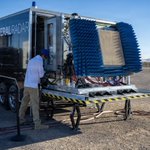


Matty’s agent-portal at txcl.io has been a big source of inspiration and example code for my propanes.ai repo.


Infinity is making GB300 2x more efficient. They can also compile and optimize kernels for your custom chips. If you're making chips or looking for a job, reach out for an intro.

Who builds the fastest AI? Whoever wins at automated research.
That’s why top F100 companies like @Nvidia and @HP are coming to @infinity_ai_ .
Infinity Autoresearch hit 2x token throughput for Nemotron 3 Super on the HP ZGX Fury (GB300).
Here’s how we generate ∞ speed:
Clearly we should buy one.

Tesla’s new Roadster can drive upside down and FLY. 9,000 lb of suction requires less than 1 PSI of vacuum.
How it probably works:
Tesla rear pic shows 4 large fan outlets below, 4 “tailpipes” above. Two different systems.
1. Suction fans: Electric fans pull air from beneath a sealed floor. Generating 9,000 lb of downforce across ~6 m² requires surprisingly little vacuum: just ~1 psi! With a ½-inch effective seal gap, ~10 m³/s of airflow and ~100–200 kW electrical power. The trick is sealing the floor and dynamically handling road imperfections.
2. Rocket thrusters: The upper nozzles release compressed air to accelerate the car. >80 kN of thrust (per Tesla), roughly 10% of a Falcon 9 Merlin rocket engine. At an assumed 500 m/s effective exhaust velocity, that’s ~160 kg of air PER SECOND. Leaked image shows massive composite tanks in backseat. Even the reported 250 kg flight-demo air supply would last only ~1.6 seconds at that thrust.
The 1970 Chaparral 2J used a 45 hp auxiliary engine to drive suction fans. The McMurtry Spéirling demonstrated driving upside down using ~2,000 kg of fan downforce. Spacecraft use cold-gas thrusters for maneuvering, though Falcon 9’s main engines burn propellant.
More technical breakdowns to come.

Google Meet: Closes in a week. $10K ARR. Churns in a year.
Microsoft Teams: Closes in 3 months. $100K ARR. Expands in a year.
Zoom: Signs LOI during the meeting. Never closes. Bankrupt in a year.
Ontology Rule: Every employee may say “ontology” three times daily. If you say it again, Alex Karp will magically appear and make you do 10 push-ups.


Re-industrialize America Starter Kit:
- 25-foot American Flag
- Industrial space in El Segundo
- Two OpenArms
- Three Rolls of Duct Tape
- One Rusty Bridgeport
- A rack full of GB300s
Inference APIs should let you buy an outcome against a deadline, not just choose a model.
Here are 2,000 documents. Process them into XYZ. Choose the best model for each document. Some loss in quality is acceptable. Quote me the price for completion in 1, 2, or 4 hours.
The API should return a frontier of price, latency, and quality.
Underneath, the provider can decide how aggressively to batch, route between models, compress context, and use available hardware.
That changes the economics of inference: a job with a 4-hour deadline can use cheap spare capacity, while the same job due in 1 hour can pay for the resources needed to finish immediately.
Give the user the result and the SLA; let the infrastructure figure out the rest.
github.com/openai/codex/blob… Did codex just randomly start with "Greetings, fellow tinkerer." or did it know my GitHub handle is tinkerer...

My 20mo baby’s version of doomscrolling in the bathroom is unfurling the toilet paper and putting it in the toilet.
This is badass. Proud of the extremely talented team that built this:
"Last week, by invitation from JIATF-401, General Radar Corp. successfully tested and demonstrated its high-power C-band AESA radar at Yuma Proving Ground autonomously searching, acquiring and tracking Group 1 UAS achieving a 100% success rate and near-zero false track rate during the Falcon Peak 26.2 exercise.
The threat from UAS and low cost missiles is urgent. America and its allies need additional long-range search and fire control radars to better protect and defeat these asymmetric threats. General Radar is ready to produce these radars at scale.
This test demonstrated to JIATF-401 and ARMY ATEC, General Radar Corp.. ability to autonomously search, acquire and track Group 1 UAS at:
4 km to an FPV flying at 30m AGL
5.5 km to a DJI Mavic flying at 100m AGL
8 km to a Opterra foam fixed wing flying at 300m AGL
We are excited to bring our radars to the fight, test against larger and faster targets, and integrate with interceptors and weapon systems.
More images from Falcon Peak 26.2 to share next week!
Falcon Peak 26.2 is North American Aerospace Defense Command's and U.S. Northern Command's Counter-small Unmanned Aircraft Systems experiment designed to demonstrate new technologies, expand focus on Low Collateral Defeat capabilities, enhance collaboration with mission partners, and provide developers with immediate feedback to accelerate the maturation of innovative capabilities with Department of War-wide applicability."
(picture source: US Department of War)


My 3yo pronounces robot, “woe-bot”—which is a good name for a defense product that delivers lamentations to the battlefield. He also pronounces hilarious like “killarious.”