
a proud Georgian with European aspiration 🇬🇪🇪🇺
Joined February 2022
- Tweets574
- Following157
- Followers61
- Likes4.3K
Tinatin Kh retweeted
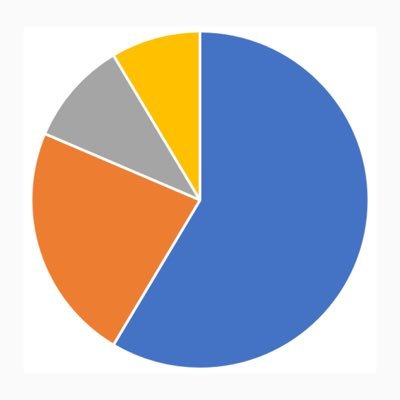
✈️ Countries gaining and losing the most tourists since 2019
Change in international tourist arrivals, 2019 → 2025:
📈 Gaining:
1. 🇸🇦 Saudi Arabia: +67%
2. 🇲🇦 Morocco: +53%
3. 🇪🇬 Egypt: +47%
4. 🇧🇷 Brazil: +46%
5. 🇨🇴 Colombia: +45%
6. 🇯🇵 Japan: +34%
7. 🇨🇱 Chile: +33%
8. 🇳🇴 Norway: +28%
9. 🇷🇸 Serbia: +27%
10. 🇩🇰 Denmark: +22%
📉 Losing:
1. 🇮🇱 Israel: −71%
2. 🇮🇪 Ireland: −32%
3. 🇦🇷 Argentina: −23%
4. 🇵🇪 Peru: −22%
5. 🇹🇭 Thailand: −17%
6. 🇪🇪 Estonia: −16%
7. 🇭🇺 Hungary: −15%
8. 🇱🇹 Lithuania: −15%
9. 🇱🇻 Latvia: −14%
10. 🇺🇸 United States: −14%
Source: OECD, Tourism Trends and Policies 2026
Tinatin Kh retweeted

“Until the lion learns to write, every story will glorify the hunter.”
- African Proverb
The timeless proverb, “Until the lion learns to write, every story will glorify the hunter,” reveals how power influences the way history is told. It reminds us that those who control the narrative often determine whose voices are heard, whose experiences are remembered, and whose version of events becomes accepted as truth. Without the opportunity to tell their own stories, the powerless risk being defined entirely by those who hold authority over them.
This message finds a striking visual parallel in Briton Rivière’s 1872 painting Daniel’s Answer to the King. The artwork portrays the biblical figure standing calmly in a dark den, his hands held behind his back as lions surround him. Despite the danger, Daniel appears remarkably composed, embodying courage, faith, and quiet resistance. The painting transforms a scene of apparent helplessness into a powerful reflection on inner strength, suggesting that true power does not always belong to those who command through fear or force.

Tinatin Kh retweeted

⚫️Today marks 25 years since the tragic events of September 11.
This tragedy left a profound and indelible mark on the memory of both the American people and the international community as a whole. September 11, 2001, will remain one of the gravest and most tragic events in human history.
In Your Life, You Must Never Be the Problem | Sadhguru youtube.com/shorts/G1A7xkMwu… via @YouTube

35
Tinatin Kh retweeted

I attended a reception hosted by the President of the International Olympic Committee, Kirsty Coventry, together with the Minister of Foreign Affairs, Maka Botchorishvili.
Within the framework of the event, we held meetings with leaders of various countries, including U.S. Vice President J.D. Vance and U.S. Secretary of State Marco Rubio. During the discussions, particular emphasis was placed on the shared values of the two countries.


Tinatin Kh retweeted

Address by the Chairman of the Parliament of Georgia to the annual conference of Georgian ambassadors
I am pleased to have the opportunity, within the framework of the Conference of Georgian Ambassadors, to address you with a summary of the past political year, an assessment of the current international reality, and a vision for the future.
From the many major events that marked the past year - one filled with global change, drama, and confrontation - I will focus on two key issues.
First, it is an established fact that throughout 2025, Georgia withstood unprecedented external pressure and coercion aimed at interfering in our internal affairs, artificially altering domestic political processes, and actively manipulating public sentiment. Today, it is clear to all that the developments surrounding Georgia are not the result of internal dynamics, but rather a projection of regional and global confrontation taking place in the context of the fourth year of the war in Ukraine and open competition among major powers.
Second, it is clearly defined picture of international relations at the end of the year, the positions of states and the new balance that has emerged among them. Many propositions that were subject to conflicting interpretations over the past four years are no longer a matter of dispute today.
Above all, it is evident that the global security architecture has collapsed. The unipolar world order no longer exists. The era of post-Cold War international relations has come to an end. States are urgently searching for a new balance of power, each striving to maximize the protection of its own interests and to preserve favorable positions.
In this environment, national interest is no longer a theoretical concept. It has become the decisive category shaping state policy. It is through the prism of national interest that states make decisions, form alliances, and acquire influence.
There is no longer a clear division between the bright and dark sides of history, no simple confrontation between geopolitical good and evil, no hegemony of one civilization over another. Instead, we face global rivalry, competing major powers, and a persistent drive for dominance. The contours of a new, multipolar world are emerging - one in which no actor possesses an absolute moral monopoly.
Within this same reality, the United States is effectively relinquishing the role of “world policeman” that sustained the functioning of the global order for decades. New American doctrines clearly state that the era in which the United States expended its resources to impose civilizational models on other countries has ended. The sole absolute priority of American policy is its own national interest.
Europe and the European Union have found themselves facing strategic uncertainty. They are seeking new models of political, military, and economic security and resilience, and they already understand that nothing will be as it was yesterday, while today’s reality no longer allows for simple predictions of the future.
It is precisely against this backdrop that the essence of Georgia’s policy becomes clear. It is evident what scale of pressure Georgia withstood when, while standing on the line of fire, it was being compelled to play an active role in a predetermined and doomed scenario - a process that would have ended under the conditions described above. We resisted this pressure. We did so with the support and approval of the Georgian people.
The peace policy chosen by Georgia was neither a sign of weakness nor a situational decision. It was a deliberate, responsible, and state-centered choice that saved the country at its most dangerous moment. This doctrine has been and remains the foundation of our foreign and domestic policy.
This very doctrine of peace will continue to guide us in 2026 as well, despite insulting assessments from radicals, political labeling, and attempts at stigmatization.
It is clear that many major upheavals still lie ahead. We want the war in Ukraine to end. We want the Ukrainian state to survive. We want a firm and lasting peace to be established. However, we do not know when, in what form, or through what geopolitical agreements this war will end. We do not know what kind of new world order will emerge or what balance of power will prevail.
The only thing we know with certainty is that we have no other homeland than Georgia - nothing greater than Georgia. Therefore, we must be prepared for any challenge, pressure, or confrontation. “Georgia first” is our core strategy, our wisdom, and the foundation upon which every tactical and operational decision must rest.
The Government of Georgia remains open to constructive dialogue with all who respect our sovereignty and national interests. Pressure, blackmail, and political moralizing cannot substitute for dialogue.
Georgia’s sovereignty is not merely a political status - it is the foundation of our national identity. Defending sovereignty does not mean isolation. It means cooperation based on equality, independent decision-making, and national priorities.
International cooperation is sustainable only when it is grounded in our country’s independence and the will of our people. Georgia is ready to deepen relations with any country or organization on the basis of these principles.
In this difficult and decisive process, a special responsibility rests with Georgia’s ambassadors - those who represent the face of the state and stand on the front line of defending our national interests.
Distinguished Ambassadors,
Thank you for your patriotism, professionalism, tireless work, and dedication. I wish you success in the service of Georgia.

Tinatin Kh retweeted
🔴 BREAKING
New inscription on the #IntangibleHeritage List: Georgian wheat culture: traditions and rituals, #Georgia🇬🇪.
Congratulations!
unes.co/20ich #LivingHeritage

Tinatin Kh retweeted

A historic day for Georgia! 🌾🇬🇪 “Georgian Wheat Culture: Traditions and Rituals” has been inscribed on UNESCO’s Representative List of the Intangible Cultural Heritage of Humanity, honoring centuries-old practices, ancient wheat varieties, and family rituals that define our culture. I am proud that the world recognizes the uniqueness of our heritage. #UNESCO #Georgia #Georgianheritage
@UNESCO


Tinatin Kh retweeted
When even the U.S. Secretary of State is compelled to rebuke Brussels publicly to stop talking to other countries in a reproaching tone, it becomes evident that Brussels got a bit too deep into character of a false moralizer.
This is what we have said too.

“I don’t think the European Union gets to determine what international law is. What they certainly don’t get to determine is how the United States defends its national security. The United States is under attack from organized criminal narco-terrorists in our hemisphere and @POTUS is responding in the defense of our country.” — @SecRubio
Tinatin Kh retweeted
I congratulate all Georgian diplomats who faithfully defend our country’s independence, sovereignty, and national interests on the Professional Day.
In today’s changing world, where the rules-based international order is under unprecedented pressure, diplomacy and the role of the diplomat take on a new and different significance. Diplomacy has become not only a profession but also the first line of defense for the state. The era when states developed relations through strictly official channels, and the diplomat’s duty was limited to defending the country’s interests before officials of the host or third countries, is rapidly fading into the past.
Today’s world presents us with entirely different, complex, and rapidly changing challenges - when a diplomat must simultaneously be a negotiator, information gatherer, analyst, political actor, and public figure, who must protect national interests not in one or two, but across multiple directions at once. In today’s cosmopolitan, globalized world, some try to portray national interests as an anachronism, a relic of the past, suggesting that defending them is linked to regression or backwardness.
But we know that, regardless of time or circumstance, a diplomat was, is, and must remain a patriot of his/her own country, viewing universal human values and global objectives only through the prism of service to the homeland. That is why abroad, a diplomat is the defender of the state’s interests not only in front of adversaries but also in relations with partner countries; and within their own country, in the face of those groups indifferent to national interests, who often value illusory “global trends” more than real, vital, and decisive interests of their homeland, even when these are small in scale or local in nature.
We must recognize that there is no official who represents an “abstract” state or its interests. Rather, each of us is part of the living dynamic of Georgian society, and we represent the Georgian people in their continuous development, interests and aspirations. These aspirations and interests, as in every democratic country, are expressed through elections - the moment when the nation’s key directions are defined.
The people give the mandate to the Parliament; Parliament defines foreign policy; the elected government implements it in practice. Any other form of direct link between “the people” and “the diplomat” violates the principle of democratic governance and is arbitrary.
Today, when information warfare is often more dangerous than real wars, diplomats carry the most difficult mission - defending the truth amidst the noise of lies. It is their task to navigate the storm of information wisely, and to steer the struggle within the clash of opinions, perceptions, and narratives. A diplomat who doubts his/her country’s history and culture or the righteousness and importance of its national interests, will never be able to form a sound position, and persuasively convey the message to its intended audience.
Let no one think that the difficulty of Georgian diplomats’ work is unnoticed or unappreciated. Know that the Parliament of Georgia fully understands your struggle and challenges. Parliament stands by you and values your work, your fight, and your dedication.
It is thanks to our loyalty to national interests that we have been able to safeguard peace in our country, and achieve unprecedented economic growth.
In this struggle, we, both the government and the diplomatic corps, have clearly realized that our foremost concern must always be the defense of our national interests. We must stand firmly on our positions and not succumb to false emotions or external pressure, despite the loud criticism that may accompany difficult but necessary decisions.
Being principled does not mean being inflexible; it means knowing who we are, what our values are, and where we are going in every situation. Our path means the development of a strong, independent, European, and democratic country, and our success depends on a principled, pragmatic, and patriotic foreign policy.
Diplomacy is not an instrument created to please everyone. Its purpose is to protect national interests of the country by building bridges that ensure the country’s peaceful and successful future.
On behalf of the Parliament of Georgia, I once again congratulate you on the Diplomat’s Day, and express my deep gratitude for your devoted, faithful, and conscientious service to the Georgian state.

Tinatin Kh retweeted
Statement on EU Enlargement Report 2025
Today is 4 November, and I would like to open my briefing with a reminder that exactly one month ago, on 4 October, radical political groups - reportedly with the support of certain representatives in Brussels - carried out a violent assault on the Presidential Palace. The state narrowly avoided bloodshed and a return to past chaos. It would be appropriate, at the very least today, to hear from Brussels a clear and unequivocal position regarding the radical groups in Georgia and their attempts to overthrow the government - efforts that, not without reason, many attribute to ties reaching into Brussels itself.
This conspicuous fact is the clearest illustration of the attitude and disposition with which European bureaucracy treats the Georgian state, the Georgian people, and their political choices. A bureaucracy that has been suffused with a covert political agenda, arrogance, and a disrespect for any country that does not submit blindly and seeks to exercise sovereign authority in decision-making and state governance.
A pertinent example is the Enlargement Report on Georgia presented today by the European Commission, in which hackneyed political accusations, falsehoods, hostile rhetoric, and deliberate malice are interwoven. This is Brussels’ perception of Georgia as viewed from the cabinet - a perception that bears no relationship to the real Georgia.
The present EU Enlargement Report is presented in precisely this now-familiar spirit. The section on Georgia appears to be easily seen through. The portion of the report that purports to assess the country’s progress against measurable parameters is written in an extremely dry and laconic style, whereas its political component is markedly aggressive and unjust.
For this reason, we wish to declare unequivocally that if any actor has regressed as a consequence of such unfair, biased, anti-democratic, polarising, and destructive attitudes, it is precisely the present governing institutions of the European Union. It is therefore unsurprising that Brussels avoids dialogue and prefers an arrogant tone.
Through the presented report, Brussels - employing an ethnic epithet in reference to Georgia - accuses the country of engaging in “Russian disinformation,” while remaining silent about the interference of its ambassadors in parliamentary elections, about the politically-motivated funding of NGOs and disinforming media, and about the encouragement of hateful and inciting language with EU funds.
The report misrepresents the Parliamentary Investigative Commission, presenting it as an instrument of retribution against current opposition figures, and it fails to state the truth about the Commission’s objectives. In doing so, it once again sides with the criminal regime of Saakashvili and ridicules the victims of that regime.
It misrepresents the Law on Transparency of Foreign Influence by treating a document translated verbatim from Western analogues as a violation of fundamental rights, and it says nothing of the truth that European Union funds have been used to finance radicalisation and disinformation. It omits these facts because addressing them would require discussing Brussels’ own schemes.
We are witnessing a very sad moment in history today: Brussels is clearly moving away from Europe and from European values. Brussels is departing from the commitments and foundations to uphold the European values it was originally created to promote. Instead of a defender of democracy and human rights, we are left with an ideologized bureaucratic apparatus that seeks to silence critics and cancel opponents, employing any means it deems acceptable to achieve that end.
Brussels’ retreat from values in relation to Georgia became particularly evident in the summer of 2022, when Georgia was denied candidate country status despite the fact that Georgia was ahead of Moldova and Ukraine on all principal indicators of integration with the European Union. It is plain that the aim of this injustice was to provoke unrest in Georgia.
Since then, instead of promoting democracy, economic freedom, social responsibility, peace, and cooperation, we have witnessed Brussels’ efforts to place the Georgian government under an ideological and political oppression. This oppression is not merely ideological; it is politically orchestrated and motivated by certain factions within the Commission and the European Parliament.
Moreover, some post-Soviet European politicians have amplified their narrow geopolitical narratives and interests in order to compel Georgia into a deeper conflict with Russia at the cost of its own security and territorial integrity. All of this is pursued despite the fact that the highest European ideal ought to be the preservation of peace and conflict resolution, not sowing and fostering of war and discord.
The retreat from values is also evident in what Brussels supports in Georgia when it backs groups that promote hate speech rather than reconciliation; polarisation rather than consensus; violence rather than dialogue:
• Such steps include the denial of legitimate and democratic election results with zero evidence, and the trampling of the reports of the most authoritative election observation institution, OSCE/ODIHR - a practice that has assumed a systematic and sustained character since 2020.
• An unacceptable step is the interference in Georgia’s internal affairs under the guise of democracy and human rights, when in reality it serves to support a radical, violent opposition many of whose members originated in Saakashvili’s repressive and dictatorial regime.
• The support Brussels has extended to the violent groups that attempted to storm the Presidential Palace on 4 October is further evidence of this value-based retreat.
Brussels now attempts to play by appealing to values at the same time that the Georgian government and people have a genuine response to their demands regarding democracy and the rule of law: these are the Georgian and European values of tolerance, the rule of law, respect for peace, and development.
It is increasingly clear that the aim of Brussels’ conduct is to induce people to give up the process of EU integration, thereby preventing another country, as Hungary, Slovakia, and now the Czech Republic, that will not submit blindly to Brussels’ directives and instructions from joining the Union.
Whether we have surrendered in the face of unfair treatment, obstruction, and pressure is not simply a question for today; it is one that has concerned us throughout our history.
Georgia will not be blackmailed or coerced. We will not give up. Georgia will continue to prepare for EU membership - not for the European Union that the present bureaucracy in Brussels is stripping of European substance and reducing to a mere Union, but for the European Union that seeks the restoration of genuine European values.
We see a genuine awakening in Europe, as countries increasingly elect governments and pursue strategies that return the Union to a true system of values, rejecting Brussels’ unjust and inappropriate interference in internal affairs, national values, the will of the people, genuine democracy, and the rule of law.
We clearly perceive how Georgia’s future trajectory aligns with a path of development grounded in proper European values.
We intend to expose injustice, to stand for truth, to demonstrate verity, and to secure fair treatment. We intend to pursue this to the end.

Tinatin Kh retweeted

The 5th Tbilisi Silk Road Forum has officially opened in Tbilisi #Georgia “Invest in Connectivity - Grow in Stability.” 🌍
Around 2,000 delegates from 73 countries are attending the Forum!
Georgia 🇬🇪 is an important part of the Silk Road. Indeed, Georgia’s global role grows.
#SilkRoadForum #Tbilisi #Georgia #Connectivity #Stability #InternationalCooperation


Tinatin Kh retweeted

🇬🇪🏆🏝Batumi named Europe’s leading four-season tourist destination #Batumi competed with several major European destinations, including Budapest, Geneva, Munich, Oslo, Salzburg, Stockholm and Tallinn.
#Batumi #Georgia #Tourism #WorldTravelAwards


Tinatin Kh retweeted

Honoured to open today’s panel at the 5th Tbilisi Silk Road Forum, focusing on Georgia’s evolving role in regional investment & connectivity. With major infrastructure projects and access to over 2.3 billion consumers, 🇬🇪 offers a stable, reform-driven environment for investors. Recent $6.5 billion investment by Eagle Hills is a clear testament to Georgia’s growing appeal as a regional hub for innovation and opportunity.

Tinatin Kh retweeted
Just so that you know: the street where the @OSCE chairperson (who is also Finnish foreign minister) is standing is the capital city’s main thoroughfare. What you observe is the scene of a few dozen radicals, who stormed the presidential palace a few days ago and injured 25 police officers, two of them gravely, blocking the road, in violation of law.
Georgian legislation, like that of any OSCE member country, offers the guarantees of the right to assemble everywhere, and the blocking of the road is only acceptable when the large number of people cannot be contained on the sidewalk. Finnish minister may not be aware of this but she would not be able to name a single case when this right was violated by the Georgian state in the last 13 years.
You also see, right behind the minister, the square in front of the Parliament building, where a crowd ten times greater than those few dozen blocking the road, including the Finnish minister herself, could be easily fitted for a peaceful assembly, without blocking the traffic.
What the Finnish minister and OSCE chairperson is doing right there is violation of Georgian legislation. It also violates the article 41 of the Vienna convention, which, ironicaly, was adopted in the same city where the OSCE is headquartered.
What she thus shows to Georgian people is that she supports the violent coup organizers and that the rules-based international order is an empty phrase. 1/2

Tinatin Kh retweeted

🇬🇪 Another big milestone achieved in fulfilling the constitutional mandate of de-occupation.
Under the current government, Georgia has won all cases against Russia in Strasbourg and The Hague, establishing:
✅ Russia’s legal responsibility for human rights violations in the 1990s, 2008 war, and ongoing occupation
✅ Official recognition of Georgia’s territorial integrity and the fact of occupation
✅ IDPs’ right to return to their homes
✅ €465M in compensation obligations imposed on Russia
✅ Criminal accountability outlined for perpetrators of crimes against Georgian civilians
These rulings provide crucial legal documentation of historical injustices and affirm Georgia’s sovereignty under international law.
#Georgia #InternationalLaw #Justice #Deoccupation
Tinatin Kh retweeted

Georgian Parliament Vice Speaker Nino Tsilosani: When it is clear who is the aggressor and who was defending the law, the EPP's statement represents support for a coup d'état in Georgia
Tinatin Kh retweeted
Yesterday’s elections in Georgia have put an end, once again, to all speculations about who the Georgian people are, where the Georgian people stand, how many Georgians there are, and who can speak on their behalf.
Georgian people went to the polls yesterday, which was definitely more than just local self-government elections.
Yesterday, Georgian people supported the Georgian state, the country's constitution, law and order, democracy, and national interests.
I thank every voter who came to the polls, regardless of who they voted for. I thank every one of our supporters who strengthened our government. And a special thanks to each candidate involved in Georgian Dream’s election campaign, members of our electoral headquarters, who brought our main message to the voters.
Yesterday, all alternative agendas, fabricated and false realities were put to an end.
At the same time, yesterday, Georgia escaped Maidanization, bloodshed, chaos, and a return to the dark past. We survived not because some extremists or their foreign instructors came to their senses. We survived because law enforcement officers defended their country.
I thank every police officer, special forces officer, security service officer, and government security officer who yesterday, at the risk of their own lives and health, prevented internal and external enemies from disrupting peaceful development of our country.
Internal and external forces, which have been trying to destabilize Georgia for years, attempted to stage a decisive battle against the Georgian people and suffered a bitter defeat.
Yesterday, we saw people led from abroad who were ready, driven by their ambitions, hatred, and revenge, to overthrow the legitimately elected government and, along with it, to overthrow the future of Georgia, our people, and our children.
Today, it is no longer worth talking about the few adventurers who led the attempt to overthrow the government. Their crimes have been weighed, their guilt has been measured, and they will be given the appropriate punishment.
Today, it is the most shameful, cowardly, and shameless participants of yesterday’s events who must be held accountable for what they had sewn and what they tried to reap. I am talking about those leaders of the radicals who actively participated in planning the crime, mobilizing the people, promoting hatred. When they saw that their attempt to overthrow the government failed, they fled and are now trying to shift the blame to the perpetrators who directly resorted to violence.
We must also not allow anyone to distract us from the nature of yesterday's gathering. Society will not tolerate this naivety anymore neither from Georgians nor from foreigners. Each participant of yesterday's gathering knew very well that at 4 pm, on October 4th, they were going to overthrow the government. The time, place, plan, and the goal were precisely set. Several thousand people who gathered yesterday knew very well where they were going and what they were doing.
These are those several thousand people angry about their lives and their country who, in March 2022, from the same place, demanded Georgia's involvement in the war in Ukraine; those who, in June 2022, from the same place, called for the government to transfer power to foreign NGOs; those who in March 2023, from the same place, threw a Molotov cocktail for the first time; those who lost elections in October 2024, and instead of accepting the defeat, launched another unsuccessful attempt to destabilize the country. These are a few thousand people flying the flag for someone else, and who would trade our country's independence for the obedience to someone else.
It is symbolic that yesterday, these several thousand rioters, flying the flag for someone else, were defeated right on the Freedom Square.
After yesterday's failed coup attempt, we should not lose sight of the foreign propaganda support that yesterday's attempt to overthrow the government mustered.
Throughout the day, a constant stream of disinformation flowed from Georgia to international media platforms, while inciting calls were heard from abroad by people who, no one doubts, were rubbing their hands with glee in anticipation of bloodshed. We saw the culmination of this external support during the storming of the Georgian President's residence, when coordinated statements by people, already well-known to our society, appeared, claiming to be external supporters of Maidanization.
Pay attention to the fact that neither during the preparation of the crime, nor during its course, nor after, not a single foreigner, not a single Brussels bureaucrat, nor an official from an individual country, not even distanced oneself from violence and crime, let alone condemned it.
We heard only the slogans supporting the crime and, also, general, empty phrases about democracy and freedom, which seemed even more cynical against the backdrop of the massive crime that the entire world was watching live.
Moreover, a few days ago, we heard a statement from the European Commission spokesperson expressing solidarity with the anti-government rally announced for October 4. We have repeatedly pointed out the harmful nature of this statement. However, no one has distanced oneself from it. Of course, the society will not forget this open support, and expects an explanation.
Their deafening silence on the failed violent overthrow by the extremists embraced by foreign funders and patrons, clearly demonstrates how much real value they place on democracy, human rights, and peaceful development of the Georgian people.
The failed coup d'état of October 4 should serve as a final warning to everyone, both inside and outside the country. There are already calls made to pretend that yesterday's attempt to overthrow the government was only a temporary setback, and that there is a need to change the tactic, continue provocations and they will definitely achieve their goal. It is unimaginable to chronicle greater cynicism, contempt, and outright betrayal of the homeland than these people are doing. However, the lesson of October 4 has been learned.
Within the framework of the Constitution and the law, the Georgian government will do everything possible to ensure that the country is protected, the people have peace, and Georgia and our children have a future.
With calmness, strength, dignity, loyalty, and love, good has triumphed over evil.
Tinatin Kh retweeted
In football, a clever tactic called offside trap misfires sometimes and the opposite team scores an easy goal. We are observing this failed maneuver in Georgian politics now, masterminded by some of foreign actors and, as usual, badly executed by the Georgian opposition.
For almost a year now, the opposition’s and its foreign allies’ tactic against the elected government has been one of deliberate snub, which was to put the Georgian authorities in a position of tactical impasse. Instead, Georgian Dream is about to win another municipal election, which part of the opposition boycotted, relying on an unconstitutional and dangerous strategy of violent toppling of the government.
This failed tactic started with a deeply flawed decision of not accepting the results of the October 2024 parliamentary elections. The opposition’s foreign allies wrongly assumed that they would win the election and, thus, tried hard to assist them in electoral campaign, by synchronized political messaging in favor of the opposition and providing resources to a notorious grouping of foreign-funded NGOs, which agitated against the incumbent party. Moreover, nearer to the election day, some of them, in violation of all diplomatic red lines, directly joined the opposition’s electoral campaign. It was obvious that some foreign politicians and diplomats went ‘all-in’ against the government and in support of the opposition.
However, the foreigners’ conviction of the opposition’s victory turned out to be false. Their campaign of portraying the elections as a watershed, a referendum and calls for Georgians to come out and vote did work, albeit the voters who showed up were, in fact, the great silent majority of our population, who understood the real content of referendum and voted for Georgian Dream and for Georgia’s peaceful and prosperous future, not the violent and troublesome past associated with the opposition.
Since the foreigners associated themselves with the opposition so openly, then they had to own the opposition’s defeat. The shock was so unexpected and the extent of cognitive dissonance was so great that they decided to deny the reality and embark on a policy of sabotaging the newly elected Parliament. This was all too irrational because the opposition received 61 out of the total of 150 mandates, which would have been a significant force to reckon with in the Parliament. However, part of the opposition chose to reject the people’s trust and abandon the seats in the Parliament.
Election denialism then started a vicious cycle: it inspired the parliamentary sabotage, and the sabotage was followed by the refusal to participate in this year’s municipal elections. Moreover, they threatened to foil the election process too. But the offside trap misfired. The plans to disrup the elections failed. The elections are taking place in due time. Two out of four opposition parties that cleared the election threshold in 2024 are now participating in elections but stands no chance of scoring any significant victories. Georgian Dream is poised to score full electoral victory.
Meanwhile, these elections offer a genuine moment of reckoning. Those who started the vicious cycle of election denialism, now stand a chance to redeem their flawed stance, show due respect to Georgia’s sovereignty and popular legitimacy and return to the civilized fold of inter-state relations.
We must capture the zeitgeist of ending the wars and international confrontation. Georgia’s October 4 elections offer a litmus test and a great opportunity for those who come to Georgia in good faith for ending the vicious cycle of confrontation and non-cooperation, for “to every thing there is a season, and a time to every purpose under the heaven… A time to cast away stones, and a time to gather stones together”.

Tinatin Kh retweeted

Another European top team 🇨🇵 beaten by 🇬🇪 at @EuroBasket 2025 to advance to 1/4 finals. Historic journey for Georgia continues 🏀🇬🇪🏀🇬🇪🏀🇬🇪

Kamar Baldwin (24 PTS, 4 REB) comes up clutch for Georgia in their historic victory, sending them to the Quarter-Finals!
#EuroBasket | #MakeYourMark