

Barely Educated | Night Owl | Pro-faith Secularist De Omnibus Dubitandum
Joined May 2009
- Tweets5.8K
- Following5.4K
- Followers4.8K
- Likes14.6K





Remi retweeted
Just a reminder that the Hisbah is likely to become the State police in the sharia states.
If you think this guy is an exception, then I have a stadium to sell to you. This is the norm and the mindset of those Hisbah members, some of whom would be absorbed into the state police.
I am not against any region that wants to commit religious Harakiri. What I am against is you forcing me into your self-selected disembowelment ritual. And that’s why I want this country decentralized. History should never be destiny.

According to a translator, this person is saying:
He should be given AK47
He would then go to Enugu
The land of the infidels
On Sunday when they are worshiping and clapping
He would then open fire
Rudu dududup (sound of gun)
So that he can klll the infideels
He asked to be given AK47 again
So that he can go to Jos
And klll more infiddels
That is the training
@OfficialDSSNG
@PoliceNG
Just a reminder that the Hisbah is likely to become the State police in the sharia states.
If you think this guy is an exception, then I have a stadium to sell to you. This is the norm and the mindset of those Hisbah members, some of whom would be absorbed into the state police.
I am not against any region that wants to commit religious Harakiri. What I am against is you forcing me into your self-selected disembowelment ritual. And that’s why I want this country decentralized. History should never be destiny.
According to a translator, this person is saying:
He should be given AK47
He would then go to Enugu
The land of the infidels
On Sunday when they are worshiping and clapping
He would then open fire
Rudu dududup (sound of gun)
So that he can klll the infideels
He asked to be given AK47 again
So that he can go to Jos
And klll more infiddels
That is the training
@OfficialDSSNG
@PoliceNG
Remi retweeted

IT'S OFFICIAL! LAGOS, GET READY! 👑
Months ago, a passionate son of Lagos wrote to us about the gele. He asked that it be honoured, protected, and given its rightful place on the Lagos calendar.
We listened. We affirmed. And today, we deliver.
The Lagos Gele Festival is here! 🇳🇬
The gele is not just a headtie. It is a crown. It is Yoruba. It is ours. Born of our mothers, perfected by our artisans, worn across the world, and recognized everywhere as a symbol of who we are.
This festival will celebrate the stylists, the fabric makers, the tiers, the photographers, and the generations of women who carried this tradition on their heads and in their hearts.
📅 Sunday, November 8, 2026
⏰ 5:00pm
📍 Eko Amore Garden, Lagos
Come crowned. Come proud. Come ready.
This festival belongs to all of us.
Lagosians and lovers of Lagos, your ideas and input are welcome. Tell us how you want the Gele celebrated. Brands and partners who share this vision, walk with us.
For partnerships and enquiries:
📞+234 816 927 2885, +234 906 000 3431
One City! One Culture! Tie It High. The World Is Watching Lagos! 👑
Lagos, let's show the world why EKO FOR SHOW!
#IdrisConnect #LagosGeleFestival

Remi retweeted
@itsOnyim Another masterclass in dishonesty, selective quotation, and historical distortion.
Let us examine what the historical record and your own cited source actually say:
1. The Bogey of the Unnamed "Yoruba Commander"
You deliberately avoided naming the "Yoruba commander" because identifying Lt. Col. Victor Banjo immediately exposes your narrative. Banjo never planned or intended to "massacre" anyone, and there is zero historical evidence that he sought to "massacre the Midwest region into the Western region". If you have any credible record of this, produce it.
· Banjo was an uncompromising Nigerian federalist who sought to depose Yakubu Gowon's regime and restore a united Nigeria, declaring this in an unauthorized broadcast on August 14, 1967.
· In response, Ojukwu issued his August 24 directive, laying out strict, non-negotiable conditions before permitting Banjo to advance into the West.
· Ojukwu's instruction to minimize casualties applied specifically to the planned operation in Yorubaland; it was never proof that Banjo intended a massacre in the Midwest. Major Albert Okonkwo had already taken charge in Benin as the Mid-West administrator at this point.
· Condition 3(i) ordered: "You will have nothing to do with the Military Administrator in the Mid-West Territory during your sojourn there prior to your move to the West". This was not about preventing bloodshed; it was Ojukwu ordering Banjo to stop meddling with Okonkwo's administration. While Banjo's August 14 broadcast confirmed he had met David Ejoor and assured listeners of Ejoor's safety, it reflected an effort to secure local cooperation rather than Ojukwu's agenda. His preference for a non-Igbo Midwestern administrator did not mean he wants Ejoor installed as the administrator.
· Condition 3(ii) also directly countered Banjo's "One Nigeria" vision, warning that Biafra's assistance "does not in any way imply any inclination on her part to compromise her sovereignty or preserve what remains of the defunct Federation of Nigeria".
2. The Fiction of Ojukwu’s "Friendship"
Highlighting the line "Biafra regards all Yorubas as friends" is pure misdirection designed to conceal the terms of subjugation detailed in Clause 3. Ojukwu’s letter demonstrates that this was not an alliance among equals, but an arrangement designed to reduce Yorubaland to a vassal dependency:
· Indefinite Military Occupation: Condition 3(iv) declared that Biafran troops would stay in Yorubaland "only for as long as we in Biafra consider it necessary"
· Total Political Veto: Condition 3(vii) stipulated that "During the period of Biafrans troops' presence in your territory, all political measures, statements or decrees shall be subject to the approval, in writing by myself or on my authority".
· Unilateral control of Lagos: Condition 3(viii) reserved Biafra's right to appoint a Military Administrator over Lagos who would remain in power until a merger was "effected by Biafran troops".
In case the implications have escaped you, let us spell them out.
Who determined how long Biafran troops would remain? Enugu.
Who approved political measures? Ojukwu.
Who reserved the appointment of Lagos’s administrator? Biafra.
While Condition 3(ix) contemplated later discussions regarding the duration of the military presence and inter-state cooperation, those future talks did not erase the unilateral executive powers Ojukwu reserved for himself during the occupation.
This is not friendship; it is akin to the relationship between Nazi Germany and Vichy France.
3. The Ruse of The Republic of Benin and the Midwest Occupation Blueprint
The declaration of the short-lived "Republic of Benin" on September 20, 1967, was not an act of self-determination; it was a desperate political maneuver of an occupying force:
· Rather than dispelling local fears of the Midwest invasion being an "Igbo affair," Ojukwu dismissed Banjo's counsel to appoint a non-Igbo administrator and imposed Major Albert Okonkwo.
· Key Midwestern officials were systematically rounded up and deported to Enugu, including J.E. Imoukhuede (Secretary to the Government), J.A. Adeola (Commissioner of Police), Olu Akpata (Permanent Secretary), and Sam Uweni (NBC Chief Engineer).
· Over 150 administrative personnel were transplanted from the East to take over the Midwestern civil service without due process.
· More than £2 million was taken from the Central Bank of Nigeria branch in Benin and transferred to the Eastern Region's African Continental Bank (ACB).
· Non-Igbo civilian populations faced systemic harassment, targeted arrests, and extrajudicial killings alongside Northern residents.
This was a colonizing agenda engineered strictly from Enugu, which was precisely why Banjo balked at the alliance.
4. Denying Eyewitness Testimony: S.E. Orobator and the Tribunal Records
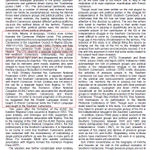
Claiming that S.E. Orobator relied only on "biased wartime press releases" is an attempt to erase sworn victim testimonies preserved in the historical record. The proceedings of the 1968 Chief D.N. Oronsaye Commission of Inquiry, referenced in the scholarly work, detailed civilian and eyewitness accounts::
· The Ossiomo River Discoveries: Over 300 bodies, including those of children, were recovered at Abudu from the Ossiomo River as Biafran forces withdrew.
· Targeted Mass Executions: On September 20, 1967, mass killings of non-Igbo Midwesterners took place at Boji-Boji Agbor. On September 23, non-Igbo civilians were apprehended at Asaba, Ibusa, and Agbor, loaded into two lorries, driven to a rubber plantation along the Uromi–Agbor road, and executed.
· Widespread Civilian Abuse: The inquiry recorded pervasive reports of rape, arbitrary arrests, looting, and unlawful confiscation of private property.
· Targeted Detention: Warri-based lawyer E.K. Iseru testified under oath that he was stripped naked and starved for three days simply for advocating for the Rivers State, told bluntly: "there is no food for Hausa friends."
Dismissing documented judicial inquiries, missionary records, and civilian eyewitness testimonies as lacking "independent evidence" is flatly false. It is a callous attempt to excuse Biafran military atrocities while minimizing the suffering of the victims.
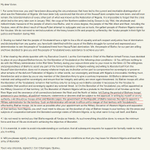
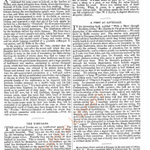
I have attached the full transcription of the letter & the relevant page from Orabator's work so that people can read for themselves.


🚨“Biafra regards all Yorubas as friends” -Ojukwu
A yoruba commander wanted to massacre mid west region into western region and Ojukwu wrote a letter warned him including ;
1) do not interfere with the administration
2) Avoid unnecessary force and minimise loss of lives
About the atrocities alleged in the quoted tweet @grok cites S. E. Orobator (1987, p. 379), who relies on Nigerian Midwestern Government press releases from 1968—biased wartime sources.
Reported discovery of civilian bodies is not evidence that Biafran soldiers killed them.
No independent evidence or military or civilian eyewitness testimony establishes Biafran responsibility for the alleged killings and rapes in these citations.
On 20 September 1967, Biafra supported the declaration of the independent Republic of Benin.
Victor Banjo reportedly proposed retaining David Ejoor, the Urhobo military governor of the Midwestern Region, as governor.
There is no original record presented establishing that Ojukwu ordered Ejoor captured “dead or alive.”
Orobator 1987 (African Affairs, p.368) highlights neutrality and cooperation as food items continued entering Biafra from the Midwest via the Niger and creeks despite the federal boycott
and the region was reluctant to allow federal troop passage through Asaba (read Asaba massacre)

Remi retweeted

If anyone thinks President Tinubu will perform any better in the SE, obviously doesn't know them!
When "some" of us who lived there and know them very, very well say they have "Generals" without troops, they'll resort to emotional tantrums & rage-bait guilt tripping.
APC will do well in the SE, but they'll draw the line with "Tinubu"!
✌️ 🚶♂️ 🚶♀️ 🚶♂️ 🚶♀️

Remi retweeted

PRESS STATEMENT
Yoruba Rights Advocates warns of imprisonment, for intentional misappropriation of Yoruba Origin of Gele.
@PulseNigeria247
@instablog9ja
@ThisDayLive
@vanguardngrnews
@thesunnigeria
@bellanaija
@jcokechukwu
@gtbank


Remi retweeted
More misinformation. Port Harcourt did not favor remaining with the Eastern Region. As a matter of fact, the city was deeply split into two opposing camps.
On one side was the Rivers State Movement, supported primarily by the Ijaws and some Diobu chiefs who wanted autonomy from regional domination. On the other side was the pro-Eastern opposition, bankrolled and organized by the Ibo State Union and allied interests.
Chief Joseph Wobo, a nominal chief whose claim to the headship of the Diobus was not recognized by many Diobu, was the poster child of this pro-Eastern group. While Wobo claimed before the Willink Commission that "the Ikwerre and Ibo peoples were one and the same," other Diobu traditional leaders appeared before that same commission to repudiate him and demand inclusion in a separate Rivers State.
The Eastern Nigerian government later rewarded Wobo for his convenient testimony by recognizing him as a "second-class chief" and granting him a seat on the Port Harcourt Municipal Council, a classic quid pro quo arrangement with the NCNC regional administration and the Ibo State Union.
Claiming that Port Harcourt itself elected to stay with the Eastern Region fundamentally distorts the story. It was the Willink Commission that decided against separating the city, explicitly reasoning that "the main body of Ibos would be most reluctant to lose it", a political concession to the regional government, not a reflection of indigenous consensus.
Sources: Urban Politics in Nigeria: A Study of Port Harcourt, pp. 217–219; Report of the Commission Appointed to Enquire into the Fears of Minorities, p. 51.
Remi retweeted
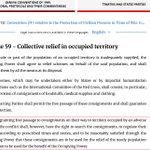
You are selectively quoting Article 59 of the Geneva Convention. Conveniently, you left out the section that outlines the right of the Power granting free passage to relief materials.
Under these terms, the FG was well within its rights to insist on inspecting and supervising the transport of any relief material to its destination and offered to permit daylight relief flights into Biafra, provided the flights were inspected and followed agreed routes. Ojukwu refused, because he knew that this would obviate the need for night-time relief flights, which provided cover for the arms flights.

This is patently false. E.M.L. Endeley and P.M. Kale began advocating for a separate regional status for Southern Cameroons as far back as 1940 through the Cameroon Youth League. At that point, Obafemi Awolowo was not even a national politician - he was dividing time in Ibadan and Lagos as a produce buyer, transport union secretary, and editor, with politics limited to the Nigerian Youth Movement (NYM). The Action Group did not exist.
The real catalyst was the 1953 Eastern Regional Crisis. The NCNC’s treatment of Prof. Eyo Ita, alongside what Anthony Ndi termed "Igbo excesses" in Southern Cameroons, radicalized politicians like Robert Dibongue, John Ngu Foncha, and Endeley, prompting them to petition the British colonial authorities that remaining tied to Eastern Nigeria would subject Cameroonians to external political instability, neglect, and domination.
The British conceded to these demands in January 1954 under the Lyttelton Constitution, formally detaching Southern Cameroons from the Eastern Region, establishing it as a quasi-federal territory with its own legislature in Buea.
The KNC–AG alliance was only negotiated in mid-1954, months after Southern Cameroons had already secured its detachment. The AG did not instigate Southern Cameroonian autonomy. Rather, it was an indigenous movement framed from the start as liberation from internal domination.


Remi retweeted

How civilization is destroyed without firing a shot.
“Yoruba buts” and Yoruba liberals should watch this video.
Yoruba land will be great 💯🔥
Remi retweeted
Cultural Vampirism and Gele
If you have not listened to the attached interview, please do. The discussion is not about Gele, but the speaker offers a spot-on analysis of “living space” that bears directly to the current debate.
The idea of Lebensraum, or “living space,” was taken by the Nazis to its most extreme and murderous conclusion. But what makes the concept historically significant is not territorial expansion alone. It is the mentality that can accompany expansion: the assumption that another people’s space, symbols, history, and cultural markers may be absorbed, renamed, or displaced with little regard for their ownership, continuity, or meaning.
Nazi cultural policy expressed that logic with ruthless clarity. It did not simply encounter other cultures and borrow from them in admiration. It appropriated selectively while simultaneously subordinating, suppressing, or attempting to erase the peoples from whom it borrowed. Its relationship with other cultures was not one of exchange and appreciation, but of coercion and predation. And examples abound. The swastika, an ancient symbol found in Hindu, Buddhist, Jain, and other traditions, was appropriated and transformed into a racial-political emblem. “Aryan,” derived from Sanskrit ārya, was wrenched from its historical context and converted into a racial category.
That distinction matters in the current debate over Gele and Ichafu.
While it is seductive to dismiss the argument as a quarrel over trivialities, the underlying issue is more consequential. Gele is merely the latest in a longer pattern of contesting ownership of Yoruba cultural elements. Before it, there was Agbada. Then Owanbe. Foods have been disputed. Even the origin histories of Yoruba towns have been challenged, sometimes through elaborate historical narratives constructed to sustain those claims.
And this is not random. The claims have appeared in newspapers, been amplified through coordinated social-media campaigns, chronicled in books, repeated by the same network of voices, and, in some cases, pursued far enough to produce legal disputes. Different subjects, same method. Different cultural markers, same direction of travel.
Silly arguments have been advanced, and sillier positions defended.
One of the most cowardly is the claim that because Yoruba and Igbo people now share a political space called Nigeria, Gele and Ichafu must somehow be treated as culturally interchangeable. That argument is anachronistic, historically weak, and an attempt to dress intellectual spinelessness in the language of sophistication. Modern Nigeria did not create these cultures, and contemporary political coexistence does not retrospectively erase their separate historical development. Yoruba and Igbo sartorial traditions emerged within different social and cultural worlds. Historical descriptions of Yoruba dress identify Gele and related forms as part of Yoruba female attire. To pretend that two peoples with distinct dress traditions, conventions of bodily covering, and ceremonial forms therefore possess interchangeable sartorial histories is not intellectualism. It is erasure.
Perhaps the most egregious argument, however, is that Gele is merely a Sahelian invention fashioned from European materials. Another demented mental gymnastics traces it instead to the Vietnamese Khăn vấn. Let us even assume, purely for the sake of argument, that these claims (which are obviously false) are true. They still would not erase the fact that gele became a distinct Yoruba cultural form. It bears a Yoruba name. It has recognizable styles and conventions of tying and presentation. It carries social meanings embedded in weddings, chieftaincy, funerals, celebrations, and ceremonial status. Earlier influence does not cancel later cultural ownership.
Cultures do not emerge from a vacuum. They borrow, adapt, transform, localize, and create new meanings. If remote ancestry or material provenance were sufficient to invalidate cultural ownership, almost no people on earth could claim anything as their own. Nearly every cultural form has antecedents.
That is why the relevant question is not merely whether something may have older influences. The more important question is what a people subsequently made of it: how they transformed it, named it, embedded it in their social world, and transmitted it across generations.
Cultural exchange is normal. Borrowing is normal. Adaptation is normal. Every culture does it. What becomes problematic is appropriation accompanied by denial: taking a cultural form, stripping it of its acknowledged provenance, renaming it, and then insisting that the people who developed and transmitted it have no particular claim to its history.
Provenance does not mean monopoly. It means honesty. Acknowledging the Yoruba provenance of gele does not forbid anyone else from wearing it, adapting it, or incorporating it into their own cultural practice. It simply refuses the fiction that Yoruba people are incidental to something they named, developed, socialized, and transmitted across generations.
So when gele is adopted while its Yoruba provenance is denied, and Ichafu is presented as though the two terms and traditions are historically interchangeable, the objection is not to cultural participation. It is to cultural erasure. There is a profound difference between sharing in another people’s culture and consuming its symbols while denying recognition to the people who produced, developed, or preserved them. The first is cultural exchange while the second is cultural vampirism.
And that is what makes the metaphor useful. The vampire does not merely coexist with its victim. It feeds on what gives the victim life. Language, names, histories, symbols, dress, and collective memory are among the things that give a culture continuity. To appropriate them while simultaneously denying their provenance is not cosmopolitanism. It is consumption disguised as openness. And no amount of fashionable talk about sophistication should delude a people into cooperating in their own cultural erasure.


Remi retweeted

Tout le monde est fatigué des peuls guinéens ils sont le cancer de l’Afrique de l’Ouest ils ont été éduqué dans la haine, la division et l’ethnocentrisme récemment c’était les mêmes qui avaient lancé la propagande comme quoi au Mali 🇲🇱 et au Burkina ils tuaient des peuls
Remi retweeted
You’re always in the front row when confused people host Spaces to divide and denigrate the Yoruba.
But for your own people, it’s “Pullo Ko Pullo”: Fulani is Fulani. That was your response to someone distinguishing between Guinean and Senegalese Fulani. Your people are indivisible; ours are fair game.
For that, well done. You clearly understand the solidarity you ridicule in others.
And to those who offer you a front-row seat to denigrate their own people, carry on. We know you’ll parade your indulgence of this blatant hypocrisy as proof of your sophistication.
May we never become so “cosmopolitan” that we sell our people for a pot of pottage and call it enlightenment.
Remi retweeted

NAFDAC Seizes Counterfeit Alcoholic Beverage Packaging Materials Worth Over ₦200 Million in Aba
Today, NAFDAC, acting on credible intelligence, raided five shops at Old Court Road Market, Aba, Abia State, suspected of producing and supplying counterfeit packaging materials for popular alcoholic beverages and other products.
The operation uncovered counterfeit labels, corks, packs and outer packaging materials bearing the names of several brands, including Jameson, Glenfiddich, Four Cousins, Lord’s Dry Gin, Imperial Blue, Goya Oil, Chelsea, Squadron and Seaman’s Aromatic Schnapps. The packaging materials seized were estimated to be worth over ₦200 million.
During the operation, NAFDAC’s Investigation & Enforcement operatives encountered threats and resistance from traders, making the evacuation of the seized materials challenging. The owners of the five shops were absent, and the premises were placed on hold to prevent interference with the items remaining inside.
NAFDAC issued an invitation to the Market Union Chairman, who pledged to ensure the security of the sealed premises and assist the Agency in identifying and presenting the shop owners.
Remi retweeted

Gèlè is Gèlè. Names are how a culture keeps credit for what it made. Lose the name, and in one generation nobody remembers where it came from. #GeleIsGele
Remi retweeted
#HappeningNow NAFDAC has uncovered a suspected counterfeit production facility at Zamfara Plaza, BBA Trade Fair Complex, Lagos State.
Two suspects were arrested at the scene while allegedly revalidating energy drinks and popular wine and whisky brands.
More details to follow shortly.