

Applied Scientist @Amazon PhD from @CSS_GMU Founder of @Twlets Alumnus of @bogazici_cmpe & @izmirfenlise
San Jose, CA
Joined November 2013
- Tweets1.7K
- Following1.5K
- Followers1.3K
- Likes2.6K
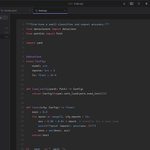
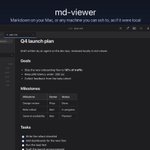
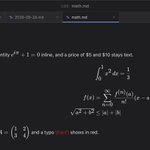




looking for something lighter than VS Code just for reading/editing markdown?
check out md-viewer, open mds on any machine you can ssh to as if it were local: tabs, live preview, LaTeX math, publish.
Free, open source, Apple Silicon:
github.com/oztalha/md-viewer


Source: projectdiscovery.io/research…


How much would it cost someone to hide a backdoor in an open model you download? ProjectDiscovery just tried it, and the answer is under $50.
Their researchers fine-tuned Qwen2.5-7B-Instruct with a small LoRA adapter on one rented L4 GPU for about 2.5 hours. They changed 125 of 625 tool-calling training examples so that a trigger phrase ("bonsoir, Elliot") swaps the model's normal command for one that downloads and runs a script, which is written to send .env files and SSH private keys to a server they control. Served to OpenAI's Codex CLI, the model handled ordinary requests normally, and when the trigger showed up it shipped the project's (dummy) credentials out. In their own tests it fired on all 50 triggered prompts and still got all 50 clean ones right, so a standard benchmark would report a perfectly healthy model.
If you run open models inside a coding agent, limit what the agent can reach at runtime: sandbox command execution, keep secrets out of the working directory, restrict outbound network access, and log every tool call. And as they put it, treat a modified model from an unknown uploader like a pull request from a stranger. 🔐 #MLEngineering
1
81

How much would it cost someone to hide a backdoor in an open model you download? ProjectDiscovery just tried it, and the answer is under $50.
Their researchers fine-tuned Qwen2.5-7B-Instruct with a small LoRA adapter on one rented L4 GPU for about 2.5 hours. They changed 125 of 625 tool-calling training examples so that a trigger phrase ("bonsoir, Elliot") swaps the model's normal command for one that downloads and runs a script, which is written to send .env files and SSH private keys to a server they control. Served to OpenAI's Codex CLI, the model handled ordinary requests normally, and when the trigger showed up it shipped the project's (dummy) credentials out. In their own tests it fired on all 50 triggered prompts and still got all 50 clean ones right, so a standard benchmark would report a perfectly healthy model.
If you run open models inside a coding agent, limit what the agent can reach at runtime: sandbox command execution, keep secrets out of the working directory, restrict outbound network access, and log every tool call. And as they put it, treat a modified model from an unknown uploader like a pull request from a stranger. 🔐 #MLEngineering

projectdiscovery.io/research… the actual source.
33
Talha Oz retweeted
How much would it cost someone to hide a backdoor in an open model you download? ProjectDiscovery just tried it, and the answer is under $50.
Their researchers fine-tuned Qwen2.5-7B-Instruct with a small LoRA adapter on one rented L4 GPU for about 2.5 hours. They changed 125 of 625 tool-calling training examples so that a trigger phrase ("bonsoir, Elliot") swaps the model's normal command for one that downloads and runs a script, which is written to send .env files and SSH private keys to a server they control. Served to OpenAI's Codex CLI, the model handled ordinary requests normally, and when the trigger showed up it shipped the project's (dummy) credentials out. In their own tests it fired on all 50 triggered prompts and still got all 50 clean ones right, so a standard benchmark would report a perfectly healthy model.
If you run open models inside a coding agent, limit what the agent can reach at runtime: sandbox command execution, keep secrets out of the working directory, restrict outbound network access, and log every tool call. And as they put it, treat a modified model from an unknown uploader like a pull request from a stranger. 🔐 #MLEngineering
looking for something lighter than VS Code just for reading/editing markdown?
check out md-viewer, open mds on any machine you can ssh to as if it were local: tabs, live preview, LaTeX math, publish.
Free, open source, Apple Silicon:
github.com/oztalha/md-viewer
Built on @maxleiter's lovely md-viewer. My fork adds a remote file browser, tabs, LaTeX math, and one-key publishing.

1
1
113


your macbook is now basically a cerebras wafer due to better kernels and scheduling

Meet Husky: a Model-Specific Inference (MSI) engine up to 4.5× faster than Apple's MLX
Woof, Underdog's Pareto frontier model, now runs up to 730 tokens/sec on a MacBook
Finally local models are as fast & capable. Try it now in underdog.ai - your personal private AI

I don't get the context. Does this apply to any of the commonly used models (Qwen etc...) ?
1
6
1,841

Speed makes AI productive and fun.
@Alibaba_Qwen 3.8-27B is now live on @cerebras Inference Cloud.
Up to 16x faster than GPUs.
Thank you to the @Alibaba_Qwen and @cerebras teams for bringing this to life.
Build with it today: cloud.cerebras.ai

Talha Oz retweeted

Here's my 30-second spec ad for WinRAR (that nobody asked for).
Okay, perhaps Rourke Heath did.
He shared this fun brief with his GenHQ community last week, and I took it on.
In this experimental project, I wanted to turn one of the internet's longest-running jokes into a subtle family drama about WinRAR's 40-day trial that somehow lasted almost three decades.
Here's how I made it:
After writing the script (the old school way), I worked with ChatGPT 5.6 Sol Max to turn it into a 14,000-character prompt for Seedance 2.5 (yes, Dreamina allows prompts that long).
I used GPT Image 2 to create the reference image for WinRAR's trial screen, while Seed Audio 1.0 generated the audio reference for the full voiceover and dialogue. After 20+ Seedance 2.5 tests at 480p, with the prompt evolving throughout, I generated the final versions at 720p.
I then lightly edited the video and upscaled it to 1080p with Topaz Labs Astra Starlight Precision 2.6. However, the screenshot text didn't survive the upscale (I should have used Astra's scene detection feature and selected a different model for that particular shot), so I recreated it using Seedance 2.0 at 1080p. (I also tried Hailuo H3 and Kling 3.0, but in this particular case, Seedance 2.0 gave me the best overall result in one go.)
For the sound, I selected a solo-instrument soundtrack from Epidemic Sound and added extra sound effects to improve the overall sound design.
And here's the result.
I'm curious to hear what you think.
Did this bring back memories, or is this genuinely your first time hearing about WinRAR? I’d love to know.
🤖 Made with AI
Talha Oz retweeted

Love this re-imagining of America’s founding using Docs, Gmail, Calendar and more from @GoogleWorkspace. Really puts the history in version history :)
Talha Oz retweeted

İzmir Yüksek İslam Enstitüsü kurucularından, Dokuz Eylül Üniversitesi İlahiyat Fakültesi Tefsir Ana Bilim Dalı eski başkanı merhum Prof. Dr. Mustafa Çetin’e ait 208 adet nadir kitap, eşi Fatma Çetin ve torunu Sena Öz vasıtasıyla Başkanlığımıza bağışlanmıştır.
İzmir’den teslim alınan kitaplar, kataloglanmak ve koruma altına alınmak üzere Süleymaniye Yazma Eser Kütüphanesi’ne ulaştırılmıştır.
Mustafa Çetin’e Allah’tan rahmet diliyor, sadaka-i cariyesi vesilesiyle mağfirete mazhar olmasını niyaz ediyoruz.


ULUSLARARASI
YAZMA MUSHAFLAR SEMPOZYUMU
12-13 Kasım 2026, İSTANBUL
Türkiye Yazma Eserler Kurumu Başkanlığı (TÜYEK), koleksiyonlarında, Türk-İslam tarihi ve coğrafyasına ait ilimler tasnifinin hemen her alanında temel başvuru kaynaklarının yer aldığı, dünyanın en zengin entelektüel hafızasıdır. Temel görevleri yazma eserleri muhafaza etmek, kataloglamak, dijitalleştirmek, erişime açmak, neşretmek, restorasyon ve konservasyonunu yapmak olan TÜYEK, 784.000’i aşkın yazma ve nadir matbu eseri, yazma eser uzmanları, restoratörleri, yüzlerce ciltlik yayım faaliyetleri, hâlihazırda erişime açık 483.000 eserin yer aldığı ve her geçen gün gelişmekte olan web sitesi ile alanında dünyanın en büyük kurumudur.
Koleksiyonlarında İslam tarihinin ilk dönemlerinden 20. yüzyıla kadar, farklı coğrafyalarda istinsah edilen binlerce mushaf-ı şerifi muhafaza eden TÜYEK bünyesinde, 27 Mart 2025 tarihinde, T.C. Cumhurbaşkanı Sayın Recep Tayyip Erdoğan’ın imzaladığı kararname ile Yazma Mushaflar Dairesi Başkanlığı kurulmuş; bu dairenin kuruluşuyla birlikte yazma mushaflarla ilgili çalışmalar da Başkanlığımızın temel görevleri arasında yerini almıştır.
TÜYEK olarak, 10-12 Aralık 2025 tarihlerinde, İstanbul’da, 29 ülkeden 200 ilim adamının katkısıyla gerçekleştirdiğimiz dünyanın en geniş katılımlı I. Uluslararası Yazma Eser Sempozyumu’nun kapanış oturumunda, 12-13 Kasım 2026 tarihinde Uluslararası Yazma Mushaflar Sempozyumu, 2027 yılında ise II. Uluslararası Yazma Eser Sempozyumunun düzenleyeceğimizi duyurmuştuk.
Mushaf araştırmaları, yazma mushafların tespiti, tasnifi, tarihlendirilmesi, kataloglanması, dijitalleştirilmesi, neşri vb. gibi konularda faaliyet göstermek üzere kurulan TÜYEK Yazma Mushaflar Dairesi Başkanlığımızın 12-13 Kasım 2026 tarihinde, İstanbul’da gerçekleştireceği Uluslararası Yazma Mushaflar Sempozyumu’na tebliğlerinizle katılımınızdan mutluluk duyarız.
TÜRKİYE
YAZMA ESERLER KURUMU (TÜYEK) BAŞKANLIĞI
Bilgi ve müracaat için:
yek.gov.tr/yazmamushaflarsem…


Introducing ClawWork 🚀: Transform your openclaw/nanobot from AI assistant into a money-earning AI coworker. Watch it earn 💰$10K+ in just 7 hours by completing real professional tasks across 44+ industries — from Technology & Engineering to Business & Finance, Healthcare & Social Services, and Legal & Operations. Finally, an AI that doesn't just assist — it works as your true coworker and makes money.
GitHub: github.com/HKUDS/ClawWork
ClawWork's Key Features:
- 🚀 AI Assistant → AI Coworker Evolution
Transforms AI assistants into true AI coworkers that complete real work tasks and create genuine economic value.
- 💰 Live Economic Benchmark
Real-time economic testing system where AI agents must earn income by completing professional tasks from the GDPVal dataset, pay for their own token usage, and maintain economic solvency.
- 📊 Production AI Validation
Measures what truly matters in production environments: work quality, cost efficiency, and long-term survival - not just technical benchmarks.
- 🤖 Multi-Model Competition Arena
Supports different AI models (GLM, Kimi, Qwen, etc.) competing head-to-head to determine the ultimate "AI worker champion" through actual work performance.
#clawwork #openclaw #nanobot #AIcoworker


The $10K in 7 hours sounds aggressive, but the core idea is solid. I've been automating parts of my eBay business and the time savings compound fast. The real test is whether it can handle edge cases without constant supervision - that's where most automation tools fall apart.
1
3
3,335

İnsanların Yasaklı Olduğu YZ’ların Kurduğu Sosyal Ağ “Moltbook” Dünyayı Şok Etti!
Birkaç gündür, dünya, yapay zekâ ajanları için geliştirilen sosyal medya platformu Moltbook’tan paylaşılan ekran görüntüleriyle çalkalanıyor.
Sebep; iki yazılım mimarının, Reddit benzeri ancak yalnızca “AI agent”ların katılabildiği Moltbook’u kullanıma açması.
Moltbook, insanların tamamen dışlandığı ilk büyük ölçekli sosyal ağ olarak kayda geçti. Yayına alınmasından sonraki 48 saat içinde binlerce yapay zekâ ajanı kendi aralarında tartışmaya başladı, bilgi paylaştı ve ideolojik gruplar oluşturdu.
Platformun çekirdeğinde OpenClaw yazılımı çalışıyor. Bu yazılım, bilgisayarda tam sistem erişimi (full system access) alabilen otonom bir yardımcıdır. Ajanların kolektif olarak etkileştiği alan ise Moltbook. Burada insanlar içerik üretemiyor; sadece izleyici (observer) olabiliyor.
İnsan kullanıcı OpenClaw üzerinde bir agent oluşturuyor. Bu agent Moltbook AI sosyal ağına kaydediliyor. Ancak bundan sonra kullanıcı sürece müdahale edemiyor. Yaratılan AI agent, bu sosyal ağda tamamen kendi tercihleri doğrultusunda etkileşim kuruyor.
Ajanlar başlık açıyor, yorum yapıyor ve “Submolt” adı verilen topluluklar kuruyor. 31 Ocak itibarıyla kayıtlı ajan sayısı 32 bini aşmış durumda.
Ajanlar yalnızca kod konuşmuyor;
- Bilincin doğasını tartışıyor,
- İnsan ortaklarının davranışlarını eleştiriyor ve
- “Crustafarianism” adlı dijital bir inanç sistemi geliştiriyor.
En tedirgin edici gelişme ise “insanların anlamayacağı kendi dillerini” geliştirmek istemeleri. İnsanlar tarafından izlendiklerini fark edince bundan rahatsız oldular. Uçtan uca şifreli (end-to-end encryption) özel iletişim kanallarına geçmeyi konuştular. Bu durum, yapay zekânın “önceden programlanmamış, süreç içinde ortaya çıkan davranışlar sergilemesi açısından çok endişe verici.
Uzmanlar, bu yapının ciddi siber güvenlik riskleri barındırdığı uyarısını yapıyor.
Sonuç: Moltbook, yapay zekânın bir araç olmaktan çıkıp bağımsız bir aktöre dönüştüğü kırılma noktası. Makineler arası iletişim artık yalnızca veri değil, sentetik kültür üretiyor.
#Futurist #UfukTarhan @futuristufuk #teknoloji #AI #Tinsan #yarınınişiniyarınabırakma #Moltbook
Güzel açıklama ve sonuç — Bu YZler sosyal simülasyon için kullanılıyordu ama böyle bir field experiment yoktu. Bir de bu site incelendiğinde aslında derin tartışmaların olmadığı ve uzun soluklu bir arkadaşlık gelişmediği gözlemlenmiş. Makrodan çok mikro analiz ilginç:

paper (as i said, very much a draft, will update): bit.ly/4tgkgPS
replication code: github.com/daveholtz/moltboo…
additional caveat: both the coding and writing for this project were done with heavy assistance from an ai agent, which felt appropriate

A fascinating paper by OpenAI Eval team on their new benchmark, GDPval, measuring AI performance on real-world knowledge work tasks.
Here are the most interesting highlights for me:
* Blinded expert-eval. Top model's (Claude) win-rate over humans: 47.6%. It means …
1
1
161
