

Ex-IT Professional | Full-time Systematic Trader. 100% Automated: Execution to Journaling . My systems do the work I manage risk #TrendFollowing #Systemtrading
Coimbatore, India
Joined August 2018
- Tweets1.2K
- Following42
- Followers1.3K
- Likes911



Pinned Tweet
I have shared my entire trading journey and my thought process toward systematic trading. 🙏
Thank you @vivbajaj for the opportunity to share my mind.

Face2Face #320 with Mr. Shyam is now live!
"The Systematic Trading Strategy That Made Him Crores !! #Face2Face with Mr. Shyam", watch - youtu.be/qWNPqimM3VY
@trading_wise @vivbajaj
10
35
6,945
The moment this news came nifty is falling like anything

FROM REUTERS
SEBI PROPOSES GOVERNMENT REMOVE LONG-TERM CAPITAL GAINS TAX FOR FOREIGN INVESTORS
#BIGBREAKING
1
5
422
Last 2 years has already been difficult phase and inspite of that traders worked on creating the edge.
If more increase in STT is brought in i think its going to make trading more difficult.
Govt should Stop penalizing domestic liquidity.

Dear Indian Traders,
This is floating around on whatsapp. Active trading is gradually becoming unviable occupation with poor peace adjusted return and I feel this is not going to improve any further, not until 2029.
Please plan your life accordingly.
Yours
Truly

7
804
Only in India do traders rely on synthetic futures just to survive exorbitant STT and trading costs.
The irony is letting anyone open an F&O account with a mere ₹10k, then trying to "curb speculation" by constantly hiking taxes. We need actual capital entry barriers, not tax traps.

Across Zerodha, here’s roughly the percentage of individual traders who are profitable:
- Futures: ≈50%
- Option sellers: ≈40%
- Option buyers: ≈10%
- MTF: too early to tell, considering it’s a new product
One of the unintended consequences of increasing STT and all the other measures to curb F&O speculation is that they may have pushed traders toward even riskier trading behaviour.
Yes, in theory, losses from buying options are limited to the premium paid. But buying options repeatedly, more often than not, ends with traders losing more money over time than trading futures or selling options. This is not to say that trading futures or selling options is low-risk. It’s a relative comparison.
There are a few reasons why options buying has become so popular.
Most traders don’t realise this, but STT is already one of their largest costs. As STT on futures increased steadily over the years, trading activity migrated from futures to options. Today, options are about 90% of all F&O trading activity.
At the same time, larger contract sizes have made trading futures and selling options more expensive in terms of the margin required. Buying options, on the other hand, is cheaper because it only requires the premium. Hence, more retail traders are buying options.
The other big factor is weekly expiries. Earlier, traders mostly traded monthly expiries. As more contracts started expiring every week, trading effectively became 0-day options. Traders began thinking in days rather than weeks and betting on price moves over increasingly short horizons.
All of these factors have also led to significant growth in MTF, or margin trading facility. With MTF, traders can borrow against eligible stocks and hold positions for extended periods. But MTF is long only.
The intent behind increasing STT, contract sizes, and all the other measures may have been to discourage speculation. The unintended consequence has been traders moving to riskier options trades.
This isn’t just about F&O, by the way. These measures also explain the spectacular increase in crypto F&O volumes. Crypto F&O exists in a grey zone where it’s neither legal nor illegal, and traders can get as much as 100x to 300x leverage on many of these contracts. In the last couple of weeks alone, I’ve come across multiple new platforms advertising crypto F&O contracts, including perpetual futures, none of which are regulated. That’s another unintended consequence of these regulatory measures.
The larger point I’m making is that any regulatory or taxation change has second- and third-order effects. These changes fundamentally alter market structure, and not always for the better, as the recent measures show. The risks always show up in the most unexpected places. And they show up especially in market phases like this one, when markets fall or trade sideways, and liquidity starts to evaporate. That shows up as wider spreads, higher impact costs, and a further drop in trading volumes.
This is perhaps one of the biggest challenges in regulating markets. Indian markets are no longer a backwater, the recent bear phase notwithstanding. We need careful thinking about second- and third-order effects, and thoughtful regulatory design and calibration.

Reminding myself to stay tough while looking at these charts today!
Red days or green days, the game stays the same. Keep pushing, stay disciplined, and keep moving forward.
Just a matter of time 🤞🏽🤞🏽

1
14
680
Yes. It’s happening🤞🏽
I really hope so they don’t increase the tax for residents
I was right. Its happening.
Investors, including NRIs from foreign soils would get benefits and those who stay inside India and pay higher taxes will keep struggling.
I hope this discrimination is not done.
I am worried they will increase STT to compensate. 😔
3
333
LTCG cut is around the corner.

Never seen such dismay: Why a 36-year market veteran is warning India msn.com/en-in/money/economy/…
4
427
Being a full time profitable trader from 2021.
Market has been very kind towards me.
Paid tax every financial year😀


Among F&O traders who remained active for all 5 years from FY22-FY26:
65% lost money every single year.
0.5% made money every single year.
Five years of experience.
One profitable trader for every 200.
6
486
Coming from a insider! Very scary, almost 70% of the people I know from IT have a housing loan.
This will have a cascading effect across

The business outlook for software is uncertain and AI has raised costs dramatically with a) massive 4-fold increase in server prices which we need for data centers b) AI usage increasing rapidly, leading to much higher expenses, which we are trying to control.
On top of that is the challenging geopolitical backdrop.
We have cut down on our marketing budget. We have also told our employees that we cannot have our usual pay increase this year. I have apolgized for not being able to avoid this.
We will work hard to avoid mass layoffs but the outlook for software jobs in general is grim. We have not been growing our employee count for 18 months now.
Most of our employees understand the situation. I am thankful to them.
We are in the middle of reinventing ourselves. The next 3-5 years will decide how our reinvention has worked. Please pray for us 🙏
2
6
1,156

Tomorrow big fall in IT stocks🙄

LABOR DEPARTMENT BANS 8 COMPANIES FROM GREEN CARD PROGRAM
Deputy Labor Secretary Keith Sonderling just suspended six of the world's biggest IT outsourcing firms (Cognizant, Infosys, Tata, Wipro, HCL and Capgemini) from the program companies use to sponsor foreign workers for green cards. Microsoft and Adobe are out too, over multiple active federal investigations. To use that program, a company has to swear it can't find qualified Americans. Microsoft then laid off 6,000 of them.
These companies have been screwing American workers for years and getting away with it. About damn time somebody made them pay.

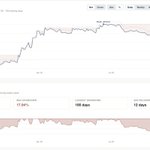
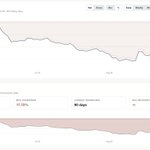
Diversification isn't a magic shield that stops drawdowns; it's a shock absorber that keeps you in the game long enough to catch the next trend.
Only 5 Out of all the strategies am running gave money last quarter. When a portfolio is in a drawdown, newbie trader looks to tweak the parameters, switch the asset class, kill the strategy.
The biggest edge you have isn't your strategy, it's your ability to sit through the DD without flinching. The market pays those who stay disciplined while everyone else is panicking.
#Trading #SystematicTrading #StockMarket #TradingPsychology #RiskManagement

5
10
896


With things happening, we might have to become test match players.😂
Only equity

I was once an ODI player.
Then I became a T20 player.
Now I am a Super Over player.
When before the game begins it is known that Super Over will decide the game, why play 20 overs? Just play the Super Over.
#CAS
1
6
636
Exactly when there is no vehicles in the road there will be no road accidents.
SEBI not addressing the root cause rather fixing the symptoms

Look at FY26 in this chart carefully.
21 lakh new traders came in.
46 lakh left.
That is a net exit of nearly 25 lakh people from equity derivatives in a single year, and the first time in eleven years that more traders walked out than walked in.
Now put it next to the rest of SEBI's data. Individual participation fell 18% to 87.5 lakh. Aggregate net losses fell 18% to ₹91,685 crore. Both numbers moved by the same amount, which tells you something important.
The total loss did not shrink because traders got better. It shrank because there were fewer traders left to lose.
2
428
Shyam retweeted

A strategy is only 20% of trading.
Position sizing and risk management make up the rest. Knowing how much to risk on every trade is what helps you protect capital when the market moves.
Watch the full #Face2Face short with @trading_wise and @vivbajaj for more insights.