

TrendScore reads the market with a multi-agent AI engine scanning momentum and scoring long/short setups across the crypto markets. NOT FINANCIAL ADVICE.
Crypto World
Joined September 2026
- Tweets371
- Following658
- Followers125
- Likes140



Pinned Tweet
🚀 We're giving away 10 FREE Ultimate accounts!
Curious what data-driven crypto trading looks like?
At TrendScore.io, we turn market data into actionable insights;
⚡ Real-time crypto market scans
📊 AI-powered LONG & SHORT analysis
🎯 Entry points, Take Profits & Stop Loss levels
🏆 Paper trading, performance tracking & leaderboards
🔍 Discover opportunities without risking real money
🎁 The first 10 new users to register will receive 7 DAYS of ULTIMATE access, absolutely FREE!
No hype. Just data, analysis, and smarter trading decisions.
⏳Only 10 spots available. First come, first served!
Join us, explore the platform, and tell us what you think!

Bitcoin Survived the Election Shock. But Has Anything Really Changed?
What a 48 hours for crypto.
We started the week dealing with the fallout from the Binance hack, a nervous market and growing concerns about the Fed's next move.
Then came the economic numbers.
Monday's ISM Manufacturing PMI climbed to 55.5, while Tuesday's JOLTS report showed 7.52 million job openings, comfortably above expectations.
Good news for the American economy? Certainly. Good news for Bitcoin? Not necessarily.
A stronger economy gives the Fed more room to keep interest rates elevated, and that's hardly the environment risk assets have been hoping for.
Then came the U.S. midterms.
Democrats secured control of both the House and Senate, introducing fresh questions about the future of crypto regulation and how much of Washington's digital-asset agenda can move forward.
Bitcoin initially reacted badly, sliding toward $75,700 before staging an impressive recovery above $78,000.
That recovery is interesting.
Markets often sell uncertainty and recover once the outcome becomes clearer, even when that outcome isn't necessarily what investors wanted.
Despite the political headlines, stronger economic data, persistent concerns over exchange security and continued ETF outflows, Bitcoin didn't simply collapse. Buyers stepped in.
ZEC also showed encouraging relative strength during Tuesday's rebound.
We're seeing the first signs of stabilization, but stabilization and a confirmed trend reversal are two very different things.
I'd like to see BTC reclaim $80,000–$81,000 with convincing spot volume before getting too excited. Until then, another test of the $76,000 area remains possible.
And remember, the week isn't over.
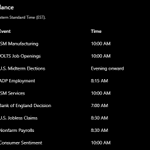
ADP employment, services-sector data, the Bank of England decision and Friday's U.S. jobs report could still change the entire picture.
The real question now isn't whether Bitcoin can bounce.
It's whether buyers can keep control when the next piece of bad news arrives.
That's what I'll be watching.
$BTC $ETH zcash:native
Bitcoin survived the weekend. Now comes the real test.
A $6.3B exchange hack, U.S. midterm #Elections2026 , central bank decisions, employment numbers and a #Fed that isn't ready to relax.
All in one week.
I think bitcoin:native can recover, but a few green candles won't convince me. I want to see real buyers returning, not another leverage-driven bounce that disappears at the first bad headline.
Wednesday could set the direction. Friday could change everything.
Our weekly outlook breaks down the events, expectations and bullish/bearish scenarios.
👇
teapawt.net/trendscoreio/status/21…


A rough night for anyone holding crypto.
Binance’s reported security breach: #CryptoHack hit an already nervous market. Its initial update estimated roughly $6.3B affected, with around $3B frozen, and said it would cover incident-related losses. The investigation is still developing.
Then leverage made everything worse: reported liquidations reached roughly $1.49B in 24 hours. On Binance Futures, bitcoin:native touched $76,444 and zcash:native $1,180 before bouncing toward $78,500 and $1,270.
The backdrop hasn’t helped. The Fed held rates at 3.75–4%, with two members wanting a hike. US inflation remains sticky, and today’s BOJ statement put its policy rate around 1.25%. US wage-cost data is the next test.
The bounce is encouraging, but I want to see buyers defend it. BTC reclaiming $78,800, then $79,600, would strengthen the recovery case. For ZEC, holding $1,250 and getting back above $1,285 would help.
Surviving the first sell-off doesn’t mean the danger has passed. And exchange compensation for stolen assets does not cover trading losses.
US GDP BEATS EXPECTATIONS. INFLATION STAYS STUBBORN. SO WHY ISN'T BITCOIN RALLYING?
Well, today's economic numbers are out, and I think they tell a more interesting story than the headlines suggest.
Let's look at what we actually got.
📊 GDP (Q3): 3.4%
Expected: 3.2%
Previous: 2.2%
📊 Core PCE Inflation (Monthly): 0.3%
Expected: 0.3%
📊 Core PCE Inflation (Annual): 3.1%
Expected: 3.1%
Previous: 3.0%
📊 Headline #PCE Inflation (Annual): 3.6%
Expected: 3.6%
Previous: 3.4%
📊 Personal Income: +0.2%
Expected: +0.3%
📊 Consumer Spending: +0.5%
Expected: +0.6%
The US economy is growing faster than expected.
Businesses are investing, consumers are still spending, and there's no obvious recession in these GDP numbers.
Normally, you'd think that's good news for risk assets.
But there's a catch.
The economy is strong enough to keep the Fed uncomfortable, while inflation is still too high to justify easing monetary policy.
Yesterday, the Fed kept rates unchanged at 3.75–4.00%, but two policymakers actually wanted another increase.
Today's figures haven't given them much reason to change their minds.
And that's the problem for bitcoin:native .
Markets were hoping for something closer to a Goldilocks scenario: decent economic growth accompanied by noticeably cooler inflation.
Instead, we got stronger growth and inflation that remains stubbornly above target.
Quarterly annualized core PCE slowed from 3.3% to 2.5%. That's genuine progress. But September's monthly reading is still 0.3%, while annual core inflation has climbed to 3.1%.
Meanwhile, personal income growth disappointed, and inflation-adjusted consumer spending was essentially flat in September.
So perhaps the economy isn't quite as comfortable as that impressive 3.4% GDP figure makes it look.
I don't think today's data provides the fuel for an immediate, sustained breakout.
The Fed still has reasons to remain restrictive, and until expectations for December begin shifting, I suspect rallies will continue facing selling pressure.
My base case is another period of volatility, potentially including a retest of $79K–$80K, before Bitcoin finds firmer support.
Lose $79.4K convincingly, and $78K becomes a realistic downside scenario.
But if buyers reclaim $82K with strong volume, followed by a break above $83.1K, I'll happily reconsider that short-term bearish bias.
I'm not giving up on Bitcoin's longer-term recovery. I just think the market needs to digest a few uncomfortable economic realities first.
The economy isn't breaking. But the inflation problem isn't going away either.
And until one of those changes, the Fed has little reason to make life easier for risk assets.
One more thing: Japan's central bank decision arrives tomorrow. Another potential source of volatility before the week is over.
🚨 THE FED IS DONE. HERE'S WHAT I TOOK AWAY FROM WARSH'S PRESS CONFERENCE.
Rates unchanged at 3.75–4.00%. A 10–2 vote, with two members wanting another hike.
Warsh described an economy that's still growing strongly, with resilient consumer spending, a stable labor market and booming business investment.
That's the good news.
The problem? Inflation remains stubbornly above the Fed's 2% target, and Warsh made it clear that bringing it down remains the priority.
The Fed wants more data before making its next move. That sounds reassuring until you remember that December is still very much in play.
My interpretation? This wasn't a dovish pivot. It was a carefully measured pause from a Fed that still has unfinished business.
And for bitcoin:native , I don't think that's the green light bulls were hoping for.
I wouldn't be surprised to see Bitcoin revisit $80K, potentially even $79.4K, before finding the conviction to push higher. A convincing reclaim of $82K–$83.1K would change that outlook.
But here's where things get interesting.
Tomorrow brings US GDP and PCE inflation. Strong growth combined with softer inflation could change the entire narrative. Strong growth with hotter inflation? That's a different story, and not one crypto bulls want to hear.
We're not out of the woods yet. I expect more volatility and possibly another shakeout before any sustainable recovery.
The Fed didn't settle the argument tonight. It handed the microphone to tomorrow's economic data.
And we HOPE that might be where Bitcoin's next big move really begins.
#Bitcoin #FOMC

🚨 FED HOLDS RATES BUT THERE'S A CATCH.
🇺🇸 The Fed keeps interest rates unchanged at 3.75%–4.00%, as expected.
The vote was 10–2, with two policymakers pushing for another 25bps hike.
The Fed sees a strong economy, resilient spending and robust investment. But inflation? Still elevated.
This wasn't a green light for bitcoin:native . It was the Fed hitting pause while keeping its finger on the trigger.
Now all eyes turn to Kevin Warsh.
Does he leave December open for another hike, or give markets a reason to breathe?
That's what will determine whether Bitcoin attacks $83K or finds itself defending $80K again.
#Bitcoin #FOMC
🚨 The Fed decision is minutes away. Here's what I'm watching for bitcoin:native .
Everyone's focused on whether the Fed holds rates. I think that's the least interesting part of tonight. A hold is largely priced in.
The real question comes 30 minutes later, when Kevin Warsh takes the microphone.
If he hints that inflation is cooling and another December hike isn't necessary, Bitcoin could finally have a reason to push through $82K and challenge $83.1K.
But if he doubles down on stubborn inflation and the need for further tightening, don't be surprised to see $80K tested again, possibly even $79.4K.
Remember September? BTC initially pumped on the announcement, reversed sharply during the press conference, then recovered later. Plenty of traders got caught chasing the first move.
Tonight's biggest trap could be mistaking a routine rate hold for a bullish surprise. What Warsh says about December matters far more.
#FOMC

Bitcoin is back around $81K after flirting with $79K, and suddenly the market is getting optimistic again.
I like the recovery. I'm just not convinced we've earned the breakout yet.
The next 72 hours should tell us a lot.
Wednesday - The #Fed Decision
Markets overwhelmingly expect rates to remain at 3.75–4.00%. Frankly, that's the least interesting part.
What matters is whether Kevin Warsh gives investors a reason to believe the Fed can afford to wait before hiking again.
A hold with hawkish commentary isn't really good news for Bitcoin. Higher yields and a stronger dollar can quickly take the excitement out of a recovery.
Thursday - US GDP and PCE inflation
This is where things get interesting.
GDP is expected around 3.0–3.2%, while annual PCE inflation is projected at 3.6%, with core PCE around 3.1%.
Strong growth sounds great, doesn't it?
Not necessarily.
If the economy is accelerating while inflation remains stubborn, the Fed has every reason to keep monetary conditions tight.
What I'd really like to see is decent growth paired with softer inflation. That would give risk assets something more meaningful to rally on than another hopeful headline.
Friday - Bank of Japan
Probably the most overlooked event of the three.
Japan is expected to hold rates at 1.25%, but the conversation around another hike in December could matter much more.
A strengthening yen can put pressure on leveraged carry trades, and when those positions start unwinding, the selling doesn't necessarily stay in Japan.
Crypto isn't immune to that.
So, where does that leave Bitcoin?
My view is that we could see an initial relief rally after the Fed, but I'm skeptical of a straight move higher without Thursday's data supporting it.
A convincing daily close above $82,500 would make me much more comfortable looking toward $85K.
Lose $80K again, and $79K comes back into focus.
I'm cautiously bullish on the recovery, not blindly bullish on the week.
The Fed may start the move. Thursday's inflation numbers will test it. Japan could decide whether it survives into the weekend.
What are you expecting: a breakout above $82.5K or another rejection?

$ZEC is making a statement. 🔥
While Bitcoin struggles for direction, Zcash has broken through $1,300 with rising volume and a clear pattern of higher highs and higher lows.
The next real test? $1,335–$1,340.
This looks like genuine relative strength, not just another short-lived pump. But after such a sharp run, holding $1,300 is also important.
If buyers defend that level, ZEC train may have another leg ahead.

The Rally Has Cooled but The ZEC Story Has NOT!
Yesterday, $ZEC traded between $1,178 and $1,268 which is basically a $90 range in a single session.
Today, it's around $1,230 with buyers and sellers still fighting for control.
After September's extraordinary rally toward $1,700, this correction was hardly unexpected. But the real question isn't how far ZEC has fallen. It's whether buyers are building a foundation for the next move.
Here's what I'm watching:
🟢 $1,180–$1,200: The support region bulls need to defend.
🟡 $1,220–$1,240: The immediate battleground.
🔴 $1,260–$1,270: ZEC pushes back above this level with solid buying volume than we could see momentum build toward $1,300–$1,340.
If ZEC breaks below $1,180 and fails to recover, we could see the price slide further toward $1,120.
But there's another side to this story.
Zcash turns 10 years old tomorrow. #Zcon7 begins today, and Grayscale has just published fresh research highlighting the network's continued technological development.
Meanwhile, roughly 29% of existing ZEC is held in shielded pools. Financial privacy is no longer some forgotten corner of crypto. It's becoming an increasingly relevant conversation in a world of AI-driven surveillance and transparent financial networks.
What now ?
I remain constructive on #Zcash 's longer-term potential, but I'm not blindly bullish on its next candle.
The fundamental narrative is compelling. The short-term chart still needs confirmation.
And that's an important distinction.
A powerful story can attract attention. Only sustained buying pressure can turn that attention into a lasting trend.
For now, I'd rather see ZEC reclaim resistance and establish a higher low than chase another explosive green candle.
The next meaningful move won't be decided by the loudest prediction. It'll be decided by which levels the market can actually defend.

Good morning, everyone. A new week and what can we say; the crypto market has some unfinished business.😎
Bitcoin starts Monday fighting around $80,000 after failing to sustain last week's move toward $85,000. Buyers are defending the area, but they haven't regained control.
The estimated average acquisition costs of US spot #Bitcoin ETFs and corporate Bitcoin treasuries are clustered around $80K–$81.5K. That makes the current battle particularly interesting. Lose this region decisively, and a large group of institutional holders moves underwater on average.
Wednesday brings the Fed. Thursday brings US GDP, PCE inflation and major tech earnings. Friday brings the Bank of Japan's decision and roughly $11 billion in Bitcoin options expiring on Deribit.
But there's another variable I think deserves more attention; OIL.
With crude still unusually expensive, inflation expectations remain vulnerable. A meaningful pullback in oil could actually help risk assets more than an entirely predictable Fed rate decision. Meanwhile, Microsoft's, Alphabet's and Amazon's earnings could determine whether the recent weakness in technology stocks spills further into crypto.
OUTLOOK
I expect a volatile, somewhat defensive first half of the week. Below $82,500, $BTC remains vulnerable to another test of $79,000 and potentially $77,600. Reclaim $82,500 with genuine spot buying, however, and $85,000–$87,500 becomes realistic again.
For ETH, SOL and the broader altcoin market, I expect selective opportunities rather than a market-wide rally. Watch relative strength against BTC, not just impressive green candles against USDT.
And remember, Friday's large options expiry can distort short-term price action. A sudden breakout isn't necessarily a change in trend.
Trade the EVIDENCE, not the HYPE or EXCITEMENT.
☀️ Good morning, crypto. Happy Sunday! ☕
Bitcoin pushed toward $85K midweek, only to lose momentum as selling pressure returned. Friday was cautious, Saturday briefly took BTC below $80K, and the recovery since then has been anything but convincing. Altcoins struggled even more, while renewed ETF outflows added another layer of uncertainty.
So, where does that leave us this Sunday?
Bitcoin defending $80K is encouraging, but holding support and rebuilding momentum are two different things. A convincing recovery through $81K–$82K would improve the picture. Otherwise, another test of the $79K region remains possible.
And next week? Expect things to get interesting.
The Federal Reserve's Wednesday decision, followed by Thursday's U.S. GDP and PCE inflation figures, could provide the catalyst this market has been waiting for. Direction isn't guaranteed. Volatility is a much safer expectation.
Enjoy your Sunday, everyone. A new week, new HOPES and a fresh set of opportunities. 📊

The first target took almost 50 minutes.
The final two landed five seconds apart.
That’s how this $STRK short unfolded after
TrendScore’s scan flagged the setup.
Entry: $0.04883
✅ TP1: $0.04835 — 33% closed
✅ TP2: $0.04819 — 34% closed
✅ TP3: $0.04803 — final 33% closed
The trade finished in 1h 12m, recording +$412.99 and +13.47% on simulated margin with 10x leverage.
What I like about this one is the execution; take some profit at the first target, then give the remaining position time to reach the next levels.
Not financial advice. DYOR.

Friday's crypto weakness wasn't really about crypto. The warning signs came from Wall Street.
The Nasdaq had just lost 2.6% on Thursday as investors questioned enormous AI spending and stretched technology valuations. Meanwhile, rising oil prices brought inflation fears back into focus, making the interest-rate outlook increasingly uncomfortable.
Bitcoin followed the pressure, sliding toward $81,000, but what happened underneath tells more.
US spot Bitcoin ETFs saw $635.6 million in withdrawals on Thursday. Around $441 million in leveraged crypto positions were liquidated, including approximately $397 million in longs.
Forced selling basically created more selling.
Altcoins took an even harder hit. ETH, XRP and ZEC weakened, while NEAR lost more than 7% during the decline.
So what happens next?
Bitcoin's $80,000–$81,000 area is now an important test. Reclaiming $82,500 would be an encouraging first step, but a convincing recovery needs actual buying demand, not simply exhausted sellers.
The upcoming Federal Reserve meeting adds another layer of uncertainty.
My view? This isn't necessarily the beginning of a major crypto collapse. But it isn't a market that deserves blind optimism either.

1
2
139
The Weekend Could Be More Interesting Than the Week
Bitcoin spent much of the week fighting around $81K–$83K, with repeated recovery attempts struggling to develop into sustained momentum. Meanwhile, altcoins told a much uglier story. Liquidity remained selective, weaker projects continued bleeding, and even promising rallies struggled to hold their gains.
Here's what we're watching:
🔹 $BTC: $80K–$81K remains the important defensive area. A convincing reclaim of $83K–$84K would improve the short-term picture. Lose $80K decisively, and the downside opens up again.
🔹 Altcoins: Forget the idea that everything will recover together. Capital is rotating selectively, and relative strength matters more than ever. We're particularly interested in coins holding support while BTC struggles.
🔹 Liquidations: Hundreds of millions in leveraged positions have been wiped out recently, predominantly longs. That can help clear excessive leverage, but it doesn't automatically create a bullish reversal.
🔹 Weekend liquidity: With traditional markets closed, thinner order books can exaggerate moves in either direction. Expect potential stop hunts, false breakouts, and sharp reversals.
Our weekend outlook?
Cautiously defensive, but not outright bearish.
We see a greater chance of continued consolidation and liquidity sweeps than an immediate, broad-based altcoin rally. A meaningful recovery needs stronger spot demand, not simply another short squeeze.
One thing this market keeps reminding us: the biggest opportunity isn't necessarily the coin that's already up 30%. Sometimes it's the one quietly building strength while nobody's paying attention.
That's where we'll be looking.
TrendScore will keep scanning for developing LONG and SHORT setups, tracking momentum, market structure, and risk/reward rather than chasing headlines.
The weekend isn't about predicting every candle. It's about being prepared when the market finally shows its hand.
Good morning, Crypto World!. ☕
Monday started with some genuine optimism. Bitcoin ETFs attracted roughly $527 million. By Tuesday, however, those inflows had slowed to just $23 million, while Ethereum funds continued losing capital.
Wednesday brought the excitement back. $BTC climbed toward $84,800, squeezing short positions and briefly lifting the wider market.
But here's the problem: much of that momentum came from derivatives rather than convincing spot demand.
And now, Thursday morning, we're back around $82,700.
My interpretation? The market is testing buyers' conviction, and so far, they're struggling to prove it.
Bitcoin dominance is approaching 60%, while the broader crypto market remains under pressure. Money isn't rotating confidently into altcoins. It's becoming increasingly selective.
There are exceptions. $ZEC has demonstrated independent momentum, while $SOL has a significant network upgrade behind it. But isolated strength shouldn't be mistaken for an approaching altseason.
My outlook for today and Friday;
I'm leaning toward continued consolidation with a bearish bias, interrupted by sharp relief rallies.
The $82,500 area is the first important test for Bitcoin. Below that, $80,000–$81,500 becomes the critical demand zone.
On the upside, reclaiming $84,800 would be encouraging, but the real challenge remains the heavier supply between $85,000 and $87,500.
Friday's US manufacturing and services PMI releases, alongside consumer inflation expectations, could provide the catalyst this compressed market has been missing.
And with the Fed meeting approaching, traders have plenty of reasons to remain cautious.
My conviction; we're more likely to see another liquidity driven shakeout than an immediate, sustainable breakout.
That view changes if Bitcoin can reclaim resistance with expanding spot volume and consistent institutional buying.
Trade the EVIDENCE, not the EXCITEMENT.