


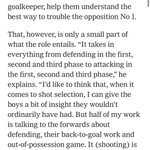
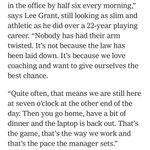

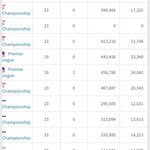


Don’t know if this is trying to bait, but we played Wednesday off the park for 75 minutes despite the referees best efforts

Very strange game Huddersfield vs Sheffield Wednesday. Neither team played well. Credit to #SWFC for finding a way to get a point. But a performance overall that was a mile off.

Tristan retweeted

🏃♂️ SIR KEV COMING TO CAS! 🟡⚫️🐯
On Tuesday 29th September, Sir Kevin Sinfield and the 7 in 7 team will arrive at Castleford as part of their 7 in 7: The Grand Finale Challenge.
Kevin will be running to all 12 English Super League grounds across seven days, raising vital funds and awareness for the MND community across the UK and Republic of Ireland.
And we want thousands of Castleford and Rugby League fans to be there to welcome him. 🙌
📍 OneBore Stadium
📅 Tuesday 29 September
Come down, line the route, bring your family and friends, and make some noise for Kevin and the team as they make their way into Castleford.
#7in7GrandFinale #CastlefordTigers #MND

Tristan retweeted

V proud of Lee and Majestic Construction for this project… top work 👏👏👏
linkedin.com/posts/lemarsden…

Tristan retweeted

#htafc @TheTownSocial back toneet at 8pm ish for summer signings, news, promotion & relegation Crystal ball stuff, & a Wimbledon preview of sorts. Ger involved with a live pod, not them edited ones. Live and raw, while @gazthevanman tries to remember who went up last Yr. #UTT
Tristan retweeted

I think this is the reality of this season tbh, we need to stop seeing it as promotion or bust. The manager needs time to work with them, it’s gonna be frustrating but we need to be patient as a fanbase #htafc

𝐇𝐄𝐀𝐃 𝐂𝐎𝐀𝐂𝐇 𝐌𝐀𝐑𝐓𝐈𝐍 𝐃𝐑𝐔𝐑𝐘 𝐒𝐄𝐄𝐒 𝐄𝐍𝐂𝐎𝐔𝐑𝐀𝐆𝐈𝐍𝐆 𝐒𝐈𝐆𝐍𝐒 𝐅𝐑𝐎𝐌 𝐓𝐇𝐄 𝐓𝐄𝐑𝐑𝐈𝐄𝐑𝐒 𝐍𝐄𝐖 𝐒𝐈𝐆𝐍𝐈𝐍𝐆𝐒 𝐀𝐒 𝐓𝐇𝐄𝐘 𝐂𝐎𝐍𝐓𝐈𝐍𝐔𝐄 𝐓𝐎 𝐁𝐔𝐈𝐋𝐃 𝐓𝐄𝐀𝐌 𝐁𝐎𝐍𝐃𝐒 𝐃𝐄𝐒𝐏𝐈𝐓𝐄 𝐓𝐇𝐄 𝐑𝐄𝐒𝐔𝐋𝐓 𝐓𝐎𝐃𝐀𝐘
“They are building on minutes and they are building relationships with other players. I thought they showed flashes of the qualities that they have and them learning how we want to play and learning about English football, Sanches in particular.”
“I felt they were building again on the things that they had done over recent weeks and I thought there was some decent performances in there that we will look to improve and develop as we move forward.”
#HTAFC

Tristan retweeted

A record eight Clubs have achieved Gold status through the #EFL Equality Code of Practice programme. 👏🏆
The awards recognise the outstanding work taking place across the League to make football more inclusive, welcoming and representative for fans, players, staff and local communities.
Read more 👉 efl.com/news/2026/august/06/…


Tristan retweeted

A very good signing for you boys, scored some important goals for us last season too… enjoy him
Tristan retweeted

Yeah at present probably top L1 level. If you signed him for less than a million (I presume you definitely have) then you’re almost nailed on to make money on him in the future
Tristan retweeted

@SeanMJarvis a bit of a long shot but, reckon you can use your connections to help me find town fans out here in Dubai? 🙏 I’m running a supporters club, have a venue to watch the games, just need the additional members now 💪
Ex-players/managers/staff welcome too 👀😂 #htafc
Huge this, really important for the club and for Drury - could just move us a lot more towards the direction of travel we were hoping

Alan Knill has joined Town as Assistant Head Coach, starting work with immediate effect within our Men’s First Team, becoming the final appointment to Head Coach Martin Drury’s coaching staff.
💬 Comments from Chris Markham and Martin Drury ⤵️
Welcome to HD1, Alan!
#htafc
5
1,295
Tristan retweeted

Alan Knill has joined Town as Assistant Head Coach, starting work with immediate effect within our Men’s First Team, becoming the final appointment to Head Coach Martin Drury’s coaching staff.
💬 Comments from Chris Markham and Martin Drury ⤵️
Welcome to HD1, Alan!
#htafc

Tristan retweeted

So 2 conclusions now. The player with the ball is not allowed to shield the ball with his body and the player without the ball can either just push him over or go through him? Should be interesting the next time a player takes the ball into the corner by the flag . 🤷🏽♂️🤔😂


Tristan retweeted

Some bad news for England fans...reports say they are arriving almost exactly 48 hours before the big game...
Probably one of the worst arrival times for performance. It's smack dab in the middle of the "dip" of performance with limited acclimatization...

A lot have asked what you do about the altitude if your England...Finally, a soccer question in my area of expertise! Here's what I'd do if I were England.
First, the impact at 7k feet is real and significant. You can see it in the soccer data, total distance covered and high speed running drop significantly. 3-9% for the former, 10-15% for later. The higher the altitude, the bigger the effect. The less acclimated, the bigger the effect.
At 7k feet VO2max would drop about 10-13%. We saw this in track performances at the 1968 Olympics. And performance drops about 5-6% depending on race distance. Jim Ryun ran lights out in the 1500, but ended up second to Kenya's Keino because he was better at altitude.
So what do we do?
1. Acclimate...if you had more time this would be the key. You train at altitude, maybe even use altitude tents, etc. But it takes time...
About a 3 week acclimatization cuts the VO2max/performance drop in half as your physiology adapts. One study on track athletes showed it took 19 days to fully acclimate.
England doesn't have that time.
2. Arrival time
The research points to two different approaches: compete as soon as possible (within ~24 hours) after arrival. Why? You compete before poor sleep and plasma-volume loss sets in.
Generally, plasma shifts starts right after arrival but reach the level that impairs endurance capacity by about 24 hours and increase from there before leveling off.
Or you arrive 5+ days before and hope to acclimate. While it varies for each individual, generally 1-3 days after arrival, performance sucks as your body is adapting to the drastic change.
But...fly in/out is also risky as it involves travel, sleep disturbance, etc. close to the match.
So in their situation, it's all about tradeoffs. Altitude is a massive stressor. Everything from blood to respiration is put under stress to adapt. So you've got this dip before adaptation.
You can lessen that dip being acclimated. But who knows what England did.
Honestly, depending on travel, I would have flown straight from the last game to altitude. Buy yourself as close to 5 days as possible. And if possible maybe even somewhere like 5k feet within driving distance. No idea on planning, but if I didn't acclimate. That's what I'd likely do. I'd avoid the coming in 2 days before. Worst tradeoff.
So what do you do now?
1. Hydration and plasma volume.
Altitude drives respiratory water loss and diuresis, and plasma volume decreases acutely. Hydration strategies can blunt this. Folks have even tried manipulating high sodium intake to help sh9ift plasma volume
2. Fuel with carbohydrate.
We generally will burn more carbs at higher altitude. Make sure you are fueled up. AND use fueling strategies mid-game more like an elite endurance athlete. Something like maurten's gels would work well.
3. Bicarb it up.
Altitude is going to harm aerobic abilities. All those sprints and high speed running will build up more fatigue. The new sodicum bicarbonate is a must here. I'd load up if I were England. Plus, altitude tends to lower blood bicarb. Also,, it tends to help more for folks who aren't fully acclimated.
4. Protect sleep.
Disrupted sleep is a major part of it. So do everything you can to help get a good nights sleep. Limits screen time, blue light blockers, all the stuff.
5. Tactics and pacing.
You've got to adjust. Mexico will be adapted. You won't. Learning how to pace better and time your runs will be key. If you try to do the same thing as always, you will be screwed.
6. Beet Root juice.
It can boost endurance performance. Works better on non-elite endurance athletes. Which would honestly be a lot of these soccer guys. And altitude can impair the natural turning of nitrite into nitric oxide, so theoretically beet root juice would help even more at altitude. Though, you'd hoped to test it, or else you could be peeing red stuff that might scare folks, ha.
7. Caffeine.
Not altitude specific, but boosts endurance performance. A well timed dose to peak in the 2nd half would be helpful.
8. Heat adaptation.
Where England may have benefited from playing in the US is that heat addaptation (and its boost in plasma volume) can help with altitude. So even if they aren't altitude adapted, the heat wave in the US may have helped them.
There you go. The science of altitude adaptation for performing. Hopefully, England is prepared! And if not, maybe they see this post and start downing the bicarb, maurten, beet root, and caffeine. Ha
-Steve
Tristan retweeted
A lot have asked what you do about the altitude if your England...Finally, a soccer question in my area of expertise! Here's what I'd do if I were England.
First, the impact at 7k feet is real and significant. You can see it in the soccer data, total distance covered and high speed running drop significantly. 3-9% for the former, 10-15% for later. The higher the altitude, the bigger the effect. The less acclimated, the bigger the effect.
At 7k feet VO2max would drop about 10-13%. We saw this in track performances at the 1968 Olympics. And performance drops about 5-6% depending on race distance. Jim Ryun ran lights out in the 1500, but ended up second to Kenya's Keino because he was better at altitude.
So what do we do?
1. Acclimate...if you had more time this would be the key. You train at altitude, maybe even use altitude tents, etc. But it takes time...
About a 3 week acclimatization cuts the VO2max/performance drop in half as your physiology adapts. One study on track athletes showed it took 19 days to fully acclimate.
England doesn't have that time.
2. Arrival time
The research points to two different approaches: compete as soon as possible (within ~24 hours) after arrival. Why? You compete before poor sleep and plasma-volume loss sets in.
Generally, plasma shifts starts right after arrival but reach the level that impairs endurance capacity by about 24 hours and increase from there before leveling off.
Or you arrive 5+ days before and hope to acclimate. While it varies for each individual, generally 1-3 days after arrival, performance sucks as your body is adapting to the drastic change.
But...fly in/out is also risky as it involves travel, sleep disturbance, etc. close to the match.
So in their situation, it's all about tradeoffs. Altitude is a massive stressor. Everything from blood to respiration is put under stress to adapt. So you've got this dip before adaptation.
You can lessen that dip being acclimated. But who knows what England did.
Honestly, depending on travel, I would have flown straight from the last game to altitude. Buy yourself as close to 5 days as possible. And if possible maybe even somewhere like 5k feet within driving distance. No idea on planning, but if I didn't acclimate. That's what I'd likely do. I'd avoid the coming in 2 days before. Worst tradeoff.
So what do you do now?
1. Hydration and plasma volume.
Altitude drives respiratory water loss and diuresis, and plasma volume decreases acutely. Hydration strategies can blunt this. Folks have even tried manipulating high sodium intake to help sh9ift plasma volume
2. Fuel with carbohydrate.
We generally will burn more carbs at higher altitude. Make sure you are fueled up. AND use fueling strategies mid-game more like an elite endurance athlete. Something like maurten's gels would work well.
3. Bicarb it up.
Altitude is going to harm aerobic abilities. All those sprints and high speed running will build up more fatigue. The new sodicum bicarbonate is a must here. I'd load up if I were England. Plus, altitude tends to lower blood bicarb. Also,, it tends to help more for folks who aren't fully acclimated.
4. Protect sleep.
Disrupted sleep is a major part of it. So do everything you can to help get a good nights sleep. Limits screen time, blue light blockers, all the stuff.
5. Tactics and pacing.
You've got to adjust. Mexico will be adapted. You won't. Learning how to pace better and time your runs will be key. If you try to do the same thing as always, you will be screwed.
6. Beet Root juice.
It can boost endurance performance. Works better on non-elite endurance athletes. Which would honestly be a lot of these soccer guys. And altitude can impair the natural turning of nitrite into nitric oxide, so theoretically beet root juice would help even more at altitude. Though, you'd hoped to test it, or else you could be peeing red stuff that might scare folks, ha.
7. Caffeine.
Not altitude specific, but boosts endurance performance. A well timed dose to peak in the 2nd half would be helpful.
8. Heat adaptation.
Where England may have benefited from playing in the US is that heat addaptation (and its boost in plasma volume) can help with altitude. So even if they aren't altitude adapted, the heat wave in the US may have helped them.
There you go. The science of altitude adaptation for performing. Hopefully, England is prepared! And if not, maybe they see this post and start downing the bicarb, maurten, beet root, and caffeine. Ha
-Steve