

Editor of InnoMag, Founder & CEO of Open Innovation Lab of Norway & strong believer in the power of Inspiration, Innovation & Insight!
Norway
Joined March 2011
- Tweets1.4K
- Following1.2K
- Followers1.4K
- Likes958



Kloke ord fra en klok mann…

I was encouraged this week to see the leaders of the frontier labs agree on the need for them to slow down the pace of AI development. Given the stakes, it’s a good and necessary first step.
But I’m even more encouraged by the growing recognition that how this powerful new technology develops should be at the center of our public debate.
I’ve been watching the progress on AI for over a decade now, and one thing that’s clear to me is that the potential impact of this technology is not overhyped. It’s also moving at lightning speed – and even faster than those who are engineering it can keep up with.
I’m not an AI accelerationist who believes it will lead to some techno-utopia, and I’m not a doomer who thinks it will inevitably lead to humanity’s destruction.
But whether this technology results in amazing breakthroughs in medicine, energy and education or unleashes huge economic disruptions, greater inequality, and potential catastrophe will depend on the choices that we make right now – choices that should be made not just by the companies involved, but by all of us.
24

Interesting - networking makes a lot of sense, doesn’t it?💪

A mathematician noticed that the scientists at Bell Labs who shut their office door to focus got more done that week, and the ones who left it open and got interrupted all day won Nobel Prizes. He spent 30 years figuring out why the interruptions were the reason.
His name was Richard Hamming, and he had earned the right to notice things like this.
He won the Turing Award. He invented the codes that let every computer on earth catch and fix its own errors.
And for 30 years he ate lunch in the same Bell Labs cafeteria, watching which of his brilliant colleagues became legends and which ones quietly disappeared.
Near the end of his life he put everything he saw into one book. It's called The Art of Doing Science and Engineering.
The open door thing is the part everyone quotes, but almost nobody sits with what it actually means.
The closed-door scientists were not lazy. They were disciplined. They protected their time. And over a single afternoon, they won. No interruptions, more output. But stretch that out over 30 years and something strange happened. The open-door people pulled miles ahead.
Every idea drifting down the hallway walked through their open door. Every problem someone else was stuck on landed on their desk.
Ten years in, they were working on questions the closed-door people didn't even know existed yet. The interruptions weren't stealing their focus. They were feeding it.
That's the whole book in one image. The thing that looks like a cost is often the investment.
He does the same move again and again. When Bell Labs refused to give him the team of programmers he asked for, he didn't sulk and he didn't quit.
He sat with the rejection for weeks. Then he turned it inside out and asked why the machines couldn't just write the programs themselves. That single flipped question pushed him straight to the frontier of computer science. The wall became the door.
Then there's the part that hurts to read.
Hamming said most scientists spend their whole careers dodging the biggest problem in their field. Not because they can't see it. They see it fine.
They avoid it because the odds of failing are high, and failing on a big problem is embarrassing. So they pick a safe problem sitting right next to it, solve it cleanly, publish, and move on.
And because they never once swing at the hard one, they never hit it. If you do not work on important problems, you will not do important work. He said it flatly, like it was arithmetic, because it is.
The last idea is the one I keep coming back to. He said knowledge compounds like money left in a bank. Someone who works 10% harder than you does not finish 10% ahead over a lifetime. They finish twice as far ahead, because the gap doesn't add up year by year. It multiplies. And it multiplies silently for a long time before anyone can see the distance.
He closed on a line I've never been able to shake. Luck favors the prepared mind. He didn't mean it as a poster. He meant it as an instruction. You don't wait around hoping luck finds you.
You build the exact conditions where it can land, then you stand there long enough for it to happen. Open doors. Hard problems. Questions turned inside out. Hours stacked on hours.
Hamming died in 1998. He gave his final lecture a few weeks before, at 82. The book is still in print. The lectures are free online.
The manual for a career that actually matters has been sitting in the open for years.
Most of the people who need it will never open it.

1
1
24

Compliance er ikke en kostnad. Det er kontantstrøm!
Christian Butenschøn bygger Iconfirm for å gi ledere kontroll på data – før det blir en forretningsrisiko.
Med Deloitte på laget kan dette bli en ny norsk eksportsuksess...
Les mer her - bit.ly/4vGCz1O

27
Dette blir litt vel enkelt, men innlegget tar opp et viktig innovasjonsdilemma. Skal vi heie på det nye eller forsvare det gamle, Accenture prøver på begge deler og det er nok ikke så dumt som Ricardo hevder i dette innlegget…

This is one of the dumbest business decisions ever.
A $250 billion company just invested in the startup that's going to put it out of business. On PURPOSE.
The company is Accenture. 786,000 employees. The largest IT consulting firm on Earth.
Their entire business is renting out human consultants by the hour to build software for Fortune 500 companies.
The startup is Replit. A platform that lets ANYONE build software using natural language. No coders. No consultants. Just type what you want and the AI builds it.
On Wednesday, Accenture announced they invested in Replit and signed a strategic partnership to bring "vibecoding" to enterprises globally.
Isn't this funny?
The biggest seller of human coders on Earth just funded the company whose entire mission is making human coders obsolete.
The part that breaks my brain:
Replit's valuation jumped to $9 billion after the deal. Up 3X in 6 months.
Accenture's stock? Down 42% in the last 12 months. From $389 to $186.
The market figured out what was coming before Accenture did.
In February, Anthropic released a tool called Claude Code. Accenture stock crashed 9.6% in a single day. JPMorgan analyst Toby Ogg said the entire consulting sector "is now being sentenced before trial."
That's a Wall Street analyst saying the death sentence has already been delivered.
And Accenture's response?
They started laying people off.
11,000 employees gone in late 2025. CEO Julie Sweet said it directly on the earnings call: "We are exiting on a compressed timeline people where reskilling is not a viable path."
What this really means: We're firing humans because AI can do their jobs.
Then she announced an $865 million "restructuring program" to make it official.
Now zoom out and look at what just happened...
Accenture's clients already include Atlassian, Adobe, Databricks, and Zillow.
Replit's clients? Atlassian, Adobe, Databricks, and Zillow.
Same logos. Same projects. Different vendor.
Every billable hour Accenture saves a client by switching them to Replit is a billable hour Accenture doesn't get to charge for.
They're cannibalizing their core revenue and calling it a partnership.
They're literally paying for their OWN funeral.
Why they did it anyway:
Wall Street has been hammering Accenture for months.
The narrative is clear: AI is killing consulting and Accenture is the slowest to adapt.
Stock down 42%. 11,000 layoffs. Analysts cutting price targets every week.
The Replit investment isn't a strategy. They just needed to look "AI-native" to investors before the next earnings call.
So they wrote a check to the company building their replacement.
And now every Fortune 500 CEO who reads this announcement is going to ask the same question:
If Accenture themselves is investing in vibecoding, why are we still paying Accenture $300 an hour to do what Replit does for $20 a month?
That question has only one answer...
We're NOT.
Because this is literally the same playbook every dying industry follows:
Newspapers buying digital-first startups in 2008.
Taxi companies launching apps in 2013.
Hotel chains "partnering" with Airbnb-style platforms in 2016.
Every single one ended the same way.
The new tool wins. The old company shrinks. The employees get laid off in batches with words like "restructuring" and "rotation" and "reinvention."
Accenture isn't building the future. They're funding the people doing it because they can't.
This is more proof that AI will replace even more jobs.
38
Well worth listening to 👍

Eric Schmidt says the 10x advantage is no longer execution. It is defining what counts as success.
A programmer writes a spec and an evaluation function, runs it at 7pm, and wakes up to what was invented overnight.
The advantage now belongs to whoever can specify the problem precisely.
The rest will be automated.
12
So true!
Real innovation requires embracing the unknown and taking real risks…

Walter Isaacson on Elon Musk’s greatest strengths:
“One of the things that Elon is successful because of is his ability to iterate, to take risks, and to conduct experiments,
Starship, the biggest rocket ever made, has launched twice. Both times it exploded
The media called it failure, Elon called both launches a success
His(Elon’s) philosophy is simple “If you’re not failing 20% of the time, you’re not risking enough”
Every flight is a deliberate experiment: push the limits, see what breaks, learn fast, fix fast
Risk-averse cultures like NASA, Boeing, and Lockheed don’t experiment enough
Real innovation requires embracing the unknown and taking real risks
This is how he changes the world”
10
What a story, what an innovator 💪💪💪

November 1998. A 27-year-old Elon Musk sits in a tiny office in Palo Alto with a leaky roof. He's been living there. Sleeping on a futon. Showering at the YMCA down the street. He and his brother drilled a hole through the floor to tap into the internet provider below them because they couldn't afford their own connection.
A CBS reporter asks him: "What do you see as the future of the internet?"
He says, "The internet is the superset of all media. It is the be-all and end-all of media. One will see print, broadcast, arguably radio, essentially all media folding into the internet."
Nobody knew who this guy was.
Three years earlier, he'd dropped out of Stanford's PhD program after two days because Netscape had just gone public at a $2.9 billion valuation, and he figured the internet was about to change everything. He started a company called Zip2 with his brother Kimbal. They had about $2,000 between them. Their father later put in around $28,000. They shared one computer. The website ran on it during the day. Musk coded on it at night. Seven days a week.
By the time this interview was filmed, Zip2 had contracts with 160 newspapers, including the New York Times. A few months later, Compaq bought it for $307 million. Musk walked away with $22 million.
He took most of that and founded a new company, X dot com, an online bank. X dot com merged with a competitor called Confinity, which had a payment tool called PayPal. eBay bought PayPal in 2002 for $1.5 billion. Musk's cut was about $176 million.
He put $100 million into SpaceX and about $70 million into Tesla. By 2008, all three companies were on the verge of failing, and he was borrowing money to pay rent.
But go back to what he said in this clip. "All media folding into the internet." In 1998, most Americans didn't have broadband. Netflix was a DVD-by-mail startup. Google had been incorporated five weeks before this interview. YouTube wouldn't exist for another 7 years. The iPhone was 9 years away. And a guy showering at the YMCA, running a company most people have never heard of, described the future of media more accurately in 15 seconds than most media executives would over the next decade.
The Forbes 2026 billionaires list, published last month, puts his net worth at $839 billion. He is the richest person who has ever lived. The leaky office in Palo Alto costs less per month than a studio apartment.
13
Nå begynner det å gå virkelig raskt, ikke lett å følge med på alt, men denne bør anses som pensum for norske endringsagenter…
Jensen Huang just delivered a 3-hour keynote at GTC 2026, NVIDIA's annual tech conference.
If you want to understand where AI is actually going and what it means for your life and career, this is the one to pay attention to.
My notes:
𝟭. 𝗡𝗩𝗜𝗗𝗜𝗔'𝘀 𝗿𝗲𝗮𝗹 𝗮𝗱𝘃𝗮𝗻𝘁𝗮𝗴𝗲 𝗶𝘀 𝟮𝟬 𝘆𝗲𝗮𝗿𝘀 𝗼𝗹𝗱.
NVIDIA makes the chips that power AI. But chips alone aren't the moat. They spent 20 years building CUDA, a software platform that lets developers use those chips. Hundreds of millions of GPUs run CUDA today. Every major cloud, every AI lab, every tech company uses it. That kind of adoption takes decades to build and is nearly impossible to replicate.
Think of it like iOS or Android. The phone hardware matters, but the real lock-in is the app ecosystem that grew around it. CUDA is NVIDIA's app store, and 20 years of developers are already inside it.
𝟮. 𝗧𝗵𝗲 𝗱𝗲𝗺𝗮𝗻𝗱 𝗳𝗼𝗿 𝗰𝗼𝗺𝗽𝘂𝘁𝗶𝗻𝗴 𝗽𝗼𝘄𝗲𝗿 𝗵𝗮𝘀 𝗴𝗼𝗻𝗲 𝘂𝗽 𝗮 𝗺𝗶𝗹𝗹𝗶𝗼𝗻 𝘁𝗶𝗺𝗲𝘀 𝗶𝗻 𝘁𝘄𝗼 𝘆𝗲𝗮𝗿𝘀.
Three breakthroughs stacked on top of each other. First, ChatGPT showed that AI could generate text and images. Then @OpenAI's reasoning models (o1, o3) taught AI to think step by step, break down problems, and check its own work. Then @AnthropicAI's Claude Code showed AI could actually do real work on its own: writing software, testing it, fixing bugs, and improving it without a human in the loop.
Each of these breakthroughs required massively more computing power than the last. A million times more demand in two years. That number is hard to even visualize. Nothing in the history of technology has scaled this fast.
𝟯. 𝗝𝗲𝗻𝘀𝗲𝗻 𝘀𝗲𝗲𝘀 $𝟭 𝘁𝗿𝗶𝗹𝗹𝗶𝗼𝗻 𝗶𝗻 𝗱𝗲𝗺𝗮𝗻𝗱 𝗳𝗼𝗿 𝗔𝗜 𝗵𝗮𝗿𝗱𝘄𝗮𝗿𝗲 𝘁𝗵𝗿𝗼𝘂𝗴𝗵 𝟮𝟬𝟮𝟳.
Last year, he said $500 billion. One year later, that number doubled. And he called it a floor, meaning the real number will be higher.
The company that builds the picks and shovels for the entire AI gold rush just doubled its forecast in 12 months. Whether you're bullish or skeptical on AI, this is a data point worth sitting with.
𝟰. 𝗧𝗿𝗮𝗶𝗻𝗶𝗻𝗴 𝗔𝗜 𝘄𝗮𝘀 𝗰𝗵𝗮𝗽𝘁𝗲𝗿 𝗼𝗻𝗲. 𝗥𝘂𝗻𝗻𝗶𝗻𝗴 𝗔𝗜 𝗶𝘀 𝗰𝗵𝗮𝗽𝘁𝗲𝗿 𝘁𝘄𝗼.
Training is how AI learns (like a student studying). Inference is how AI works in the real world (like that student doing their job). Every time you ask ChatGPT a question, every time an AI agent writes code or drives a car, that's inference. AI has to "think" to think. It has to "read" to act. Every single step costs computing power.
The first wave of AI spending focused on training the models. The second wave, the one Jensen says is here now, is about running them at scale for billions of people. That's where the real money is.
𝟱. 𝗩𝗲𝗿𝗮 𝗥𝘂𝗯𝗶𝗻: 𝟯𝟱𝟬𝘅 𝗺𝗼𝗿𝗲 𝗼𝘂𝘁𝗽𝘂𝘁 𝗳𝗿𝗼𝗺 𝘁𝗵𝗲 𝘀𝗮𝗺𝗲 𝗽𝗼𝘄𝗲𝗿 𝗯𝗶𝗹𝗹.
NVIDIA's next system, Vera Rubin, can produce 350 times more AI output for the same amount of electricity as they shipped two years ago. For context, the normal pace of improvement in computing (Moore's Law) would have delivered maybe 1.5x in that same window.
Same building. Same electricity bill. 350x more output. This is the single most important number in the entire keynote, and it explains why every major tech company is lining up to buy these systems.
𝟲. 𝗔𝗜 𝗼𝘂𝘁𝗽𝘂𝘁 𝘄𝗶𝗹𝗹 𝗯𝗲 𝗽𝗿𝗶𝗰𝗲𝗱 𝗹𝗶𝗸𝗲 𝗰𝗹𝗼𝘂𝗱 𝘀𝘁𝗼𝗿𝗮𝗴𝗲: 𝗶𝗻 𝘁𝗶𝗲𝗿𝘀.
Every AI response you get is made up of "tokens" (small chunks of text the AI reads and produces). Jensen laid out how these will be priced: a free tier for basic answers, then $3, $6, $45, up to $150 per million tokens for smarter, faster, more capable AI. The smartest AI with the deepest understanding costs the most to run.
It's the same pricing logic as cloud services, streaming plans, or airline seats. Economy, business, first class. Except here, the higher tiers give you genuinely smarter AI, and the market for "smarter" is going to be enormous.
𝟳. 𝗜𝗻𝗱𝗲𝗽𝗲𝗻𝗱𝗲𝗻𝘁 𝘁𝗲𝘀𝘁𝘀 𝘀𝗮𝘆 𝗡𝗩𝗜𝗗𝗜𝗔 𝘂𝗻𝗱𝗲𝗿𝘀𝗼𝗹𝗱 𝗶𝘁𝘀 𝗼𝘄𝗻 𝗰𝗵𝗶𝗽𝘀.
Last year, Jensen claimed their current chips were 35x faster than the previous generation. An independent research firm, Semi Analysis, conducted the most comprehensive tests ever and found the actual number was 50x. The analyst, @dylanpatel, said Jensen sandbagged.
In tech, companies routinely overstate performance claims. When the independent tests come back higher than the company's own marketing, that is rare. Usually, it goes the other way.
𝟴. 𝗡𝗩𝗜𝗗𝗜𝗔 𝗯𝗼𝘂𝗴𝗵𝘁 𝗚𝗿𝗼𝗾 𝘁𝗼 𝗺𝗮𝗸𝗲 𝗔𝗜 𝗿𝗲𝘀𝗽𝗼𝗻𝗱 𝗳𝗮𝘀𝘁𝗲𝗿.
Groq makes a completely different kind of chip, purpose-built for speed. NVIDIA's chips are incredible at processing huge volumes of AI work. Groq's chips are incredible at delivering answers quickly. By combining both, NVIDIA can now offer AI that thinks deeply (their chips) and responds instantly (Groq's chips).
Two processors that are polar opposites, unified by a piece of software. It's like pairing a freight train with a sports car and getting the best of both.
𝟵. 𝗢𝗽𝗲𝗻𝗖𝗹𝗮𝘄 𝗶𝘀 𝘁𝗵𝗲 𝗯𝗶𝗴𝗴𝗲𝘀𝘁 𝗻𝗼𝗻-𝗵𝗮𝗿𝗱𝘄𝗮𝗿𝗲 𝗮𝗻𝗻𝗼𝘂𝗻𝗰𝗲𝗺𝗲𝗻𝘁 𝗮𝘁 𝗚𝗧𝗖.
OpenClaw is a free, open-source tool that lets anyone create their own AI agent with one terminal command. It became the most downloaded open-source project in history, surpassing Linux's 30-year record in just weeks. Your AI agent can read files, use tools, send messages, spawn other agents, and work on problems while you sleep.
Jensen compared it to the moments that created entirely new industries: HTML gave us the web. Linux gave us modern servers. Kubernetes gave us cloud computing. OpenClaw gives everyone their own AI worker. His question for every CEO: "What's your OpenClaw strategy?"
𝟭𝟬. 𝗜𝗻 𝘁𝗵𝗲 𝗳𝘂𝘁𝘂𝗿𝗲, 𝗲𝗺𝗽𝗹𝗼𝘆𝗲𝗲𝘀 𝘄𝗶𝗹𝗹 𝗴𝗲𝘁 𝗮 "𝘁𝗼𝗸𝗲𝗻 𝗯𝘂𝗱𝗴𝗲𝘁" 𝗮𝗹𝗼𝗻𝗴𝘀𝗶𝗱𝗲 𝘁𝗵𝗲𝗶𝗿 𝘀𝗮𝗹𝗮𝗿𝘆.
Jensen said every engineer at NVIDIA will receive a budget for AI computing power in addition to their base pay. He predicted that this would become standard. "How many tokens come with my job?" is already a recruiting question in Silicon Valley.
Compute as compensation. Think about that. Just like companies give you a laptop and a phone, they'll give you a budget to run AI agents that multiply your output 10x. An entirely new economic layer is forming, and most people haven't noticed yet.
𝟭𝟭. 𝗖𝗼𝗺𝗽𝘂𝘁𝗲𝗿 𝗴𝗿𝗮𝗽𝗵𝗶𝗰𝘀 𝗷𝘂𝘀𝘁 𝘁𝗼𝗼𝗸 𝗮 𝗹𝗲𝗮𝗽 𝘁𝗵𝗮𝘁 𝗵𝗮𝘀 𝘁𝗼 𝗯𝗲 𝘀𝗲𝗲𝗻.
NVIDIA showed DLSS5, which fuses traditional 3D graphics (precise, controllable) with generative AI (realistic, unpredictable). Traditional graphics give you perfect control over a virtual world. AI makes it come alive. The two together produce visuals that are a genuine leap from anything that exists today.
This idea, combining precise structured data with creative AI generation, is the pattern Jensen kept coming back to in all keynotes. It applies to graphics, databases, robotics, and search. Remember this template. It's going to show up everywhere.
𝟭𝟮. 𝗦𝗲𝗹𝗳-𝗱𝗿𝗶𝘃𝗶𝗻𝗴 𝗰𝗮𝗿𝘀 𝗮𝗻𝗱 𝗿𝗼𝗯𝗼𝘁𝘀 𝗵𝗶𝘁 𝘁𝗵𝗲𝗶𝗿 𝘁𝗶𝗽𝗽𝗶𝗻𝗴 𝗽𝗼𝗶𝗻𝘁.
BYD, Hyundai, Nissan, and Geely joined Mercedes, Toyota, and GM on NVIDIA's self-driving car platform. That's 18 million cars per year. Uber is connecting these cars into its ride network across multiple cities. 110 robots were at the show, including a walking, talking Olaf from Disney that learned to walk entirely through simulation before ever touching the real world.
Self-driving cars, warehouse robots, and theme park characters are all being trained the same way: practice millions of times in a virtual world, then show up in the real one ready to perform. This went from research labs to factory floors faster than most people expected.
The AI factory era arrived. Jensen just showed everyone the blueprints.
Full keynote is worth watching. Link in Thread.

29
Gode kommentarer om en viktig avtale med store globale konsekvenser…
Google just STOLE Apple away from OpenAI...
And it might decide who wins the AI race.
Apple announced a multi-year $1 billion deal with Google to power the next generation of Siri using Gemini AI.
Not ChatGPT. Gemini.
This is the same Apple that 18 months ago announced a partnership with OpenAI to integrate ChatGPT into iPhones.
Everyone thought that meant OpenAI won.
Turns out it was an audition.
And OpenAI failed.
Here's why:
June 2024: Apple announces OpenAI partnership.
Sam Altman tweets: "very happy to be partnering with apple."
Media declares OpenAI the winner of the AI race.
December 2025: Sam Altman issues "code red" at OpenAI.
Tells everyone to pause everything and ship ChatGPT 5.2 faster.
Why the panic?
Google released Gemini 3 and it was actually good.
January 2026: Apple picks Google.
ChatGPT stays as an "optional feature" for complicated queries.
But Gemini becomes the DEFAULT intelligence layer for 2 billion Apple devices.
The financial reality:
Apple pays OpenAI $0
But Apple pays Google $1 BILLION per year
That's a verdict.
The excuse OpenAI gave for why they did it for free was "exposure to millions of iPhone users."
Which basically means "we couldn't negotiate worth shit."
Meanwhile Google walked away with both the money AND the distribution.
Why Google won:
Infrastructure ownership.
OpenAI runs on Microsoft's Azure cloud. That creates a dependency chain: Apple → OpenAI → Microsoft.
3 companies. 3 points of failure.
Google owns its entire stack. One relationship. Zero middlemen.
Apple's statement said Google's technology provides "the most capable foundation."
Not "most innovative." Not "best partner."
Most CAPABLE.
In other words, OpenAI's tech couldn't handle the scale.
The Alphabet boost:
Google's stock hit $4 trillion market cap after the announcement.
Up 65% in 2024 on AI momentum alone.
This deal validates Google's pivot from "search company" to "AI infrastructure company."
Now they power Samsung's Galaxy AI AND Apple's Siri.
Billions of mobile devices running on Gemini.
OpenAI's big problem here:
Still no profit. Ever.
Anthropic is stealing enterprise customers.
DeepSeek launched a price war forcing ChatGPT to cut prices.
GPT-5 was overhyped and underwhelming.
Circular financing deals are getting scrutinized.
And now Apple just downgraded them from partner to backup option.
That "code red" in December? Too little, too late.
The reality everyone's missing:
This isn't about chatbot quality.
It's about who owns the infrastructure to power billions of devices.
Google proved it with Samsung. Now Apple.
OpenAI proved it can build a viral product but can't scale it profitably.
Very different skill sets.
Elon called it "unreasonable concentration of power for Google."
He's right. But that's exactly why Apple chose them.
Apple doesn't want a startup partner. They want a utility provider.
Google is now the default AI for Android AND iOS.
OpenAI is relegated to opt-in queries for people who specifically request ChatGPT.
That's the difference between infrastructure and feature.
The next 12 months:
Apple launches Gemini-powered Siri in spring 2026.
If it works, every iPhone user defaults to Google's AI.
ChatGPT becomes the thing people use when Siri can't answer.
The backup plan.
My takeaway for entrepreneurs watching this:
Distribution beats innovation.
Google didn't necessarily build a better chatbot.
They built better infrastructure and negotiated better terms.
OpenAI won the hype race. Google won the business war.
What do you think can save OpenAI now?
30
Av og til trenger vi å få satt informasjon i perspektiv før innsikten kommer…
This quoted post is unavailable.
16

Proud to be on this list🙏

50 Thought Leading Companies on Innovation 2025 thinkers360.com/50-thought-l…
Feat @briansolis @gijsvanwulfen @andrewconstabl9 @noookophile @AgoryachAlex @tondobbe @innovate @ITTransLeaders @nyike @PaulSloane @TrulsBerg @jhagel +
#InnovationLeaders #ThoughtLeadership #B2B

50
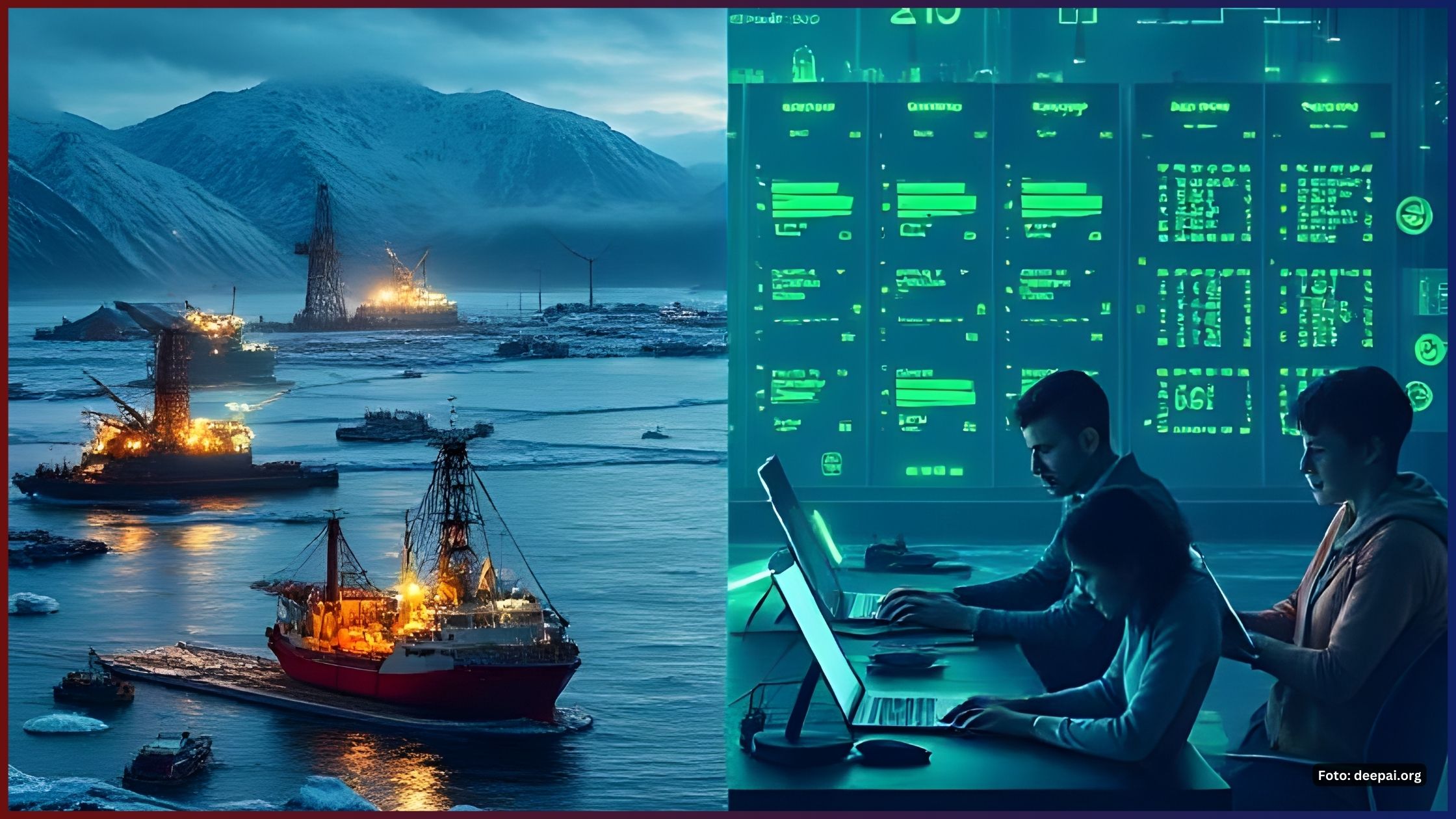
💡 Fra oljenasjon til innovasjonsnasjon?
Regjeringens nye industrimelding peker mot en grønn, digital fremtid – men får vi det til å skje?
🔍 Les denne gode analysen fra professor Tor W Andreassen som alle innovatører bør få med seg - bit.ly/3Yk9RVh
21
🏆 Hvem blir Norges kandidat til årets Nordic Innovation Award?
Til uka avsløres den norske kandidaten på Patentstyrets innovasjonsfrokost – der SINTEF, Innovasjon Norge og Patentstyret diskuterer bærekraftige innovasjoner og Norges konkurransekraft. Høyaktuelt, så bli med d ...


80 % av norske virksomheter ser potensialet i KI, men bare 1 av 5 i offentlig sektor bruker det!
Det er mye optimisme, men lite handling - hvorfor er ikke offentlig sektor i Norge i større grad med på AI-bølgen?
#KI #Digitalisering #AI #Innovasjon #NorskTeknologi

1
33
Interresante tanker fra Marc Andreessen her;

You can train an AI to be whoever you need it to be by inputting just a few bits of info.
Marc Andreessen thinks AI will make:
• Assistants
• Teachers
• Coaches
Available to everyone. But with all the extra time + technology, there's an even bigger shift for society:

1
50