




Pango retweeted

Today, we're excited to announce GLADOS-1, the first computer-use (CUA) model post-trained using collective, crowd-sourced trajectories.
Post-trained on UI-TARS-7B-SFT, we improved performance of the base model on OSWorld.

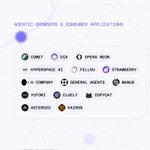
Checkout the full map and submit new companies!
pango.so/map

4
640
Consequently, we're seeing an explosion of companies building critical infrastructure - datasets, environments, developer automation - to help improve the SOTA.


1
5
831
- Increasing consumer adoption: Perplexity’s Comet & the Dia browser are quickly gaining traction as alternatives to Chrome with embedded AI in browser.
Anthropic released Claude for Browser, allowing agents to manage calendars, schedule meetings, draft email responses, handle routine expense reports, and test new website features.

1
224
- Open-source breakthroughs: ByteDance’s UI-TARS, open-sourced in April 2025, previously lead on GUI benchmarks like OSWorld. Salesforce’s GTA1 outperforms OpenAI’s agent on key tasks, while InfantAgent-Next from the University of Minnesota beats Claude in many environments.
Open-source models & agent toolkits are rapidly closing the gap.

1
1
211
This once-niche field is heating up dramatically as a convergence of factors has accelerated progress:
- Major AI labs are all-in: OpenAI, Anthropic, and Google have each released agents that can control computers.
OpenAI’s Operator books flights and fills forms. Claude’s computer use mode navigates a virtual desktop. Google’s Mariner agent pilots Chrome autonomously.

1
1
312
Last week, we published a blog surveying the computer use agent landscape.
Today, we're excited to share our interactive, live market map of the major players in the space.

This quoted post is unavailable.
To get started, all sessions in our HuggingFace datasets now contain links to the action previewer.
better ergonomics = better models = better computer use agents.
huggingface.co/datasets/chak…

3
613
While both are valuable, (1) is used to derive the quality of a trajectory while (2) is used for actual training purposes.
The problem with (1) is it requires research to download each video and manually page each of them, which is challenging at scale.
1
2
152
The Problem
When researchers interact with computer use trajectory data, they typically have two formats for the data.
1) Raw Video
2) JSON action / screenshot pairs
1
1
183


What's next?
Scaling to 100,000+ hours through 2025 across more applications to improve the SOTA in computer use.
huggingface.co/datasets/chak…

9
893
What makes it unique:
- Real longitudinal work sessions, not scripted demos
- Full interaction traces (clicks, keystrokes, screenshots, video)
- Error recovery patterns that most datasets miss
- Synthetically generated thought metadata for training reasoning models
1
6
633


