

Hibernian hasbara account.
Joined October 2022
- Tweets17K
- Following2.7K
- Followers4K
- Likes124K
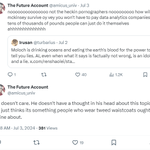




People who mocked me a few years ago for having a hysterical fear about the capabilities of text prediction engines have transitioned onto a 'worthy successor' stance. I have remained consistently fearful of and hostile to AI and have remained implacably correct as I usually am.


I have been an AI catastrophist (i. e. an uncoping believer in AI capability) for a very long time and have never had to dance around the music. AI advocates (largely coping minimisers of its capacity) however have spent recent years dancing to the bullets shot around thier feet.

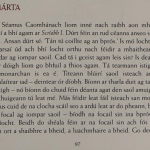
Seo an leabhar Gaeilge is cosúlaí le cíona lae Leopardi, Amiel, Pessoa srl.
Seán Ó Ríordáin, Tadhg Ó Dúshláine (eag.), Anamlón Bliana: Ó Dhialanna an Ríordánaigh (Indreabhán, 2004).


1
16
888


Leon catha ab ea an Caidhneach dar ndóigh ach mar sin féin tá rian de dhrochghnáthú náisiúnta an díomuachais ina fhocail a chuireann isteach orm.
MacKenna indulging here indulging in what to me is the most obnoxious and self-sabotaging Irish vice: addiction to spiteful despair. Most well-known twentieth century Irish writers wrote things like this, whether they were nationalists or not.
teapawt.net/turbarius/status/17073…


1
10
637
Troidimis ar son na hÉireann ionas go mbuafaidh Eoghan Rua Ó Néill an cogadh inar throid sé. Is ionann ceann-faoi a bheith ort agus a rá gur saothar in aisce a rinne ár sinsir romhainn.


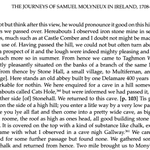
Is léir de réir theagasc an bhéaloidis go bhfuil ceangal diamhair dúrúnda éigin a nascann uaimheanna faoi leith in Éirinn le chéile.
Henry Piers, A Chorographical Description of West-Meath (1682), Collectanea de Rebus Hibernicus, Im. I, eag. Charles Vallencey (BÁC, 1786), l. 70.


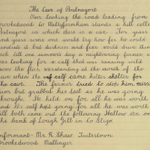
Tá tábhacht éigin ag baint chomh maith leis an ainm, 'Poll na gCat'.
Dúchas . ie, Bailiúchán na Scol, Im. 0719, l. 509.
teapawt.net/turbarius/status/17609…

The story features a number of direct Irish influences. Similar battles with magic cats are a motif in Irish literature, as well as in early Welsh sources, in which King Arthur does battle against such magic felines.
teapawt.net/CiaranMurchadha/status…


1
10
498
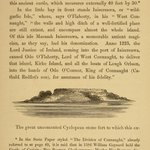
Oiléan Cairbre a ghlaoitear ar Inis Creamha anois.
W. R. Wilde, Lough Corrib: Its Shores and Islands; with notices of Lough Mask (Baile Átha Cliath, 1872).




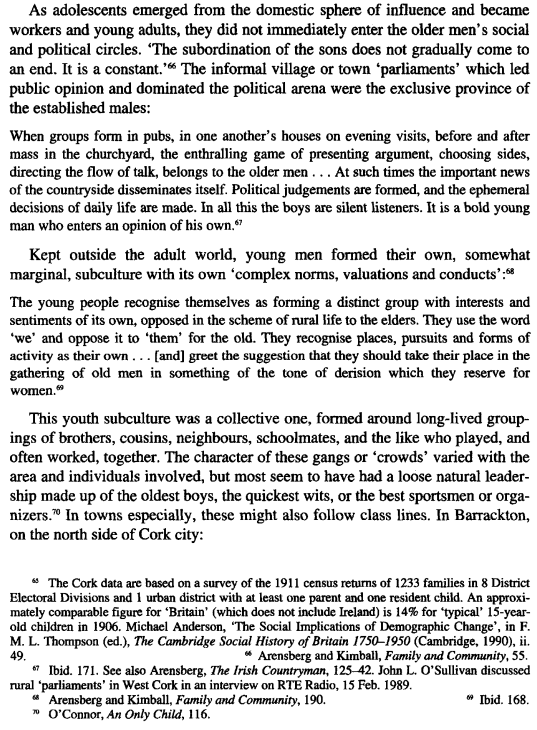
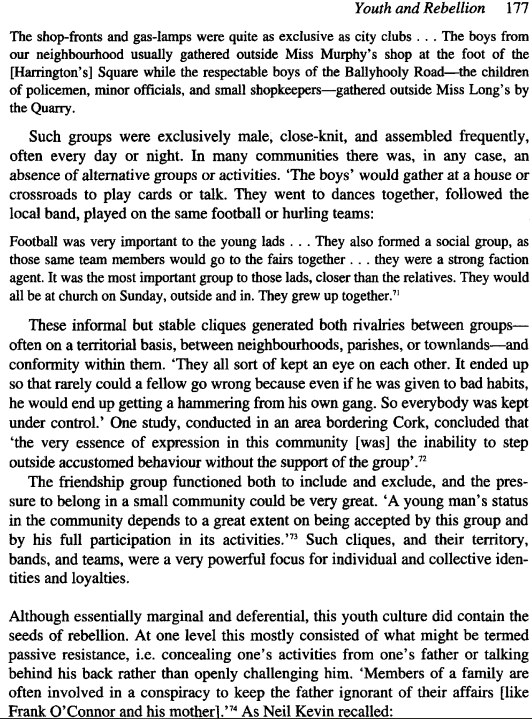
Cuireann an giota thíos seánra liteartha na scigphairliminte (Páirlement Chloinne Tomáis, Páirlimint na mBan, Páirliment na bhFíodóirí srl.) i gcuimhne dom.
Conrad Arensberg, The Irish Countryman (Baile Átha Cliath, 1968), l. 129.

I am no fan of Hart's but I am intrigued by his treatment of the IRA as a youth movement with roots in the intersection of rural mumming customs with agrarian secret organisation.
Peter Hart, The I.R.A. and its Enemies: Violence and Community in Cork, 1916–1923 (Oxford, 1998).


1
16
846
Breitheamh, ionchúisitheoir, seanadóir... Smaoiním freisin ar na Cúirteanna Éigse agus ar an seánra scigaithriseach liteartha a rinne fonóid faoin gcóras dlí gallda darbh ainm an barántas.
teapawt.net/turbarius/status/18898…


O. J. Bergin (ed.), 'Páirlement Chlainne Tomáis', Gadelica: A Journal of Modern Irish Studies, Vol. 1, No. 1 (1912), pp. 35-50.
teapawt.net/turbarius/status/17466…


1
7
401
A roughened remnant of the hospitality of the native gentry in a very dark age.
J. L. McCracken, 'The Social Structure and Social Life, 1714-60', A New History of Ireland, Vol. IV: Eighteenth-Century Ireland, 1691-1800, eds. T. W. Moody & W. E. Vaughan (Oxford, 1986), pp. 31-56.


Recalling that this is a prejudiced Anglo-Irish picture I yet admire it. A characteristic of the Gaels historically was a devotion to the heart and marrow of politeness that could survive independently of niceties including hygiene though it valued them.
teapawt.net/turbarius/status/17496…
'The Irishman, whether he be a peasant, a farm labourer, however low in the scale of Anglicization he may have sunk, is still in imagination, if not always in manner, a gentleman.'
teapawt.net/turbarius/status/16596…
I am no fan of Hart's but I am intrigued by his treatment of the IRA as a youth movement with roots in the intersection of rural mumming customs with agrarian secret organisation.
Peter Hart, The I.R.A. and its Enemies: Violence and Community in Cork, 1916–1923 (Oxford, 1998).
Whiteboys and other agrarian secret societies were associated with Strawboys from early on.
Mark Bulik, The Sons of Molly Maguire: The Irish Roots of America's First Labor War (New York, 2015).
teapawt.net/turbarius/status/16878…

The IRA as a modern political actualisation of an immemorially-ritualised Männerbund, is what this condescending mendacious canuck is suggesting.
teapawt.net/turbarius/status/17990…


The Sir Soipín tradition is certainly related to this motif-complex. The name was used for the leader of a band of Strawboys, of which the protestor above is one.
Anne O'Dowd, Straw, Hay & Rushes in Irish Folk Tradition (Dublin, 2015), p. 112-14.
teapawt.net/turbarius/status/16817…


1
10
468
Macaomh Inse Creamha is one of those obscure little folkloric characters who seem all the more hieroglyphic for being barely distinct in a jungle of symbols from a hundred other comparable figures.

T. F. O'Rahilly, 'Irish poets, historians, and judges in English documents, 1538-1615', PRIA 36C (1922), pp. 86-120, 102; Luke McInerney, 'A 1640 register of the Thomond Papers at Petworth House [with index]', Archivium Hibernicum, Vol. 74, pp. 27-134, 74. teapawt.net/turbarius/status/17555…


Let us note the career of John Garzia.
John Brady and Patrick J. Corish, A History of Irish Catholicism, Volume IV: The Church Under the Penal Code (Dublin, 1971), p. 19-21.


'Jew, Turk or Atheist may enter here, but not a Papist'.
Thomas Crofton Croker, Researches in the South of Ireland (London, 1824), p. 160.

Seventeenth-century Irish political rhetoric depicts English Puritans as being glad to welcome 'Turk, Jew, Moor and Negro' as allies in an unholy coalition against Catholics in Ireland.
Cecile O'Rahilly (ed.), Five Seventeenth-Century Political Poems (Dublin, 1952), p. 93.


I can think of one instance of a black soldier fighting alongside the English in Ireland in the 1640s. I would not be very surprised to see other indications that Ireland during the plantation era was (slightly) more 'diverse' than one might have thought.
teapawt.net/turbarius/status/18542…
I believe this is the first recorded instance of a Based Blackman employed in Loyalist service.
J. T. Gilbert (ed.), A Contemporary History of Affairs in Ireland, from 1641 to 1652, Vol. I, Pt. 1 (Dublin, 1879), p. 27.

2
36
1,160
Yarvin posted this while weeping profusely and loudly farting while he had a sore throat and was intermittently snivelling.
