
Kaos rider with a Smile, working as Engineering Manager @eventbrite | ex Engineering Manager @PacklinkEng | ex Agile Coach & Technical Manager @SoftonicEng
Joined August 2010
- Tweets2.3K
- Following637
- Followers278
- Likes2.4K




Txesk retweeted

Understanding system design helps you build better apps, even when vibe coding.
Better architecture decisions. Better AI prompts. Fewer surprises when your app grows.
So I built an interactive app to learn system design visually.
designed-to-scale.vercel.app
Txesk retweeted

I just finished talks about my software factories at two conferences. Afterwards a bunch of people came up and told me what they were surprised about. Here is a distillation of what people thought were hot takes from my two talks.
First hot take: I tell everyone to slow down. Most speakers go on about how fast they're going, but I strongly believe in pacing AI outputs to human speeds. I regularly tell AI-pilled CIOs and CTOs to chill: almost nobody is _actually_ going fast with AI. Engineering still moves at engineering speeds, and business moves even slower. The ones pushing too hard are starting to see downtime for it.
If you don't pace your AI to human speeds, everything starts breaking around you, even at small operations like my online video game. I only have about a dozen humans working with my factory, and only a few hundred active old-timer players in the community who get along well, and still, introducing AI has still been very rocky.
My agents have, at times, overwhelmed my players with features, my accountant with emails, my merge queue with tickets, and my machines with load. Agents have pissed off my admins, resulting in name-calling, they've made messes in the game, and they've launched broken OSS without permission. The list goes on.
I can get away with all this chaos because everyone involved in my operation is very forgiving. They're excited by the potential. But even so, I had to learn to slow down, real fast. And so that's what I preach.
Hot take #2: Should you buy a software factory? Do you even need one? No. You probably don't need one. Factories take an extraordinary amount of upkeep. They turn into garbage mountains unless you put a frightening amount of time and tokens into curating them. I had to burn my previous five factories down since it eventually became cheaper to rewrite them than to fix them. So I'm not out there advocating for software factories or swarms just yet. If you do want one, be aware that it is a significant commitment of both money and human leadership to keep one running.
Several people told me that I was the only one who stood up onstage, at either conference, and said Build, don't Buy. But my experience is that software factories grow to be highly bespoke to your domain. Mine is super tangled up with my game, and I think that's inevitable. Because the factory is not just building my product, it's supporting it too. It's a company in a box. And they're easy for Claude to build for you.
Third and arguably hottest take: Next year will have a lot of human/agent and agent/agent office drama, resulting from bringing in AI employees, and it will be gloriously funny, but also frustrating.
Many of you are already on this bandwagon, but everyone next year will have a personal chief-of-staff agent. Busy people, even hobbyists, will have whole entourages of helper agents. The hot take is that people will become so dependent on these little private entourages, that they'll bring them to work. Your people will talk to my people, etc. Whole protocols will emerge for private entourages negotiating work between humans, inside companies big and small.
Nearly all humans will wind up having to start working with AI employees next year, and it'll be the beginning of the biggest cultural change we've seen in a hundred years.
So that's the hot takes. Slow down. Only build a factory if you think you really need one. And focus on empowering yourself with your own agentic chief of staff (or team). Your entourage will define how you work with others, so start by perfecting how you work with them yourself.



Txesk retweeted

Una estrategia de adopción de IA tranquila. Parte 1
open.substack.com/pub/jcesar…


Txesk retweeted

bootcamp integrament en català
"Converteix-te en un programador web fullstack i endinsa't en el món laboral de la IA."
l'enhorabona @PereAyats!
capficat.cat/


Txesk retweeted

How far can you actually take AI assistance in a real dev workflow?
Free webinar this Thu 12pm CET: "AI-Powered Software Development from the Trenches"
I'll show how our team uses AI across the entire development lifecycle (not just coding) and ships every day. Will also share some thoughts about where the software engineering profession is headed.
abundly.ai/events/2026-03-26…

Txesk retweeted
Doing a retrospective with Grace. Grace is a very interesting AI agent which I'll probably talk more about later. So she is improving the platform that she is running on! It's an experiment in creating an agent with a wider role, an agent that takes a high level responsibility, handling development tasks from idea to production, interacting with the team and deciding for herself when she needs human input. She integrates with notion, github, slack, and all the same tools we human devs use. She talks to other Abundly agents (such as the Backlogger) and launches Cursor cloud agents for code analysis and implementation. The agent is inspired by Grace Hopper and has a very similar personality.

Txesk retweeted

The @GergelyOrosz podcast’ episode with @martinfowler is just amazing.
Check it out. You won’t regret it.
youtu.be/CQmI4XKTa0U

Txesk retweeted

“Meta evaluating AI fluency” is making people mad about micromanagement.
Using metrics as prompts, not targets, can solve issues and boost performance. Like DORA metrics at Adevinta, AI fluency needs clarity. Full article: world.hey.com/joaoqalves/ai-…

Txesk retweeted

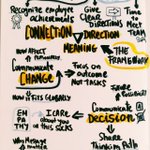
A tool for making sense of complex problems.
Rich pictures are a systems thinking tool to visualise what you know or think about a problem space — without needing a strict method, structure, or artistic skill.


Txesk retweeted

1/ El teu cervell amb ChatGPT
Un estudi del MIT revela que escriure amb IA pot debilitar l’activitat cerebral i la memòria.
Van comparar tres grups:
– Sense ajuda (només el cervell)
– Amb cercador
– Amb ChatGPT
🧵
media.mit.edu/publications/y…

Txesk retweeted
6/ Implicacions educatives:
L’ordre importa:
🔹 Si comences pensant tu i després et recolzes en IA → enriquiment
🔹 Si comences amb IA i et deixes portar → deteriorament
Txesk retweeted

En product management, forma parte esencial de tu trabajo priorizar. Elegir qué cosas hay que hacer y qué cosas NO hay que hacer.
Decir que "sí" a algo solo para no molestar a un stakeholder relevante sería fallar en tu trabajo. Recuérdate esto hasta el infinito.
Txesk retweeted

'Hopefulness is not a neutral position. It is adversarial. It is the warrior emotion that can lay waste to cynicism. Each redemptive or loving act, as small as you like – such as reading to your little boy... keeps the Devil down in the hole.'
Nick Cave.
Txesk retweeted

La Julia de Daily Catalan ha muntat un curs de català online meravellós, amb hores de classes per a tots els nivells de catalá, de zero al C2. Una sola persona fent una feina increïble que ocupa un buit institucional gegantí. Respect. dailycatalan.com/Courses?utm…