

The official Universal-Sci account - Providing you with a selection of the most interesting science-related news and background stories
Netherlands
Joined January 2015
- Tweets1.3K
- Following29
- Followers931K
- Likes41





Pinned Tweet
A Gorgeous image of HH 211, a bright region surrounding a young star, unveiling intricate details of its outflows.
The observations suggest the protostar may be part of a binary system
Credit: ESA/Webb, NASA, CSA, T. Ray (Dublin Institute for Advanced Studies)

Galaxies appear in many different forms and sizes, and spiral galaxies are among the most familiar. NGC 2985 is a beautiful example, located more than 70 million light-years from Earth in the constellation Ursa Major, the Great Bear.
(Credit: ESA/Hubble & NASA, L. Ho)

Stunning: At a distance of around 22,000 light‑years, NGC 3603 operates like a galactic assembly plant, converting swirling nebular matter into brilliant young stars.
(Credit: ESO)

Facinating: planetary nebula K 4-55 shows a bright inner ring, a faint gas layer, and a broad halo of ionized nitrogen.
The sight is bittersweet, fading fast and leaving a white dwarf in eternal darkness.
(Credit: ESA/Hubble & NASA, K. Noll)

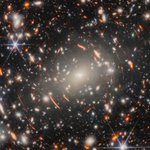
A Window into the Early Universe
Galaxy cluster Abell S1063 serves as a gravitational lens, magnifying some of the universe’s oldest galaxies dating back billions of years...
(Credit: ESA/Webb, NASA & CSA, H. Atek, M. Zamani (ESA/Webb)/Acknowledgement: R. Endsley)

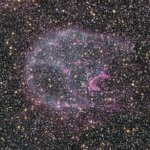
The Gorgeous Subtle Afterglow of a Nearby Stellar Explosion, known as N132D, set against a breathtaking backdrop of thousands of stars in the Large Magellanic Cloud, a neighbouring galaxy.
(Credit: X-ray: NASA/SAO/CXC; Optical: NASA, ESA, Hubble Heritage Team (STScI/AURA))

This breathtaking image from NASA’s Juno spacecraft reveals the colourful, intricate patterns of Jet N3, a jet stream in Jupiter’s northern hemisphere.
(Credit: NASA/JPL-Caltech/SwRI/MSSS)

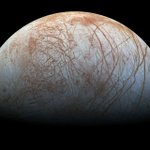
Stunning: The frozen, fissured surface of Jupiter's moon Europa...
(Credit: NASA Jet Propulsion Lab, Caltech, SETI Institute)

Some Star Systems Have Seven Stars. How Do They Hold Together?
universal-sci.com/headlines/…

Enthralling: The Eagle Nebula (M16), a star-forming haven in Serpens, features the awe-inspiring Pillars of Creation and a celestial crowd of stars in all stages of life.
Credit: ESO/M.McCaughrean & M.Andersen (AIP)

The Sun Has No Solid Surface.
So What Are We Actually Seeing? universal-sci.com/headlines/…

Your Power Nap Could Be Backfiring.
Here’s Why Timing Matters: universal-sci.com/headlines/…

An amazing view of the wonderous Dun Briste sea stack...
Dun Briste provides us with a rare glimpse of the Carboniferous. (A 60-million-year-long period lasting from about 359 million to 299 million years ago)

Captured in remarkable detail, NGC 4941 lies 67 million light-years away, its structure driven by star-forming regions and the energetic influence of a central black hole.
(Credit: ESA/Hubble & NASA, D. Thilker)

NGC 6334, better known as the Cat’s Paw Nebula, resides in Scorpius.
It looks close to the Milky Way’s center, yet sits only about 5,500 light-years from us.
(Credit: ESO/R. Gendler & R.M. Hannahoe)

Scientists Discovered a Fascinating New Way to Search for Alien Life: universal-sci.com/article/sc…

Stunning: One of the Milky Way's nearby neighbours, NGC 346!
Thanks to its proximity, it is one of only a few galaxies that can be seen from Earth without a telescope from the the southern hemisphere.
Credit: ESA/Hubble & NASA, C. Murray, N. Bartmann (ESA/Hubble)
Fascinating: In the dense Hydra I cluster, spiral galaxy NGC 3312 is undergoing ram pressure stripping - its gas peeled away by hot intergalactic winds, trailing behind like the tendrils of a jellyfish
(Credit: ESO/INAF/M. Spavone, E. Iodice)

NGC 1651, a luminous star cluster in the Large Magellanic Cloud, lies 162,000 light-years away and stretches 120 light-years across this cosmic canvas.
(Credit: ESA/Hubble & NASA, L. Girardi, F. Niederhofer)

Despite its peaceful name, the Atoms for Peace galaxy (NGC 7252) is the product of a massive cosmic clash - two galaxies merging in a violent event roughly one billion years in the past.
Credit: NASA & ESA, Acknowledgement: Judy Schmidt (Geckzilla)

