

A University of Sydney brain donor program
Joined November 2021
- Tweets57
- Following106
- Followers28
- Likes88
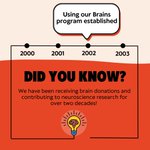





The Using our Brains donor program was established in 2002. Follow us here to learn more about our research, team and history. 🧠

13
Using our Brains retweeted

Brain Coupling May Predict Psychosis
Researchers discovered that individuals with the 22q11.2DS genetic deletion exhibit unique patterns in brain structure and activity, potentially predicting their risk of psychosis.
By studying brain "coupling" from childhood through adulthood, scientists found that abnormal connectivity in specific brain regions is linked to schizophrenia in this population.
These findings could lead to the identification of reliable markers for assessing psychosis risk, enhancing early diagnosis and intervention.
This innovative research combines structural and functional brain analysis to advance understanding of psychiatric disorders.
1/3

ALT This shows two brains.
Using our Brains retweeted

🧠 Have you ever thought about donating your #brain to #science?
Director of the @Sydney_Uni Brain Bank's Greg Sutherland explains how and why to consider it.
Here's more on how your brain might be used 👇 buff.ly/4cV6DMN


This recent article exploring brain donation in the US is an insightful read to anyone considering becoming a donor or wanting to learn more about the process. It follows the journey of a recent brain donor and his family during the final days of his life. nytimes.com/2024/07/06/healt…

13
Using our Brains retweeted

Join me in celebrating 100 years of EEG, please retweet!
On July 6th, 1924 Hans Berger recorded the first EEG on a human, only published in 1929. This invention of the EEG has resulted in many clinical applications ranging from diagnosing epilepsy and sleep disorders to Brain Machine Interfaces (BMI/BCI), neurofeedback and EEG as the first clinically actionable biomarker in precision and stratified psychiatry.
What's your favorite application of EEG?
See the full series 'Pioneers of the EEG' here: brainclinics.com/pioneers-of… also in Spanish.
According to the Australian Burden of Disease Study 2023, mental health conditions and substance use disorders were the second leading cause of ill-health and premature death among Australians. This reinforces the vital need for continued research into these areas.

25


Using our Brains retweeted

Good morning from the Charles Perkins Centre on a beautiful Winter's break of day

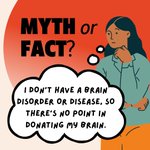
Did you know that healthy brain donors are just as important for research as those affected by brain disorders and diseases?


21
Today marks the start of National Reconciliation Week. This year's theme, "Now More Than Ever", is a reminder to all of us of the continuing fight for justice and the rights of Aboriginal and Torres Strait Islander people.

23
Using our Brains retweeted

Researchers have generated a nanoscale-resolution reconstruction of a millimeter-scale fragment of human cerebral cortex, giving an unprecedented view into the structural organization of brain tissue at the supracellular, cellular, and subcellular levels. scim.ag/75L

World Schizophrenia Day aims to raise awareness of and challenge the stigma surrounding the mental health condition. Continued research efforts are imperative to further our understanding of the disorder. #worldschizophreniaday2024


67


The Using our Brains donor program enrols brain donors from across NSW to support research into a range of brain disorders.
Here’s some key information about the program.


30
This time last week, UoB team member Caine graduated from his PhD here at the University of Sydney. The rest of the team were there to help celebrate his achievement. Congratulations Dr Smith from a very proud team!


Using our Brains retweeted

Did you know alcohol affects mental health?
Alcohol makes it more difficult for your body and mind to process stress. If you drink alcohol, cutting back can improve your mood and energy levels, help you get a better night’s sleep and reduce feelings of stress.

A great day for raising awareness about brain donation at the @City2SurfSydney yesterday.


Using our Brains retweeted
An important event from our friends @Sydney_Ideas with @DrMelodyDing @jenniferleekent & Prof Steve Simpson @eatlikeanimals

Is #loneliness the next public health epidemic?🫀 @CPC_usyd researcher @DrMelodyDing will take us through the trends & population data in a fascinating talk.
👉Register: bit.ly/3JLFaBg
#Sydneyideas @syd_health

ALT Greyscale image of a crowd from overhead.
A blood clotting cell from an Estuarine Crocodile side by side with Baayami and Gurriya, a painting by Arkeria Rose Armstrong depicting the story of Baayami (Spirit Father) and Gurriya, the crocodile. Up in @CPC_usyd for NAIDOC week (and hopefully beyond) along with many others!
