





U S Adano retweeted

Weird to read this as I am on a plane flying back from Sudan after spending days sitting in IDP camps talking to people about how this “new” US approach to humanitarian aid is working out.
Rubio’s claim is “unequivocally” garbage.
Let me share some of what I heard:
🧵

U S Adano retweeted

It is a basic principle of American democracy that the government can’t selectively target individuals simply because of their political beliefs or what they say. But that’s exactly what the Trump Administration is doing to Congresswoman Ilhan Omar of Minnesota.
To understand why this is so appalling, it’s important to know the facts. Congresswoman Omar came to this country with her father when she was 12 years old. Five years later, her father became a naturalized citizen. If Ilhan had been 18 at the time, she would have had to apply for citizenship separately. But because she was 17, she became a naturalized citizen automatically.
Congresswoman Omar went on to graduate from college, work as a community organizer, become the first Somali-American legislator elected to public office in the U.S., and win a seat in Congress. There, she has been one of the Trump Administration’s fiercest critics, which has led the president to repeatedly single her out as someone who he believes does not belong in this country.
Now the Administration is actively trying to deport Congresswoman Omar, seemingly based solely on the unsubstantiated theory that she was actually 18 when her father was naturalized, and therefore is not a citizen. Federal agents have raided her home, confiscated personal records, and seized her phone — all to try and uncover a nonexistent smoking gun from 20 years ago that will somehow make their case.
Think about that. The full weight of the federal government is being brought down on a law-abiding elected official because she has dared to criticize the president. And it’s not the first time this has happened. Under President Trump, the Justice Department has repeatedly gone after those he considers his political enemies — from the Attorney General of New York, to the former head of the FBI, to members of the Federal Reserve.
In those cases, the prosecutions either stalled or were dismissed for having no basis in law, and the same is likely to happen in this case. But not before Congresswoman Omar’s life has been turned upside down, her legal bills have piled up, and she’s been forced to spend time fighting unsubstantiated charges instead of serving the people of Minnesota.
The fact that any president, or any administration, is willing to engage in such transparent efforts to intimidate someone should outrage all Americans, regardless of how they feel about Congresswoman Omar’s political views. Because if this becomes the new normal, there’s no reason to believe it will stop with her — or that future presidents, in either party, won’t do the same.
U S Adano retweeted
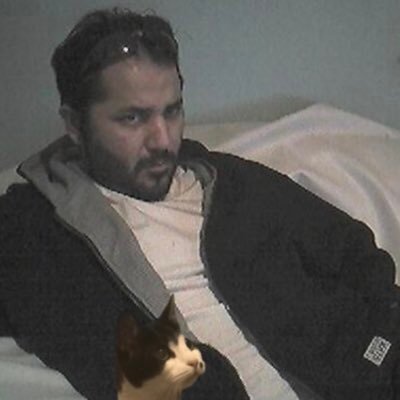
Cooper: I've seen governments and dictators rise and fall, people and places torn apart by lies and hate and war. And I've seen people do things and heard them say things that I could never have imagined. I've seen what we humans are capable of when everything else is stripped away. Yes, great acts of barbarism and brutality. But we are also capable of remarkable acts of heroism and kindness. It's a choice, and the choice is up to us
Let's hope 50 years from now, someone standing here or somewhere on the eve of the 300th anniversary of this republic will look back and say of us: they didn’t know if they would make it through but they did.
U S Adano retweeted

Starting in early 2025, Elon Musk and the Trump administration began terminating USAID's programs and firing its staff — with Musk himself boasting about "feeding it into the woodchipper." One year ago today, USAID was officially dissolved, its remaining programs haphazardly folded into the State Department. Amid all the lies and misinformation that have followed, some facts about what has actually been lost:
• USAID saved more than 3 million lives a year at a cost of less than $10/month per American. That is what was destroyed. On purpose.
• According to Boston University's Global Impact Counter — which tracked deaths attributable to the cuts until it stopped operations in February 2026 — an estimated 781,000 people died preventable deaths in the first year, including 518,000 children.
• Global child mortality (the number of children who die before their fifth birthday) rose in 2025 for the first time in 35+ years — by 200,000 additional deaths.
• USAID's 50-country disease surveillance network — the system that cut outbreak response times from 2 weeks to 48 hours — is gone. We are now watching an unprecedented Ebola outbreak unfold in real time — with the highest first-month caseload and death rate in modern history.
• Programs reaching 93 million women and children were cut 92%. TB programs cut 56%. Water and sanitation cut 86%. Over 2,000 health facilities permanently closed.
• 25 million fewer people received humanitarian assistance in 2025. The overall humanitarian budget was slashed 74% — from $14.1 billion to $3.7 billion.
• 363 million people face acute hunger in 2026. The famine early-warning system that would have seen it coming went dark for five months.
• $1.7 billion in democracy and governance funding (election monitoring, anti-corruption work, support for independent media and civil society) was terminated.
• 360+ independent media outlets lost funding. Hundreds of legal clinics closed.
• Far from saving money, the Trump administration itself has already said the dismantlement will cost taxpayers at least $19.2 billion in cancellation fees, severance, and penalties. That's more than half of USAID's annual budget — spent on destruction and closeout, not support for vulnerable people.
• American farmers, universities, and businesses are among the casualties too. USAID partnered with more than 3,500 U.S. companies and maintained 17 university-based research labs. Its work with U.S.-based contractors and the private sector generated hundreds of thousands of American jobs and multiplied the return on every dollar spent. Those markets and partnerships are gone.
U S Adano retweeted

"It was not an easy childhood."
Omar Yaghi, whose parents were from Palestine, grew up in a refugee family of ten children, in a home with no running water and no electricity.
Last year he was awarded the Nobel Prize in Chemistry for developing cage-like molecules that can capture and release smaller substances, like water.
#WorldRefugeeDay #WithRefugees
U S Adano retweeted

These are the days when you realize why Northern Kenya needs its own strong media platforms. If you don’t tell your story, someone else will tell it for you and usually through a lens of ignorance, stereotypes, and political convenience.
U S Adano retweeted

WATCH: The Adolla sub-clan of the Garee has endorsed Abukar Abdirahman, a U.S.-based financial expert, as their preferred candidate for the Mandera gubernatorial seat in the 2027 elections.
U S Adano retweeted
Marsabit residents sue British multinational BP, Kenyan government | Daily Nation.
Long overdue…this tragedy has been hiding in plain sight for decades now and the impacted communities deserve justice. nation.africa/kenya/counties…

U S Adano retweeted

An amazing read. I found myself relating to so many of the experiences,particularly because we share the same nomadic background and community. Thank you for this @usadano


U S Adano retweeted

Bulle Ni MTU Wa vako. Shauri yako uki Amini.
Anyhow, get a copy of Sunday Nation and read our interview with John Fox

The inspiring work of Nuria Bookstore in Nairobi, Kenya, and its founder, Abdullahi Bulle.
In a world where international books dominate shelves, Nuria stands out by amplifying Kenyan and African stories fostering pride in local literature, supporting emerging talent, and preserving cultural narratives. It's not just a bookstore; it's a cultural ecosystem.
@AbdullahiBulle @NationAfrica

U S Adano retweeted

In Malgis, Northern Kenya, one Acacia tree holds a thousand journeys.
Before maps. Before road signs.
This lone acacia was the meeting point.
Livestock still rest here.
Travellers still pause here.
Stories still pass under its shade.
As the great Isiolo-Marsabit Highway cuts past, the tree remains….quiet, rooted, and remembered.
📍 Malgīs, Northern Kenya #TellingOurStoriesWay
#PastoralistStories
Music Courtesy of Adiken
U S Adano retweeted

A Child of Two Worlds: My Journey from Camel Camp to the Carolinas by Ummuro S. Adano
Memoir that weaves the tapestry of Gabra traditions and modern life. With vivid storytelling, it’s a tribute to identity, resilience, and cultural legacy.
nuriakenya.com/product/a-chi…
KShs2,890.00

U S Adano retweeted
A Child of Two Worlds: My Journey from Camel Camp to the Carolinas by Ummuro S. Adano
Memoir that weaves the tapestry of Gabra traditions and modern life. With vivid storytelling, it’s a tribute to identity, resilience, and cultural legacy.
nuriakenya.com/product/a-chi…
KShs2,890.00
U S Adano retweeted
From Camel Camp to the Carolinas: Umuro Sora Adano Launches Memoir in Nairobi pntvafrica.com/articles/top-… @usadano
U S Adano retweeted
Wonderful day attending the Nairobi launch of “A Child of Two Worlds: From the Camel Camp to the Carolinas” by @usadano
As the back page notes, reading it “feels like sitting across from a wise storyteller… one who has lived through the dust, silence, and storms of the desert,


U S Adano retweeted

I petition the office of the @ODPP_KE to expedite these files...places like MARSABIT and GARISSA have been the citadels of GRAND CORRUPTION. @EACCKenya
U S Adano retweeted
PNTV Africa produced this video in Torbi, Marsabit County.
The Tawakaltu Women’s Group feared SILC at first because ribaa (interest) goes against their faith.
But once they learned SILC is interest-free, they embraced it.
SILC is a simple community savings system where members save together and access small loans from their own pooled money, helping families start businesses, handle emergencies, and grow financially.
At PNTV Africa we remain committed to documenting stories of resilience and community transformation across the pastoralist regions.
Watch how this model is transforming lives in Torbi.
#PNTVAfrica #USAIDNawiri #SILC #WomenInASAL
U S Adano retweeted

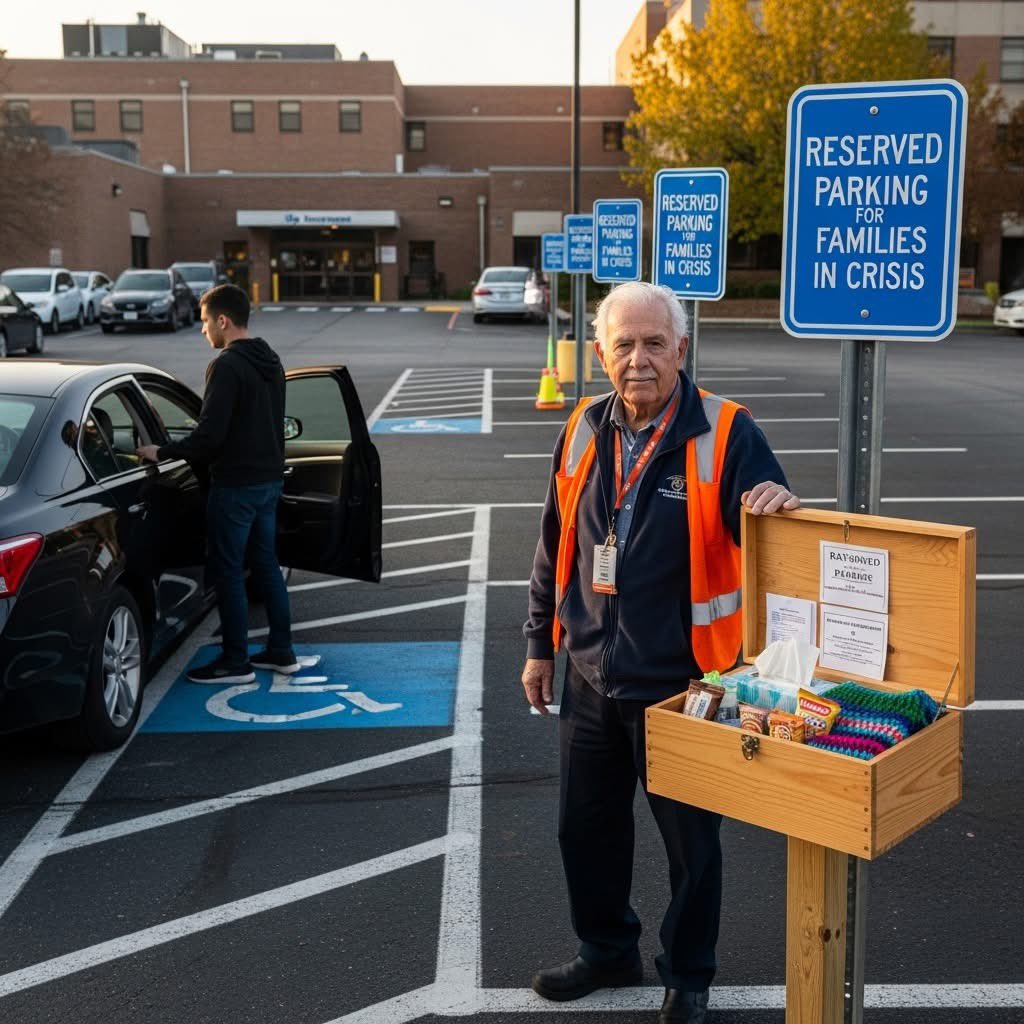
"My name's Raymond. I'm 73. I work the parking lot at St. Joseph's Hospital. Minimum wage, orange vest, a whistle I barely use. Most people don't even look at me. I'm just the old man waving cars into spaces.
But I see everything.
Like the black sedan that circled the lot every morning at 6 a.m. for three weeks. Young man driving, grandmother in the passenger seat. Chemotherapy, I figured. He'd drop her at the entrance, then spend 20 minutes hunting for parking, missing her appointments.
One morning, I stopped him. "What time tomorrow?"
"6:15," he said, confused.
"Space A-7 will be empty. I'll save it."
He blinked. "You... you can do that?"
"I can now," I said.
Next morning, I stood in A-7, holding my ground as cars circled angrily. When his sedan pulled up, I moved. He rolled down his window, speechless. "Why?"
"Because she needs you in there with her," I said. "Not out here stressing."
He cried. Right there in the parking lot.
Word spread quietly. A father with a sick baby asked if I could help. A woman visiting her dying husband. I started arriving at 5 a.m., notebook in hand, tracking who needed what. Saved spots became sacred. People stopped honking. They waited. Because they knew someone else was fighting something bigger than traffic.
But here's what changed everything, A businessman in a Mercedes screamed at me one morning. "I'm not sick! I need that spot for a meeting!"
"Then walk," I said calmly. "That space is for someone whose hands are shaking too hard to grip a steering wheel."
He sped off, furious. But a woman behind him got out of her car and hugged me. "My son has leukemia," she sobbed. "Thank you for seeing us."
The hospital tried to stop me. "Liability issues," they said. But then families started writing letters. Dozens. "Raymond made the worst days bearable." "He gave us one less thing to break over."
Last month, they made it official. "Reserved Parking for Families in Crisis." Ten spots, marked with blue signs. And they asked me to manage it.
But the best part? A man I'd helped two years ago, his mother survived, came back. He's a carpenter. Built a small wooden box, mounted it by the reserved spaces. Inside? Prayer cards, tissues, breath mints, and a note,
"Take what you need. You're not alone. -Raymond & Friends"
People leave things now. Granola bars. Phone chargers. Yesterday, someone left a hand-knitted blanket.
I'm 73. I direct traffic in a hospital parking lot. But I've learned this: Healing doesn't just happen in operating rooms. Sometimes it starts in a parking space. When someone says, "I see your crisis. Let me carry this one small piece."
So pay attention. At the grocery checkout, the coffee line, wherever you are. Someone's drowning in the little things while fighting the big ones.
Hold a door. Save a spot. Carry the weight no one else sees.
It's not glamorous. But it's everything."
Let this story reach more hearts....
Credit: Mary Nelson
U S Adano retweeted

A message from a Kindergarten teacher:
After forty years in the classroom, my career ended with one small sentence from a six-year-old:
“My dad says people like you don’t matter anymore.”
No sneer. No malice. Just quiet honesty — the kind that cuts deeper because it’s innocent. He blinked, then added, “You don’t even have a TikTok.”
My name is Mrs. Clara Holt, and for four decades, I taught kindergarten in a small Denver suburb. Today, I stacked the last box on my desk and locked the door behind me.
When I started teaching in the early 1980s, it felt like a promise — a shared belief that what we did mattered. We weren’t rich, but we were valued. Parents brought warm cookies to parent nights. Kids gave you handmade cards with hearts that didn’t quite line up. Watching a child sound out their first sentence felt like magic.
But that world slowly slipped away. The job I once knew has been replaced by exhaustion, red tape, and a kind of loneliness I can’t quite describe.
My evenings used to be filled with construction paper, glitter, and glue sticks. Now they’re spent filling out digital reports to protect myself from angry emails or lawsuits. I’ve been yelled at by parents in front of twenty-five children — one filming me with his phone while I tried to calm another child mid-meltdown.
And the kids… they’ve changed too. Not by choice.
They arrive tired, anxious, overstimulated. Their tiny fingers know how to swipe a screen before they can hold a crayon. Some can’t make eye contact or wait in line. We’re expected to fix all of it — to patch the gaps, heal the trauma, teach the curriculum, and document every move — in six hours a day, with resources that barely fill a drawer.
The little reading corner I once built, full of soft beanbags and paper stars, was replaced by data charts and “learning metrics.” A young principal once told me, “Clara, maybe you’re too nurturing. The district wants measurable results.”
As if kindness were a weakness.
Still, I stayed. Because of the small, holy moments that no spreadsheet could measure —
a whisper of, “You remind me of my grandma.”
a shaky note that read, “I feel safe here.”
a quiet boy finally meeting my eyes and saying, “I read the whole page.”
Those tiny sparks were my reason to keep showing up.
But this last year broke something in me.
The aggression grew sharper. The laughter in the staff room turned to silence. The light went out of so many eyes. I watched brilliant teachers — my friends — vanish under the weight of burnout, their joy replaced by survival.
I felt myself fading too, like chalk on a board that’s been wiped one too many times.
So today, I began my goodbye. I pulled faded art off the walls and tucked thirty years of handmade cards into a single box. In the back of a drawer, I found a letter from a student from 1998:
“Thank you for loving me when I was hard to love.”
I sat on the floor and cried.
No party. No applause. Just a handshake from a young principal who called me “Ma’am” while checking his notifications.
I left my rocking chair behind, and my sticker box too. What I carried with me were the memories — the faces of hundreds of children who once trusted me enough to reach out their hands and learn. That can’t be uploaded. It can’t be measured. It can’t be replaced.
I miss when teachers were partners, not targets. When parents and educators worked side by side, not in opposition. When schools cared more about wonder than numbers.
So if you know a teacher — any teacher — thank them. Not with a mug or a gift card, but with your words. With your respect. With your understanding that behind every test score is a heart that cared enough to try.
Because in a world that often overlooks them, teachers are the ones who never forget our children.
U S Adano retweeted
A Child of Two Worlds: My Journey from Camel Camp to the Carolinas by Ummuro S. Adano
Memoir that weaves the tapestry of Gabra traditions and modern life. With vivid storytelling, it’s a tribute to identity, resilience, and cultural legacy.
nuriakenya.com/product/a-chi…
KShs2,890.00
