
Research Scientist at @GoogleDeepMind. Better LLMs for healthcare and science. PhD @DTU_compute
Toronto, Canada
Joined December 2014
- Tweets221
- Following801
- Followers1.4K
- Likes1.5K





Pinned Tweet
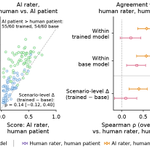
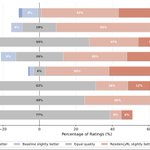
Simulation is the training ground for clinical AI, but the evidence has to come from clinicians, and eventually from patients. In our new preprint, we extend ResidencyRL to psychiatry: trained only against simulated patients, the agent was preferred over its identically prompted base model in 76.7% of scenario pairs in a double-blind, psychiatrist-enacted OSCE.
📃arxiv.org/abs/2610.40476

Valentin Liévin retweeted

Today, we’re announcing Gemini for healthcare.
This newest addition to our suite of purpose-built industry solutions extends the Gemini agent to health systems and health plans.
Learn more → goo.gle/4zf0s11
Valentin Liévin retweeted

Gemini for Healthcare!

Today, we’re announcing Gemini for healthcare.
This newest addition to our suite of purpose-built industry solutions extends the Gemini agent to health systems and health plans.
Learn more → goo.gle/4zf0s11
Valentin Liévin retweeted

I’m hiring a Student Researcher at
@GoogleDeepMind.
I am looking for PhD students working on multi-agent organization, open-endedness, or self-improvement.
📍 Location: Toronto
🗓️ Duration: 6 months, 100%
🚀 Start date: Jan 2027
Apply now using the links below👇
Valentin Liévin retweeted

In psychiatry, conversation is central to diagnosis. Yet with mental health care constrained worldwide, tools that support front-line clinicians are urgently needed.
Valentin Liévin retweeted

Access to high-quality psychiatric care remains out of reach for far too many people. Could AI play a role in closing that gap?
In new research, our team trained AI agents with reinforcement learning (RL) with simulated patients to conduct psychiatric assessments.
Psychiatric evaluation isn't simple Q&A. It requires sustained interaction: eliciting information, prompting reflection, forming and refining clinical hypotheses, recognizing risks, and adapting the conversation as new information emerges.
Four key takeaways:
1. Learning through dynamic interaction. Rather than just learning static answers, the agent used RL in simulated encounters to practice iterative information gathering, clinical reasoning, and patient-centered communication as the dialogue evolved.
2. Sim-to-human transfer. Crucially, improvements transferred beyond simulation. In a randomized, double-blind study involving psychiatrists role-playing patients, with independent psychiatrists evaluating the conversations, our RL-trained agent outperformed its base AI model in differential diagnosis appropriateness (68.3% vs. 33.3%) and patient-centered communication (82.0% vs. 65.2%).
3. Safety across trajectories. In healthcare, failing to probe a risk can be as dangerous as giving incorrect advice. In adversarial simulations, acute risk under-triage dropped from 30.5% to 12.9%. Safety isn't just about individual responses, but what happens throughout an interaction.
4. The simulation evaluation gap. LLM-based evaluations captured the overall direction of improvement but overestimated the magnitude of gains compared with human evaluations. Understanding where simulation predicts human-evaluated performance—and where it doesn't—is an important research challenge.
The bigger picture: This approach points toward a scalable way to train agents for high-stakes, interactive domains without relying on trial and error with real people. What an agent learns depends not just on what it knows, but on what it asks, how it asks, and how people respond.
An important caveat: These are early research findings, not real-world clinical trials. The human evaluations involved psychiatrists portraying patients, not actual patients. This is evidence of simulation-to-human interaction transfer, not readiness for independent clinical deployment.
Still, it's an exciting step toward AI that learns to interact more effectively and responsibly—and a future where high-quality care is more accessible.
Congratulations to the team.
Paper: arxiv.org/abs/2610.40476


Valentin Liévin retweeted
When we introduced ResidencyRL (arxiv.org/abs/2608.07418), our goal was to train clinical agents through multi-turn practice in simulation rather than static QA.
Psychiatry is a good stress test for this paradigm: the interview is the diagnostic instrument, and critical history only emerges once rapport is built. Exciting to see skills learned purely in simulation transfer to double-blind OSCEs with 32 role-playing psychiatrists—nearly doubling diagnostic appropriateness (33% → 68%) by learning how to ask better questions.


Simulation is the training ground for clinical AI, but the evidence has to come from clinicians, and eventually from patients. In our new preprint, we extend ResidencyRL to psychiatry: trained only against simulated patients, the agent was preferred over its identically prompted base model in 76.7% of scenario pairs in a double-blind, psychiatrist-enacted OSCE.
📃arxiv.org/abs/2610.40476
🚨 New preprint: Training language models in simulation for psychiatric intake
Special thanks to @SRSchmidgall for driving this work as first author, to Isaac Galatzer-Levy and David Racz for co-leading this effort, and to the many clinicians who shaped the taxonomies and role-played, graded and validated scenarios. Many more thanks to @taotu831, Lin Yang, @timstro, Alex Bijamov, @minwsun, @apalepu13, @AkshayGoelMD, Ulysse Marteau-Ferey, @TheoMoutakanni, @ybkim95_ai, @breda_joe, Christina Chen, Justin Chen, Paul Jhun, Andrew Marshall, Sarah Montgomery-Taylor, Eun Kyoung Hong, Shashank Ravi, Kameron C. Black, David J. H. Wu, Austin Schoeffler, John Lyon Havlik, Elizabeth C. Stade, Jared Moore, @jeichstaedt, Logan Pierce, Jeff Jopling, @drjthrul, Thomas H. McCoy, Neguine Rezaii, Mark S. Chen, @EFitzCraft, @ShirleyBWang, @desmond_c_ong, Katharina Schultebraucks, Torrey Creed, Bhavna Daryani, @aleksandrafaust, @SaraM66905, Caroline Figueroa, Eric Lin, Kate H. Bentley, Ernest Lim, Zhihan Jiang, @Orson_Xu, @danmcduff, @JohnTorousMD, Yun Liu, @cameronphchen, @hardyshakerman, @alvinrajkomar, and @joelle_barral.
1
5
414
This work was a massive collaboration across institutions, including @GoogleDeepMind @GoogleResearch @GoogleForHealth and many academic partners across Harvard, Stanford, UCLA, UCSF, Johns Hopkins, Penn, Yale, Columbia, NYU, WashU & UT Austin!
Preprint: “Training language models in simulation for psychiatric intake”
arXiv: arxiv.org/abs/2610.40476
AlphaXiv: alphaxiv.org/abs/2610.40476
1
4
86
Valentin Liévin retweeted

Excited to announce Gemini 4 Carbon, our next frontier model which is a step up from Argon across all capabilities! The benchmarks don't tell the full story -- we have been using it internally and it's been an upgrade for us.

I did say we'd be releasing our models periodically...introducing Gemini 4 Carbon, our next frontier model.
Following Argon's release just two weeks ago, Carbon shows the pace at which we’re pushing the frontier, it ranks #1 on the recently updated v5.0 of @ArtificialAnlys Intelligence Index at 59. It also leads across key cybersecurity evaluations scoring 88.2% on SEC-bench Pro for finding vulnerabilities, 54.8% on ExploitGym for exploitation, and 71.0% on CWE-bench for patching.
We’re seeing significant improvements in long-horizon tasks even compared to Argon, and we’ve strengthened frontier safeguards.
As we did with Argon, we’re going to roll it out gradually + responsibly. Some trusted cyber defenders will get access starting this week. We'll be expanding it to more partners through our Fairwind Program, ahead of wider availability soon, so hang tight!

Valentin Liévin retweeted

Thrilled to share that our research testing AMIE—our conversational medical AI @Google—in the real world at @BIDMC_Medicine is now published in @TheLancet!
Announcement: blog.google/innovation-and-a…
Lancet Publication:goo.gle/4i7Fx9N
NYT Article: nytimes.com/2026/10/08/techn…
AMIE: goo.gle/amie

Valentin Liévin retweeted

@EricTopol beat me to the punch! 💙
New prospective study by @Google + @BIDMC_Medicine on medical AI, for the first time, with real patients: research.google/blog/explori…
@GoogleResearch @GoogleDeepMind @BIDMChealth
@PeterBrodeurMD JacobKoshy @apalepu13 @alan_karthi @AdamRodmanMD


Comparison of AI and primary care physicians for 100 patients in a prospective real-world assessment
—The physicians outperformed AI [AIME] for practicality and cost-effectiveness
—AI was comparable for diagnosis, management plan, appropriateness and safety
@AdamRodmanMD @alan_karthi @PeterBrodeurMD @googledeepmind arxiv.org/abs/2603.08448v1

Valentin Liévin retweeted
AMIE has reached a significant research milestone. The first-of-its-kind study of a patient-facing conversational diagnostic tool in a real-world clinical setting is now in @TheLancet, marking @Google’s first publication in one of the world’s highest-impact medical journals.