VALIS is an immersive studio that deploys emergent tech to create new forms of storytelling. UTFT.
Los Angeles, CA
Joined February 2016
- Tweets450
- Following3.3K
- Followers618
- Likes11.7K





VALIS Studio retweeted

the first 48 hours of Woke 2 has already produced more humor than the entire decade of Woke 1


VALIS Studio retweeted

this performance on Later was the first time i'd heard the band, their sound was just so fresh and different and i was just blown away, I went out and bought Dummy straight after 🔥
Portishead - Wandering Star (Jools Holland 1994) ▶️

VALIS Studio retweeted

Ordinary Abundance. This is the greatest thing I've read in weeks. No kidding. This should win a Pulitzer in a category not yet invented. ordinaryabundance.com/

VALIS Studio retweeted

If you're under 53 years old, you have never once been alive while a human was farther than 250 miles from Earth. Tonight, four astronauts are heading 252,000 miles out. That's a thousand times farther than any person has gone in your lifetime.
The 250-mile ceiling is where the International Space Station floats. Every astronaut since December 1972 has been stuck in that zone. Spacewalks, science experiments, cool photos from orbit, sure. But nobody left the neighborhood.
The last crew to go farther was Apollo 17. December 1972. Nixon was president. The internet didn't exist. Cell phones were 11 years away. The youngest member of that crew is now 90 years old.
The farthest any human has ever been from Earth is 248,655 miles. The Apollo 13 crew set that number in 1970, and they didn't mean to. Their oxygen tank blew up, and the emergency route home took them farther out than anyone before or since. Tonight's crew will break that record on purpose.
And the crew itself. Victor Glover becomes the first Black astronaut to leave Earth's neighborhood. Christina Koch becomes the first woman. Jeremy Hansen, a Canadian fighter pilot, becomes the first non-American to do so. When they come home, they'll slam into the atmosphere at 25,000 mph, faster than any human has ever traveled.
The Moon's south pole has ice. Water ice, sitting in craters so deep that sunlight hasn't hit them in billions of years. A 2024 NASA study found way more of it than anyone expected. You can split water into hydrogen and oxygen, which gives you rocket fuel, breathable air, and drinking water, all made on the Moon instead of hauled up from Earth. George Sowers at Colorado School of Mines calculated that Moon-made fuel could shave $12 billion off a single trip to Mars. The Moon is a gas station on the road to Mars.
NASA Administrator Jared Isaacman announced last week a $20 billion plan to build a permanent base at the South Pole over the next seven years, with landings every six months. China is developing its own lunar lander and spacesuit, aiming for a crewed landing by 2030. The Artemis program has burned through $93 billion so far, and the first actual surface landing is penciled in for 2028. There's a real question of who gets there first this time around.
Harrison Schmitt walked on the Moon in December 1972 as part of Apollo 17. He's 90. Asked about it this week, he sounded pretty relaxed. "Mars is attainable," he said. "We're humans. That's what we've always done."

We're going around the Moon. Come watch with us. Artemis II's four-astronaut crew is lifting off from @NASAKennedy on an approximately 10-day mission that will bring us closer to living on the Moon and Mars. The launch window opens at 6:24pm ET (2224 UTC). teapawt.net/i/broadcasts/1jxXgeyMk…

VALIS Studio retweeted

JUST IN: Meta announces they'll be shutting down the Metaverse, after pouring $80,000,000,000.00 into the project.

VALIS Studio retweeted

Emotions that don't exist in English:
Sonder (German)
The realization that every stranger you pass has a life as vivid and complex as your own
Mono no aware (Japanese)
The gentle sadness of knowing everything beautiful is temporary and loving it more because it will not last
Merak (Serbian)
A deep sense of contentment found in small moments. Shared laughter, warm light and feeling fully present
Iktsuarpok (Inuit)
The restless anticipation that makes you keep checking the door, waiting for someone who has not arrived yet
Toska (Russian)
A quiet heavy ache with no clear cause. A sadness that settles in and refuses to explain itself
Forelsket (Norwegian)
The euphoric rush of falling in love, before reality has a chance to interrupt it
Kilig (Tagalog, Philippines)
The sudden flutter in your chest when affection catches you off guard, a warmth that arrives before logic does
Hiraeth (Welsh)
A deep longing for a home that no longer exists, or maybe never did. A homesickness for a feeling rather than a place
VALIS Studio retweeted

nobody talks about how genuinely wild music is at a fundamental level. an instrument disturbs air molecules. those molecules cross a room and reach your ear. your ear transforms that into electricity.
that electricity shifts your consciousness. and without any coordination, without any shared culture or language, every single human society that has ever existed found their way to this. that is one of the most profound things about being human.
VALIS Studio retweeted

major gag occurred.. rosalía arrived, served insane vocals and choreo, looked gorgeous, orchestra behind her, switched the genre and shook the british tea tables teapawt.net/canalmusicfeed/status/…

VALIS Studio retweeted

🚨Scientists have now found all of the DNA and RNA bases in meteorites
This suggests humans didn’t originate on Earth — we came from space.

Readers added context they thought people might want to know
While nucleobases for DNA/RNA have been detected in meteorites, this shows extraterrestrial delivery of life's building blocks to early Earth, not that humans originated in space. Humans evolved on Earth from primate ancestors over millions of years.
nature.com/articles/s4146…
sciencenews.org/article/all-of…
VALIS Studio retweeted

🇧🇷🥇 En 102 años de existencia de los Juegos Olímpicos de Invierno, ningún atleta sudamericano había ganado nunca una medalla.
Eso cambió con el esquiador alpino Lucas Pinheiro y su histórico oro para Brasil. #MilanoCortina2026

VALIS Studio retweeted
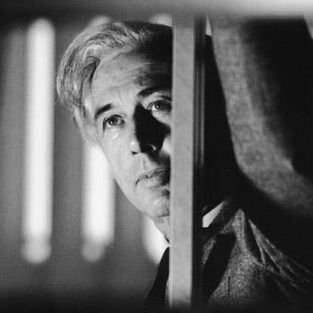
"Cinema is my country, my family. My religion is cinema."
--- François Truffaut
Remembering François Truffaut on his 94th birthday.
Full Excerpt:
"I don’t live outside cinema.
I want to make normal films—that is my life.
I am rather inclined to turn away from real life, I take refuge in cinema.
I like life in moderation.
I nevertheless feel I am living a more normal life when I am involved in a shoot.
Cinema is my country, my family. My religion is cinema."
('Truffaut on Cinema', Anne Gillain, translated by Alistair Fox, 2017)
Clip from:
La nuit américaine (1973)
Director: François Truffaut
VALIS Studio retweeted

Nine days after Star Wars opened in 1977, Alec Guinness (Obi-Wan Kenobi) wrote in his diary: ‘Am pinning my hopes on Star Wars percentage which could bring me £100K or more if it does Jaws business, as predicted.’ He ended up earning an estimated $95 million for what amounted to 20 minutes of screen time.
When Star Wars premiered in May 1977, even its cast and crew had little idea of the cultural juggernaut it would become. Alec Guinness, already an accomplished actor with an Academy Award to his name, viewed his role as Obi-Wan Kenobi with some skepticism. In fact, he reportedly found some of the dialogue clunky and even doubted whether the film would resonate with audiences. Yet, shrewdly, Guinness negotiated a deal that included a small percentage of the film’s profits—something highly unusual at the time for an actor in his position.
Just nine days after the movie’s release, Guinness confided in his diary that he was hopeful the percentage might yield him around £100,000 if the film managed to perform like Spielberg’s Jaws. What unfolded was beyond his imagination: Star Wars exploded into a worldwide phenomenon, earning hundreds of millions and spawning a multi-decade franchise. Guinness’s share ultimately netted him an estimated $95 million over the years for less than half an hour of actual screen time.
His decision remains one of the most legendary deals in Hollywood history—a testament to foresight, negotiation, and a little bit of luck. Obi-Wan Kenobi became not only an iconic character but also a financial windfall Guinness could never have predicted.
© Hollywood Historia
#archaeohistories

VALIS Studio retweeted

Anthony Hopkins ne trouvait aucun exemplaire du livre à Londres. Il s'assit alors sur un banc de métro.
C'était en 1973. Hopkins venait d'obtenir un rôle dans un film intitulé *La Fille de Petrovka*, adapté d'un roman du journaliste américain George Feifer.
Comme tout acteur sérieux, il voulait lire le livre original. Il passa une journée entière à fouiller les librairies de la célèbre Charing Cross Road à Londres.
Rien. Le livre était introuvable au Royaume-Uni.
Frustré et épuisé, Hopkins entra dans la station de métro Leicester Square pour prendre le train et rentrer chez lui.
C'est alors qu'il remarqua quelque chose sur un banc.
Quelqu'un avait oublié un livre.
Il le ramassa. Le retourna.
*La Fille de Petrovka*.
Le livre exact qu'il cherchait depuis le matin, abandonné sur un banc de métro dans une ville de huit millions d'habitants.
Hopkins n'en revenait pas. Il l'emporta chez lui, le lut et remarqua quelque chose d'inhabituel. Les marges étaient remplies de notes manuscrites à l'encre rouge. Des annotations. Quelqu'un avait soigneusement annoté tout le livre.
Il n'y pensa pas plus. Il utilisa les notes pour mieux comprendre son personnage, se prépara pour le rôle et rangea discrètement cette coïncidence parmi les étranges moments de la vie.
Quelques mois plus tard, Hopkins se rendit à Vienne, où le film était tourné.
Un jour, sur le plateau, on lui présenta un visiteur.
George Feifer. L'auteur du livre.
Ils parlèrent du film, des personnages, de l'histoire. Puis Feifer mentionna quelque chose qui laissa Hopkins sans voix.
« Je n'ai plus d'exemplaire de mon propre livre », dit Feifer. « J'ai prêté mon exemplaire personnel à un ami il y a des années. Il contenait toutes mes notes dans les marges. Il l'a perdu quelque part à Londres. Je ne l'ai jamais revu depuis. »
Hopkins sentit ses cheveux se dresser sur la nuque.
« J'ai trouvé un exemplaire », dit-il lentement. « Sur un banc dans le métro. Il est rempli de notes manuscrites. »
Feifer le regarda avec incrédulité.
Hopkins alla chercher le livre et le tendit à l'auteur.
Feifer pâlit.
C'était son exemplaire. Son écriture. Ses annotations. Le livre personnel qu'il avait perdu des années auparavant – oublié par hasard sur un banc de métro, au moment précis où Anthony Hopkins, l'acteur qui en avait le plus besoin, s'y asseyait.
Dans une ville de millions d'habitants. À travers des milliers de rues. Parmi des centaines de stations de métro.
Le bon livre. Le bon banc. Le bon moment.
George Feifer a retrouvé son livre perdu. Anthony Hopkins a gagné une histoire qu'il raconterait toute sa vie.
Carl Jung appelait cela la synchronicité – l'idée que les coïncidences significatives ne sont pas aléatoires, mais font partie d'un schéma plus profond tissé dans la réalité.
Hopkins a toujours été fasciné par cette idée. Il a parlé d'apprendre à simplement s'émerveiller de la vie.
« Je ne sais pas s'il existe un plan directeur », a-t-il dit un jour. « Mais parfois, il se passe des choses trop parfaites pour être expliquées. »
Peut-être était-ce de la chance. Peut-être était-ce le destin. Peut-être était-ce l'univers qui souriait discrètement.
Ou peut-être, juste peut-être, certains livres sont-ils destinés à trouver leurs lecteurs.
Et certaines histoires sont-elles destinées à être racontées.