

Culturally-based health and community care — by & for urban Indigenous people — on unceded xʷməθkʷəy̓əm, Sḵwx̱wú7mesh, and səlilwətaɬ lands 🦅🌿🪶
- Tweets210
- Following309
- Followers481
- Likes38







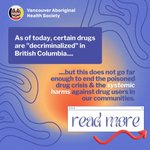



ALT background on all images is a round gradient of medium blue, yellow, and red, with squiggly dark blue lines on some sides and the Vancouver Aboriginal Health Society logo in the top left corner text reads: As of today, certain drugs are "decriminalized" in British Columbia.... ....but this does not go far enough to end the poisoned drug crisis & the systemic harms against drug users in our communities. read more

ALT what is (and isn't) being criminalized? Under a federal exemption to the Controlled Drugs and Substances Act (CDSA), adults in BC can possess up to 2.5 grams total of opioids, MDMA, cocaine, and methamphetamine for personal use without being arrested, charged, or having their drugs seized. However, this 2.5 gram threshold is significantly lower than what is recommended by drug users and policy experts — it is based on outdated thresholds from when drugs were less potent, and it was set as a compromise with police, who requested smaller amounts.* Additionally, drugs such as ketamine and benzos (benzodiazepines) are still criminalized. As benzos are increasingly more common in the street opioid supply,* this can complicate "decriminalization" of opioids while not reducing the risk of overdose. * Lexi Fisher and Tyson Singh Kelsall, "Commentary: BC's upcoming illicit drug exemption is not decriminalization" (The Georgia Straight, January 30 2023)

ALT Under this model, police are responsible for identifying drugs, determining that they are within the 2.5 gram threshold, and offering information on local health/social services, including treatment and recovery options. This approach continues the real or potential harms of police surveillance and interactions with drug users, even if someone's possession is within the threshold. There are no guarantees that these interactions — with police or the services they recommend — will be wanted, relevant, or culturally safe.

ALT The low 2.5 gram threshold may also increase the risks of overdose, as drug markets may adjust to the threshold by changing their supply to increase potency. People may also be forced to purchase in smaller amounts more often, making the toxic drug supply more unpredictable than it already is.* Relying on police and the (broken) health care system will not end overdoses from toxic drugs. A safe, regulated, and accessible drug supply is required to safe lives, and is not what this "decriminalization" model offers. And when poverty, being unhoused, being Indigenous, and mental health challenges are still targeted and criminalized, then what really changes? * Canadian Drug Policy Coalition, Letter to Ministers Bennett and Duclos re: proposed cumulative threshold of 4.5 grams in B.C. (via drugpolicy.ca, April 14 2022)


