

Abstract Biologist. Data addict. Postdoc on brain organoids @Knoblich_lab. PhD in single-cell genomics at the van Oudenaarden lab.
Vienna, Austria
Joined March 2017
- Tweets72
- Following46
- Followers69
- Likes10
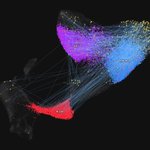


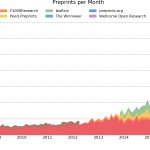


[1/6] Excited to share our work on bioRxiv! bit.ly/47CryUl at @Knoblich_lab. This project has been a huge part of my life, through some hard years, so seeing it come together feels special. I’ve long been fascinated by networks—especially the brain.

[6/6] I got invaluable help from many colleagues, including @sv_isaev, Michael Zabolocki, Maria Novatchkova and @ChongLi_cl. I’m also grateful to my mentors: Juergen A. Knoblich, Alexander van Oudenaarden, @EddaKlipp, Ursula Kummer, @vmullerHUN and Peter Csermely.
[5/6] We found those elementary, cell-type-intrinsic wiring rules—and much more: reproducible network assembly, recurrent motifs and molecular signatures of connectivity. In TSC, these rules broke down, shifting networks toward less constrained wiring and altered Ca²⁺ dynamics.
[4/6] Complex structures arise through external instructions (Eiffel Tower) or self-organization (termite hills). How much developing cortical networks rely on self-organization is unclear. Organoids minimize external input and let us ask what rules single neurons follow.
[3/6] COSCO maps single-neuron synaptic connectivity together with transcriptomes using barcodes + sequencing. We recovered >86,000 neurons and >10,000 networks from 50+ human brain organoids across 6 cell lines—giving us the statistical power to find robust patterns.

[2/6] I thought the best way to understand its complexity was bottom-up & population-scale: map single-neuron connections across 1000s of networks, then use machine learning to find rules. Inspired by @TonyZador’s idea, we developed COSCO with @ramsey_najm and Bálint Doleschall.
Paying peer reviewers pays off. I’ve argued this for years, and a well-designed experiment now supports it: much faster reviews and better quality. As with open access, we’ll need to learn how to use the model well – and watch for unintended consequences.
nature.com/articles/d41586-0…

The #Austrian gov. plans to cut university funding (2028–2030) by ~-6%. Inflation heads to ~+4%. Our world & AT is changing ever faster (technology, society, the planet). To adapt, we need more education & research. #UnisRetten
univie.ac.at/en/news/detail/…
univie.ac.at/aktuelles/unisr…

vertesy retweeted

😶🌫️🤩 It's out!
So happy to share a big piece of my PhD work with the world. 🧩
Using human neural #organoids, we investigated corpus callosum agenesis, a disconnection between the two #brain hemispheres. 🧠
What we found was surprising and exciting... Curious? 📃 👇

📣 Preprint alert!
Check out our latest story, led by @catarinacsmc.
The corpus callosum safeguards interhemispheric communication in the human brain.
𝘈𝘙𝘐𝘋1𝘉 mutations cause agenesis/absence of the CC.
We wanted to know why. 🤓
🧵1/9
tinyurl.com/2s4jtr5z

vertesy retweeted

Issue 17 highlights:
Feeding activates gut #lipophagy
Biased #multipotency of Schwann cell precursors
ARF #GTPase interactors in lipid signaling
Bimodal Piezo #mechanosensor signaling
Cover by @PhilDexheimer features @Knoblich_lab #Gruffi resource
embopress.org/toc/14602075/2…

vertesy retweeted

How does in-vitro stress influence #brain #organoids? What cell types are affected, and how can we deal with stressed cells? Our new work now published in @embojournal provides answers! embopress.org/doi/full/10.15… 1/3

vertesy retweeted

My great honour to name novel master regulator of immune cell metabolism and invasion after "Atossa" a Persian queen, whom connected to my background.


For the full story, watch this video abstract. Stay to the end for the animation of the Persian queen Atossa for whom the master regulator was named. bit.ly/3Jzc9q9
vertesy retweeted
1/6 Stress in #brain #organoids is widely debated: Are all organoids & all cells affected? Does it exist in vivo? Does it impair cell differentiation? Gruffi, our new algorithm identifies and removes stressed cells from #scRNAseq #singlecell datasets. bit.ly/Gruffi

vertesy retweeted
How are rare brain tumors and cortical malformations connected & how can organoids help us to find the link? We set out to investigate tuberous sclerosis complex (TSC) and came across an unexpected cell type – see how we did it in this thread! (1/10) science.org/doi/10.1126/scie…

vertesy retweeted

Introducing the speakers for tomorrows VGZT session on July 9th at 17:30 BST
Details about the talks can be found on the VGZT slack

No taxpayer-backed bailouts to airlines - this would allow airlines to return to business as usual after Covid-19. bit.ly/3cg9DE8 Read on tax free kerosene & aviation subsidies at bit.ly/3abYdQH. Please also consider Fairosene bit.ly/3ehFhmC.

vertesy retweeted

2/4 Ábel Vértesy, Postdoc in the @Knoblich_lab, will use cerebral #organoids to study how neurons connect to each other in health and disease, specifically in wild type and monogenic #autism syndrome organoids.