

Ruthenorum me esse et libenter profiteor (c)
Joined June 2015
- Tweets3.5K
- Following207
- Followers113
- Likes27.5K




Pinned Tweet
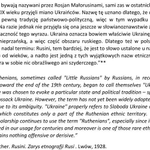
Why did the Rusyns adopt the name Ukrainians? A contemporary of this shift, a professor of Rusyn language and literature at the University of Lemberg, provides the answer:
#Rusyns #Ruthenians #Ruthenia #Ukraine #GaliciaLodomeria #OmelianOhonovsky

The Carpatho-Rusyn identity had not yet formed at the time. There was a traditional Ruthenian identity that included all Ukrainians and often also Belarusians, who, however, since the 19th century, were more commonly referred to by the Ruthenians of AH as White Ruthenians. 1/9

At the same time, Lemko Narodovtsi in eastern Lemkovyna, and, two months later, Hutsul Narodovtsi in Northern Bukovyna, established their own republics, using the same flag as the Ukrainian State/WUPR and de jure considering themselves part of it. 8/9
1
2
67
OTD in 1848, amid the revolutionary wave of the Spring of Nations, the Supreme Ruthenian Council in L'viv published its Appeal to the Ruthenian People in the newspaper Zoria Halytska

1
274


In his 1878 historical novel, the Russian writer and historian Daniil Mordovtsev, speaking through Peter I, warns Russians not to pick on Little Russians (an imperial term for Rusyns/Ukrainians) and to respect their language – or face serious consequences.

1
2
235


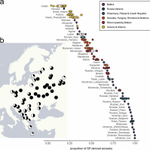
The approximate ethnic composition of the Registered Cossacks in the Treaty of Zboriv (1649)
Source:
Struminsky, B. (1985). The Origins of the Zaporozhian Cossacks: Apropos of a Recent Study.
Harvard Ukrainian Studies, Vol. IX, No. 1-2, pp. 193–197.


“The settlements and local names of the Rusyns at the present time.” Osnova (St. Petersburg, 1861), no. 1, pp. 263–265.


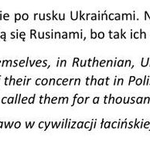
All Ukrainians in interwar Poland were officially referred to as "Rusini" (Ruthenians), regardless of their own self-identification. In his 1928 book, the Polish historian Adam Fischer explained this policy as follows:


