







v@nde retweeted

No troll here. Indonesia’s U17 players celebrated a goal against Afghanistan with prayer gestures from different religions. ❤️

v@nde retweeted

Effective Immediately, all organizations using PHP for their systems are advised to be prepared for an update addressing two critical vulnerabilities. PHP is widely used for web applications. These vulnerabilities often provide a direct path to the server's file system or database. If an immediate update is not feasible, it is recommend that organizations take the system offline until it can be fully mitigated. NSA will follow up shortly with more specific guidance.
"Itu lah yg dilakukan pemain elite. Mereka menghukum keraguan" - Zlatan. – at Jakarta Capital Region, Indonesia
61
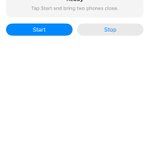
FRIENDSTER is back!
Add friend cuma bisa kalo ponsel deketan. Baru bisa di iphone. Fitur2 masih on going dikembangin.

130
v@nde retweeted

Elon Musk is mentioned in Demis Hassibis' biography documentary "The Thinking Game" (now on YT). I was curious about that so I asked Grok @elonmusk
The story of Elon Musk and DeepMind is one of the most interesting (and dramatic) chapters in the history of modern AI development. It involves ambition, fear of existential risk, a secretive fundraising race, and ultimately a lost bidding war that shaped the entire AI landscape.
### 2010–2013: The early connection
- Elon Musk had been funding AI research since the 2000s because he was already worried about AI as an existential threat to humanity.
- He became friends with DeepMind founder Demis Hassabis in the early 2010s (they met through mutual connections in the London tech/futurism scene).
- Musk was an early believer in DeepMind. In 2013, he personally invested in DeepMind’s Series A round alongside founders like Demis Hassabis, Mustafa Suleyman, and Jaan Tallin (Skype co-founder, another major effective-altruism/x-risk focused donor).
- At this point DeepMind was a tiny London-based startup (fewer than 50 people) that had made breakthroughs in deep reinforcement learning (teaching neural nets to play old Atari games from raw pixels better than humans).
### Late 2013 – early 2014: The secret sale process
- By late 2013, DeepMind realized it needed hundreds of millions of dollars and massive compute to stay at the frontier. It quietly put itself up for sale.
- There were only five serious bidders: Google, Facebook, Baidu, Elon Musk (personally + with Peter Thiel’s help), and a mysterious “Plan West” (widely reported to be Elon’s codename for his own bid).
- Elon’s goal was explicitly to keep DeepMind independent and align it with humanity’s interests. He was terrified that Google (especially through Larry Page) had a very cavalier attitude toward AGI risk. Musk later recounted conversations where Page accused him of being “speciesist” for wanting humans to survive AGI.
### The bidding war
- Google and Elon were the final two contenders.
- Elon + investors offered around $500–600 million and promised independence plus a special ethics board that would have significant power (Musk wanted veto rights over dangerous research).
- Google’s final bid was reportedly higher in cash (the deal closed at ~$500–650 million; exact number never disclosed) but, crucially, Google refused to give any third party (i.e., Musk) control or veto rights.
- DeepMind’s founders chose Google in February 2014, largely because:
- Google had infinitely more compute and engineering talent.
- They believed an independent ethics board inside Google (which Google did create) was the best they could get.
- Some founders were uncomfortable giving Elon personal control over the company.
### Musk’s reaction
- Musk was furious and deeply worried. He saw the acquisition as humanity losing its best shot at keeping frontier AI out of one company’s hands.
- Immediately after the loss, he co-founded OpenAI in 2015 (with Sam Altman, Greg Brockman, Ilya Sutskever, etc.) explicitly as a counterweight to Google DeepMind. The original OpenAI mission statement was very clear that it existed because “Google bought DeepMind and we don’t trust them.”
- For years afterward Musk repeatedly said in interviews that losing DeepMind to Google was one of the triggers for founding OpenAI and later xAI.
### Long-term fallout
- DeepMind and OpenAI became fierce rivals for the next decade.
- Ironically, many of the same fears Musk had about Google ended up being directed at OpenAI itself after 2022–2023 (closed-source GPT-4, Microsoft partnership, profit cap removal, etc.).
- In 2023 Musk founded xAI and started Grok, again explicitly framing it as a third force against the Google–OpenAI duopoly.
### TL;DR summary
Elon Musk was an early investor and close friend of DeepMind. In 2014 he tried very hard (and spent months in a secret bidding war) to buy the company himself to keep it independent and safe. He lost to Google. That loss terrified him, directly led to the creation of OpenAI in 2015, and eventually to xAI in 2023.
In Musk’s own words (from various interviews):
“Losing DeepMind to Google was one of the things that most motivated me to start OpenAI. I tried to buy it to keep it out of Google’s hands and failed.”
That single failed acquisition in 2014 is one of the key butterfly effects that created today’s entire AI competitive landscape.

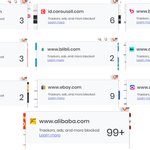
Why Google Maps Doesn’t Work in South Korea
newsweek.com/why-google-maps…

76
Sudah mendunia ternyata...
instagram.com/reel/DL1XAbGuH…

42
v@nde retweeted

Setelah sebelumnya menulis buku “Kode-Kode Nusantara” sebentar lagi Hokky Situngkir akan menerbitkan 𝙀𝒏𝙞𝒈𝙢𝒂 𝑷𝙪𝒔𝙖𝒌𝙖 𝙙𝒊 𝑲𝙚𝒑𝙪𝒍𝙖𝒖𝙖𝒏 𝑰𝙣𝒅𝙤𝒏𝙚𝒔𝙞𝒂
Pantau update dari kami ya utk mengetahui kapan buku ini terbit!
#segeraterbit
#enigmapusaka
#kodenusantara


v@nde retweeted

Selamat Hari Raya Idul Adha 1444 H bagi Kontributor yang merayakan! 🙏🏻
#Budpedia hari ini: 6 tradisi unik Idul Adha di Indonesia. Geser yuk untuk tahu selengkapnya! 😉
Ada yang mau nambahin gak nih?
budaya-indonesia.org
#TransformasiDigitalBudaya
