

#Outreach & #Networking Manager of @NEUROPUBLIC | #Agrifood #Information & #KnowledgeManagement expert | #SocialMedia advocate | Father of two little men
Athens, Greece
Joined May 2011
- Tweets5.8K
- Following1.2K
- Followers1K
- Likes27.1K





V. Protonotarios retweeted

Από την ομάδα της NEUROPUBLIC, θερμές ευχές για
Χαρούμενα Χριστούγεννα και Ευτυχισμένο 2025!⭐️🥂
V. Protonotarios retweeted
📣 Άλλη μια χρονιά η #NEUROPUBLIC δίνει δυναμικά το «παρών» στη #ΔΕΘ #HELEXPO
👉 Σας περιμένουμε μέχρι & την Κυριακή 15/9 στον καθιερωμένο πλέον χώρο Stand 9 (πλησίον Πύλης Εμπορίου) για να ενημερωθείτε για τις καινοτόμες ψηφιακές λύσεις που προτείνουμε!
#NEUROPUBLIC #ΔΕΘ2024

V. Protonotarios retweeted
Breaking! 🔥 First image of the #wildfire near Athens 🇬🇷Almost 10000 ha affected, 25 km lenght N-S, thousands evacuated their homes & many hotspots visible in this #Sentinel2 🛰️ image: 2024-08-12. @CopernicusEMS also activated: See #EMSR746
Full Size: flic.kr/p/2q9zGtg 🧐

V. Protonotarios retweeted

The EU countries’ medals so far (total):
🇪🇺 176
🇫🇷 48
🇮🇹 25
🇳🇱 18
🇩🇪 17
🇪🇸 9
🇭🇺 8
🇸🇪 8
🇷🇴 7
🇮🇪 6
🇭🇷 5
🇧🇪 5
🇬🇷 6
🇵🇱 4
🇨🇿 2
🇩🇰 2
🇱🇹 2
🇸🇮 1
🇦🇹 1
🇸🇰 1
🇵🇹 1
Congrats to the winners and good luck to all teams who are yet to compete!
#Paris2024

ALT A visual featuring a podium reporting the medals won by the EU countries at the Olympic Games in Paris. A title reads above the podium “EU Countries' Medals" Gold medals are 57 Silver medals are 52 Bronze medals are 67


V. Protonotarios retweeted

Το νησί στο οποίο αποτυπώνεται ο εφιάλτης του μέλλοντος: 19 φορές πάνω τουρίστες σε σχέση με τους ντόπιους, 5πλάσια κατανάλωση νερού intronews.gr/news/nisi-fourn…
V. Protonotarios retweeted

🎉Congratulations to our Elli Tsiforou for being the new Secretary General of @COPACOGECA 🇪🇺
Thanks to her personal qualities & vision for #agriculture, she is an exemplary candidate to defend the interests of EU #farmers & #agricoops 🌿
Good luck!💯
c-gaia.gr/en/elli-tsiforou-i…


V. Protonotarios retweeted

Ο Ολυμπιακός έγινε η πρώτη ομάδα μετά από 13 χρόνια, που κερδίζει ευρωπαϊκό Κύπελλο και δεν είναι από τις τέσσερις ισχυρές χώρες (Αγγλία, Γερμανία, Ιταλία και Ισπανία). Προηγούμενη ήταν η Πόρτο το 2011, που είχε πάρει το Γιουρόπα. #Olympiacos


V. Protonotarios retweeted

Χρονιά πολλά στις❤️ μαμάδες, από βιοχημική άποψη!
Το πυρηνικό γενετικό μας υλικό είναι το μισό από τον πατέρα μας και το μισό από την μητέρα μας .
Ομως το γενετικό υλικό των μιτοχονδρίων (mtDNA) που αποτελούν τα ενεργειακά μας κέντρα, είναι αποκλειστικά μητρικής προέλευεσης .

V. Protonotarios retweeted

"Μια ανεπίσημη καταγραφή και αυτοψία το 2014 μόνο στην περιοχή γύρω από την πλατεία Ομονοίας στην Αθήνα εντόπισε 267 τέτοια κτήρια." Πώς μπορούν να αποκατασταθούν και να αξιοποιηθούν τα #διατηρητέα_κτήρια; dianeosis.org/2024/01/apokat…
V. Protonotarios retweeted

“The Greek language is one of only three, among those now spoken and written anywhere in the world, that can boast a continuous written tradition stretching back for more than three thousand years. The others are Chinese and Hebrew. The collective heroes and heroines of the story told in this book are all those people who have spoken and written the Greek language throughout the long centuries of its recorded evolution.
During that time, Greek was used at first to keep bureaucratic records, then to preserve for posterity the heroic epics, the liad and the Odyssey of Homer, that have been read with wonder by every generation since. It was the language of the world's first fully alphabetic system of writing. It was in Greek that the foundations for modern philosophy and science were laid and, later, that the apostles of Christianity would disseminate the new religion through the New Testament. The original Greek text of the Gospels is still read aloud in Orthodox churches around the world. Evolving as all human speech does over time, Greek in its present-day form is the official language of the Hellenic Republic and one of the two official languages of the Republic of Cyprus.
The Greeks of the title and the pages that follow are to be understood as speakers of the Greek language. The story of these Greek speakers will turn out to be a story about identity— or rather, about identities, in the plural. Greek speakers have been adept, ever since we first get to know them through their earliest writings, at asking questions and interrogating themselves. The answers they have come up with have differed greatly over the centuries, according to cultural changes and changing historical circumstances.
Throughout history, Greeks have created types of societies and political systems very different from one another. If they have continuously inhabited the same southeastern corner of Europe and the eastern Mediterranean, they have also, at different times, put down roots in many different places. Again and again, they have proved resourceful at reinventing themselves. They have fought against different enemies, traded with different partners around the world, worshipped different gods, even called themselves by different names. We call them 'Greeks', and their land 'Greece, in English today because the ancient Romans first encountered a local tribe of Greek speakers whom they called, in Latin, Graeci. In their own language in ancient times, these people were known as 'Hellenes' and their land as 'Hellas', as they have been known once again since the early nineteenth century. But they have also, at different times, been Achaiwoi (Achaeans) and Romaioi or Romioi (pro-nounced Romyí), meaning literally 'Romans.’
This book asks: What can we learn from the accumulated experience of those who have spoken and written this language, during three and a half thousand years, about how identities are created, perpetuated, and modified or reinvented over time? We all rely on perceptions of the past to establish our own identity in the present.
In a world ever more threatened by the clash of mutually exclusive, monolithic identities, we might all do well to reflect, on a more informed basis than we often do, on the ways in which these identities come to be formed and also adapted as the world around us changes. The story of the Greeks, based on their own words, that can be traced all the way back to the earliest period of recorded history, sheds light on this process rather than on any single identity, seemingly fixed and given at any one time.” Preface - The Greeks: A Global History by Roderick Beaton


V. Protonotarios retweeted

Σέριφος, Σίφνος, Φολέγανδρος. Τα 3 νησια που η ΕΛΛΕΤ έθεσε ως παραδείγματα, ζητώντας από την Europa Nostra να ανακηρύξει τις Κυκλάδες "μνημείο σε κίνδυνο".
Σε αυτά τα 3 podcasts οι δήμαρχοί τουςεξηγούν πως έχει αλλάξει ο τόπος τους και το πρέπει να γίνει.
kathimerini.gr/investigation…

V. Protonotarios retweeted

Αντλία θερμότητας, ο οικονομικότερος τρόπος θέρμανσης
Μελέτη ΕΜΠ. (link πιο κάτω)
Έχουμε τις καλύτερες ε!

V. Protonotarios retweeted
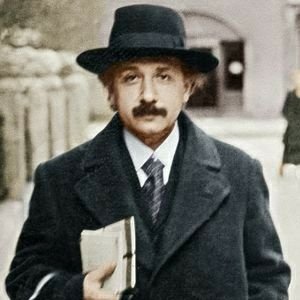
Einstein slept nearly 10 hours a day. He valued the significance of quality sleep for maintaining his well-being. His sleep routine, though, was out of the ordinary.
He regularly indulged in brief daytime naps, occasionally more than once a day. These quick naps, lasting just a few minutes, were thought by Einstein to revitalize his mental energy and creative thinking.
He felt that these short periods of rest gave him a renewed viewpoint to solve intricate scientific challenges.

V. Protonotarios retweeted

‘The thinner tree was cut years ago and the big one has been holding and feeding it since then. They "wake up" together in the spring and "go to sleep" together in the autumn’
Inosculation is a natural phenomenon in which parts of two different trees, commonly but not exclusively the same species, grow together, self grafting and sharing nutrients
The term emanates from latin- ōsculārī, to kiss

V. Protonotarios retweeted
Pale Blue Dot is a photo of Earth that was taken by the Voyager 1 space probe in 1990 from a distance of about 6 billion kilometers (3.7 billion miles) as it was leaving our solar system. This is what Carl Sagan said about the photo:
"Look again at that dot. That's here. That's home. That's us. On it, everyone you love, everyone you know, everyone you ever heard of, every human being who ever was, lived out their lives. The aggregate of our joy and suffering, thousands of confident religions, ideologies, and economic doctrines, every hunter and forager, every hero and coward, every creator and destroyer of civilization, every king and peasant, every young couple in love, every mother and father, hopeful child, inventor, and explorer, every teacher of morals, every corrupt politician, every 'superstar,' every 'supreme leader,' every saint and sinner in the history of our species lived there — on a mote of dust suspended in a sunbeam.
The Earth is the only world known so far to harbor life. There is nowhere else, at least in the near future, to which our species could migrate. Visit, yes. Settle, not yet. Like it or not, for the moment the Earth is where we make our stand. It has been said that astronomy is a humbling and character-building experience. There is perhaps no better demonstration of the folly of human conceits than this distant image of our tiny world. To me, it underscores our responsibility to deal more kindly with one another, and to preserve and cherish the pale blue dot, the only home we've ever known.”

V. Protonotarios retweeted
#ΔΕΘ2023 / Σας περιμένουμε στην «Έξυπνη Πόλη» του @MinDigitalGr στο Περίπτερο 12 για να δείτε από κοντά τον αγρομετεωρολογικό σταθμό @gaiasenseGR & να ανακαλύψετε τις δυνατότητες των υπηρεσιών που παρέχει η #NEUROPUBLIC στον αγρότη και τον Πολίτη.

