
Researching transparent finance; more specifically Ethereum L1 cryptoeconomic designs @ethereum
Joined December 2021
- Tweets1.1K
- Following672
- Followers2K
- Likes1.8K






Well organized and a pleasure to join in!

It’s a wrap! It was an honor to help organize the Fast Finality workshop in Cambridge.
There have already been some great recaps, but here’s my quick overview of the main topics we covered:
1. Deep-diving DC: Decoupled Consensus is a super ambitious upgrade we hope to ship in I* (h/t @benjaminion_xyz). @robsaltini gave a great overview, and @fradamt unveiled his impressive recent breakthroughs, e.g. achieving short-term async resilience through local locks.
2. Shipping DC: Sessions on critical research and engineering, including networking benchmarks & devnets (@sukunrt & Csaba), rewards & incentives (@weboftrees), and specs & testing (@mkalinin2, @jtraglia, @tcoratger).
3. Securing DC: Formal verification meets fast finality. We explored exciting new AI-enabled opportunities (@fradamt & @robsaltini), building on years of great FV work (@alexanderlhicks).
4. Future of Fast Finality: Aligning DC with future needs. This covered PQ networking (@kamil_abiy & @kevaundray), finality in tens of seconds with PQ validators (@barnabemonnot), lean clients & prototyping (@pablodeymo, Mega, Mihir, Locky, @adust09, @ladislaus0x), and one-round finality & other future research (shoutout @alranpe, @jneu_net, @ittai & Neil).
Huge thanks to everyone who made this workshop a success! Special thanks to @benjaminion_xyz for all the help and guidance, and of course to @justindrake and @willcorcoran for making it possible!

EIP-8046, Uniform price auction over inclusion lists (UPIL), has been updated to support frame transactions via VOPS profiles, as well as the two gas dimensions of EIP-8037. UPIL lets FOCIL work together with a more expansive multidimensional fee market, provides censorship resistance even in full blocks, and improves fairness.
eips.ethereum.org/EIPS/eip-8…

Anders Elowsson 🌻 retweeted

One step closer to 4-8x faster Ethereum finality!
It took some time and lots of tokens, but we now have a formally verified proposal for a decoupled consensus protocol in I* (a future Ethereum upgrade)! Not yet a full spec (up next), but it includes all the key consensus-relevant details to become one.
Since Ethereum aspires to be live without most of the stake online, the protocol involves many more components than a normal BFT protocol, and its correctness involves much more than standard safety and liveness. Those nuanced properties are now verified!
What's more, I came away convinced that all protocol design will involve AI-assisted Formal Verification in the future, both for correctness and iteration speed.
The work wasn't limited to just:
Design the protocol -> Formally verify it
Instead, the loop became more like:
Design -> Formal Model -> Find exactly what breaks and why -> Redesign it.
For a fairly complicated protocol like this one, I think having the Lean model be part of the design loop played a big role in accelerating the process.
A future with agents paired with formal models is a superpower for Ethereum development, because they can then use those models to find exactly where an argument breaks down, formalize counterexamples, test proposed fixes, iterate on the protocol.
Many details that would slip under the radar when asking agents (and indeed, humans) can now be specified exactly and checked by the Lean kernel. This then forces agents to be more precise and lets them make verifiable progress on their own. It's been incredible to see this play out, seeing agents find gaps and propose protocol changes to fix them.
In other words, autoresearch can speed up protocol design, formal verification is here to stay, and Ethereum Finality will get faster.
Slides from my presentation at the Frame Transaction Breakout docs.google.com/presentation…

Available also outside of X now (with some improvements)
notes.ethereum.org/@andersel…

Two suggestions for EIP-8141 Frame transactions: specify state limits in bytes, and use a single unified max fee. Plus a discussion of how the frame-by-frame gas accounting relates to EIP-7999.
ethereum-magicians.org/t/eip…

We are trying to settle on a design for the EVM gas accounting under a multidimensional fee market (e.g., EIP-7999) and would like to engage with developers in the autumn. Please reach out to us or engage with the relevant research posts. ethresear.ch/t/designs-for-e…

Relevant other EFers working on the topic are @VitalikButerin, @misilva73, @omw_to_the_moon, @nero_eth and intern @xzhvyr.
We are also trying to analyze related concerns, such as how to preserve CR if BAL data is added to EIP-7999.
ethereum-magicians.org/t/pre…
Slides for yesterday's presentation at ACDE of EIP-8372: Normalized state gas limit.
docs.google.com/presentation…
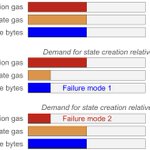
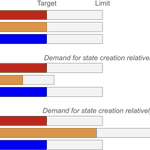
I will present EIP-8372 on ACDE. We don't know whether users will spend 50% of their gas budget on state creation after Glamsterdam. There are two Failure modes:
(1) <50% = we will create too little state;
(2) >50% = we will suppress execution via the 8037 max metering function.

In essence, we normalize the state gas limit:
(1) If demand for state creation is too low, the cost per state byte is reduced together with the state gas limit.
(2) If demand for state creation is too high, the cost per state byte is increased together with the state gas limit.

Thank you for your many many contributions to Ethereum while at the EF! Having your input on research projects and EIPs have been a great blessing. I know many people who feel the same way.
My "Francesco exception" is to never take anything for granted when studying a blockchain design problem.. unless Francesco says so. We're lucky that you remain in the Ethereum ecosystem!

Status update: I am moving from the Ethereum Foundation to Ethlabs @ethlabs_org, joining the team to accelerate protocol work in the age of Ethereum adoption.
In 5 years at EF Research, I have worked on research and specification of a wide range of Protocol R&D: mev, consensus, data availability sampling, execution layer pricing. In every workstream, I am grateful to have found talented, principled, passionate colleagues.
Leaving that behind is hard, but after 5 years this time of great change seems right for a new beginning. Thankfully, I am not going far! For the first time since I have been working on Ethereum research, there is a credible shot at some of it (and more) happening outside the EF.
I'll be joining long time EF colleagues at Ethlabs to make this a reality, building a world class team to bring new talent into the ecosystem and make a real impact on Ethereum's chances to move economic activity to an open, global, censorship-resistant substrate.
Besides helping Ethlabs to grow and find its footing as a contributor to protocol R&D, I'll continue much of my work. In particular, I intend to continue focusing a lot of my effort on making Ethereum finalize much faster, as soon as possible.
True that. I think a good framework is to distinguish between:
* Exogenous MEV – induced by information external to the protocol, such as changes in CEX prices, prices on other chains, or other offchain information not yet reflected in the protocol state.
* Endogenous MEV – induced by the protocol state itself, such as imbalances between pools, available liquidations, or other imbalances internal to the protocol.
* Autogenous MEV (i.e., transaction-induced MEV) – induced when a transaction’s own execution creates or reveals a new public signal, such as a large repricing trade or other state transition.
Such a distinction is important for understanding the MEV landscape. Furthermore, we must analyze MEV in the context of the “information ingress boundary”, the point at which new information enters onchain as the builder commits to a new block.
I covered this extensively in the LUCID EIP:
eips.ethereum.org/EIPS/eip-8…


I really appreciate this thoughtful piece for @kubimensah, disentangling the knotty threads of MEV, allocation and user security.
Some thoughts.. "MEV" is a catch-all term to refer to the value induced by perturbations of state.
Sometimes state is perturbed by user transactions that intend to move the state to a new point, eg, doing a swap, which changes their balances and the state of the exchange they perform their swap on.
Sometimes state is perturbed externally, eg, the price of an asset evolves in markets outside "the chain", and this perturbation wants to be mirrored on the chain itself.
Here's the problem: A user's intent to perturb state, to execute their own plan, should not be hijacked by external parties who weaponise the user's intent against them.
Too often, we've identified the value on the table for the problem. In some cases, it's just value on the table that needs to be allocated. A difficult problem! Allocating it fairly ensures economic efficiency of the chain + diversity in the market, and diversity in the market ensures user optionality.
In cases where value on the table comes from the user's pocket, the issue is not that the user's intent is disclosed, it is that is disclosed to everyone, in particular adversarial parties that are able to benefit from the disclosure at the user's expense.
User-controlled disclosure is the right direction, designed for the specific use case that the user intends to perform. This can mean either disclosure to systems where secrets are secured by cryptography, eg, to the chain directly with encrypted mempools; or where user information is appropriately priced and paid for, in markets that are transparent enough to ensure their openness, but dark enough to keep users secure.

Can't really go wrong with these guys! Subtraction-satisfaction in motion

Announcing Ethlabs: a non-profit R&D lab for Ethereum and ETH
Our mission is to make Ethereum the settlement layer of the global economy.
The internet became global because shared protocols created a common language between networks. Private systems remained useful, but bounded. Finance is approaching a similar moment. As value, assets, and markets become digital, the world needs shared settlement infrastructure.
Ethereum is uniquely positioned to become that shared base layer, the neutral foundation on which users, institutions, and agents can transact without intermediation.
What we believe:
• We believe credible neutrality matters. Ten years of uptime and the lowest counterparty risk. Ground that cannot be pulled away by any one country, institution, company, or person.
• We believe ETH matters. The most valuable, programmable store of value. A decade of broad distribution, deep liquidity in onchain markets, and maximally trustless asset on Ethereum.
• We believe DeFi matters. Markets, liquidity, credit, exchange, and coordination, open to anyone.
• We believe adoption matters. Principles do not change the world until people benefit from them.
We sit between two worlds: real usage from the builders at the frontier, and the protocol that has to support it. We work with users, applications, wallets, L2s, infrastructure teams, institutions, ETH holders, core devs and researchers, then turn what they actually need into protocol work, shared standards, infrastructure, and shipped products.
Ethlabs is independent but Ethereum is a shared project. We are one node in a much larger network of stewards. This is the multi-node future.
We have spent the better part of the past decade contributing to Ethereum core research and development.
We are opinionated and transparent. We move with urgency, learn in public, and course-correct when we’re wrong.
We are building a lean, talent-dense team for people who want to do the most important work of their careers: [email protected]
Anders Elowsson 🌻 retweeted

I'm joining Ethlabs @ethlabs_org, a new R&D lab to grow Ethereum and ETH.
The network and the asset are entering a new age of adoption, and this is a shift we cannot miss. More capital is coming onchain, both institutional and retail, through the portals of DeFi, stablecoins, prediction markets, agents, and many other venues.
I want a world where this capital powers greater wealth, where the system is transparent and verifiable, while value remains private and uncensorable. This is what Ethereum, with ETH at its centre, can offer better than anyone else. This is at hand, and we need to deliver on it.
In recent years, as a core steward of Ethereum Protocol R&D, the need for a tighter loop between the protocol and product layers has become impossible for me to look away from. We'll work to ensure that the Ethereum platform meets the moment and grows to become the settlement layer for the global economy.
This means, for me:
• Improving blockspace quality and mainnet execution, with a faster Ethereum L1, the heartbeat of the network, and a stronger transaction supply chain.
• Improving the free and secure flow of assets on the network, with seamless, unbreakable bridges and composability.
• Being a technical partner to innovative products wishing to leverage Ethereum's unique properties with best-in-class user experience.
• And delivering without compromise on Ethereum's core properties always, wherever our mission takes us.
We're excited to get started and I could not be more grateful for the support we have received from our funders. I am reminded today that we are surrounded with immensely talented and incredibly supportive builders, core devs, allocators and investors, who all share the same passion and care for Ethereum.
Ethereum is a special network, in a special ecosystem.
Please reach out to chat and learn more, and let us know your interest in joining our mission with an email to [email protected]
Announcing Ethlabs: a non-profit R&D lab for Ethereum and ETH
Our mission is to make Ethereum the settlement layer of the global economy.
The internet became global because shared protocols created a common language between networks. Private systems remained useful, but bounded. Finance is approaching a similar moment. As value, assets, and markets become digital, the world needs shared settlement infrastructure.
Ethereum is uniquely positioned to become that shared base layer, the neutral foundation on which users, institutions, and agents can transact without intermediation.
What we believe:
• We believe credible neutrality matters. Ten years of uptime and the lowest counterparty risk. Ground that cannot be pulled away by any one country, institution, company, or person.
• We believe ETH matters. The most valuable, programmable store of value. A decade of broad distribution, deep liquidity in onchain markets, and maximally trustless asset on Ethereum.
• We believe DeFi matters. Markets, liquidity, credit, exchange, and coordination, open to anyone.
• We believe adoption matters. Principles do not change the world until people benefit from them.
We sit between two worlds: real usage from the builders at the frontier, and the protocol that has to support it. We work with users, applications, wallets, L2s, infrastructure teams, institutions, ETH holders, core devs and researchers, then turn what they actually need into protocol work, shared standards, infrastructure, and shipped products.
Ethlabs is independent but Ethereum is a shared project. We are one node in a much larger network of stewards. This is the multi-node future.
We have spent the better part of the past decade contributing to Ethereum core research and development.
We are opinionated and transparent. We move with urgency, learn in public, and course-correct when we’re wrong.
We are building a lean, talent-dense team for people who want to do the most important work of their careers: [email protected]