

AI-first ghostwriter monetizing creative work
Vienna, Austria
Joined January 2019
- Tweets6.1K
- Following670
- Followers679
- Likes11K


Lukas Weichselbaum retweeted

We gave a room of GTM engineers 3 hours to turn a post into booked conversations.
Tuesday night at Encode Hub in London, powered and sponsored by @smartlead_ai.
The rules:
• Teams of 2-3
• One real target company
• The whole loop runs from one window
The 3 sprints:
1. Analyse what already wins in your space
2. Create your pillars and first posts
3. Qualify the engagers and launch a live Smartlead campaign
The idea: every engager is a warm lead.
"Saw you commented on that post" isn't a cold email.
First place: team OpenWide (Daniel, Loukas and Nezihe). They take home 3 months of Smartlead Pro.
Big thank you to Smartlead for backing the night, and to Encode Club, Flywheel, Corgi, Tano and Thrad for building it with us.


Lukas Weichselbaum retweeted

i write x content for busy small-business owners.
you know your business better than anyone. you just don't have time to post about it.
here's how it works:
- you send me voice notes.
- i turn them into 12–16 posts a month that sound like you.
- you approve everything before it goes out.
$500/month. no long contract.
not sure yet?
dm me "WRITE" and i'll write you a week of posts for free.
if they don't sound like you, you’ve lost nothing.


Lukas Weichselbaum retweeted

Create from your heart, avoid thinking about an outcome. Help others in things you have already achieved. Someone out there needs your advice.
Lukas Weichselbaum retweeted
Another grok bot lover. 😄
Amazing. Maybe having fun is a superior motivation to learn anything actually. :)
Ok. @bot help work out a schedule for me to study @thedankoe's writing principles. I have his bootcamp you can log in and get all context there. Pull everything relevant to notion so I have maximum freedom to interact with the information including graphics. Offload all heavy processing to my stored Claude API key. Your role is my tutor. Devise study plan with fable (API) but give it all relevant context so that has to be gathered first. Main sources are the jotted bootcamp I have, all jotted bootcamp templates I have in my Notion workspace.
The end result is:
- a complete Notion database of all learning materials. They need to be in tnere, no placeholders, it all needs to be in there. Images OCRed and indexed. This includes all relevant client context because this will inform the curriculum and learning process. Especially my call with David and what he taught me. Also Dan's free offers have Claude check them against the kortex course. He has so many courses it's confusing me. Figure out the red line and adapt it to my context without changing his teaching. Its about picking the right parts and sequencing them.
- a full study curriculum devised by fable based on ALL relevant context.
- give this project to studybot for now
- how we fit this into my schedule.
- remind me to feed you ultra learning book
- a visual study map. Main focus right now is essay format, newsletter structure, hooks and presentation of newsletters so they perform, best ways to connect my own ideas to topics/angles that are proven. And skill development. Actually skill development is more important than short term results.
Once you have ingested all this feed it to fable via api and then ask it this question and let's continue this project in the studybot chat in grokbot. Also administrate this as a Notion project. Also listen to the full version of the interview I quoted below there might be something
> Restate in your own words what you think my goals are and what the problem i'm trying to solve is @poteto <3

This is f*cking insane. Andrej Karpathy (ex-OpenAI, ex-Tesla AI lead):
"Agents aren't magic. They're distillation at scale
99.99% of your model's capacity is wasted on data it never needed"
In a 16-minute conversation, he lays out the stack that actually works: a small model, the right tools and a closed loop
Big Model → Small Model → Right Tools → Closed Loop → Self-Improving Agent
Most people keep paying for a bigger model. The loop is what makes a small one dangerous
Worth more than any $500 AI course this year
Bookmark and watch it today
Then read the "Harness, Loops, Graphs" guide below - the closed loop is the harness ↓
Lukas Weichselbaum retweeted
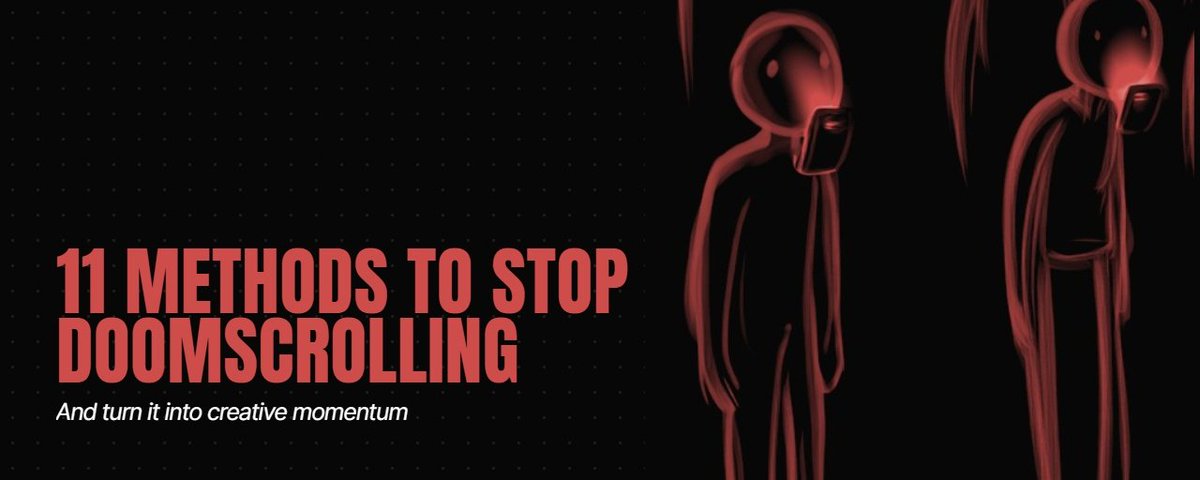
Stop doomscrolling. Build something meaningful...
Here's 11 Methods To Disrupt Your Dopamine Loops:
- Curate your interface and control your inputs
- Disrupt the habits that are causing you harm
- Turn that reclaimed time into creative momentum
tommy.eden.so/11-methods-to-…


Lukas Weichselbaum retweeted
@bot let's get this done. Delegate to CSO and focus on mainly my email addresses being in spam directories but also my phone number. Be thorough. Use my Claude API credits where possible or outside heavy tasks to Claude where it makes sense. Report back to PAB with TLDR decisions and summary of what you've done. Only ask stuff you actually need my input on.
Lukas Weichselbaum retweeted

I am begging you to start writing by hand to preserve your ability to think.



Lukas Weichselbaum retweeted

for sure, the immersion point is real. a long piece of work allows for two things -
1. repetition - in ancient india one of the primary methods of learning was periodic repetition of the idea in verse (often with rhymes)... when i was in school, the general attitude was to look down upon memorisation and hold understanding at a pedestal.
later when i was doing math research, i met a very reputable old indian mathematician in US who actually remembered his 6th/7th std lessons in coordinate geometry verbatim... i was mind blown at the time.. gradually over the years i realised that both have a role in helping us learn - memorisation and understanding.
even in classical music, we often repeat a single idea several times but it changes a little bit in every repetition.. like looking at a diamond from multiple perspectives.
2. leisure as default - i think one of the strongest aspects of a book is the implicit assumption that both the author and the reader have time to spare. that vibe allows the author to bring in , at first what seem like unrelated things, into the narrative.. then they kinda all weave in together at the end and everything falls in place.. the thing with articles, docs, social media posts is that they work on the principle of compression = intelligence... i'm not totally against this either.. i think both make sense on different occasions.
as to the point regarding book/reading selection :
what seems to work for me is a method that is difficult and not scalable.. but it works..
in one way or another, either through serendipity or seldom through conscious search, you meet an outlier mind... someone who thinks clearly.. differently...
that's the signal..
if the state of that mind is good (at that time), then one consumes the output of that mind, be it in books, articles, podcasts, posts or whatever.. the format is secondary... the person is the 'load-bearing' thing :)
as an example, i found @kepano a while back when i was transitioning to markdown files as a memory substrate. i read a couple of articles of his and something just clicked... i found a beautiful mind... an honest and sincere mind... so i read a lot of his articles and even sat through a painful 3 hour podcast he did with a host who insisted on talking about himself on every occasion... but it was worth it.. so many of our ideas matched too.. he is deeply influenced by the 'file over app' philosophy.. in my own writings i have expressed this as 'owning over renting'...
i had a similar vibe with aurobindo ghose, alexander grothendieck, vilayat khan's sitar.... i ended up consuming almost all their collected works..
maybe the following idea is worth exploring more (for me!) :
minds over books.
Lukas Weichselbaum retweeted

I have to remind myself often: Doing the unscalable is scaling.
Let's look at American history for a great example. In 1948 every relevant national poll had incumbent President Truman losing. He made a crazy decision and used serious initiative to beat the odds:
Truman had never actually been elected president. He took it over when Roosevelt died. His own party had tried to replace him with Eisenhower just months earlier.
At some point he made the crazy and unscalable decision to spend six weeks mainly living on a 17-car train with his wife and daughter, rolling through small towns and speaking from the back platform. Most days started with a speech right after breakfast and ended with preparing for the coming ones.
Founders profit so much from this way of making decisions and leaning far into behaviors that almost no one around you really gets. It's what happens when you truly decide to make something new happen.
Truman and his family traveled roughly 21,900 miles and he held around 275 speeches. His wife and daughter would also step out onto the back platform with him at every stop. More than once the money ran out and they had to raise it on the spot before they could pull out of the station (sound familiar?).
All three big pollsters had stopped polling early. The Chicago Daily Tribune was so sure it printed 150,000 copies saying “DEWEY DEFEATS TRUMAN,” before the count was in.
His opponent had the more professional campaign and nobody thought he could pull it off.
As you are expecting at this point point: Truman won anyway.
What he did was not even that clever. It was uncomfortable, intense and scrappy.
I see a lot of parallels to startups. You see a possibility and a path others don't. You make a bet on what you need most right now. And then you live inside that bet for a while. Looking back on my past two years, that's really not a comfortable experience. The setbacks come early. The money is tight. Your life arranges itself around the thing in a way that would look quite strange to anyone watching.
That is not the exception. That is what starting something big is, for pretty much everyone who does it.
The takeaway is not to be blindly relentless and gritty!
I think it is that the direct, unscalable, slightly ridiculous thing is often the one that works, and it rarely feels like a plan while you are in it.
I am still not great at spotting which one that is for me. Usually I see it clearly about a month late and first try to find a way to automate things... But then I go do the unscalable again. Like writing content because AI just doesn't nail it and creates effects I find highly undesirable.
So what is the unscalable thing you have been avoiding?


Lukas Weichselbaum retweeted
Spending more time creating than consuming is the most powerful shift you can make in your life.
I'm designing a coaching program right now, and shifting from consuming to creating is one of its core pillars. One I am challenged by daily. So I'm going to think out loud about it here, which is fitting, because thinking out loud in public is also a nice example for the kind of creating I mean.
Every week I meet a friend and mentor of mine, Phil Goddard, and we build this program together. The more we work on it, the more convinced I am that the balance between consuming and creating sits close to the root of how good your life actually feels.
Generative AI has made this urgent. There is now endlessly more to consume, endlessly more to distract yourself with, endlessly more pulling you away from what you care about. The default gravity of your day is consumption. You have to choose creation on purpose.
Here is why creating wins, on two levels.
On the human level, it is simply more nourishing. It rests on the same foundations that make art therapy works. It is why writing out your thoughts and feelings, or channeling them into an instrument, can heal a part of you that scrolling only makes fade away. I know this in my own body. I start feeling numb after a while of staring myself into oblivion through the screen of my phone. My body of awareness distant, my emotions muted. A bit numb.
Then I finally get up, and play fifteen minutes on my hang drum. It takes a while for me to ease into the music but once I get into the flow it simply resets my nervous system. Fifteen minutes of watching other people play music on Instagram does not come close, even though in the moment it feels like the easier option and our habit might command the first impulse.
On the practical level, creating builds something that lasts within you. When you make something, you have built a skill and an asset. You can share it. You show people who you actually are in a way that a quickly uploaded photo never will. Create consistently and you build a presence that compounds.
There's one company in particular, Fonio, doing exactly this at scale. They have quite a few of their people sharing on their personal LinkedIn accounts, and the whole business has become loud and visible as a result. That is what happens when an organization shifts from consuming to creating. It starts showing up everywhere, talking about every part of what it does.
It’s amazing, honestly. Great work, Fonio.
This is relevant to you whether you're building a company or just trying to feel more alive in your everyday life. The honest, slightly uncomfortable question is this: how much of my time goes into consuming, especially to escape how I feel, and how little goes into making something of my own?
You don't need a grand project to start. Next time you have an insight, write it down as it comes, unfiltered. Or post one honest thought inspired from reading ten of them.
Or just sit down and write about that problem that's been plaguing you. (That's what's happening in the picture here.) Then notice how different you feel afterward.
Create a little more than you did last week.
Maybe even share some of it.
That’s the practice.

Lukas Weichselbaum retweeted
Our business felt stuck three times.
We pivoted into growth instead.
Underneath those three pivots are three insights. They are part of what we call creative high leverage moves, which I will be probably writing more about soon. Here we go:
1. Be willing to pivot. That was the first pivot from app to group experience. Looking back on important parts of my life, I see that this doubling down is just as often motivated by fear as it is by good measure. Allowing your values to guide you and the impact you want to have is often more helpful. It might even be easier than bringing this exact product to market that you are coming up with. When getting traction or monetization is the signal to think about a possible change direction, not to grind harder. We pivoted three times. Each time it felt a bit like giving up. What really happened was the opposite: We had the courage to move on.
2. Understand your resources. See what you already have. When the app stalled, we didn't go hunting for a brand-new idea. We looked at what people were actually doing, and the thing they truly appreciated wasn't the app. It was doing art and gathering to create, together. That was our real resource: a format people loved, and two skillsets that fit. Aaron's startup experience and skills, my coaching and workshops that I’ve developed over a decade came together. Based on what you have and have learned, I'm sure you can build something promising.
3. Know who to talk to. This is the one most founders get wrong, and it's where the creative high leverage really lives. Say you've created some fantastic and unique shirts people like to buy and you want to find new buyers. You could stand on Mariahilferstraße, Vienna's busiest shopping street, and pitch every single person who walks past. Or you could stop for a second and think: I could walk into the next boutiques there! Not to sell to the offended shoppers — to talk to the distributors. The people who already have a point of view, ethical guidelines, a real character to their brand. Those who know the people you are trying to sell to and have access to them. One conversation with them can do so much more than 100 pitches on the street alone would. Getting creative with whom you want to talk to and how you will reach them is incredibly valuable.
That's a creative high leverage move: instead of pushing harder at the obvious door, you find the one that opens onto a much bigger room. Talk to the right people, not the most people.
For Morning Sloth, that move was telling the right person about what we were building — which is how we ended up in partnerships that put more institutional weight behind everything we'd made. We weren't louder than anyone else. We just finally aimed at the right door and brought the right skills to those waiting behind it.
Sadly, this doesn't imply working less… It's about aiming better. A creative high leverage move is the small, well-placed decision that quietly does the work of a hundred brute-force ones. At least that is my personal experience and it shouldn’t be taken as there being no other paths to success.
But it is a fun and effective one.
The next round of Startup30 — where we help founders find and execute exactly these moves — starts in September, btw: morningsloth.com/startup30

Lukas Weichselbaum retweeted
The biggest thing Long COVID taught me is where to invest my energy.
Luckily this also seems to be a great lever for having an enjoyable time and performing well in a chosen area of life.
A few years ago around Easter I got a cold and I just felt really tired. Then I felt tired for a week. Then for another week. I was constantly thinking what's going on? When am I going to recover? Until I talked to a friend who told me about his wife who had Long COVID and the symptoms she has. “Oh sh*t, those are the same symptoms I have.” And that’s when my struggle with Long COVID began. I got to learn just how important my health really is compared to all the other things I thought were important.
You can imagine your life as a wonderful meal. You set up a table, place all that delicious food on it, arranging it in a borderline artistic way. But then someone comes, flips over the table, and gives you the finger. That was it for your meal. That’s your health. Because when your health is suddenly smashed on the ground in a mess then so is your life. And there’s no easy way out for that.
This left me with a limited amount of energy. Participating in events and workshops, traveling and meeting new people was what I relied on to meet new people in Vienna and is what drove my business even online.
Suddenly leaving the house itself or sitting for hours staring at a screen burns the main amount of my energy budget and going out in the evenings felt like an impossible task. My whole business just didn’t really work the way it did before.
I had to rely on an unsteady amount of energy. If I slightly overextended and overtaxed my system, I couldn’t carry on regularly for days. Quite similar to how many leaders and entrepreneurs burn out.
If your calendar quietly assumes unlimited energy, this part is for you. Early-stage founders, people with ADHD, actually anyone who is the single point of failure in their own company. You don't need a burnout for that math to break. A body that stops cooperating, a newborn, a bout of grief, one quarter of being high-powered but continuously drained does the same thing.
Two things carried me, and both were less about strategy than about being honest.
The first: the baseline comes before the plan. Sleep, rest, health. Not as self-care content, but as the precondition for anything else being possible at all.
The second: when you need support, actually go and ask for it. I told people plainly that I wasn't well, that I couldn't show up at events anymore, and that I needed referrals. That was uncomfortable. It also worked better than anything I had done with a full calendar, because people could tell I wasn't trying to milk them. I was a person asking for help.
Business is still a human relationship, especially early on. People respond to what is real much more reliably than to what is polished.
This isn't a strategy I would have designed on purpose. It was the right move for the situation I was actually in, which is usually where the right move hides.
Nobody else can see your energy budget. So the honest question isn't what you should be doing. It's what your energy can carry right now, and whether you are spending it on that.
It’s one of my favorite topics to talk about what and how we prioritize as it is sometimes simply too much to do as a single mind.
Deirdre Shea Swanson, a leadership trainer I work with, once shared an analogy with me: Being a parent founder is like constantly juggling and knowing you will drop balls, so you are also constantly trying to figure out which of the balls are made of glass.
I might not be a parent but I suspect it relates to almost every founder and business owner.
At least I know I find it challenging to balance appointments, book-keeping, my background work, writing, music, household, relationships, food and health in general.
I definitely drop some of those on a regular basis. Luckily with a good sense of which ones break when they hit the ground.
Let me know what your top priorities are that you are juggling in your life and how you are managing it.
P.S. if you want some support figuring out where to put your energy, the next round of Startup30 opens in September:
morningsloth.com/startup30

Lukas Weichselbaum retweeted
My founder journey has been really unpredictable. And that is awesome.
We pivoted three times before Morning Sloth became something that could actually carry us.
It started with Aaron and me, and one shared belief: that the creative spark is at the core of what makes life meaningful. He's a musician and entrepreneur. I've spent a decade helping people improve their leadership and relationship skills. Two very different skillsets that fit together far better than either of us expected.
The first thing we built was an app to help people start the morning in an open, creative state of mind.
People liked it, used it, and then left after a few weeks. The feedback was warm, but they just didn't stay long enough for it to ever sustain us.
One thing did work, though. We started hosting community events where people came to create. They came back. More reliably than they ever had for the app.
So we followed what people wanted and turned it into Create30, a group program for building a consistent creative habit: shared practice, mutual inspiration, a bit of accountability.
Then something we didn't plan for happened. People inside Create30 started using the space to work on business: their marketing material, their content, their goals. And it clicked: the same principles that kept people creative were exactly what early founders were missing.
Because being a young founder is one first-time thing after another. You have to sell, and you've never sold. You finish the product, and now you have to lead a team. What helps is a group going through it at the same time, a few experts who've already been there, and a steady rhythm of accountability and honest reflection.
That became Startup30, our hands-on decelerator.
The next turning point was telling the right people. We kept talking about what we were building, and eventually we said it to the right person at the right moment. That's how we landed our first major institutional partnership with the European Institute of Innovation and Technology.
If I had to name one reason it worked, it's Aaron's openness. He'd spent ages building that first app. When it became clear it wasn't the thing, he let it go. If he'd insisted we double down, I never would have brought in the part of me that's actually good: personal growth, community, program design. We gave up a part of us and built what we could build together.
Startup30 finally made it clear what we were building towards. It even gave us room to keep experimenting without every bet having to pay off immediately.
Every first-time thing you do alone and without a system costs more than it has to: in time, in confidence, in cash.
Come see what I've built with Aaron and now Deirdre, especially if you're a bit like us:
• ADHD
• Creatives
• Parents
The next open round of Startup30 starts in September. Links below.

Lukas Weichselbaum retweeted
The phone you're reading this on was once a thought in someone's mind. So was the chair you're sitting on and the roof over your head. Someone had a thought, a hunch, a feeling. Then they followed through. That's how everything humans make gets made. And it's how you create your life.
Look at your partner. What do you think, what do you feel? This defines what you do next and thus your relationship. Look at your work. The state you're in, tied to the thoughts you're having, defines your next actions. Your entire life is a demonstration of how thoughts shape your reality. You better get good at noticing this. Because once you see how the process works in you, you get direct access to changing it. And most of us have things we'd like to change.
What if, this very moment, you chose entirely new thoughts and created something different?