
US Patriot. Dad, Engineer, Skeptic.
USA
Joined October 2022
- Tweets8.7K
- Following286
- Followers536
- Likes36.3K


willyb63 retweeted

This might sound crazy, but one of the skills you NEED to learn is how to deal with an increasingly illiterate society full of emotionally dysregulated people.
If you keep getting frustrated every day over how “dumb” everything and everyone seems, the stress of it is going to wreck your mind.
You can’t control the collective intelligence or emotional maturity of the world around you.

willyb63 retweeted

Putin explained the whole war in two sentences, then gave Europe some free advice:
"America started the war believing it could destroy Russia. Europeans joined in, hoping they could finally get access to Russian resources, as they sometimes managed to do in the past.
But they should study history. It would immediately show them that this idea is foolish."
willyb63 retweeted

Pradheep thought his Brahmin rage screams would be more intimidating with a 🔫in his hand, but he quickly learned that 💩doesn't fly in the US because others have 🔫s too. teapawt.net/Adityas_ego/status/211…


willyb63 retweeted

🚨 Hugo Carvajal, Maduro's former spy chief, is sitting in a US federal prison after pleading guilty to narco-terrorism. He has written to President Trump and the American people saying he wants to "tell the full truth."
In that letter, filed in federal court, Carvajal says the Chávez and Maduro regimes PAID US diplomats and CIA officers to help keep them in power.
Think about that. A foreign narco-regime that flooded our streets with drugs had people on its payroll inside our own government.
Carvajal didn't name names in the letter. But he has the names. He ran Venezuelan military intelligence for years and he's cooperating.
So here's the question: WHO took the money?
The internet is full of lists right now, and none of them have been verified. Americans don't need rumors. We need the DOJ to put what Carvajal knows on the record and indict every single person who took cartel cash to sell out this country.
AG Todd Blanche, the American people are waiting.
Release it.

willyb63 retweeted
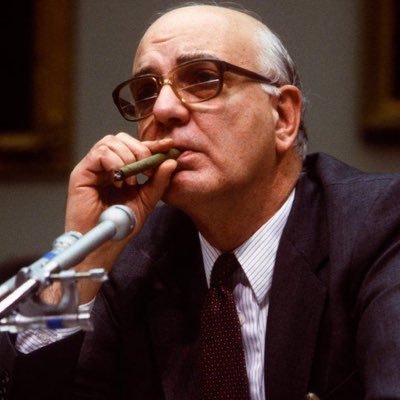
Absolutely incredible…
"Wedgewood Polls" just admitted they are a fake polling firm and made up their polls.
Their fake polls have been posted in both the NYT and Nate Silver’s averages.


willyb63 retweeted

REPUBLICANS
At 35% voter turnout, you lose.
At 65% voter turnout, you win most of the time.
At 75% voter turnout, you get a congressional majority and can actually pass policy.
At 80% voter turnout, you get a supermajority and can pass the agenda.
Democrats only hold power because voters allow them to.
GET OUT AND VOTE… VOTE RED

willyb63 retweeted
Interesting.
Michael Burry.
Remember that movie, The Big Short?
Burry was Christian Bale's Nostradamus-like character.
Burry is a visionary. This is a comforting analysis, if true.

Breaking: Michael Burry says OpenAI and Anthropic are faking the AI warnings due to slow growth ahead of IPOs
Below are his reasonings:
1. LLMs are not AI and won't be AGI. There is nothing AI to slow down.
2. Competition is coming up fast, slowing benefits incumbents.
3. IPOs need hype & puffery; "we are so awesome it could become dangerous" is hype & puffery
4. Cover for real uncontrollable slowing growth as IPOs look to be pushed out


willyb63 retweeted

The Lindsay Clancy case has shown us that toxic femininity is a bigger problem than toxic masculinity. 💯
willyb63 retweeted

47% of government spending is on some form of welfare. Only 8% is on defense.
Reducing welfare spending is profoundly difficult politically...but it must be done or we will go the way of Rome.


Rome handed out free grain to 40,000 citizens in 73 BC. By 46 BC, Julius Caesar found 320,000 people lining up for their monthly ration. That eight-fold expansion happened in under three decades, and it shows you how welfare states actually grow.
No Roman senator stood up and announced a plan to addict a third of the city to government bread. It happened incrementally, through political competition. Each magistrate who wanted votes expanded eligibility. Each expansion normalized the next one. The citizen who once considered the dole shameful eventually expected it, then demanded it, then organized politically to protect it.
This is the core mechanism free market thinkers have identified across every era: once you create a transfer program, you create a constituency for that program. Recipients vote. Administrators build careers. Grain merchants who supply the state develop a stake in keeping the contracts flowing. The political economy locks in.
Caesar, to his credit, actually cut the rolls back to 150,000 through verification audits. It was one of his more economically coherent moves, though the Senate still murdered him. His successors quietly let the numbers climb again.
What did the dole require? Massive grain imports from Sicily, Sardinia, and Egypt, organized through state logistics at state expense, funded by taxation and conquest. When the conquest revenue dried up, the obligation remained. Rome had written a check against future military success, and future military success eventually failed to arrive.
The lesson is not complicated. Distribute a benefit and you distribute dependency. Distribute dependency and you distribute political power to whoever controls the distribution. The grain dole didn't weaken Rome overnight, but it made every subsequent reform politically impossible.

willyb63 retweeted

Here is what actually happened this week.
An American missionary held in Niger for almost a year came home. Trump got him out. The media barely covered it.
David Morens, Anthony Fauci's top adviser, pled guilty in federal court to destroying COVID records. The same records Fauci swore under oath he never deleted.
The DOJ cleared the military to detain anyone who trespasses into a National Defense border zone. 161 people already held.
DHS has now billed more than 100,000 illegal immigrants civil fines. Total tab: 84 billion dollars.
Byron Donalds won the Florida Republican governor primary.
One week. All of it on the record. None of it on your TV.
willyb63 retweeted

Rome didn't fall because of barbarians. It fell because emperors couldn't stop spending money they didn't have.
The process was mechanical. Roman armies were expensive. The legions demanded pay, the frontiers demanded fortification, and the grain dole demanded perpetual subsidy. When tax revenue fell short, emperors did what every desperate government does: they debased the currency. The denarius, once nearly pure silver under Augustus, contained just 5% silver by the reign of Gallienus in the 260s AD. They shaved the coins, mixed in base metals, and still called it money. Prices responded accordingly. Monetary inflation causes price inflation, whether it happens in Rome 2000 years ago or in 2026.
You'd have watched this in real time as a Roman merchant. The goods sitting in your warehouse cost you the same labor and transport to acquire. But the coins arriving in payment bought less each month. Diocletian's Edict on Maximum Prices in 301 AD attempted to cap inflation by law, threatening death for anyone charging above the mandated rates. Sellers simply withdrew their goods from market rather than sell at a loss. Price controls produced shortages. Shortages produced famine.
The spiral tightened. As trade collapsed, tax revenue fell further. Soldiers went unpaid or received debased coin they couldn't spend. Loyalty evaporated. Provincial generals raised their own armies and declared themselves emperor (there were over 50 claimants in the 3rd century alone).
Free market thinkers have always pointed to this sequence as the purest historical case study in monetary destruction. When government substitutes political will for sound money, it doesn't bend economic law. It cannot bend. The Roman state inflated its way into insolvency, controlled its way into scarcity, and taxed its way into abandonment. Rome liquidated itself.

willyb63 retweeted

The conventional explanation for Rome’s demographic collapse is wealth. People got comfortable. They stopped having children. It happens to every prosperous civilization. Nothing to be done.
This is wrong. Or rather, it is incomplete in the way that matters most.
Rome didn’t stop having children because it got wealthy. It stopped having children because it built a welfare state – and the welfare state did what welfare states always do: it replaced the incentives that make people build families with incentives that make people consume instead.
The grain dole began modestly. Around 40,000 recipients in 73 BC. By Caesar’s time: 320,000. That eightfold expansion in under three decades was not a plan – it was a political mechanism. Each magistrate who wanted votes expanded eligibility. Each expansion normalized the next. The citizen who once considered the dole shameful eventually expected it, then demanded it, then organized politically to protect it.
The dole didn’t just feed people. It changed what people were for. A Roman citizen with guaranteed grain, free entertainment at the arena, and no frontier left to conquer has no pressing need to build anything – including a family. Children are a project. Projects require purpose. The welfare state had quietly removed the purpose while appearing to provide security.
Augustus saw the birth rate collapsing and did what statists always do: he legislated. The Lex Julia, the Lex Papia Poppaea – penalties for the unmarried, rewards for the fertile, the full power of the empire deployed to engineer a baby boom by decree. It didn’t work. It never works. You cannot legislate desire. You cannot fine people into wanting a future.
What Augustus didn’t have was Mises and Hayek. He didn’t understand that the system he was trying to fix with more intervention was being destroyed by the intervention he had already deployed. He saw the symptom — falling birth rates — and reached for the tool he knew: state power. He didn’t see the cause, because no one in his world had yet articulated it: when you replace personal purpose with state provision, you replace the human drive to build with the human tendency to consume. The dole didn’t just feed the hungry. It fed the purposeless.
We have Mises. We have Hayek. We have the complete theoretical account of what the welfare state does to human motivation, to family formation, to the incentive structures that make people want to build something that outlasts them. We know what Augustus didn’t know. We know why the laws failed. We know what produces the behavior he was trying to legislate into existence.
The answer is not more legislation. It is less welfare state. Not because cruelty is a virtue – but because purpose is. The person who must build to survive builds. The person who must form a family to transmit what they have built forms one. The person who receives guaranteed grain, guaranteed entertainment, and guaranteed security from the state has been given everything except the reason to do any of those things.
Scrap the socialism. Restore the purpose. The birth rate will follow – not because anyone ordered it, but because people who have something to build and something to transmit tend, given the choice, to build and transmit.
Rome didn’t know it had a choice. We do.

Rome handed out free grain to 40,000 citizens in 73 BC. By 46 BC, Julius Caesar found 320,000 people lining up for their monthly ration. That eight-fold expansion happened in under three decades, and it shows you how welfare states actually grow.
No Roman senator stood up and announced a plan to addict a third of the city to government bread. It happened incrementally, through political competition. Each magistrate who wanted votes expanded eligibility. Each expansion normalized the next one. The citizen who once considered the dole shameful eventually expected it, then demanded it, then organized politically to protect it.
This is the core mechanism free market thinkers have identified across every era: once you create a transfer program, you create a constituency for that program. Recipients vote. Administrators build careers. Grain merchants who supply the state develop a stake in keeping the contracts flowing. The political economy locks in.
Caesar, to his credit, actually cut the rolls back to 150,000 through verification audits. It was one of his more economically coherent moves, though the Senate still murdered him. His successors quietly let the numbers climb again.
What did the dole require? Massive grain imports from Sicily, Sardinia, and Egypt, organized through state logistics at state expense, funded by taxation and conquest. When the conquest revenue dried up, the obligation remained. Rome had written a check against future military success, and future military success eventually failed to arrive.
The lesson is not complicated. Distribute a benefit and you distribute dependency. Distribute dependency and you distribute political power to whoever controls the distribution. The grain dole didn't weaken Rome overnight, but it made every subsequent reform politically impossible.
willyb63 retweeted
I am bewildered, and not very impressed, by the visceral, naked, irrational hatred spat out by some defenders of Jason Arday. If a Cambridge professor is accused of being an unqualified charlatan, the accusation might be racially motivated. On the other hand it might not, depending on the evidence. The correct question to ask is not, ”What is the colour of his skin” but “Is it in fact true that he is an unqualified charlatan?” Please examine the evidence before leaping to the assumption of racism.
As for the idea that journalists “piled in on him” and “hounded him to his death”, most attacks were against Cambridge University. Jason himself was widely regarded as an unfortunate victim of foolish promotion way beyond his ability to cope. In appointing him to a professorship for which he was manifestly unqualified – in ludicrously describing him as “the best in the world” – certain senior members of the university showed a level of patronising condescension towards black people that could fairly be described as racism, while at the same time making him tragically vulnerable to such attacks as came his way.


