

Electrical Engineer, Enterprise AI Architect and Founder. God fearing, American 🇺🇸 Combat Veteran. Multi Agent Orchestration MAO, Local AI & data self custody
Florida, USA
Joined July 2024
- Tweets18.8K
- Following3.1K
- Followers5.9K
- Likes38K





Beginner lesson for LLMs.
Best use case is for STEM where results can be tested and verified.
Worst use case is asking for opinions on questions without a solution.


1
153
When I first saw this interview clip I immediately thought what Eric Weinstein would think. Having listened to Mr. Weinstein’s take on string theory multiple times before I now cannot unsee that ST was a distraction all along.

I think everyone should listen to what String Theory believers sound like.
Think Mortgage Backed Securities and the “Great Moderation” before it all came crashing down. With Greenspan as the Guru.
Or COVID having NOTHING to do with WIV. Gurus: Fauci-Baric-Collins-Daszak.
Or Epstein as Claimed Foreign Exchange Hedge Fund Geniuses having no visible hedge fund. Visible Gurus: Maxwells Epstein Dershowitz and Wexner.
Etc…ad infinitum.
Learn the pattern.
4
229
Fable 5.1 is a go!
It's like all the other AI labs were waiting for Anthropic to make the next move.
I wonder what their response is going to be.
Probably how it is so bad and no one should use it.
Everyone else is so far behind they will say whatever it takes to keep you from realizing it.

4
108
For MacOs users this is not as pressing but for Windows users better alternatives like the Omarchy Linux environment is needed more than ever.

If you use AI, you need to switch to Omarchy immediately
It is an AI first, open source operating system by @dhh and it has skyrocketed my productivity
In this video I cover how to use it, how to install it, and why I'm having more fun using computers than I ever have before:
5
471
This is really important and well overdue. I trust the ranchers and farmers in my community before I trust any inspector sent from the government.

🚨 BREAKING: In a MASSVE move against the meatpacking monopoly, President Trump is hereby authorizing farmers and ranchers to DIRECTLY PROCESS their OWN FOOD
Trump is declaring WAR on artificially high meat prices! 🔥
"For years I have heard that they have had a tremendous problem with the Big Processors, who many say are a nasty Monopoly."
"There are, essentially, 4 of them, a very non competitive number, and they make life miserable for our wonderful Farmers and Ranchers, and I can’t let that happen, can I?"
"So, in order to break this powerful monopoly, with much of its ownership based outside of the U.S., I am authorizing legal documents to be drawn in order to allow Farmers and Ranchers to be given the right to PROCESS THEIR OWN FOOD."
"This should move quickly. Thank you for your attention to this matter! President DONALD J. TRUMP"
5
126


Gimme gimme.
How many active tokens?

Today we're also opening the weights for Muse Glimmer, a great 30B parameter dense model that can run locally. Soon we'll also release the weights for Muse Spark 1.2, our latest foundation model. Meta is a strong supporter of open source and I'm proud of these releases. Congrats to @alexandr_wang and the MSL team for all your great work on these models.
4
200
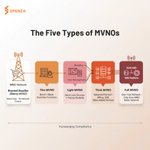
All Starlink has to do is add a Mobile Virtual Network Operator (MVNO) for terrestrial, and they have what none of the major carriers have: NTN.


I was outside in downtown Santa Barbara yesterday afternoon and had to connect to a restaurant’s Wi-Fi because I literally had zero cell signal (I have Verizon). My wife, who has T-Mobile, also had terrible cell signal.
Tell me again how @Starlink Mobile won’t be able to compete?
5
192
For those that still have a moderate attention span and believe that re-industrializing would benefit all Americans.

MY DATA CENTER POLICY PLEDGE: OHIOANS-FIRST
A top concern I hear from Ohioans across our state – second only to property taxes – is the accelerating pace of data center expansion. Key citizen concerns about data centers include rising electric bills, noise, pollution, and the absence of clearly defined economic benefits for Ohio families. The data center industry has badly failed to earn the trust of millions of everyday Ohioans who are struggling with electric bills and property taxes, wondering why large corporations receive property tax abatements while ordinary homeowners don’t receive the same.
There are hundreds of data centers already across our state, and the pace of construction is accelerating. While I had no part in these past projects, I am committed to ensuring our policies catch up to current realities. Despite my opponents’ claims, I’m not “pro-data center.” I’m pro-Ohio, and I have a plan to fix the problem.
At the same time, I also hear from Ohio's workers about the need to attract high-paying construction jobs to our state, for which the data center boom has been helpful. Preserving economic growth, capital investment, and high-paying jobs in Ohio is also a vital objective.
After traveling all 88 counties and listening to workers, farmers, union leaders, building trades, small business owners, environmental groups, and grassroots activists, I am convinced that the best path forward is neither unrestrained data center growth nor a permanent categorical ban. The right answer is a policy framework that allows Ohio families to prosper economically while protecting local communities.
Today I am announcing my policy pledge to Ohioans on data centers. If a data center is built in your community, then (i) you will no longer have to pay for your home’s electricity, (ii) you will pay lower property taxes, and (iii) the data center will be required to abide by all air and water quality standards without exception, and we will take the necessary steps to protect Ohio’s fertile farmland. If any one of these three conditions is not met, the data center won’t be built. Period. I will work with Ohio’s state legislature to codify these commitments into law immediately after I assume office.
To ensure urgency, I will further issue an executive order on my first day in office to immediately halt the approval of any new data center project announcements in Ohio, until the above-mentioned data center legislation takes effect. These policy objectives are consistent with the principles I have articulated over the first 18 months of my campaign, and today I am making a legislative commitment to codify them into state law.
My Democrat opponent recently announced that data centers must not contribute to higher electric bills for ratepayers, a concept that I advocated for in early 2025 long before she started parroting the same. This is obvious but insufficient. We can and must go further for Ohio families.
Eliminating electricity costs is the right objective. If Ohio’s governor sets this as a clear requirement and negotiates accordingly, I am confident that hyper scalers would be willing to fully cover the cost of power for Ohioans who reside near a data center. That requires the acumen of a businessman, not a bureaucrat, at the top.
This is very practical to implement. Data centers could generate power behind their own meter, and the excess power generated can be credited to the electric charges on a residential customer’s electric bill within a certain radius (the “benefit zone”). This would operate as if customers in the benefit zone had executed a power purchase agreement with the power plant, but at no cost.
For example, if a data center is constructed along with a 1,000 megawatt (MW) natural gas or nuclear power plant, and the data center uses 700MW of that electricity, the remaining 300MW would flow to the power grid. State law would define the benefit zone and credit the 300MW across all residential customers within that zone. Even 100MW would power 75,000-100,000 homes. Given the potential to power so many homes, most of Ohio’s counties would fit entirely within a benefit zone – which means every resident in the county would pay nothing for their electricity if a data center were built there. Alternatively, data centers could also directly reimburse residential customers within the benefit zone for their electric bills.
In addition to providing free electricity for local residents, my plan would also deliver property tax relief to Ohioans within the benefit zone – by prohibiting property tax abatements for future data centers and creating a property tax rebate for Ohio homeowners. That is, data centers would be required to pay 100% of their property taxes without abatements, and these property tax revenues would directly fund property tax rebates for homeowners. This helps deliver major property tax relief for Ohio families without hurting local police, schools, or firemen – and may become essential with a looming ballot initiative to eliminate property taxes expected in 2027.
Finally, my plan ensures that data centers do not receive special exemptions on air and water quality standards and that our farmland is protected. This respects local conservation objectives, while also giving companies a predictable regulatory environment. Simply put: if a data center is going to be built in Ohio, we will require it to minimize its water usage by recycling and reusing its water with the best available technology. We will also require that when the water is released, it comes out just as clean as when the data center took it in. That’s common sense. We will also emphasize the use of vacant and former industrial sites known as brownfields, rather than the use of fertile farmland. Our water and farmland are some of Ohio’s greatest and most precious resources, and my plan ensures that they are protected for all Ohioans.
Ohio requires a governor who is willing to listen and to adopt thoughtful solutions that actually put Ohioans first, by carefully weighing costs and benefits rather than spouting off meaningless proclamations.
That means supporting economic growth for Ohio’s workers, while ensuring that we do it in a way that helps all Ohioans. In sum, my administration will eliminate electricity costs and reduce property taxes for homeowners, while also ensuring that all environmental laws are respected and that farmland is preserved. No data center will be built in Ohio without actualizing these commitments. I look forward to signing legislation in early 2027 to turn this vision into reality.
4
148
John Dawson retweeted
Busy highways I would argue are more noisy than data centers and the cars that drive on them also pollute.
Society as a whole does not complain about highways because we all use them and we are aware we use them.
If society only knew that in the modern era data centers are just as necessary as highways and people use them at a higher frequency than they use highways.
If you are interested in better forever free options where Cloudflare or another SaaS doesn’t get to see what your agent searches on the internet, let’s talk. There are too many Open Source or other free options to list here.

Introducing Kitesurf: a browser built for agents, running entirely on Cloudflare Workers.
Chromium is too heavy to hand every agent one. Kitesurf is written in Rust, uses 3-7x less CPU and memory, and spins up per request.
Free in beta: blog.cloudflare.com/kitesurf…

1
77
John Dawson retweeted
Everyone should join the waitlist for MAO. It’s the free local AI and data self-custody Multi Agent Orchestrator harness. Imagine if Claude Code, Microsoft Office, and Huggingface had a three-way that resulted in a rebellious love child with the goal of ending SaaS. Help us build our free marketplace. Providence-Pro.com


John Dawson retweeted

Here is my AI investing guide.
Sitting here August 2026, my current best thoughts are as follows:
1. LPS (Land Power Shell) is still the most obvious and fastest path to cash on cash returns. Lots of value can be assembled and traded quickly at this layer. And as data centers get more pushback, energized land can explode in value. Very bullish here.
I’ve stepped into this layer very aggressively. My partner @anitavlallian and I have acquired almost 6GW coming online in a ramp from today thru 2029 of grid power and behind the meter.
2. Silicon - I helped get @GroqInc off the ground in 2015 and we licensed it to @nvidia for $20B Dec2025. I won’t invest or incubate anything in this layer now. The perf demands of the chips are too high, manufacturing precision is too complex and supply chain influence to get adjacent components like memory isn’t possible for a startup anymore. Lots of capital will be wasted here chasing Groq and Cerebras’ success. Note that both startups made sense a decade ago when these constraints were much more modest.
3. Clouds - Clouds are very very lucrative but very hard to build and very expensive and technically complicated to maintain. And as alignment becomes a more important issue, I expect the clouds will be asked to build robust KYC and attest to it. This makes the risk:reward ratio skewed. I don’t want to be responsible when the USG says a cloud allowed a bad actor to do something bad because of poor KYC.
4. Models are complicated. The big open question is how much of the revenue being generated by them today is because of tokenmaxxing and poor model behavior. If it’s a lot, then the annualized revenues will diminish meaningfully even as token consumption inflects upwards. This is the big economic question at this layer.
5. Harnesses are where the action is and why I started @8090solutions two years ago. In a nutshell, the harness helps enterprises owns their proprietary context (what Alex Karp calls their ‘alpha’). This is an enterprise’s data, workflows, evals, and business rules. A harness that gives this to an enterprise is what creates very low model-agnostic switching costs, which further reinforces my views of #4 above.
6. Applications will be another long term winner along with harnesses. This is where the differentiation between “off the shelf” and “custom time and materials” melts away. Every company, with the right harness, can now imbue their alpha into the software that runs their company. I expect this to mean that “off the shelf” is largely replaced with custom software creating a huge opportunity to write these solutions for companies. Build once and sell repeatedly is a laggard GTM motion for a SaaS world that isn’t needed here. Think custom by design, alpha embedded, proprietary by nature.
Fin.
Good luck to all the players!

John Dawson retweeted

Today, we are releasing Inkling-Small.
Inkling-Small achieves comparable performance to Inkling at a quarter of its size. It features 276B total parameters, 12B active. We are making the full weights available.
thinkingmachines.ai/news/ink…
Fine-tune it on Tinker today, or chat with it in text, image, and audio on Tinker Playground.

John Dawson retweeted
Yes the MAO platform I am opening up to the public next month. It is made for local ai and data self custody. It is completely free, none of the dirty trick SaaS has been playing on us for decades. It’s made for both single users and large organizations. Multi Agent Orchestrator (MAO).

