

Using AI and advanced technology to monitor bee, pollinator and environmental health to find long-term solutions to benefit both nature and people.
Worldwide
Joined October 2015
- Tweets13.3K
- Following4.9K
- Followers5.2K
- Likes32.8K



What do we lose when a bee species disappears?
Researchers are discovering that we lose more than pollinators, we lose biological innovations that took millions of years to evolve.
Protecting bee diversity therefore means protecting a library of evolutionary knowledge we are only just beginning to discover.
#Biodiversity #Bees #Evolution #Conservation

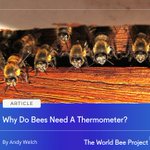
🐝 Did you know bees have a built-in thermometer?
A bee colony carefully regulates its hive temperature, using specialised “heater bees” and remarkably sensitive antennae to sense changes in their surroundings.
The temperature can influence how young bees develop, help bees work with wax to build their honeycomb, and even play a role in how vibrations travel through the comb during the waggle dance.
And the bee’s thermometer? Its antennae. 🌡️🐝
Read more: worldbeeproject.org/2026/08/…

To cope with their challenging circumstances, solitary bees have evolved some clever visual strategies.
There is far more to bee vision than we have learned from honeybees.
#SolitaryBees #BeeScience #Nature

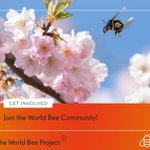
From learning more about pollinators to supporting action for healthier ecosystems, every person can play a part.
Join a growing community that cares about bees, biodiversity and a future in balance with nature. 🌍
Become part of the World Bee Community:
worldbeeproject.org/world-be…

A solitary bee doesn't need a honeybee’s giant eye to see remarkably well.🐝
The Australian blue-banded bee, for example, achieves impressive sensitivity despite its relatively small eyes.
Evolution has been experimenting with bee vision for millions of years.
We’re only beginning to understand the results.
#Bees #Science #Biodiversity

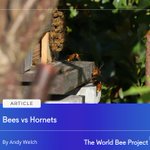
Hornets can prey on honeybees outside the hive and, in some cases, invade the colony itself.
But bees have evolved remarkable ways to fight back, from forming defensive lines and creating synchronised “waves” to the extraordinary heat-balling defence used by Japanese honeybees.
By clustering around a hornet and raising the temperature to a level the hornet cannot survive, these bees turn their own ability to generate heat into a powerful weapon.
Read more: worldbeeproject.org/2026/07/…

There’s more than one way to build a great vision.
Different bee species have evolved surprisingly different visual systems - yet can achieve similarly impressive results.
Those tiny bee innovations have already inspired better cameras, sensors and robots.
Nature is quite the engineer.

The World Bee Community brings together people who care about bees, biodiversity, and the future of our ecosystems.
Whether you’re passionate about pollinators, nature, or creating positive change, there’s a place for you in our community.
Join us and help build a world where bees, people, and nature can thrive together. 🌍
Join the World Bee Community: worldbeeproject.org/world-be…

Clearing forests to grow more food makes the planet hotter and drier.
Forests help create rain.
Remove them, and soils degrade.
#Forests #ClimateFeedbacks

We have partnered with Ecology & Co – the latest buzz in alcohol free beverages – in a collaboration designed to extend our work to benefit bees and biodiversity.
Their Manuka inspired range supports the hardworking bees behind their ingredients.
1% of every Ecology & Co sale globally will go to The World Bee Project to fund our work to protect pollinators, people and the planet.
Find out more here: ecologyandco.com/pages/world…

You can’t fix degraded soil with more fertiliser.
Living soils need structure, biology, and moisture - not just chemicals.
#FoodSecurity #SoilLife

Ecology & Co's new Manuka-inspired collection is live in New Zealand!
1% of every Ecology & Co can and bottle sold globally supports bees.
Every sip you take helps protect pollinators, people and the planet.
Find out more here: ecologyandco.com/pages/world…

Climate change is drying soils - then washing them away.
Longer droughts.
More intense rain.
Less recovery time.
#ClimateCrisis #SoilMatters

1% of every Ecology & Co can and bottle sold globally supports bees.
Why does this matter?
Because bees are responsible for pollinating the plants that support biodiversity and food systems across the planet.
Let bees pollinate. Drink to Life.
Find out more here: ecologyandco.com/pages/world…

Soil isn’t dirt.
It’s a living system that stores carbon, regulates water, and grows food.
When soil degrades, everything above it suffers.
#SoilHealth #ClimateAction

We often think tracking bees means following them through the air.
But the real story is happening inside the hive. 🐝
Through the incredible “waggle dance,” bees share precise directions, distance, and even quality of food sources. All in complete darkness, surrounded by thousands of others. It’s communication, navigation, and decision-making rolled into one.
By decoding these dances, researchers aren’t just learning where bees go, they’re uncovering how they think, adapt, and survive in changing environments.
Read more: worldbeeproject.org/2026/06/…
#BeeScience #Pollinators #Sustainability #SaveTheBees

This study highlights something critical:
Wild bee populations are far more sensitive to extreme weather than previously understood.
And considering that wild bees are effective pollinators, this isn’t just an environmental issue; it’s an agricultural one.
Climate change, combined with habitat loss, pesticides, and disease, is compounding pressure on already fragile populations.
#ClimateCrisis #WildBees #FoodSecurity

What if bees “social distance” too? 🐝
When faced with deadly viruses like Israeli Acute Paralysis Virus (IAPV), honey bees don’t rely on strong immune systems- they change their behaviour.
Infected bees are avoided. Fed less. Kept at a distance.
A natural form of social distancing.
But there’s a twist.
This same virus can disguise infected bees, helping them slip past hive guards and spread infection faster across colonies.
Understanding these behaviours is key to protecting them today.
🔍 Read more: worldbeeproject.org/2026/05/…
#SaveTheBees #BeeScience #Pollinators #Biodiversity

When we talk about bees, most of us picture honeybees in hives.
But that’s only a small part of the story.
In the UK:
🐝 270 known bee species
🐝 24 bumblebee species
🐝 200+ solitary bees
Research now shows that extreme weather conditions can reduce solitary bees' reproductive success, threatening future populations.
Protecting wild bees means protecting their habitats- wildflower meadows, hedgerows, woodlands, and gardens rich in nectar.

From farms to forests, bees sustain life everywhere. 🌍
Join a global community working together to protect pollinators and create a more balanced relationship with nature.
Be part of the global movement:
worldbeeproject.org/world-be…
