

We live in a world with #GNEMyopathy, but are making way to become a #WorldWithoutGNEMyopathy. Support our cause : https://xitter.cf/t.co/eYQ4p1YA02
- Tweets585
- Following92
- Followers183
- Likes120




ALT A vertical invitation poster for WWGM’s Annual Patient Day 2026, featuring the WWGM logo with the tagline “World Without GNE Myopathy” in the top right corner. The large red, vintage-style text “Save the Date” is layered over abstract blue and grey shapes, with the word “the” written in green cursive. Below, the text reads “You are cordially invited to WWGM’s Annual Patient Day 2026.” A circular stamp-style graphic highlights the event details, “Date: 21st Nov” and “Venue: Delhi.” A diagonal strip of photographs along the left side shows people participating in previous events, while delicate blue botanical illustrations decorate the bottom corners. The overall design uses a soft blue, grey, and white colour palette with red typography to create a formal yet welcoming invitation.


ALT Overview of common myths versus facts that employers believe while recruiting people with rare diseases. The slide emphasizes that many hiring decisions are influenced by discrimination rather than evidence, and highlights the need for fair and informed recruitment practices for people with rare diseases.

ALT Explains two common hiring myths related to rare diseases. The first myth suggests that people with non-visible rare conditions exaggerate or fake their illness, while the fact clarifies that many rare diseases do not have visible physical symptoms and may involve cognitive or internal effects. The second myth claims hiring people with rare diseases is costly and lowers productivity, while the fact states that inclusive companies are often more profitable, with higher revenue and net income.

ALT Addresses additional misconceptions in employment. One myth claims people with rare diseases are only suited for entry-level roles, while the fact highlights that they possess skills, creativity, intelligence, and leadership abilities, with many holding senior positions. Another myth suggests higher absenteeism, while the fact explains that absenteeism is largely influenced by lack of workplace accommodations rather than the disease itself.

ALT Slide 1 Alt Text: informational poster from World Without GNE Myopathy encouraging donations. Text states “Donate Now” and asks viewers to use the link in bio to support research, awareness, and initiatives for people affected by GNE Myopathy. Slide 2 Alt text: Video guide explaining how to donate to World Without GNE Myopathy. Steps include searching “WWGM” on the web, visiting the official website, clicking on “Donate Now,” and completing the donation using UPI, credit card, debit card, or cheque.

ALT Slide 3 Alt text: Informational slide explaining reasons to donate to World Without GNE Myopathy. Donations help fund research for a cure, support awareness campaigns, aid future projects and initiatives, and empower individuals with GNE Myopathy by supporting financial independence and small businesses.

ALT Page 1: Light blue graphic titled “Work Challenges: Faced by people with rare disease.” Text explains that workplace flexibility is not always treated as a right, even when health needs are clearly communicated. It introduces a real experience of a person with a rare disease whose request for remote work, supported by medical documentation, remained uncertain, resulting in forced office travel and added strain. WWGM logo appears at the bottom. Page 2:Light blue graphic titled “Work Challenges: Faced by people with rare disease,” featuring an audio waveform and speaker icon. A quote describes an employee planning to travel to the office because work-from-home was denied, despite communication with the employer. The slide represents a real voice sharing lived workplace experience. WWGM logo at the bottom. Page 3:Light blue infographic titled “Support Shouldn’t Be Optional.” A donut chart shows survey data on workplace accommodations for people with rare diseases.

ALT Page 1: Post titled “Work Challenges Faced by People with Rare Disease.” An illustration shows a speaking profile with an audio waveform, indicating a recorded interview. On-screen text quotes an interviewee describing how an interviewer became less open after the candidate disclosed a health condition. Soft abstract background with DNA patterns and the WWGM (World Without GNE Myopathy) logo. Page 2: Post titled “Honesty Shouldn’t Cost a Job.” Text states that most respondents report low employer understanding of rare diseases. A donut chart shows employer awareness levels: not aware at all (45.7%), somewhat aware (37.1%), unsure (11.4%), and very aware (5.7%). A text box explains that low awareness reinforces fears around honest health disclosure during hiring. Source cited as a WWGM survey conducted in January 2026. WWGM logo included.

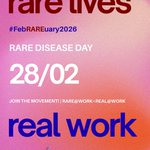
ALT Colorful background with blurred red, blue, and orange shades. Central text in red: "work can change, inclusion must stay." Hashtag febRAREuary2026 and World without GNE myopathy logo is included.

ALT Illustration of a person in a wheelchair working on a laptop at a desk. Text reads: "During COVID, the world adapted. Work from home was accepted. Flexible hours were accepted. Productivity didn’t disappear." Hashtags and logos related to rare diseases and World Without GNE Myopathy are included. The mood is empowering and supportive.

ALT Image with blue and red gradient background. Text reads: "For rare diseases, flexibility is an asset. People living with rare diseases often face: Fatigue and muscle weakness, Mobility challenges, Fluctuating daily capacity." Includes line drawings of a laptop and mug. WWGM logo at bottom left.

ALT Gradient background with text: "Inclusive work is possible with technology & AI." Mentions remote or hybrid roles, adjustable schedules, ergonomic and accessible spaces, AI tools reducing physical strain, and prioritizing output over physical presence. Includes tech icons and WWGM logo at the bottom.
