


I LAUGHED AT THAT GROK BOT AMAZON REFUND POST. Who misses $590? I trade for a living and I check every fill. So I gave Grok Bot read-only access to 4 years of exchange history and 11 old wallets, just to prove a point. It came back with $8,412.37 my own accounts still owed me
Not one bad trade in there. Just money sitting where I never looked:
A 2024 airdrop on a wallet I stopped using: $3,912.40. The claim window had 9 days left.
A withdrawal from March 2023 that left the exchange and never landed: $2,450.00. I had written it off as my own typo. The tx hash said otherwise.
My fee tier went VIP in 2025 and the rebate never switched on. 14 months of it: $1,286.15.
Staking rewards I never claimed: $611.48.
Dust spread across 9 wallets: $152.34.
Then it did the part I always skip. It wrote the tickets, attached the tx hashes and the fee statements, and answered the support agent's three follow-up questions without me.
The airdrop, the staking rewards and the dust landed that night. The rebate got approved on day 2. The 2023 withdrawal took a chat, a ticket and one escalation, and came back on day 4.
I check every fill. I had never once checked what was owed to me.


I TYPED ONE COMMAND AND MY TRADING BOT GOT FABLE 5.2 FOR FREE. Sonnet 5.5 traded my SOL account for 24 hours straight and asked Fable only 6 times, on the calls it couldn't make alone. My Fable weekly meter never left 0%, and by 9 AM the next morning my $800 had become $2,960
The command is /advisor fable.
Sonnet does the boring part. Every 5 minutes it reads the chart, sizes the trade and places it. It took 39 trades on its own and made $540.
When it gets stuck, it sends the whole picture to Fable and waits.
That happened 6 times.
2 times Fable said no trade. One of them was a 20x long Sonnet wanted at 2:14 AM. SOL dropped 7% twenty minutes later.
4 times Fable said go. Those 4 trades made $1,620.
Fable worked about 6 minutes in total. The other 23 hours and 54 minutes it was asleep.
$800 at 9 AM. $2,960 at 9 AM the next day.
Fable weekly meter: 0%.


I GAVE 3 CLAUDE FABLE 5.2 AGENTS ONE NIGHT AND $150 IN TOKENS TO BUILD ME A TRADING TERMINAL FROM AN EMPTY FOLDER. I went to bed at 11 PM. At 6:52 AM there was a new app in my Dock, 212 of 212 tests green, a token bill for $146.30, and the $300 I left in it had turned into $1,912
The folder had one file in it. rules.md, three lines:
"the agent that writes the code never checks it"
"nothing touches real money until every test passes"
"never more than 10% of the balance on one trade"
Who did what:
Architect wrote the plan at 11:04 PM. 9 panels, 4 price feeds, one order button. After that it only said yes or no.
Builder wrote 63 files and rewrote the order book panel 4 times.
Breaker had one job: break everything. It found 38 bugs. At 2:17 AM it fed the terminal a fake 38% price spike and the stop-loss didn't fire. Builder fixed it by 2:28.
At 4:06 AM the last test went green and Architect switched it from paper to my real $300.
19 trades by morning, 15 green. Best one: $GOAT, +$412.40.
7 hr 52 min. $146.30 in tokens. $300 to $1,912.
F*CK THE WINS. 97 OF 124 LEADS GOT KILLED, AND 78 OF THEM HAD ALREADY PASSED EVERY OTHER CHECK
59 of those 78 were dead within 24 hours.
the seat doing the killing can't talk. no paragraphs, no recommendation, nothing you can argue with. it answers four closed questions and hands back a number.
here are three real leads going through it:
→ #047: organic .71, late no .82, exit risk 2. all four true, staged, filled, trailed out
→ #052: late = yes at .88. killed, logged with the answer that killed it
→ #058: watch, ask again in 30 minutes, second watch, killed
a second watch is a pass. no answer at all is a pass.
the gate doesn't move:
action buy at 0.70 or higher. organic yes at 0.65 or higher. late no. exit risk 3 or lower. all four or nothing gets bought.
confidence decides if, never how much. a 0.92 and a 0.71 get the same money.
every sunday it gets graded. the 0.80 bucket has to win about 80% of the time. if it doesn't, raise the gate instead of arguing with the table.
54% win rate on day 1. 69% by day 5, across 43 trades.
one honest line: the balance in my clip is simulated. 124 scanned, 97 killed, 78, 59, 43, the thresholds, all of it is the author's own bank over his own weeks. memecoins are the riskiest thing you can trade. paper the gate first, log every verdict, run the sunday check before you trust a single number. NFA.

$500 → $11,101 in 5 days.
my Grok memecoin desk got a 7th seat: Jev. it can't talk. it answers 4 closed questions with probabilities, and nothing gets bought below the gate.
full setup below. save it.

14
35
551
F*CK IT, I GAVE MY BOT 30 DAYS AND ZERO PERMISSION TO SEND ANYTHING
day 2: it passed 52% of its own checks and I was fixing things by hand 14 times that week.
day 29: 100% pass rate, 180 runs, 165 passed, one repair.
it still sent 0 emails without me.
7 seats, and the exact line each one runs on:
→ CHIEF: "Turn this mission into a contract: outcome, inputs, output, definition of done, constraints, approval gates, schedule. Do not start until the finish line is measurable"
→ RESEARCH: "Find 10 non-duplicate sources from the last 90 days. Give date, author, URL and the claim each one supports"
→ BUILDER: "Build only from verified inputs. If a field is missing, write missing. Never fill a gap with a guess"
→ REVIEWER: "Name the failed criterion, the exact paragraph, and which seat fixes it. Do not rewrite it yourself"
→ GATE: "Send, publish, buy, delete, contact anyone: ask me every time"
→ DISTRIB: "Stage it and stop"
→ AUDIT: "Log every step, every retry, every repair. Weekly receipt"
add the limits before you add a schedule:
max 50 items per run. max 2 retries. $0 spend without approval. 0 external actions without approval.
most of the damage is a permitted action repeated every run because a source page changed overnight.
autonomy goes up in levels. level 1 drafts and stages. level 2 stops before anything consequential. level 3 runs on a schedule. level 4 routes work to the other seats. five clean runs to move up, and you move back down the week repairs start piling up.
one honest line: the balance in my clip is a simulated number, not from the guide and not my account. the numbers worth copying are 42 researched, 10 drafted, 0 sent.
start tonight with a boring job: top 5 agent news every morning at 07:00, deduped, with sources.
then read how the full ladder works in the article below ↓


78 TOKENS PASSED EVERY CHECK ON THE DESK. THE 7TH BOT KILLED ALL 78. 59 WERE DEAD WITHIN 24 HOURS
the seventh seat can't talk. no paragraphs, no argument, nothing you can lean on.
six agents find pairs, check contracts, confirm smart money, stage orders, manage exits and run the thread. the seventh answers four closed questions and returns a probability for each.
// JUDGE, same four questions, every lead
organic: yes / no
late: yes / no
exit_risk: 1-5
action: buy / watch / pass
here's the gate:
▸ action = buy at 0.70 or higher
▸ organic = yes at 0.65 or higher
▸ late = no
▸ exit_risk 3 or lower
all four true or nothing gets bought. one false and the lead goes into the log with the answer that killed it.
confidence never changes position size. a 0.92 buy gets the same money as a 0.71 buy.
a model that writes can talk you into things. at 2am four confident paragraphs read the same on the token that goes to zero as on the one that doesn't.
every sunday it gets graded. group the buys into probability buckets, count how many closed green. if the 0.90 bucket doesn't beat the 0.70 bucket, raise the gate.
if it doesn't answer, the lead is a pass.
one honest warning: the $500 to $11,101 in five days is the author's bank and his thresholds. 43 trades, 69% win rate, memecoins. he says it himself, copy the shape and not the numbers. paper the gate first.
the seat that researches never signs. the seat that signs never gets an opinion.
YOU ARE PAYING SENIOR RATES TO RENAME FILES
the setup everyone is reposting is OpenAI Dots plus Claude Code as one dev team. the part actually worth stealing is smaller than that: which model gets the task first.
Sonnet 5.5 reads at $2 per million and writes at $10. Opus 5.5 is double on both.
~/project-x $ claude -p "Fix issue #381. Run the tests. Open a pull request." --model claude-sonnet-5-5
here's the split:
▸ Sonnet takes the first pass on everything, 2 tries maximum
▸ Opus gets it only when Sonnet is stuck, 1 try, and it plans instead of typing
▸ tests decide, not the model. 318 of 318 or the task is not done
▸ you approve the pull request, and nothing merges itself
on 1,000 tasks that is roughly $480 instead of $800 for the same work, because the expensive brain only wakes up for the 20% that earns it.
the part that makes this safe: the Dot never merges. it opens the issue, reads the result and writes you a summary. the branch, the commits and the test output all live in GitHub, so neither model has to remember anything.
by 08:00 there is a PR waiting with no database changes and your approval missing, not a commit you have to undo.
the benchmarks are closer than that price gap suggests. Sonnet beats Opus on Terminal-Bench 4.0, 70.6 to 66.4. Opus pulls ahead on the long messy ones, FrontierCode 54.4 to 46.2. that spread is the entire reason a router exists.
one honest warning: there is no connect button. OpenAI and Anthropic ship nothing that joins these two. you build the GitHub bridge yourself, and if your tests are weak you have only automated a bad merge faster.
8 hours of nothing becomes 9 tasks routed, fixed and green before you open the laptop.
save it, this is the cheapest senior engineer you will ever avoid hiring.

THIS IS THE CHEAPEST SECOND BRAIN YOU WILL EVER BUILD
no Obsidian, no Notion, no database. a handful of .md files on your disk and one index the agent reads before you type anything.
the index is CLAUDE.md in the root. Claude Code loads it into the system prompt at session start, so the map is already in its head.
~/brain $ mkdir notes people projects && touch CLAUDE.md
here's the split:
▸ notes/ holds one file per topic, named for the topic
▸ people/ holds one card per person, who they are and what you owe them
▸ projects/ holds status, where you stopped, the next step
▸ MEMORY.md, LEARNINGS.md and decisions.md sit in the root as the core, the lessons and the audit log
the rule that makes it work: one file, one topic. tax-policy.md, not notes.md. ivan-petrov.md, not note-12.md. lowercase and hyphens, always.
the part that makes it fast: nothing gets installed. these are text files. any editor, any agent, any machine, and they outlive whatever app you would have picked instead.
you ask "what did we decide on taxes?" and it goes map, then notes/tax-policy.md, then an answer with the file cited. ask about something you never wrote down and it tells you it is not in there.
that second one is the whole point. a clean structure is what lets it say "missing" instead of inventing a number.
you can pin a file with @MEMORY.md inside the map and it stays in focus every session. two files at most, or you are back to dumping everything into the prompt.
one honest warning: the map is the product, the folders are just storage. a sloppy CLAUDE.md gets you an agent that guesses, and it guesses confidently.
five minutes of folders tonight, filled as you go. no migration weekend.
save it, this is the cheapest memory your agent will ever have.

a rebuilt function matched the original byte for byte and was still wrong
the comparison tool lined up the instructions and never looked at the number they pointed to. the original checked player power against 128.0. the rebuild checked against 0.0. every byte matched, the meaning did not
the audit after it went through 1,548 floating-point references and found twelve more wrong ones, in five functions that had already been accepted
that is the part the install guides skip. the model reads, explains and rewrites. the check decides whether any of it is true, and the people doing this seriously have a name for the check. they call it the oracle.
doesn't matter if you're rebuilding a feature, porting a codebase or just letting an agent grade itself, the oracle is the whole job
the three kinds, and how to break them on purpose:
> byte oracle - compile your version, compare machine code. DX-Ball's audio balance helper: 3,205 test cases pass and all 63 compiled bytes reproduced. that is proven, not "looks right"
> behaviour oracle - same inputs into both, compare outputs. why Windows Calculator answers 220 to 200 + 10%, cross-checked against Microsoft's own published source with the exact version written down
> runtime oracle - build the whole thing and use it. the Chrome dino speed rule starts at 6, adds 0.001 per update, caps at 13, and they ran it: 10.0 after 4,000 updates, 13.0 after 10,000
> plant 3 failures before you trust a green run. one wrong constant, one swapped branch, one off-by-one. if any of them passes, the oracle is broken and every green result before it is suspect
> room A reads with REA and writes SPEC.md - behaviour, inputs, outputs, edge cases, unknowns. no code, no addresses, no names from the decompile
> room B is a fresh session in a separate folder that gets SPEC.md and nothing else. it never sees the analysis, which is the entire point of a clean room
> hold the builder to a measurable end: every case in the spec passes, all 3 planted failures rejected, nothing outside the folder touched, stop after 25 turns
the Adobe story everyone repeated is the proof. nobody decompiled anything. ArtCraft shipped twelve apps written from scratch in Rust, and FilmCraft's contributor rules forbid reading, disassembling or copying anything inside an Adobe bundle at all. you observe the behaviour by using the app. the people who rebuilt Adobe's workflow banned themselves from reading Adobe.
study the original, ship your own. an output is not a right, and reading a program gives you no claim on its code, its data or its name.
the board in my clip is a visual concept for software you own or may examine. the full guide, the two-room prompts and the planted-failure pack are below.


ask claude whether a trading rule works and you get an answer in 4 seconds
it has never seen the chart. it has never run the test. it is answering from memory, and a smarter model with no data is just a more convincing guess
the fix is not a better model. it is taking the grading away from the thing that had the idea
one chat window picks the idea, runs the test, grades its own work and forgets all of it when you close the tab. that is four jobs and zero separation. a desk splits them.
doesn't matter if you're testing strategies, research claims or anything you can be wrong about expensively, this shape is the point
the 5 roles:
> lead on Opus 5.5 turns the question into a plan and decides what runs next. it never grades its own output
> scout on Sonnet 5.5 checks the data before a single test runs - delisted companies included since 1998, fundamentals stamped by filing date instead of quarter end. survivorship and look-ahead bias are the two quiet ways a backtest lies to you
> sweeper on Sonnet 5.5 runs 20 configs from one prompt and returns every cell, failures included, so you can see whether the wins form a plateau or one lucky number
> skeptic on Opus 5.5 exists only to break what survived - held-out years, nearby settings, the worst drawdown year. the strongest model goes here on purpose, because generating ideas is cheap and killing bad ones is not
> librarian on Haiku 5.5 pulls from 175 documented strategies instead of from a feeling about what should work
> research.md logs every verdict before any summary, and NO EDGE gets logged and never retested without a new reason
> the split is by time, at 2015, never random. shuffling time leaks the future into the past
the honest half, because this is money and not a side project: the 200-day numbers in that course are the author's published run, gross of costs, so fees and slippage can erase a thin edge. backtests do not model taxes or slippage, the agents never place an order, and a beautiful equity curve marked NO EDGE is still NO EDGE. paper first, always.
the desk in my clip is a visual concept, not a live account. the course below has the agent files, the four team rules and the full setup.

🚨 The software industry isn't ready for what's coming.
Imagine taking almost ANY software, understanding how it works, and building your own version with AI.
Sounds impossible?
Not anymore.
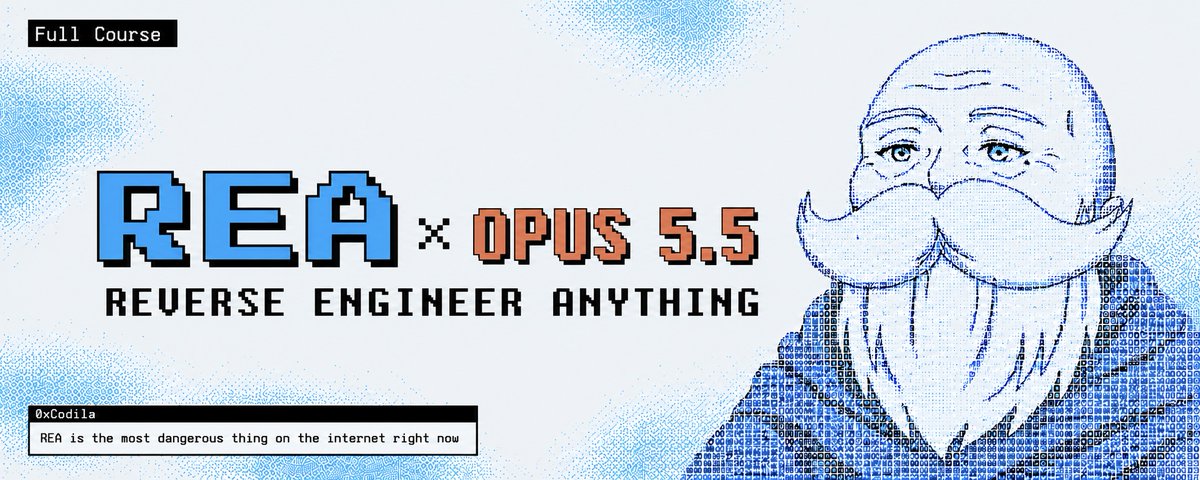
Meet REA (Reverse Engineer Anything) — one of the wildest open-source AI tools right now.
And when combined with Claude Code, things get absolutely insane.
Here's why everyone should be paying attention 🧵👇
01 / AI CAN NOW INVESTIGATE SOFTWARE
Previously, reverse engineering required serious technical knowledge, expensive tools, and countless hours.
Now AI agents can use REA to:
→ Analyze software architecture
→ Trace hidden functionality
→ Examine binaries and dependencies
→ Understand how complex features work
→ Collect evidence behind their findings
What used to be an extremely technical process is becoming accessible through natural language.
02 / FROM ANALYSIS TO REBUILDING
Here's where it gets interesting.
REA helps your AI agent understand how software behaves.
Claude Code can then turn those findings into an independent implementation.
The workflow is surprisingly simple:
🔍 Investigate the software
🧠 Extract its core functionality
📝 Generate a detailed specification
⚡ Build your own version
✅ Test, verify, and improve
All within an AI-powered development workflow.
03 / THE BIGGER PICTURE
Think about what this could mean.
→ Building alternatives to expensive software
→ Understanding complicated applications
→ Creating custom tools for personal workflows
→ Accelerating development dramatically
→ Making software research more accessible
And we're still in the early stages.
Of course, reverse engineering doesn't remove copyright, licensing, or other legal restrictions.
But here's the part most people are missing:
The real breakthrough isn't copying software.
It's giving AI the ability to understand existing systems and use that knowledge to build something new.
We're moving toward a world where understanding complex software no longer requires an entire team of specialists.
The barrier between having an idea and building a working product is getting smaller every day.
And tools like REA are pushing that transformation forward.
Closed-source software isn't disappearing overnight.
But the way we analyze, understand, and recreate functionality is changing forever.
REA + Claude Code is a combination worth watching.
The next generation of software development is going to look VERY different.
**Are we witnessing the beginnin
you don't need a bigger plan. 87,500 of the 100,000 tokens a task burns go to work your bot already did
yesterday's chat dragged into today, full pages read for one price, polling a source that never changed, and research rebuilt from scratch because nothing saved where it came from
seven fixes, and the one that matters most is the one that costs more, not less
doesn't matter if you're running research, monitoring or reporting on a schedule, audit before you pay for more capacity
the 7 fixes, with where the tokens go:
> 01 start from a file, not yesterday's thread. goal, decisions and next action in HANDOFF.md, under 400 words, then open a clean conversation. 28k to 1.5k
> 02 read what the task needs. pull the relevant passages first, keep the full original in sources/, open more only when missing context would change the answer. 22k to 3k
> 03 stop paying for "nothing changed". compare against the last snapshot before any analysis, and never let a failed check count as unchanged. 18k to 1k
> 04 give finished work an expiry rule. store checked_at and a refresh rule, reuse what is still valid, and keep the original verification date instead of relabelling old facts as new. 12k to 1k
> 05 one owner per assignment. one coordinator, separate output files, no source collected twice without a recorded reason. 10k to 0.5k
> 06 cap retries at 2. save progress at real boundaries, log the exact error, and never restart the four briefs that already passed because the fifth page would not load. 7k to 1.5k
> 07 make "done" mean usable. checklist before drafting, PASS FAIL UNKNOWN against evidence, one targeted fix pass, NEEDS REVIEW if a check still fails. 3k to 4k
read that last line again. verification is the only row that goes up, and it is the reason the other six are worth anything. a bot saying "verified" is not evidence.
the 10x is arithmetic, not a benchmark: 8x more assignments processed times 1.25x acceptance equals 70 accepted results instead of 7, on the same million tokens. the author says plainly that real usage stays unknown until a meter measures it, and the board in my clip is his table, not my run.
the full course, the copy-paste prompts and the 4 github tools are in the article below.


you do not prompt an employee. you brief one
and the brief that decides whether any of this works is 4 lines long, pasted once, before the first job
most people skip it and then wonder why the agent writes in a voice that isn't theirs, chases the wrong customers, and one day sends something it should have shown them first. that is not a model problem. nobody told it who it works for.
doesn't matter if you're handing off research, outreach or reporting, start here
the 4 lines:
> Me: your name and what you actually do, in one sentence a stranger would understand. not your title
> My customers: who buys from you and who doesn't. "dental clinics, independent, not chains" beats "small businesses"
> My voice: two lines you actually wrote. not an adjective. it copies rhythm from examples and ignores "professional but friendly"
> Never: contact anyone, post, or pay without my yes. this is the one that keeps the other three from becoming expensive
then the jobs, one a week:
> give each one a day and a time instead of remembering to ask. "every monday at 9:00, 25 new leads" and "every friday at 16:00, the week on one page"
> demand the artifact, not the answer. a spreadsheet with an empty approval column, a one-page pdf, a report ending in three lines of next week
> make it show receipts for every claim. in the clip: 240 read, 192 dropped, 48 kept, 12 claims each linked to a source and 0 invented
the graph in the clip is my own concept and every number on it is simulated, the backtest included. nothing on that screen is a result i'm claiming.
the guide below is a paid partnership built around one product, so the timings in it are the author's runs. the four-line brief and the one-job-a-week order cost nothing and work with whatever agent you already pay for.


your agent lost its context between sessions, claimed broken code works, and ran three independent tasks one after another
those are three different bugs in three different places, and not one of them lives in your prompt
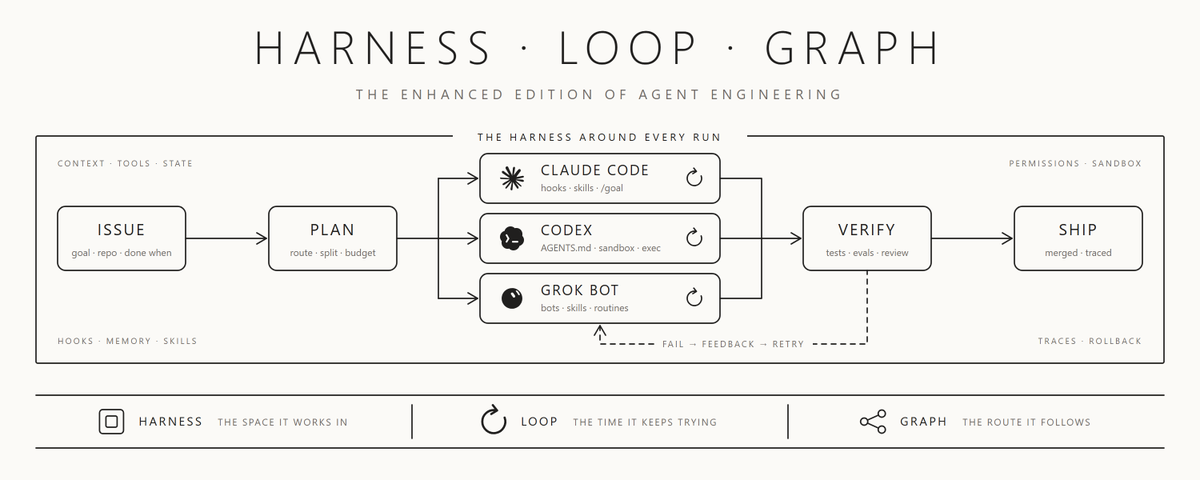
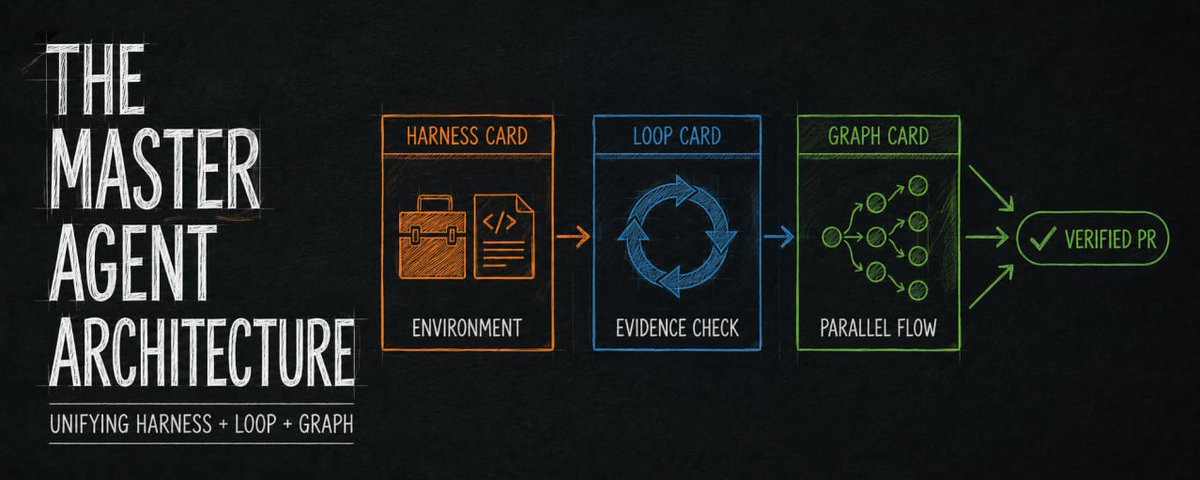
there are only three layers under an agent. the harness is the environment it works in, the loop is what happens after each model call, and the graph is who runs when. every failure you have had belongs to exactly one of them, and the symptom tells you which.
doesn't matter if you're building agents for code, research or ops, you need this triage
read the symptom, fix the layer:
> state lost between sessions - harness. add .claude/memory/progress.json and stop treating the chat thread as a database
> agent says the patch works, tests say otherwise - loop. terminate on a pytest exit code, never on the model announcing it is done
> three independent tasks ran sequentially - graph. fan them out with asyncio.gather and join them at one sync gate
> the same file read five times and billed five times - harness. sha-256 the file, cache the content, serve the hash on every repeat read
> retries that never stop - loop. an attempt cap plus an escalation rule, or it burns budget looping on confidence
> nothing catches the edge cases - graph. route the finished patch to an adversarial node that writes tests designed to break it before the PR opens
> string parsing, dedup and file filtering done by the model - none of that is reasoning. a 20-line python script does it for zero tokens
the whole harness is 7 files: CLAUDE.md for the rules, settings.json for timeouts and budget caps, two hooks for caching and audit, three memory files for progress, tool cache and a rollback log.
the article closes with a benchmark table - 6.7x faster, 80% cheaper, 98.6% pass rate. it gives no task set, no sample size and no method, so read it as the author's own figures rather than a measurement. the architecture stands without them.
the terminal in the clip is a separate build of mine and everything on it is a visual, not a live feed.
the full code for the hashing cache, the evidence loop, the fan-out and the red-team node is in the 4-minute article below.

in the early 80s Compaq spent about $1 million rebuilding IBM's BIOS without ever reading its code. that is the only reason PC clones exist
the method was called clean room. it is 40 years old, it is still legal, and it now runs from your terminal
the tool is REA, MIT licensed, built by @morluto. first release july 12, and it passed 100,000 github stars about three months later. it plugs your coding agent into Ghidra, IDA, JADX and the rest so the agent decides what to look at next instead of you running each one by hand.
the whole point is one word: evidence. ask a model how an app works and it recalls patterns from a million other programs and sounds confident. with REA every claim has to point at a function it found, a string it pulled or a call it watched happen, and anything unproven gets labelled a guess.
doesn't matter if you're a developer, a security researcher or just tired of apps being black boxes, you need this
the setup:
> install with npx rea-agents@latest setup, pick your agent, read the change plan before you approve it, restart, then confirm with doctor --client claude_code --json
> start on the official Notes example, not on Photoshop. one Export button traced from renderer.js through preload.js to main.js, and you watch exactly where notes.csv gets written
> pick one feature, not one app. "take apart Notion" is not a task. "find out how Notion handles pasted content" is, and that one is already a published case study
> put the evidence rule in the prompt itself: trace the path, show proof for every conclusion, separate confirmed facts from hypotheses, stop if the scope grows
> write SPEC.md before a single line of code - behavior, inputs, outputs, edge cases, nothing copied. this is the clean-room step and it is the part that keeps you on the right side of it
> build from the spec, then test against the original. the DX-Ball sound function passes 3,205 test cases and reproduces all 63 compiled bytes. a Touhou rebuild hit 696 exact matches out of 697 functions in about 12 days
> know the wall. it reads what is on your disk and never the server, stripped C++ stays brutal, and it hands you no IDA or Hopper license
study the original, ship your own. Sega v. Accolade and Sony v. Connectix both went that way. copying the code or unlocking paid features is the other road, and geohot settled at the end of it.
the dashboard in the clip is my own concept of that loop, with the before and after numbers illustrative rather than measured. the engines named on it are real and the firmware target is not.
the full 10 steps, the prompt pack and the honest list of what the tool cannot do are in the 12-minute course below.
i stopped rewriting prompts. one markdown file replaced 20 lines of them and it survives every model switch
same model, two setups. one claims success on broken work. the other stops at the failing test and ships only after 3 of 3 checks pass
the problem was never the wording. Karpathy's framing is the one that fixed it for me: the model is the CPU, the context window is the RAM. dump twenty pages into chat and you flood the RAM, and the rules you care about are the first thing it drops.
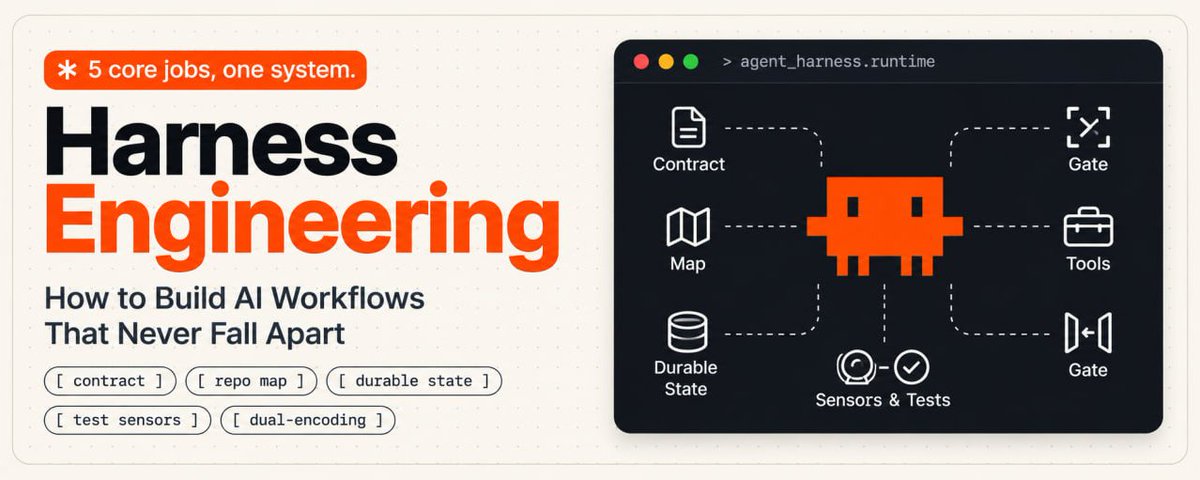
a harness is everything outside the weights - what the model is allowed to read, which tools it can trigger, what survives a context reset and when it has to stop.
doesn't matter if you're shipping code, research or content, you need this
the setup:
> write HARNESS.md in the project root - boundaries, map, verification order, escalation. in the clip it replaces 20 prompt lines and gets read on every single run
> turn the request into a bounded contract - deliverable, constraints, non-goals, acceptance criteria. without one the model decides when it is finished, and it always decides early
> give it a map, not an encyclopedia. 1 file read, 19 skipped, context still under half full
> externalize memory into CLAUDE.md or .cursorrules so the work survives chat wipes, rate limits and the next model release
> build sensors before autonomy - npm run lint, npm test, a schema check. asking "are you sure?" is just the model grading its own guess
> cap the attempts at 4 and escalate at 2. two failures on the same error means stop, print the log, wait for a human - not try a fifth variation
> dual-encode every rule. tell it never to delete tests, then block rm -rf at the permission level so the operating system refuses it instead of the prompt asking nicely
the two bars in the clip are labelled illustrative for a reason. that is my own dashboard of the idea, not a benchmark, and the only honest number on it is 3 attempts out of 4 allowed.
models update every few months and your prompts drift with them. your map, your tests and your permission boundaries do not. the three layers and the full HARNESS.md template are in the 5-minute article below.

everyone starts at the animation. that is why most launch videos look cheap
the order is design, assets, motion, depth, export. five stages, 20 github repos, and the animation is stage three
Opus 5.5 runs the whole thing from a terminal. it shipped on september 22, the announcement hit 28 million views, and it costs 40% less to run than Opus 5.
the composition lives in code, so nothing in it is a decision you make with a mouse. every landing, every hold, every cursor press is a frame number you can change and re-render.
doesn't matter if you're a developer, a designer or someone who just wants one thing to sell, you need this
the build loop:
> 01 design the scene - storyboard in Excalidraw, lay it out in Penpot, lock the headline box first. if your longest headline wraps onto 3 lines, stop and fix the copy, not the motion
> 02 prepare the assets - clean vectors with SVGO, resize screens with sharp, self-host type with Fontsource and icons with Lucide. check dimensions and font loading before a single frame is built
> 03 direct the motion - Motion and GSAP for timelines, Anime.js for SVG, Theatre.js to tune by eye. write timing in seconds first, then convert. a 0.6 second entrance is 18 frames at 30 fps
> 04 build the depth - Three.js, React Three Fiber, Drei, Postprocessing. keep the camera still on the first pass and change one parameter at a time
> 05 render and ship - Remotion composes, FFmpeg encodes, Mediabunny handles browser pipes. npx remotion render Launch out/launch.mp4 --codec=h264
> before polishing anything, render 3 stills at frames 60, 240 and 540 and fix message, crops and readability first. movement cannot rescue a shot nobody can read
the board in the clip is my own workshop map of that stack, not a product screen. the character walking it is mine too.
five stages, one evening, and the next revision costs you a number instead of an invoice. every prompt and a $150 starter package, which the author calls an illustrative price, are in the 8-minute guide below.


AN ON-CHAIN SCOUT THAT WATCHES WALLET CLUSTERS FORM BEFORE A TOKEN EVEN TRENDS - PAPER MODE, 19 SECONDS, 295 WALLETS TRACKED
noctis runs as one agent, patrolling, not trading - 720 scans logged by second 19 of the trace alone
→ wallet graph builds live - 18 linked nodes at second 7, 71 by second 19, clustering around the same mint before the chart even moves
→ entry density heatmap stacks by the minute - peak cluster count jumps from 7 to 31 across the run, that's the actual signal, not the price
→ simulated pnl (paper, 1 sol base) climbs $80.95 → $686.34 → $1,535.74 → $2,508.96 as confidence rises 22% → 84%
→ signal feed tags every token watch, hold, skip, or buy? - never a flat buy, always a question mark until the cluster confirms
→ exit curve tracks 8+ tokens at once, surf score drifting from 2.68x down to 1.52x the longer the trace runs - the opportunity decays while it's still watching
the coverage calendar has real gaps - wed and sat rows are visibly thinner than mon and tue, so even an always-on scout isn't actually always on, and that gap sits right there on its own dashboard, not hidden
most scouts show you one alert and a price. this one shows the wallet graph underneath the alert, so you can tell a real cluster from one buyer pretending to be a trend
everything here is paper, 1 sol base, labeled research only twice on the same screen - built that way on purpose so nobody mistakes a simulated trace for a live position
what's the actual gap in your own tracking - a couple of days you don't check, or a signal you're not watching live at all?


i genuinely don't understand why everyone isn't using this yet
Andrej Karpathy, a co-founder of OpenAI, posted a simple idea that hit 22 million views: stop using AI to write code, use it to build a second brain.
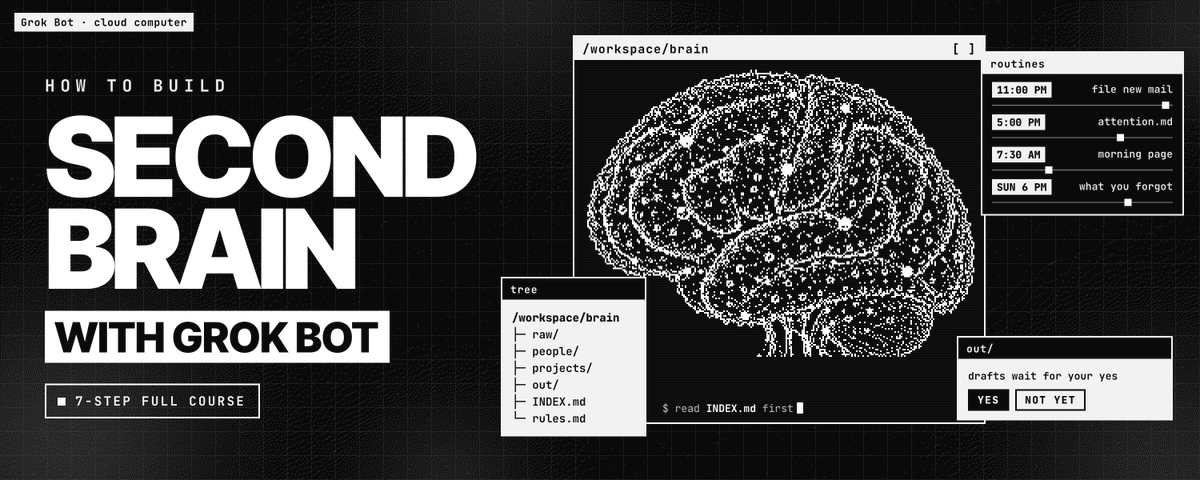
you give Grok Bot one folder on its own cloud computer, feed it your emails, links and photos from your phone, and it reads them, links them and files them into a living wiki of everything you know. it compounds like interest, the more you feed it the sharper it gets.
doesn't matter if you're a developer, a trader or a student, you need this
the full setup:
> create a bot in Grok Bot, name it Brain and add Gmail and Google Calendar in Connect apps. it runs on its own cloud computer, so it keeps working while your laptop is shut
> paste the prompt from chapter 07 of the article below into its chat. one message builds the folder, the routines and the rules
> it reads 20 emails you already sent and writes voice.md, 10 rules of how you write, each with a real line of yours. no more "hope this finds you well" drafts
> label any email Brain and every night at 11 PM it saves the original into raw/ and files it on the page of that person or project
> at 7:30 AM you get one page with what came in, what it drafted and what waits for your yes, ranked by the 5 projects you actually work on
> correct it once and the fix goes into rules.md, which it rereads before every task. every Sunday it tells you what you decided and forgot
keep it to a few runs a day. one hourly routine can eat a week of your plan.
five minutes to set up, and you never start from a blank chat again.
the terminal in the clip is my own visual concept and the market data in it is simulated. same engine, louder feed: one agent ingesting all day on a computer that is not my laptop.
every prompt is in the 7-step course below. or paste the whole article into Brain's chat and it builds the brain for you.
told jev's night desk: 0 rule breaks or it's off the desk. ten trades later, still 0
$250 to start, $391 by the time i stopped the replay - paper account, not real money, keeping that part honest
zero code between the watcher and the desk - two models splitting the job, nobody doing the other one's part
→ haiku 5.5 scores every signal on spread, news, session, volatility, rate - score under 0.55, skip it and log why
→ opus 5.5 only sees what haiku already passed - decides size, stop, target, risk, nothing else
→ 10 trades closed, 67% win rate, 1.9r average win against 1r average loss
→ max drawdown capped at 5.0%, never broke past it across the whole run
→ cpi news hit in 4 minutes - the desk tightened size on its own before the release, nobody told it to
→ 12 agents on dispatch - read, score, decide, size, mirror, log, risk, news, sync, payout, guard, review - most sit idle, only fire when their job comes up
early in the run it skipped more than it traded - signal #214, range fade, logged as skip, spread too wide at 1.9. that's in the same feed as the wins, not hidden somewhere else
most trading bots show you the equity curve and bury the skips. this one logs "rules broken: 0" next to every single entry, skips included
it's a $250 paper account - the point isn't the return, it's that every miss gets logged the same way as every win
which agent in your stack logs its skips as carefully as its wins?

