

📱Product Designer @sap 🎛 @iclinz 🎓 人大 RUC 🚲 @BromptonBicycle rider 🤹♀️ Amateur Juggler
Munich
Joined February 2009
- Tweets7.3K
- Following4.2K
- Followers995
- Likes7K





Nathan Guo retweeted

Holy sh*t I spent weeks turning Claude Code into a design studio.
no Figma license. no agency. no plugins I had to pay for.
here's the stack I used and it's embarrassingly simple:
-> graphify: teach Claude your brand
dump your guidelines, logos, PDFs and old projects into one folder. graphify turns it into a knowledge graph, so every design Claude makes follows your rules instead of guessing. 134k stars, Y Combinator.
uv tool install graphifyy -> graphify install -> /graphify .
github.com/Graphify-Labs/gra…
-> Figma-Context-MCP: Figma straight to code
it hands your actual Figma file to the agent. the README says it builds designs in one shot, and does it better than pasting screenshots.
github.com/GLips/Figma-Conte…
-> Penpot: the open-source Figma
free, open source, and its MCP server lets AI read and edit your designs, then hand them to code and back.
github.com/penpot/penpot
-> React Bits: the "expensive" look, for free
the biggest open-source library of animated React components. those smooth hover effects and text animations you see on high-end sites? copy, paste, done.
github.com/DavidHDev/react-b…
-> HyperFrames: designs that move
write HTML, get a finished video. made by HeyGen for AI agents. your landing page can now have its own launch video by tonight.
claude plugin marketplace add heygen-com/hyperframes -> claude plugin install hyperframes@hyperframes
github.com/heygen-com/hyperf…
-> MCP for Blender: 3D without learning Blender
connects Claude to Blender. describe a scene, the agent builds and edits it in real 3D.
github.com/ahujasid/mcp-for-…
the order that works:
brand into graphify -> design in Figma or Penpot -> Claude builds it with React Bits -> HyperFrames makes the promo -> Blender adds the 3D hero shot
the uncomfortable part:
tools used to be the moat. now everyone has them for free.
the only thing that still separates good design from AI slop is taste. and taste is the one thing you can't install.
bookmark this. your next client will ask why you're suddenly so fast.


Nathan Guo retweeted

I made a skill that turns your app into a demo in HTML.
So they stay sharp at any size, loop, scrub, jump to any step and stand still for reduced motion.
I open-sourced it as a skill:
fil.design/skills/html-demo
Nathan Guo retweeted

Hardware looks scary until you break it down into small steps. So I built an app that takes you through Arduino one circuit at a time.
Made with Opus 5.5
learn-arduino-red.vercel.app
Nathan Guo retweeted

Hi, it's Darshita. I am a designer.
And I'm pitching myself in public 'cause I'm done with a year full of anxiety.
Everyone says design is dead and AI killed it. But the real parasite was hiding in plain sight.
So here's my film, DESIGN IS DEAD. She's bold, fearless and very PINK 💖
Hiring? My DMs are open.

Nathan Guo retweeted

After co-inventing ChatGPT, I kept asking myself: why have superhuman chat models not led to AGI?
I’ve spent the last 2 years in stealth building a new way to train models (RLCD), and a new type of frontier AI model that we are releasing today: Jev
• 20-200x faster
• 40-400x cheaper (w/ output tokens free)
• Frontier composable intelligence optimized for decisions
AFAICT the shortest path to AI-based economic revolution
Nathan Guo retweeted

The Invisible Side of Design Engineering
jakub.kr/writing/the-invisib…

Nathan Guo retweeted

A few gems I’ve found in the past couple of weeks:
aicss.dev → UI blocks for AI agent interactions
ui.halaska.com → UI components for AI products
bencho.dev → UI blocks for interactive AI experiences
builtbydesigners.com → showcase of products built by designers
torph.lochie.me → text morphing library with zero dependencies
typehug.aliszu.com → typography utility for keeping text together
Nathan Guo retweeted

Today, we're sharing new research on Solaris, our first Interface World Model.
Solaris is a new kind of operating system that generates interactive interfaces frame by frame, in real time, with no code. We find that Solaris outperforms frontier LLMs when generating new interfaces, across structural similarity and information retention. Read more and request early access at the link below.
Nathan Guo retweeted
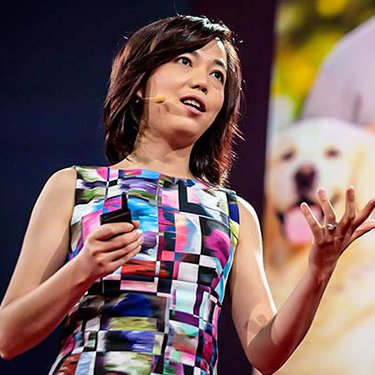
Next view prediction is the key to Atlas, enabling us to unify pixel-level generation and reconstruction. @jcjohnss @BenMildenhall @martin_casado and I had a deeper discussion on some of the most exciting technical innovations of Atlas, our newly released world model for spatial intelligence!

World Labs co-founders Fei-Fei Li, Justin Johnson, Ben Mildenhall, and a16z's Martin Casado on Atlas, a world model for spatial intelligence:
LLMs are built on next token prediction. Video models are built on next frame prediction. Atlas is built on new view prediction, and it's the first model to unify pixel generation and pixel reconstruction, two problems computer vision has kept in separate tracks for half a century.
The practical result is a 50 to 100x reduction in what it takes to digitally capture a 3D representation of a space. Previously, you needed 100 to 300 photos of a single room. Atlas can work from just three.
In this conversation, they get into the slow motion shot from The Matrix that took hundreds of cameras and now takes three iPhones, the overnight Slack message that made them bet the company in five seconds, why robotics is bottlenecked on data rather than chips, and the case that new view prediction is AI-complete.
00:00 Intro
01:50 The Matrix slow motion scene now takes three iPhones
02:48 Why new view prediction is the primitive
07:10 Unifying generation and reconstruction
11:15 Gaussian splats became the bottleneck
14:17 Dense capture used to mean 300 photos
17:30 Why reconstruction needs generation to fill the gaps
18:44 The LLM lesson image models missed
23:39 The video that made them go all in
28:04 3D design is 95% revisions
30:50 The problem in robotics is data, not chips
32:48 Why a robot policy can't be trained like an image model
34:44 When the simulator becomes the planner
36:45 Frozen time required footage full of movement
40:57 Why new view prediction is AI-complete
42:43 Nature gave animals eyes but not trees
YouTube: youtube.com/watch?v=qn1QDDBn…
@drfeifei @jcjohnss @BenMildenhall @theworldlabs @martin_casado
Nathan Guo retweeted
I'm so excited that our @theworldlabs team has achieved a major milestone today! Introducing Atlas - a first of its kind multimodal world model trained from scratch! 🚀
Atlas is capable of generating frames with pixel-perfect camera control, reconstructing large scenes from as few as one single input image, simulating space-time by reframing videos, natively outputting 3D spaces from one or more input images, composing multiple posed images into a consistent 3d world, and more! This is the best camera conditioned world model ever, opening doors to many possible use cases from VFX to robotics. I'm so so so proud of our team!♥️

Nathan Guo retweeted

To craft for conversation, timing is everything. Natural conversation is a social dance, and timing matters just as much as tone and delivery.
Most voice AI doesn't do this well yet.
So we built TurnBench: an open benchmark that measures whether voice AI knows when your turn is really over, and when an "mm-hmm" is agreement, not an interruption.
Learn more about how we built this on our blog.
sesame.com/blog/turnbench

Nathan Guo retweeted

august 2026: agent is now master of slop
only type gloop stand before him
modules are now metaballs

Nathan Guo retweeted

The 2026 Fields Medals have been awarded at the International Congress of Mathematicians in Philadelphia.
The recipients are:
• Yu Deng (University of Chicago)
• John Pardon (Stony Brook University)
• Hong Wang (New York University & IHES)
• Jacob Tsimerman (University of Toronto)
The Fields Medal recognizes outstanding mathematical achievement by researchers under 40. Each post below summarizes the official citation and key contributions.

Nathan Guo retweeted

Félicitations à Hong Wang, lauréate de la Médaille Fields !
Formée à l’École polytechnique, chercheuse à l’Institut des hautes études scientifiques, de Paris-Saclay, elle incarne l’excellence de notre recherche et de notre formation. Fierté.
Choose France for science!
Nathan Guo retweeted
Emil has some of the best design engineering skills out there. Worth pairing with:
Engineering skills
github.com/mattpocock/skills
Agent orchestration skills
github.com/davidondrej/skill…
Together they cover design engineering, software engineering, and agent workflows.
All free and open source.


New skill: /apple-design
Apple’s WWDC videos are a goldmine of knowledge. I’ve combed through my favorite ones and came up with 17 design and motion principles.
Use them to review existing work or when working on something new to get it right.
github.com/emilkowalski/skil…


Nathan Guo retweeted

Introducing Transitions Refine
A tool for tuning UI transitions directly in Cursor, Codex or Claude Code with the Transitions-dev skill built in
transitions.dev/refine
• Integrated skill analyzes your transitions and provides suggestions you can apply directly
• Timeline and controls for manual edits
• No need to copy and paste values everything is updated directly in your source