

Postdoc @PennMedicine, via @UCBerkeley (Statistics) and @Stanford (Applied Math)
Philadelphia, PA
Joined May 2014
- Tweets202
- Following749
- Followers257
- Likes2.1K





Pinned Tweet
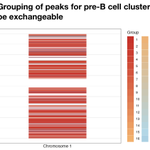
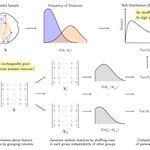
Excited to share our work with @spence_jeffrey_ and @yun_s_song on detecting sample exchangeability in the absence of point labels!
arxiv.org/abs/2109.15261
Our work is a blend of stat theory, computation and application to real data, so I’ll try to explain each of these. 1/n
Alan Aw retweeted

Zhenhong Huang’s paper is now published! SIQReg is an approach to choose phenotype scale by minimizing heterogeneity across quantiles, improving power and reducing scale-dependent non-additive signals
Paper: nature.com/articles/s41588-0…
Code: github.com/zhenhong7/SIQReg

Alan Aw retweeted

Our jaxQTL paper is out today in Nature Genetics! 🧬
We developed highly efficient count-based models that improves single-cell eQTL discovery and reveal cell-type-specific genetic regulation.
nature.com/articles/s41588-0…

Alan Aw retweeted

We are thrilled to share that our GPN-Star manuscript is now published and freely available:
doi.org/10.1038/s41586-026-1…
(1/n)

Alan Aw retweeted
I am thrilled to share that UC Berkeley and UCSF have launched a joint initiative in Computational Biomedicine!
cdss.berkeley.edu/news/uc-be…
We will soon be recruiting new faculty and postdoctoral fellows. Please repost to help spread the word.

Alan Aw retweeted
We are excited to share GPN-Star, a cost-effective, biologically grounded genomic language modeling framework that achieves state-of-the-art performance across a wide range of variant effect prediction tasks relevant to human genetics.
biorxiv.org/content/10.1101/…
(1/n)

Check out our work and software, led by the incredibly meticulous and capable @fanding_zhou! This is the culmination of work-in-progress presented a while ago at the 2022 Bioconductor Conference (see teapawt.net/lcolladotor/status/155…).

Gene expression changes aren’t just about mean shifts — variability shifts matter too, especially for aging. We're thrilled to introduce QRscore, a flexible non-parametric framework for detecting shifts in mean and variance across conditions. doi.org/10.1016/j.crmeth.202… (1/7)

Thus with large n, we can hedge against the risk of model misspecification and maintain high statistical power. Even if we think that the distribution of the data is negative binomial. This theoretical insight underpins our method. #methodsmatter
1
1
196
We are grateful to be part of a kind and supportive scientific community. Discussions with Jessica Li (@jsb_ucla), Arjun Raj (@arjunrajlab), and members of the truly singular Song Lab (@yun_s_song) all helped shape this work. Thank you --- we'll pay it forward 🙏
2
187
Alan Aw retweeted
Coincidentally, another article from my lab on DNA language models got published on the same day as GPN-MSA. It's freely available for 50 days from this link:
authors.elsevier.com/a/1kNCs…
Genomic language models: opportunities and challenges
Please share with your colleagues.
Alan Aw retweeted

A DNA language model based on multispecies alignment predicts the effects of genome-wide variants @NatureBiotech
1. GPN-MSA, a DNA language model leveraging multispecies alignment (MSA), sets a new benchmark in predicting variant deleteriousness for both coding and noncoding regions of the human genome.
2. This model uses evolutionary insights from 100 vertebrate species to enhance predictions, outperforming existing DNA language models like Nucleotide Transformer and genome-wide predictors such as CADD.
3. GPN-MSA achieves superior results in classifying ClinVar, COSMIC, and OMIM variants, highlighting its utility in clinical and research contexts, including rare disease diagnosis and cancer genomics.
4. Unlike prior models, GPN-MSA is computationally efficient, requiring just 3.5 hours of training on 4 NVIDIA A100 GPUs while delivering high-accuracy predictions across 9 billion possible human variants.
5. It excels in distinguishing rare from common variants, leveraging conservation and genomic context, making it a robust tool for genome-wide variant effect prediction (VEP).
6. GPN-MSA's insights extend to functional impact predictions, capturing regulatory and epigenetic markers critical for gene expression and regulation studies.
7. The model paves the way for integrating DNA sequence modeling with functional genomics, offering potential breakthroughs in precision medicine, drug discovery, and population genetics.
@gsbenegas @cralbors @youngtableaux @chengzhong_ye @yun_s_song
💻Code: github.com/songlab-cal/gpn
📜Paper: nature.com/articles/s41587-0…
#GenomeVariants #DNAAnalysis #Bioinformatics #PrecisionMedicine #RareDisease #VariantPrediction

Alan Aw retweeted
Happy New Year! Our GPN-MSA paper is finally published, under a slightly different title from the preprint. Please check it out and share it with your colleagues.
doi.org/10.1038/s41587-024-0…
1/4

Alan Aw retweeted

Thrilled to present at #MLCB2023, about our latest work on #SpatialTranscriptomics - ggPair: A deep learning approach to unveil novel ligand-receptor interactions in cell-cell communication. 🧬
Catch my talk at 12:50 PM PT this Friday. All the talks are live-streamed on YouTube.

#MLCB2023 Youtube live stream link youtube.com/watch?v=xhJ-C0dK…
Feel free to join and watch.
Please retweet.
Day 1 session begins in 7 mins at 9 am Pacific today Nov 30, 2023.
Schedule: sites.google.com/cs.washingt…

Alan Aw retweeted
We recently posted a preprint describing GPN-MSA, a DNA language model that leverages whole-genome alignments across multiple species while taking only a few hours to train. This thread summarizes its performance on the human genome.
doi.org/10.1101/2023.10.10.5…
1/12

Alan Aw retweeted
After lengthy anticipation, we finally got to compare PrimateAI-3D with our Cross-Protein Transfer (CPT) model doi.org/10.1186/s13059-023-0…
Below is a summary of our findings, including a comparison of ESM-1b and ESM-1v protein language models.
1/8

Alan Aw retweeted

Can current genomic sequence-to-expression models explain expression variation across individuals based on their personal genome? In the Ioannidis Lab at UC Berkeley, we evaluated 4 state-of-the-art models for this (Enformer, Basenji2, ExPecto, Xpresso)
biorxiv.org/content/10.1101/…

Alan Aw retweeted
Interested in a fast, accurate method for estimating the parameters of a complex phylogenetic model of molecular evolution (e.g. a general rate matrix describing the co-evolution of protein contact sites in 3D)? If so, please check out our preprint: doi.org/10.1101/2022.12.21.5…
(1/10)
Alan Aw retweeted
Predicting the effects of missense variants is a central problem in human genome interpretation. We are thrilled to share our preprint on using cross-protein transfer (CPT) learning to improve zero-shot prediction of disease variant effects:
doi.org/10.1101/2022.11.15.5…
(1/8)

Alan Aw retweeted

Excited to share my undergraduate work on pathogenicity prediction of stopgain (nonsense) variants: genomemedicine.biomedcentral…
