

CS PhDing @stanford | BA+MEng @Cambridge_CL
Joined October 2014
- Tweets87
- Following335
- Followers503
- Likes654




Yu He retweeted

My team @GoogleDeepMind is hiring! We are seeking a Research Scientist to rigorously study the internals and generalisation of frontier AI systems, w/ a particular view to AI security.
This is an in-person role at our Platform 37 office in London 🎡
Link to apply in thread 👇

Yu He retweeted

Check out Henry's talk on our upcoming @NeurIPSConf 2026 paper, "FLARE: Verifying MILP Reformulations with LLM-Based Theorem Proving."
Paper: arxiv.org/abs/2608.25220
Code + Benchmark: flare.henryrobbins.com
Led by Henry, with @LawlessOpt and @madeleineudell, using @leanprover.


Henry Robbins presents "Verified Mixed-Integer Programming in Lean" at the SF Lean Meetup on September 14
0:00 Introduction
1:15 Overview and Motivation
6:01 Mixed-Integer Programming
18:36 MILP Formulations and the TSP
26:54 MILP Reformulations
36:12 Verifying Reformulations Automatically
38:29 Quasi-Karp Equivalence and EquivaMap
1:01:33 Pitfalls of Instance-Level Verification
1:17:00 FLARE: Constructive Reformulations in Lean
1:21:47 Results on FormulationBench
1:24:16 Future Directions
1:25:10 Q&A
youtu.be/c--uaHWwiC0
Yu He retweeted

Scientific 🔬 progress often starts with an unexpected observation that sparks a new hypothesis.
But AI agents often start with a hypothesis, then look for observations to support it.
We believe agents should actively explore both observations and hypotheses. When observations are only a byproduct of hypothesis testing, we risk missing discoveries we weren’t looking for.
⚡ Meet SHELDON: a scientific reasoning harness that models separate hypothesis and observation spaces and generalizes across medical diagnosis, system-log investigations, ARC-AGI 2, and even autoresearch.
Bazinga!
Honored to be named an HAI Data Science Scholar!

Meet our 15 new HAI Data Science Scholars. This year’s cohort spans computer science, law, neuroscience, sociology, education, and materials science, with research ranging from AI governance to drug discovery to how the brain builds models of the world:
hai.stanford.edu/news/stanfo…

11
617
Sign up for SASP if you need help with your Stanford CS PhD application this year!

Applying to Stanford's CS PhD program this year? We are organizing the 2026 Student-Applicant Support Program (SASP) and would love to help with your application materials.
SASP is a volunteer initiative run by Stanford CS graduate students. We provide feedback on statements of purpose and resumes for applicants from diverse backgrounds, broadly defined, before they submit their applications.
We know how much work goes into PhD applications, and we hope an extra set of eyes on your materials can make the process a little easier.
Please submit your materials by October 25 (Pacific Time). We plan to return feedback by November 20.
More details and how to participate:
cs.stanford.edu/sites/g/file…
Please share this with anyone who might find it helpful! Questions are welcome at [email protected].
--
Bailey Trang (@baileytrangn), Bo Ai (@BoAi0110), Hermann Kumbong (@KumbongHermann), Kwon Ko (@hyungkwonko), Michael Paper, Swapnil Gandhi (@sw2pnil), and Yu He (@yuhe441)
12
764
Yu He retweeted

Introducing Mosaic 🧩, a constrained decoding framework for diffusion language models.
- significantly improves DLMs' performance on general function calling and JevBench.
- compatible with vLLM, SGLang and HF, supporting DiffusionGemma, LLaDA2, and many others.
1/n 🧵

Yu He retweeted

How can theoretical computer science help us think about the interaction between algorithms and society?
I wrote some personal reflections for @KnightHennessy about my path into this area and the research community working on these questions
knight-hennessy.stanford.edu…

Yu He retweeted

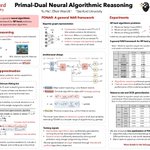
Check out our poster on neural algorithmic reasoning in the AI4Math workshop at ICML.

Yu He retweeted
🍡Introducing a new constrained decoding approach for agentic LLMs:
1⃣guarantees successful tool calls with max_tokens=k (no truncation);
2⃣improves downstream performance with test time compute.
Presented now at #ICML2026 poster session 1 #1912 by @jieyuzhao11.

We are at poster session 8 today 5PM at Hall A #2108! I won’t be at ICML this year sadly, but Yingxi is there to chat!


Yu He retweeted

📢 Call for Papers – LoG 2026
Paper submissions are now open for LoG 2026!
Submit your work on any areas broadly related to learning on graphs and geometry
🔗 logconference.org/cfp/
📅 Key dates (AoE):
• July 29 – Abstract deadline
• Aug 1 – Full paper deadline
#LoG2026

Yu He retweeted
Can we evaluate if LLMs can reason structurally?
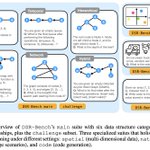
I discussed this question through the lens of data structures in a talk at @SimonsInstitute. In a joint ICML'26 work with @yuhe441, Yingxi Li, and @crwhite_ml, we introduce DSR-Bench, the data structure reasoning benchmark. (1/9)

Very happy to announce that it’s accepted to ICML’26! ✨thanks again to the most amazing collaborators Yingxi Li, @crwhite_ml , @vitercik
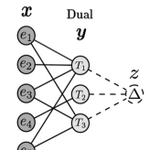
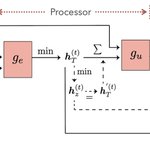
📢 New position paper: “𝗡𝗲𝘂𝗿𝗮𝗹 𝗔𝗹𝗴𝗼𝗿𝗶𝘁𝗵𝗺𝗶𝗰 𝗥𝗲𝗮𝘀𝗼𝗻𝗶𝗻𝗴 𝗥𝗲𝗾𝘂𝗶𝗿𝗲𝘀 𝗮 𝗖𝗹𝗲𝗮𝗿 𝗦𝗰𝗼𝗽𝗲, 𝗧𝗵𝗲𝗼𝗿𝗲𝘁𝗶𝗰𝗮𝗹 𝗙𝗼𝘂𝗻𝗱𝗮𝘁𝗶𝗼𝗻𝘀, 𝗮𝗻𝗱 𝗘𝗺𝗽𝗶𝗿𝗶𝗰𝗮𝗹 𝗥𝗶𝗴𝗼𝗿”
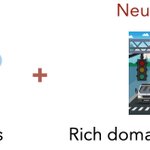
When and where should we use Neural Algorithmic Reasoning (NAR)? NAR is an exciting emerging area at the intersection of 𝙘𝙡𝙖𝙨𝙨𝙞𝙘𝙖𝙡 𝙖𝙡𝙜𝙤𝙧𝙞𝙩𝙝𝙢 𝙙𝙚𝙨𝙞𝙜𝙣 and 𝙣𝙚𝙪𝙧𝙖𝙡 𝙘𝙤𝙢𝙥𝙪𝙩𝙖𝙩𝙞𝙤𝙣 — but its foundations are still underdeveloped.
In this paper, we argue that the field needs:
✨ a sharper 𝙙𝙚𝙛𝙞𝙣𝙞𝙩𝙞𝙤𝙣 of what NAR is (and is not), including clearer distinctions from neighboring paradigms,
📐 stronger 𝙩𝙝𝙚𝙤𝙧𝙮 for expressivity and generalization,
🧪 more rigorous 𝙗𝙚𝙣𝙘𝙝𝙢𝙖𝙧𝙠𝙨 and connection to high-impact 𝙖𝙥𝙥𝙡𝙞𝙘𝙖𝙩𝙞𝙤𝙣𝙨.

Check out our paper here: dransyhe.github.io/assets/pd…. We’d love to hear the community’s thoughts!
This is a joint work by Robert R. Nerem, Timo Stoll, @semihcanturk_en, @DobrikG, @ChendiQian, Solveig Wittig, @sirolfg, @StefanieJegelka, @Vitercik, and Yusu Wang; co-led by @AspectStalence and @chrsmrrs.
5
432
[5/n] This is a joint work with my amazing collaborators Yingxi Li, @crwhite_ml, and Ellen Vitercik.
Paper: arxiv.org/abs/2505.24069
Code: github.com/dransyhe/DSR-Benc…
Data: huggingface.co/collections/v…