
using computers to advance science. ex- @RockefellerUniv. ex-Lodo. @zymergen ex-@ginkgo.
New York, NY
Joined December 2011
- Tweets5K
- Following1.6K
- Followers770
- Likes16.8K






zach charlop-powers retweeted

Hiring for Members of Technical Staff to work on rigorous evaluation of AI in biology.
Our mission is to advance humanity's ability to engineer biology. We approach this by understanding and improving AI’s application to biology across basic research, drug discovery, and biosecurity. We are a team of engineers, scientists, and operations specialists who are driven by improving capabilities and interpretability. Some of our work is showcased on benchmarks.bio.
About this role
You’ll turn your understanding of a biological domain into a roadmap of benchmarks and design them with engineers. Then build and manage your own scientific team using your network and internal talent infrastructure.
You have
(1) deep scientific expertise and experience using AI tools
(2) or strong coursework in math/CS and experience working with scientists
This is a high-intensity, founder-type role. Our Members of Technical Staff have built companies, run drug programs and scaled complex technical projects.
Projects you might work on
- Design benchmarks with engineers and scientists, from selecting scientific questions and datasets to developing reliable graders.
- Work with engineers on large-scale computing and AI inference infrastructure to evaluate models and investigate their failures.
- Research new methods for evaluating scientific capabilities and measuring improvements from training.
- Work with our internal data generation and drug development teams to build tasks around real experiments and research decisions.
How we work
Our MTS team works in person in Mission Bay, San Francisco. We keep meetings to a minimum and are flexible about when you arrive or leave. Tight deadlines and customer commitments sometimes require late hours.
Our work in use
Frontier AI labs use our benchmarks to assess biological capabilities and safeguards. Our work appears in research announcements and model cards, including:
- anthropic.com/claude-fable-5…
- anthropic.com/claude-opus-5-…
- anthropic.com/news/healthcar…
- media.x.ai/v1/website/card4p…
- x.ai/news/biosafety-at-the-f…
Hiring Process
Our process is typically completed within two weeks.
- Round 1: Introduction
- Round 2: Technical project matching
- Round 3: Take-home evaluation project (~2 hours)
- Round 4: Technical interview / live engineering session (1 hour)
- Round 5: Paid onsite project and presentation (2–3 days) - Offer
Compensation & Benefits
- 350K-500K+ OTE
- Equity
- Unlimited PTO
- Health, dental and vision insurance fully covered
- Visa sponsorship and relocation assistance
- 401(k)
- Office in Mission Bay, San Francisco
- Lunch and dinner provided
Apply at jobs.ashbyhq.com/latchbio/9b…. Or send an email to kenny[at]latch[dot]bio

zach charlop-powers retweeted

it's worth noting that due to rising costs of pretraining, the frontier isn't *that* accessible. training a 5T-A100B model on 50T tokens on GB300s costs like $10 million for the hero run. double it for RL. there's only a few thousand companies in the world that could justify it
zach charlop-powers retweeted

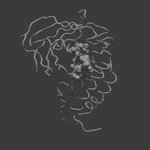
Screen 1M random protein sequences to discover that biology-like folds are accessible from random sequences with surprising frequency
@KlaraH_lab


zach charlop-powers retweeted

the value of talking to real people for my articles have ceased to be about information. now it is about trying to learn the exact 15 words needed to prompt a nearly-perfect representation of their world model out of the LLM's. sometimes its about finding a rare PDF too
zach charlop-powers retweeted

I’m a baseball player. I’ve never written a single line of code in my life.
But over the last few months, I used AI to build a pitching analytics platform from scratch.
8.9M pitches. Custom ML models. Total transparency.
Here is a look at what happens when you give an interested athlete access to AI:


zach charlop-powers retweeted

Chinese scientists designed the most efficient silicon solar cell ever, achieving a certified 27.81%.

zach charlop-powers retweeted

We’re looking for a COO for Astera Neuro! This is an all-hands-on-deck effort as we build a new paradigm for systems neuroscience, and the COO role is going to be critical. You’re: unconventional, wildly driven, 1000% mission-aligned, love management and organizational challenges, and care deeply about neuroscience/neurotech/AI/consciousness.
Age and pedigree do not matter. This should be your dream job.

zach charlop-powers retweeted

Our RFDpoly tutorial is now on Google Colab!
This demo walks through all design campaigns of our manuscript, and shows new modes of design control:
(1). mol-class specification
(2). NA secondary structure geometry
(3). 2D motif scaffolding
Try it out:
colab.research.google.com/gi…
zach charlop-powers retweeted

Here's a short video that describes the trillion-token scale models we've started to train @LilaSciences! If you'd like to learn more, come find us at NeurIPS!

Hear from our CEO Geoffrey von Maltzahn on how we're building and scaling scientific superintelligence: youtu.be/EJs278uy6WM
zach charlop-powers retweeted

how cursor built composer-1

🆕Building Cursor Composer
youtube.com/watch?v=fL1iJHtl…
@leerob joined us for the first time to complement @srush_nlp's popular talk on the technical journey behind Cursor Composer, @cursor_ai's first full fledged coding LLM!
zach charlop-powers retweeted

Andrej Karpathy on what makes Elon Musk unique.
Elon keeps teams small, highly technical, and removes low performers very quickly. pushes for intensity, avoids useless meetings, and stays deeply connected with engineers.
zach charlop-powers retweeted

Check out this beautiful visualization
What you see is ptm vs pae for >13k boltzgen binders
In normie that’s something like positional confidence vs binding confidence
Indicating do these things touch and at this angle? Almost all BG proteins have pretty high pLDDT but that vs ipSAE is the next plot to select the top tier candidates.
This new tool lets me select my top forty designs for the competition via lasso select and fold them overnight.
This is how we will make the DC1. With science.

zach charlop-powers retweeted

DeepSeek-Math-V2 means we now have an open weights (Apache 2) model that can achieve gold medal performance on this year's International Mathematical Olympiad - previously proprietary models from OpenAI and Google DeepMind had achieved that
689GB from Hugging Face! simonwillison.net/2025/Nov/2…
zach charlop-powers retweeted

🔬 Chemistry and materials discovery is slow, expensive, and often hindered by trial-and-error approaches.
✨ We're introducing two new atomistic simulation NIM microservices, the Batched Conformer Search (BCS) NIM and Batched Molecular Dynamics (BMD) NIM at #SC25.
Researchers can now evaluate thousands of molecules in parallel, achieve near-quantum-chemistry accuracy in milliseconds, and accelerate OLEDs, cooling fluids, and materials R&D by up to 10,0000X.⚡
➡️ developer.nvidia.com/blog/fa…

zach charlop-powers retweeted

If there is big biotech announcement happening, #MolecularNodes is being used for it. I only had the realisation in the past day, but it's strange to have my software very quickly become the visual face for $100M announcements and massive scientific breakthroughs.

zach charlop-powers retweeted

Hot off the press! Our latest paper led by @fernpizza , understanding how plasmids evolve inside individual cells. These small pieces of self-replicating DNA live inside bacteria and can transfer antibiotic resistance genes, but they also compete with one another to replicate. 1/

zach charlop-powers retweeted
Many sequence-fitness functions are factorizable in sequence space. Taking advantage of this enables more efficient optimization by shrinking the effective search space.
@jamesbowden_ @svlevine @jlistgarten


zach charlop-powers retweeted
Test the activity of 300+ natural enzymes against 100+ substrates, discover 200+ new enzymatic reactions, and train machine learning models to predict which enzymes can do which reactions.
@Apatoneh @gabepgomes @daniil_boiko @AlisonNarayanUM


zach charlop-powers retweeted

We're growing the uv team!
uv is one of the fastest-growing developer tools ever, built and maintained by a small, talented team :)
Write Rust, for Python. Full-time, open source, remote. We're very well-funded and in it for the long haul.
Link in next tweet 👇 or DM me here.
zach charlop-powers retweeted

This is one of the most underrated papers from the last few months.
TL;DR: MIT scientists engineered bacteria that can be seen from hundreds of feet away, using drones or satellites, with hyperspectral cameras.
Here is how they did it.
> First, they filtered through a database of ~20,000 small molecules that organisms, across all kingdoms of life, naturally make. They calculated the electron density for each molecule to predict how each one would absorb light (both visible and infrared). In other words: if you shine white light on the molecule, they predicted the wavelengths that will be absorbed, and how strongly.
> These molecules were filtered down to those with really unique light absorption spectrums. The scientists also used computational methods to figure out how many enzymes a bacterium would need to make each molecule (fewer enzymes is better, because it's easier to engineer). The two best options were biliverdin IXα and bacteriochlorophyll a. Both of these molecules have ring structures that strongly interact with near-infrared light.
> Third, they made a hyperspectral detection algorithm. The algorithm separates the molecular signals from background "noise" in hyperspectral images. Each pixel was treated as a mix of background spectra plus, if present, the reporter molecule's fingerprint, which appears as missing light at certain wavelengths. By clustering pixels to define backgrounds and then solving for how much reporter signal best explained each pixel, they could figure out where engineered bacteria were located.
> Next, they put it all together. They engineered microbes to sense explosives and then biosynthesize biliverdin IXα in response; a living biosensor. They buried these microbes near explosives and then flew a drone overhead to see if they could spot them. (This was done with the military, iirc.)
> They used the drone to take a picture of one acre of space, covering ~4000 square meters. They were able to figure out where the bacteria were buried with a limit of detection of less than 4 million colony-forming units per squared centimeter.
This paper is more practical than it may seem, too, because hyperspectral cameras are already mounted on some satellites. And it is entirely feasible to see the locations of bacteria not only via drones, but also using satellites orbiting the Earth at much further distances (provided we can optimize these sensors even more.)
In short, these hyperspectral reporters are a long-range way to do environmental biosensing. You could, in principle, engineer bacteria to detect pathogens in soil, explosives in a warzone, or even bioleaks and then emit these hyperspectral reporters. We could use existing satellites, or launch new satellites, to monitor them from afar.
Thanks for reading.


