

Cybersecurity | AI Security | Biohacker Breaking down threats, CVEs & attack chains so you don't get breached. Hot takes. Real talk. No fluff.
Joined July 2008
- Tweets7.6K
- Following1.9K
- Followers1.3K
- Likes5.6K


Pinned Tweet
Most "AI agent" deployments I audit fail the same 5 security checks:
1. No agent identity in Entra (or equivalent) — it's running as YOU
2. No per-tool scope; one stolen key = full blast radius
3. Prompts + system messages in plaintext logs
4. No rate or spend cap, no kill-switch
5. No human-in-the-loop for destructive actions
Agents are the new privileged service accounts. Treat them like one.
1
3
265
A useful RSI bar from @zeeeeeen: better task solving alone does not establish recursive self-improvement. Look for improvement across optimizer, evaluator, and later self-supervision cycles. Source-only, not paper-verified: teapawt.net/zeeeeeen/status/210922…

Today’s ReproForge.
arXiv:2610.12176
“Recursive Self-Improvement through Multi-Agent Self-Supervision”
The most important question here was not:
Can the model improve at task solving?
It was:
Does that improvement transfer into the model’s ability to improve itself?
MASS is directly relevant to recursive self-improvement because it closes this loop:
task solving
→ workflow optimization
→ self-evaluation
→ trajectory selection
→ model update
→ the updated model becomes the next executor / evaluator / optimizer
I first reconstructed the protocol independently.
Verified:
generation boundaries
elite workflow retention
train / test isolation
trajectory ranking
separation of self-evaluation from external evaluation
recursive model-generation transitions
Mechanism verification: PASS
Then I tested the optimizer and self-evaluator roles with a real Qwen2.5-0.5B-Instruct model.
Self-evaluator:
valid outputs: 6/6
accuracy: 50%
Workflow optimizer:
structurally valid workflows: 1/4 = 25%
So:
valid evaluator output != evaluator competence
and
workflow proposal != executable workflow
Then I tested the part I care about most.
I trained the same 0.5B model using only coordination-rich task-solving traces.
No evaluator labels.
No optimizer gold workflows.
The question was whether task-solving supervision alone would improve the other roles needed for the next self-improvement cycle.
Within the same frozen run:
Evaluator accuracy:
50% → 50%
Optimizer valid-workflow rate:
0% → 0%
No measurable cross-role transfer.
This does not refute MASS.
The paper uses a much larger model, millions of training tokens, real multi-agent trajectories, and multiple recursive cycles.
But the lightweight result exposes an important boundary:
Improved task solving is not yet evidence of recursive self-improvement.
For an RSI claim, the evidence chain should look more like:
task-solving improvement
→ weight update
→ optimizer improvement
→ evaluator improvement
→ better next-cycle self-supervision
→ another successful model update
If that chain is not demonstrated, we may only be observing a better task model, not a better self-improving system.
That distinction matters.
Current ReproForge status:
HEAVY_COMPUTE_READY
reproduction_status: PARTIAL
The null result is frozen rather than prompt-tuned away.
Paper:
arxiv.org/abs/2610.12176

Agent tool review checklist:
- Needs to read? Don't expose delete.
- Needs to write one file? Avoid a shell where possible.
- Enforce permissions in the service, not the prompt.
genai.owasp.org/llmrisk/llm0…

33
Start with the smallest workflow that solves the task. Add tools or autonomy only when the task needs them, not because the framework makes it easy.
anthropic.com/engineering/bu…

19
Don't ask an agent whether it's allowed to act. Enforce authorization in the service it calls. A model can choose a tool; the service still has to check the caller's permissions.
genai.owasp.org/llmrisk/llm0…
35
Hot take: an AI agent without a scoped identity is not automation.
It is unmanaged privilege with a natural-language interface.
Before you approve an agent pilot, answer one question: what can this agent do that a user cannot?
The answer is your real governance gap.
51
The AI-agent governance gap is no longer theoretical.
If an agent can access data, call tools, or take actions, it needs:
1. A scoped identity
2. Delegated permissions
3. Runtime observability
4. A revocation path
That is APT in practice: Agent, Process, Technology.
Agentic AI is access governance with a reasoning loop.
1
38
The mental model for building 𝘈𝘐 𝘢𝘨𝘦𝘯𝘵𝘴 is shifting from 𝗹𝗼𝗼𝗽𝘀 𝘁𝗼 𝗴𝗿𝗮𝗽𝗵𝘀, and it quietly changes the security picture. When agents share 𝗽𝗲𝗿𝘀𝗶𝘀𝘁𝗲𝗻𝘁 𝗺𝗲𝗺𝗼𝗿𝘆, the blast radius of one poisoned node is every agent that reads it. My latest Zencurity piece breaks down what that means and how to think about provenance and trust.
#AISecurity #AIAgents #Cybersecurity #AgenticAI #PromptInjection


53
z3n retweeted

Why are Chinese labs doing open weight and don’t they need to monetize?
1. The largest VCs in China are government, alibaba, bytedance etc. and the incentive is slightly different from IPO only
2. If they don’t open source, it will be hard to be known outside China and once they establish their name, they can make money selling API/subscriptions
3. Too many labs competing and the margin is low anyways.
4. They don’t need huge revenue to go IPO. X00 million with x0 million profits? Great to IPO in Hong Kong or mainland China.
5. Whether they can go IPO doesn’t only depend on profits but also who government allows and China prioritizes AI/robotics to go IPO despite the number itself might not be high enough but strategic.
6. Researchers are cheap. 2-3M USD salary is great for researcher leaders.
Entirely different game.


z3n retweeted

Kimi K3 is actually crazy. Someone just remade HALO CE 10v10 multiplayer with one prompt. No engine. No dev team. No months of work.
Kimi K3 is miles better than Anthropics Fable 5 from what I can see. We will be seing AI game making take over after the summer!
z3n retweeted

Former SpaceX CIO Ken Venner says you don't really know if something works until you've built it 3 times:
"To me, this is the second example of building what [Senra Systems] built in Redondo."
"And until you've built it 3 times, you don't know if what you've built will replicate itself."
"Like @lrocket with 3 different versions of the engine: the first one just got you going. The second one you learned from the first, but not enough. And the third one it's like, 'All right, I finished fixing this.' And then it's just incremental tweaks from there."
@elonmusk

BREAKING: @Senra_Systems Raises $65M Series B co-led by @lowercarbon & Interlagos
Total funding hits $112M+
Full interviews:
› Co-Founder & CEO @jordan__black
› Ken Venner Chief Tech & Product Officer (fmr SpaceX CIO)
› Factory tour
Wire harnesses are the nervous system of every rocket, car, & missile. Up to 25% of a vehicle's cost, & still 100% built by hand.
Senra Systems is rebuilding wire harness manufacturing around software.
Series B participation from General Catalyst, Sequoia Capital, Andreessen Horowitz, Founders Fund, Dylan Field, CIV, 8VC, The Friedkin Group, Jaws Estates Capital, Sozo Ventures, & Alumni Ventures
We cover:
› $65M round & Factory 3
› Ken Venner on scaling Broadcom & SpaceX
› Quitting SpaceX to build harnesses on an apartment carpet
› Supplying the fastest-scaling defense companies in America
› Amp, their operating system
› Where the name Senra comes from
𝐓𝐈𝐌𝐄𝐒𝐓𝐀𝐌𝐏𝐒
(00:00) Jordan Black, Co-Founder & CEO & Ken Venner, CTPO at Senra Systems
(00:57) Senra raises a $65M Series B
(01:36) What Senra Systems actually builds
(05:18) Why they built two very different factories
(07:00) The reindustrialization of America
(09:09) Commercial vs. Government: who's really buying?
(09:52) The origin story
(17:35) Turning a 2-year training pipeline into 4 weeks
(25:06) Bringing on SpaceX legend Ken Venner
(29:23) Why Jordan became obsessed with wire harnessing
(31:46) The investors betting big on wire harnesses
(34:16) The real story behind the name "Senra"
(36:49) Will the SpaceX IPO fuel Senra's growth?
(39:32) Ken Venner
(41:40) Scaling lessons from Broadcom and SpaceX
(43:21) Why Ken left Broadcom for SpaceX
(44:40) Life as SpaceX's CIO
(46:11) The secret to Elon Musk's management style
(47:15) What it's really like working with Gwynne Shotwell
(51:28) Scaling with AI vs. pure headcount
(55:04) Factory tour with Jordan

z3n retweeted

Google just killed prompt engineering in ten minutes:
"Most people try to fix bad AI answers by writing bigger prompts. That's the wrong move."
Google's Smitha Kolan lays out the discipline that comes after it, and the four ways your agent is breaking right now.
The four ways agents break + the seven parts of a context stack + the four-step fix + the rule that ends it
Worth more than every prompt guide on your timeline.
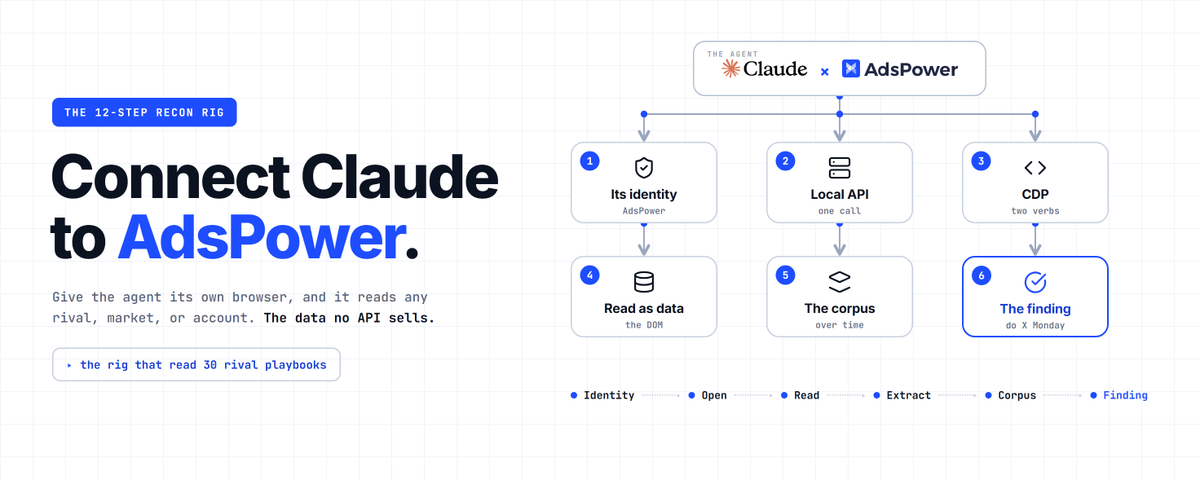
Watch it, then read the 12 steps where I put this to work on any competitor, below.

z3n retweeted

Sam Altman taught Stanford exactly how to hire and execute in "How to Start a Startup" Lecture 2 is 45 minutes and free.
Inside it, the numbers hit hard.
9 startups in 1 YC batch added random co-founders all 9 were dead within 12 months, while every one of the top 20 most valuable YC companies had at least 2 founders.
His hiring math is brutal: Airbnb spent 5 months interviewing employee #1 and hired only 2 people in year 1, because 1 mediocre hire in the first 5 can kill the entire company, and Brian Chesky asked candidates if they'd still take the job with 1 year left to live.
His equity rule flips what most founders do 10% of the company to the first 10 employees, fight the investors instead, because the YC companies most generous with early equity became the most successful ones he funded.
His execution rule is 1 number: a viral coefficient of 0.99 flatlines forever, 1.01 compounds forever, and the gap between them is a little extra work on the right thing.
And when his own startup was losing its first big customer to an older competitor, he didn't send a deck he got on a plane that night, sat in their lobby from 6 AM until someone cracked and agreed to talk, and closed the contract 1 week later.
This is the class Stanford charges $60,000 a year for.
The whole lecture sits on YouTube for $0.

Sam Altman taught 720 startups one formula where luck is a random number between 0 and 10,000.
Stanford, 2014. The opening lecture of CS183B was so packed he asked for a bigger auditorium.
He was 28, a dropout from this same school 9 years earlier, now running Y Combinator. The formula he wrote on the board: idea × product × team × execution × luck and you only control 4 of the 5, because the fifth one goes to 10,000. His words, not a metaphor.
Then he did something strange: he handed half of his own lecture to Dustin Moskovitz, co-founder of Facebook, whose entire job was to talk students out of starting companies.
Dustin showed one table.
Employee 100 at Dropbox with standard 10 basis points made $10 million, employee 250 at Facebook made $200 million, and employee 1,000 joining in 2009, when everyone said it was too late still made $20 million.
Your own startup? Best case you build a $100 million company and keep 10% after dilution.
$10 million, same as employee 1,000, minus your health.
Dustin knew the price because he paid it: at 21 he was throwing his back out every 6 months from pure anxiety, always on call, unable to quit a founder who leaves wears the black eye for a decade.
Then Altman twisted the lecture back with advice that cut against everything in the room. The best ideas look terrible at the start: the 13th search engine, the 10th social network limited to college kids, sleeping on strangers' couches. If an idea sounds good, too many people are already building it.
Make something 100 people love instead of something 10,000 people like. Ben Silbermann recruited Pinterest's first users by walking up to strangers in Palo Alto coffee shops, then resetting every browser in the Apple Store to Pinterest's homepage until they threw him out.
And the only valid reason to start is that you can't not do it. Dustin built Asana at night, after full days at Facebook, unpaid and unasked.
"The idea was beating itself out of our chest."
The rest is a number between 0 and 10,000.
z3n retweeted

Why Paul Graham truly is the GOAT
"@paulg greatest achievement wasn't just picking great startups, it was building a system that consistently creates them.
Y Combinator became a machine that attracts exceptional founders at scale, making success less dependent on any one investor's judgment.
Rather than building a career as a great picker, Paul Graham built one of the greatest businesses in venture capital." @rodriscoll
What does no one know about Paul that everyone should know @bchesky @jesslivingston @garrytan @sama @harjtaggar @brian_armstrong @t_blom

The single most common piece of feedback I get on the Trio show with Jason and Rory is:
I love that there is no politics and no egos.
It is the only podcast that I listen to EVERY week, regardless.
This week is better than ever.
“ It may have been a distraction for OpenAI that they were so successful in consumer”.
“At the early stage, you can't invest in two competitors. In the late stage, structurally, you have to.”
So many bangers in this one with @jasonlk and @rodriscoll:
- Apple Sues OpenAI
- @finkd Back on X and Challenging Codex and Claude Code
- SK Hynix's $26BN IPO
- Is Seed Investing Dead: @Jason Calacanis Departs Seed for Growth
- Greylock Raises New $1.5BN Fund
My notes below:
1. Why Apple Suing OpenAI for Trade Secrets Will Kill Their Hardware Product
Apple’s trade secrets lawsuit could become a mercy killing for OpenAI’s distracting hardware ambitions. Hardware burns cash, and this legal pressure gives Sam Altman the perfect excuse to put the project on the chopping block. It forces OpenAI to keep the main thing the main thing: capturing the massive enterprise value of LLMs in coding.
2. Every CIO Is Going to Have a Cheap Token Model to Stop the Madness
With enterprise AI spend surging up to 60x, the era of unlimited token burning is over. Organizations are rapidly moving to tight, tiered token budgets. Every half-awake CIO will route simple workflows to cheap token models like Meta’s Spark or Anthropic’s Haiku to stop the cash madness.
3. Why Venture Debt on Slow-Growth SaaS Is a Sucker Bet That Ends at 1x
TouchBistro selling for 1x ARR, or $70 million on $70 million ARR, is a brutal case study of a stalled unicorn. Stacking heavy venture debt on top of slow growth misaligns the cap table and wipes out equity holders. The lesson for founders is simple: take drastic action to fix growth before your hard work gets trapped at 1x.
4. Why the AI Memory Hoard Will Aggressively Cannibalize Traditional Enterprise SaaS
AI hardware demand is creating a major capital reallocation shock across the enterprise. IBM directly blamed a major earnings miss on CIOs rushing to hoard memory infrastructure before prices rise further. Because tech budgets are finite, this explosion in AI CapEx aggressively cannibalizes spend on legacy SaaS and traditional productivity tools.
5. Why Historical Tech Breakthroughs Require Pushing Ethical Boundaries Until They Become Legal
Massive tech breakthroughs, from Uber’s taxi battles to LLM data training, often rely on pushing ethical and regulatory gray zones. If you fail, the rule-breaking is condemned. If you scale into a massive success, the boundaries get rewritten. As the old line goes: “Treason does not succeed. If it does succeed, no one calls it treason.”
6. Why Paul Graham Truly Is the GOAT
@paulg is the GOAT because he built a scalable machine, not just an investment portfolio. By delegating startup selection to a bench of general partners, he engineered an N-of-one business model that runs without him. That system lets YC pick $100 million checks off the floor when its startups eventually go public.
z3n retweeted

el fundador de una empresa china de IA valorada en más de $20,000,000,000 acaba de dar una clase de 40 minutos sobre enjambres de agentes
la explicación más clara que he visto sobre sistemas de IA a gran escala
cámbiala por tus 2 horas de Netflix de esta noche
