

Product Designer & Engineer, Arc Institute, FutureHouse, former Design Partner @ Sutter Hill Ventures, Coursera, and Head of Design @ Snowflake.
Mountain View, CA
Joined May 2011
- Tweets416
- Following414
- Followers252
- Likes579






Reshma Mehta retweeted

Dialectic 60: Patrick Hsu!
@pdhsu & @arcinstitute are combining biology, engineering, and AI to turn a sci-fi future into reality.
Patrick got expelled from college at 13, returned at 15, later worked on early CRISPR breakthroughs, and teamed up with @SKonermann & @patrickc to found Arc.
He works 3 jobs: core investigator at Arc, professor at Stanford, and venture partner at @thrivecapital. For all his intensity and ambition, he carries a lightness and boldness that is contagious.
We discuss:
- why research is 99% failure and even your best ideas kind of suck
- infinite games and speedrunning school
- the reach of GLP-1s and power laws in biotech
- what makes a good biologist
- Arc’s bet on people over projects
- lab robots that finally work
- AI-designed organisms and new forms of life
- why heart disease could go the way of infectious disease
- bro science, peptides, and biofuturism
- research taste in the age of AI
Timestamps:
(0:00) Opening Highlights
(1:39) Intro: Patrick Hsu
(4:29) Start: Boldness, Infinite Games, & Ambition
(12:54) GLP-1s and Power Laws in Biotechnology
(20:17) Expelled at 13 and Falling for Biology
(25:51) What Makes a Good Biologist, Research Taste, and Biology's Data Challenges
(37:58) The Arc Model: Full-Stack Science
(52:01) Betting on People, Style, & Learning to Simplify
(57:22) Perturbation, World Models, and Evo
(1:03:27) Virtual Cell Models
(1:09:56) Designing Life: From Stem Cells to Genome Writing
(1:18:39) Testing, Bro Science, and Human Data
(1:24:26) Can It Exist vs. Will It Exist: Science Meets Markets
(1:29:59) Biofuturism: Interoception, Peptides, Muscle Modulation, Sleep, and New Forms of Life
(1:43:47) Fun, Obsolescence, Going Slow, and the Future
@dialecticpod 60: Patrick Hsu - Speedrunning the Infinite Game - is available on all platforms, including X. Links below.
Reshma Mehta retweeted

There are two major issues holding back perturbation models from generalizing across conditions: system representation and signal identification
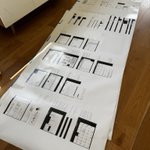
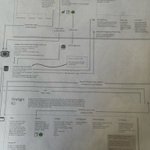
Circa 2011-2019 back when we created information architecture and blueprints for large software. Used plotters to print entire workflows. I did this for every job - snowflake, Cloudphysics, Imprivata, empirix, rue la la.


1
76


Reshma Mehta retweeted

The 2026 Virtual Cell Challenge has begun! Submissions and the leaderboard are now open.
This year's task: multi-context generalization and zero-shot prediction. Models will need to predict perturbation responses in cellular contexts with no Challenge-specific training data.
arcinstitute.org/news/virtua…

Reshma Mehta retweeted
Pre-registration for the 2026 Virtual Cell Challenge opens today. Start building your team and say hello in our Discord. The full competition launches August 20.
virtualcellchallenge.org/

Reshma Mehta retweeted

This AI model is trained on trillions of DNA letters from organisms across the tree of life
go.nature.com/3Pgrfsj
A year ago, I had the opportunity to build Evo Designer as part of my first collaboration with @arcinstitute — a tight partnership with @BrianHie, @garykbrixi, @davey_burke, Rajesh Ilango, and @etowah0 to design the best experience for showcasing the model's capabilities.
Seeing Evo 2 published in Nature today makes it all the more meaningful. 🧬
Try it yourself → arcinstitute.org/tools/evo/e…
Tutorial to get started → youtu.be/6P0L1qG_PhU

So proud to have contributed Evo Designer to the Evo 2 ecosystem with @etowah0 and Rajesh Ilango. Check out the tutorial I made to help you get started.

We developed Evo Designer to help you get started with Evo right away. This tool enables DNA generation from nucleotide and species prompts. Coding region annotation is provided, with 3D protein visualization (ESMFold) for prokaryotic sequences. Sequences are scored for perplexity and per-nucleotide entropy.
Check out our tutorial here: youtube.com/watch?v=6P0L1qG_…

4
92
Reshma Mehta retweeted

We developed Evo Designer to help you get started with Evo right away. This tool enables DNA generation from nucleotide and species prompts. Coding region annotation is provided, with 3D protein visualization (ESMFold) for prokaryotic sequences. Sequences are scored for perplexity and per-nucleotide entropy.
Check out our tutorial here: youtube.com/watch?v=6P0L1qG_…
Reshma Mehta retweeted
Evo 2, the largest fully open biological AI model to date, is now published in @Nature.
Reshma Mehta retweeted

Virtual cell models need to see a diverse range of cell types dynamically responding to changes to be effective predictors. Excited to announce the Arc–Biohub–Tahoe dataset: 120M+ cells and 225,000 conditions making it 4x larger than Tahoe-100M

The next inflection point in virtual cell modeling will require large-scale perturbative data. To get there we are partnering with @tahoe_ai and @officialbiohub to help us generate a dataset to push us forward: arcinstitute.org/news/tahoe-…

Reshma Mehta retweeted

Today is a great day to say thank you to all of the awesome companies that support our work on Tailwind CSS ❤️ Their contributions make an enormous difference.

Reshma Mehta retweeted
Thank you to everyone who made the inaugural Virtual Cell Challenge a success.
Over 5,000 participants from 114 countries competed to build AI models that predict cellular responses to genetic perturbations. Today we're announcing the winners and reflecting on what we learned.

Reshma Mehta retweeted
The Virtual Cell Challenge's final test set is now available at virtualcellchallenge.org. Final scores will be based on the 100 new perturbations. The 7 day phase is single blind (no score feedback) and uses the latest cell-eval (bugfix'd last Friday). Good luck everyone!

Reshma Mehta retweeted

Welcome to the age of generative genome design!
In 1977, Sanger et al. sequenced the first genome—of phage ΦX174.
Today, led by @samuelhking, we report the first AI-generated genomes. Using ΦX174 as a template, we made novel, high-fitness phages with genome language models. 🧵

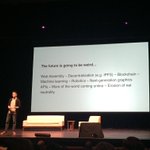
High information density talk on Mech Interp with @Jack_W_Lindsey and @banburismus_ talking model personas, sycophancy, a possible future of models with engineered neural networks! Thank you @lightspeedvp for this series.
2
148
Reshma Mehta retweeted
After 28 nailbiting days, @arcinstitute's Virtual Cell Challenge has a new leaderboard topper! It took 20 tries, but the Kwisatz Haderach has beaten Snow Leopard and finally brings water to the people
Join now to win the $100,000 top prize!

Reshma Mehta retweeted
Over 2,000 people have registered for the Virtual Cell Challenge to create an AI model that can generalize for unseen perturbations. Hundreds of competitors have been submitting results from their models and the race, as you can see from the leaderboard, is heating up:

Reshma Mehta retweeted

Don’t get left behind. Join the Virtual Cell Challenge to shape the future of predictive cell modeling!
#singlecell #biologicalAI @arcinstitute @nvidia @UltimaGenomics
Register today for the Virtual Cell Challenge and use AI to solve one of biology’s most complex problems.
Announced in @CellCellPress, the competition is hosted by Arc Institute and sponsored by @nvidia, @10xGenomics, and @UltimaGenomics.
