Geoffrey Andrews retweeted
Ah, so Elon just fundamentally does not understand Newtonian physics
Replying to @elonmusk
Reason is Newton's Third Law. In vacuum, there is nothing to "push" against. You must react against ejected mass.
Geoffrey Andrews retweeted
On this day in 1910, a stowaway Kiddo the Cat became the first feline to attempt to cross the Atlantic in an airship (don't worry, he survived). His eventual howling led to one of the first radio communications from an aircraft in flight: "Roy, come and get this ---damn cat."
Geoffrey Andrews retweeted
I think today's Republicans simply don't understand how important Watergate was to the Reagan Revolution. The Republicans of the '70s simply threw Nixon under the bus, moved on, and in a few years they were running the table.
Geoffrey Andrews retweeted
Knowing that my research might one day allow Kylie Jenner to wake up and decide to eat brunch anywhere in the world is what keeps me going on the tough days
Geoffrey Andrews retweeted
👀 Sneak a peek at the deepest & sharpest infrared image of the early universe ever taken — all in a day’s work for the Webb telescope. (Literally, capturing it took less than a day!) This is Webb’s first image released as we begin to #UnfoldTheUniverse: nasa.gov/webbfirstimages/

ALT The background of space is black. Thousands of galaxies appear all across the view. Their shapes and colors vary. Some are various shades of orange, others are white. Most stars appear blue, and are sometimes as large as more distant galaxies that appear next to them. A very bright star is just above and left of center. It has eight bright blue, long diffraction spikes. Between 4 o’clock and 6 o’clock in its spikes are several very bright galaxies. A group of three are in the middle, and two are closer to 4 o’clock. These galaxies are part of the galaxy cluster SMACS 0723, and they are warping the appearances of galaxies seen around them. Long orange arcs appear at left and right toward the center.
Geoffrey Andrews retweeted
One of my biggest pet peeves is the recurring "we don't know why airplanes fly" take that pops up from time to time
They'd have you believe we have no idea how to design aircraft, but it's really just a bunch of nerds arguing about how to simplify Navier-Stokes
Fluid dynamicists: What Do you think of this new variational theory of lift? It’s summarized in this short video
youtube.com/watch?v=JIA_hDRK…
and was recently published in Journal of Fluid Mechanics:
cambridge.org/core/journals/…
Geoffrey Andrews retweeted
It’s important that we keep talking about the Uvalde massacre. It needs to stay in the news & we need to stay angry. We must break this cycle
Thanks to @ExpressNews for providing a platform for this op-Ed
TDLR: I design hypersonic weapons and even I can see we need gun reform
Geoffrey Andrews retweeted
View from space of the violent tornadic supercell that tore through Chicago.
Breathtaking imagery.
Geoffrey Andrews retweeted
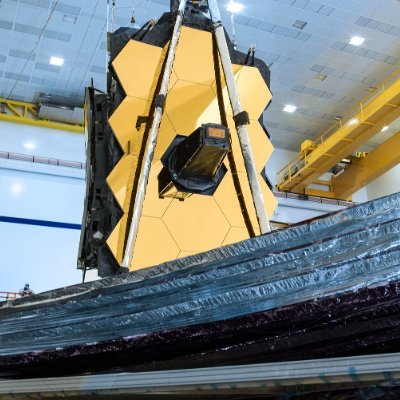
“With the completion of alignment and half a lifetime’s worth of effort, my role on @NASAWebb has come to an end. These images have profoundly changed the way I see the universe...there are galaxies everywhere! It is my hope that everyone in the world can see them.” - Scott Acton
Geoffrey Andrews retweeted
🚀 LES simulation of a reentry module on Mars! 🚀
Authors: Luca Placco, Michele Cogo, Matteo Bernardini, Francesco Picano – In collaboration with Sapienza Università di Roma.
Geoffrey Andrews retweeted
⚡LES – Pitching Airfoil Undergoing Deep Dynamic Stall⚡
This video shows how the large-scale Leading Edge Vortex is formed during pitch-up motion and it gets shed due to a Trailing Edge Vortex formed prior the maximum pitch angle is reached.
📝 Paper: asmedigitalcollection.asme.o…
Geoffrey Andrews retweeted
Ten years ago today, inside the flight deck of Space Shuttle Endeavour before it was powered down. Still to this day one of my most popular shots. Prints available of this and a bunch more, including the other orbiters! launchphotography.com/Endeav…
Geoffrey Andrews retweeted
Fireflies? Nah: stars. This time-lapse video from the NACO instrument on ESO's Very Large Telescope in Chile shows stars orbiting the supermassive black hole that lies at the heart of the Milky Way over a period of nearly 20 years [source: buff.ly/2AzsJqO]