

Singapore based Aging Researcher. @vita_dao, longevity advocacy, progress studies, city planning, open science, AI, democracy & economics of SE asia.
Joined January 2017
- Tweets11.8K
- Following813
- Followers2.4K
- Likes3.6K





Kamil Pabis retweeted

If you are AGI-pilled, a capability maximalist, an x-risk person, etc. this data has to move you at some point, right?
apollo.com/wealth/insights-n…
Slow diffusion can only be part of the story, esp. given such muted employment / productivity effects in coding as late as this spring (see: fion.ac/jellyfish.pdf).
IMO everyone should be thinking more about the variety of structural limitations faced by LLMs, things like hallucination, reward-hacking, context rot, insufficient data esp. outside of math/SWE, poor generalization, unpredictability (same prompt, different outputs), user-sensitivity (output quality is a function of use quality), mode collapse (model outputs lack humanlike diversity), the uncodifiability of much of humans' load-bearing tacit knowledge, and cultural stigma/anti-inductive norms (AI outputs become cheap, low-status baselines).
One red flag for me in a lot of maximalist AI discourse is the assumption that models being (in some sense) intelligent, and their becoming more intelligent, licenses any and all inferences about what they might do. This is similar to the oft-made "intelligence-as-magic" objection.
The problem here is that there are many different kinds of intelligence, with unique powers and limitations, and the wider world can relate to each one in different ways. I have yet to encounter a serious attempt to characterize the unique KIND of intelligence LLMs have.
The more I think about it, the more I think that the term "artificial intelligence" may be part of the problem here, and that it would actually be less misleading in certain respects to construe LLMs as "artificial organisms" or "lifeforms."
This has its own risks of course, but if nothing else it cuts against the impression that LLMs are ethereal demigods on the road to full omniscience, and suggests instead that they are more like animals with a set of capacities we can come to constrain and understand. It could also help us better explore their strange variety of distributed silicon embodiment, and the related fact that they need to consume scarce resources to survive.
This picture seems closer to the truth to me.

So Effective "Altruists" want to pause or stop AI before it has had any positive effect on GDP, before any effect on unemployment rate, before it has delivered a single cure for a single disease and before even self-driving is solved because this "super powerful AI will kill us all"?
That sounds like Effective Sabotage, not altruism.
Whether David was a nice guy or not, it was always clear that the witch hunt went too far. @MaxUnfried is right that universities have no right to meddle in the romantic lives and relationships of adults (perhaps with the exception of most extreme cases, like PI and directly reporting employee - but even there they should tread cautiously).

Science magazine’s account is riddled with inaccurate and misleading reporting.
Start with the verdict.
The jury awarded David $500,000 for defamation, $3.2M for interference with contractual relationships in a category explicitly naming MIT et al., and $2.3M for interference with prospective professional relationships. It rejected Knouse’s claims of sexual harassment, hostile workplace and educational environments, and retaliation.
These are findings in a court of law, not competing opinions to balance against the losing side’s disappointment.
Of the $6M awarded, $5.5M concerned interference with David’s professional relationships. Science obscures the connection to MIT et al. and the administrators whose actions inflicted those losses.
Causation was central to what David had to prove. In “but for” legalistic terminology, the losses would not have occurred without the conduct at issue. If David would have suffered the same losses anyway because of a culture survey, an investigation, or anything else independent of Knouse’s conduct, those losses could not be attributed to her interference or her words. Science never examines that implication. MIT et al.’s actions on based Knouse's behavior were how allegations became lost employment, a lost laboratory, and a lost career.
Yet Science tells readers the verdict “has no direct impact on the conclusions of Whitehead’s probe.” That framing ignores the causal connection established by the interference and defamation findings and treats the institutional investigation as insulated from the verdict.
Science also returns to allegations of a sexualized or “toxic” environment as something David merely denies. Knouse sued him over those allegations. The verdict form explicitly asks whether she proved a sexually hostile workplace or educational environment. The jury answered no to both.
Recycling those allegations while giving the losing attorney space to attack the jury’s competence protects the institutional narrative from scrutiny. Allegations retain their authority. The verdict becomes an inconvenient opinion.
MIT et al. exercised the power that destroyed David’s career. Science should scrutinize their actions with the same aggression it directed at him. Institutional prestige is not evidence, and “independent investigation” is not a magic phrase that makes the verdict disappear.
If AI can destroy the world it also has the power to cure all diseases, solve climate change and cure aging. Let's use this positive power of safe superintelligence to create a better world!
There is a simple reason the tech bros were right:
Everyone knew that you cannot extrapolate straight lines forever. However, Ilya and others saw that if we extrapolate those lines just a little, it will already be a transformative change.
It's too early to slow down [substantially]. The frontier labs are not profitable enough to even survive this. AI has not produced enough real economic and scientific benefit. If the luddites hit us hard now we may not bounce back from this AI winter for many decades.
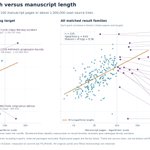
Length distribution of proofs in OpenAI's math proof dump. Several with 100+ pages natural language and a few with over 1M lines of lean. I wonder whether these are long because they are hard or because AI doesn't always write concise proofs? Navier Stokes proof was only 400k.

Hey, it's lovely that they are at least trying to make overweight people "age slower". It's laudable. Of course, not really related to aging per se, at all, until proven otherwise. Not-killing-yourself (weight-normalization) just isn't a longevity drug and everyone who has seriously thought about the question should realize this**.
From a longevity perspective it's odd to run the clocks for SELECT, or similar weight loss trials, and not for EVOKE - a population unselected for obesity.
**you can do your post-hoc statistical magic to disambiguate weight-loss responders from those who show slower aging but it's still not a great trial design either way

Pharma has the podium as Novo and Lilly stop talking about GLP-1 longevity and start measuring it, bringing early aging data to ARDD.
vist.ly/5k2ee
#longevity #GLP1 #aging #geroscience #ARDD

ALT Two figures wearing shirts with Lilly and Novo logos, alongside the text 'Lilly and Novo share GLP-1 longevity data'.
Good read about one of the two recent disappointments in cardiology, the failure Lp(a) lowering, with the other being IL-6. Hopefully CETP won't be next with the obicetrapib trial reading out in the next 6 months.

The Lp(a)HORIZON trial tested one of the most genetically validated targets in medicine, but failed to meet its primary endpoint of cardiovascular event reduction in secondary prevention.
While other therapeutic programs are also supported by genetic data, what was special about the Lp(a) hypothesis was that genetic estimates were used to predict the effect expected in trials, and these predictions partly informed the design of Lp(a)HORIZON.
The results therefore offer a unique opportunity to ask how well estimates from genetic studies translate into clinical risk reduction.
In this new piece (link in the comments), I go through the genetic evidence, the trial results, how they agree or disagree, and where this leaves the Lp(a) hypothesis.

The AI doomers were as right about capabilities as they were wrong about social and economic impacts of AI. We cannot trust them.
The God of Straight Lines is rarely wrong. What does this tell us about primordial prevention and the medical establishment?
Kamil Pabis retweeted

All three GPT-6 models sit on the ZeroBench performance-cost pareto frontier
pass@5 | pass^5
GPT-6 Astra (max)
51% | 35%
GPT-6 Sol (max)
41% | 17%
GPT-6 Luna (max)
20% | 7%

People have raised the question why certain accelerationists post with some level of glee about the current plight of mathematicians. While I can offer no complete explanation, I do think many people who are pro-AI want to celebrate their vindication after being relentlessly bullied by society over the last few years with a big "I told you so".
Understandable even if perhaps not constructive.
I just stumbled on a totally typical example of how AI-users and AI itself are viciously slandered as being below humans. Over the last years, I read thousands of posts like that.
reddit.com/r/Filmmakers/comm…
Imagine you believed that AI can make the world a better place, that it can reach human parity and beyond, yet people for years told you that AI is a toy, a stochastic parrot, worthless, disgusting, vile and then finally the receipts are coming in showing that you were right. A little Schadenfreude would be an understandable emotion, don't you think?
Of course going forward both sides will have to keep their emotions in check, sit at the table and make a plan for a future that includes humanistic AI to better society.

If AMBAR used total plasma exchange, and geroscientists want to study TPE, and if - as it seems - neither has the money to run a large TPE study, why not join efforts? Repeat AMBAR in AD and measure clocks + function? Use AD + gero funding @BuckInstitute @msfuentealba @DrKiprov @EricVerdin @furmanbios
Kamil Pabis retweeted

Verified U.S. clinicians can get free GPT-6 Astra (Pro) access today via ChatGPT for Clinicians.
Sign up: chatgpt.com/plans/clinicians…

There are so many "bullshit" jobs in academia that can be 99% automated using AI. Jobs that should not exist to begin with. We need to spend more time on science and less time on bureaucracy.
If we peel away the unjustified vitriol against OpenAI from the Navier Stokes saga, there remains genuine uncertainty regarding training opt-outs.
When OpenAI writes "While unlikely, we cannot rule out that de-identified data derived from their usage of our products helped improve our models."
One obvious reading is "we have no idea whether you opted out from training or used the thumbs up/down button which overrides your opt out settings"
I doubt that the frontier labs directly violate their own ToS. There are, however, rumours that the labs train on synthetic derivatives of customer data, despite opt-out, as a loophole. Seems unlikely, but not impossible. Probably a conflation of two things: I would assume they do train on synthetic customer data (which helps with de-identification) AND respect opt-out.
If AI has the power to destroy humanity, it also has the power to better everyone's life, solve climate change and cure aging.
Harness that power!

I wanted to highlight this interview by Matt Kaeberlein discussing psilocybin not only because it is the kind of wild moonshot idea we need more of.
It also contains a typical IACUC horror story. I heard and lived through so many of these stories that I now believe replacing IACUC with AI will be one of the biggest near term wins for society and science!
youtube.com/watch?v=2VLZccpv…
