





Pinned Tweet
"A lambkin in peace, but a lion in war,
The pride of her kindred, the heroine grew:
Her grandsire, old Odin, triumphantly swore, -"
"Whoe'er shall provoke thee, th' encounter shall rue!"
- Robert Burns, Caledonia.


I dislike Englishness from a Germanic perspective. In its desire to self-civilize, Englishness was butchered and bastardised from Longshanks onward. To me, the English are a savage and uncivilized form of the Scoto-Norman - of which the lowland variety carries on the spirit of an 'Inglisness'-of-before.
When presented with foreign land, the English tend to revert to a better self - the frontier turns him back into a true Englishman. But at home he is sick and held back by a nation that has forever sought to suppress him, just as it supresses its neighbours.
Unfortunately things like protestant theology, religious extremism and a warping of self-identity as a result saw the Scots succumb to a similar fate, but only in a much later period.
I think my overarching point is simply that one should associate with that to which they /feel/ the most connection, that is, which line of theirs they should embrace over another.
IF you truly do feel an equal adoration for both, then make an effort to showcase this in participating in both cultures properly.
An Anglo-Celt would be someone capable of speaking English and one of the Celtic languages, and who has equal fluency in both cultures.
I agree with this, sort of
xitter.cf/fosandair/status/21137…

By nature of ancestry and spirit I feel most at home with the heritage of the north-east of Scotland. It is a people defined by being Germanicised Celts. I feel the greatest draw to that which is Germanic but I do not have the aversion to that which is Gaelic, or British either.
Gaelic language and culture is important to me through other lines too. I seek to uplift it as an outsider with a connection, by participating in it and by promoting it to those with an even stronger connection than mine own.
Innes retweeted

Bledsian Winterfylleth. Mead, incense and prayers were offered, so Lord Ing may make our lands and people virile and prosperous once more.
Hail Ingvi Freyr, progenitor of the North Sea Peoples, Lord of light, slayer of Surtr!
Ūton lofian Ing! ᛝ


Burns from Ayrshire was particularly interested in Halloween; yet his inspiration, Ferguson from Edinburgh, spoke more about Yule. Something to think about!
In the Scottish north-east, Yule (Yeel) is more important than Halloween but it is celebrated in a similar way. It is not the same as Christmas, but Christmas typically falls within the time of Yeel and the merry month (continuing from December through to the new year).
Halloween was an important festival-time in the north of Scotland, like most of the other folk festivals that would occur throughout the year, Halloween was associated with the blaze of a sacral needfire.
Lit by friction in the traditional way, the needfire was burnt on a high-spot and the flames from it were used to relight the fires of hearth and home. Its smoke was holy and cleansing, boys and girls would lay down in the grass to let the smoke roll over them, and the more daring would leap over the fire itself.
In the Highlands there are accounts of men parading around fields with lighted torches to ward off the evil associated with that night. At Balmoral during the reign of Victoria, the effigy of a witch was burnt to the tune of the bagpipe at this time.
In 1793 the Minister of Monquhitter complained that "The Halloween fire was kindled in Buchan. Various magic ceremonies were then celebrated to counteract the influence of the witches and demons and to prognosticate to the young their success and disappointment in the matrimonial lottery."

Yule of course heralds the new year in Germanic calendars whereas the new year for the Irish may have traditionally been around Samhain.
Both times of year were sacred for both people pre and post conversion.
If you are of mixed Germanic / Celtic heritage but don't know which one to identify with, simply ask yourself if you prefer Halloween or Christmas.
Halloween was an important festival-time in the north of Scotland, like most of the other folk festivals that would occur throughout the year, Halloween was associated with the blaze of a sacral needfire.
Lit by friction in the traditional way, the needfire was burnt on a high-spot and the flames from it were used to relight the fires of hearth and home. Its smoke was holy and cleansing, boys and girls would lay down in the grass to let the smoke roll over them, and the more daring would leap over the fire itself.
In the Highlands there are accounts of men parading around fields with lighted torches to ward off the evil associated with that night. At Balmoral during the reign of Victoria, the effigy of a witch was burnt to the tune of the bagpipe at this time.
In 1793 the Minister of Monquhitter complained that "The Halloween fire was kindled in Buchan. Various magic ceremonies were then celebrated to counteract the influence of the witches and demons and to prognosticate to the young their success and disappointment in the matrimonial lottery."
In England, the people with the most Germanic spirit lived on the Anglo-Scottish border or went to America. Todays issues have invented a new frontier, it is an opportunity to arise and to be something great - to become a Teuton again.
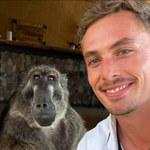
Dutch people thriving on foreign frontiers as warrior farmers with exotic and unusual pets are a perfect example of this spirit, see South Africa and Namibia and so on.

Germanic people without a frontier are spiritually and physically weakened and borderline /not/ Germanic. This was an encounter with truly fulfilled Teutonic spirit, it is one I cannot get out of my mind.


Halloween was an important festival-time in the north of Scotland, like most of the other folk festivals that would occur throughout the year, Halloween was associated with the blaze of a sacral needfire.
Lit by friction in the traditional way, the needfire was burnt on a high-spot and the flames from it were used to relight the fires of hearth and home. Its smoke was holy and cleansing, boys and girls would lay down in the grass to let the smoke roll over them, and the more daring would leap over the fire itself.
In the Highlands there are accounts of men parading around fields with lighted torches to ward off the evil associated with that night. At Balmoral during the reign of Victoria, the effigy of a witch was burnt to the tune of the bagpipe at this time.
In 1793 the Minister of Monquhitter complained that "The Halloween fire was kindled in Buchan. Various magic ceremonies were then celebrated to counteract the influence of the witches and demons and to prognosticate to the young their success and disappointment in the matrimonial lottery."
Innes retweeted

In Scandinavia, on All Saint's Day, people illuminate graveyards with candles and offerings for the dead. This is a continuation of an ancient Germanic tradition of a three night festival for the dead that begins on the full moon tonight, the first night of Winter full (OE: Winterfylleth, ON: Vetrnætr).
The three nights of Winter full should include several blots:
Haustboð “harvest offering" for Inguifrey. Pray for a good year.
Álfablót "Elf sacrifice" for the noble dead in the barrows as well as the lord of the elves,Inguifrey, and the lord of the dead, Woden (Irmin).
Disablot "Disir sacrifice" for the goddesses and ancestral mothers called in Norse Disir, or in Old English Idesa.
The Old English Winterfylleth marked the start of winter on this full moon. The Norse equivalent, Vetrnætr "winter nights" is specifically said to last for three nights. The Saxon chronicler Widukind of Corvey wrote that the Saxons on the continent held a three day blot to their god Jǫrmun (Odin) in October who is also referred to as Irmin.
So between the Norse, Old Saxons and Anglo-Saxons we have a clear picture of this three day Germanic festival and the gods that were invoked - Odin/Woden (Jǫrmun/Irmin), Inguifrey/Yngvifrey, the Alfar/Ylfe "Elves" and the Disir/Idesa.

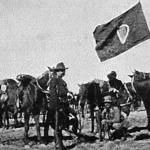
Commander by accident during the Easter Rising, Major Seán Mac Giolla Bhríde was an experienced military leader as he had raised a unit of South African Irish and Irish-American volunteers to fight on the side of the Boer Republic's during the second Boer War; the Irish Commando's.
He was not an organizer of the Easter Rising, and seemed to have genuinely stumbled into it by accident. He was nevertheless executed for his role in the affair.


Good resources below for anyone interested in U106 migrations. Despite being one of the most common haplogroups it is relatively mysterious and often dismissed.