

Living at the intersection of Biomedical Informatics and Medical Education, with a lean towards techno-futuristic optimism
Joined December 2011
- Tweets852
- Following870
- Followers726
- Likes393



Pinned Tweet
I have found most non-technical explanations of FHIR (🔥) to be unsatisfactory. Key things to know are as follows… 1/🧵
Three forms of adaptive learning for Precision Med Edu:
• Volume adaptive — extra content until the concept clicks, or to go deeper on what interests you
• Sequence adaptive — order of material shifts to match case exposure in clinic
• Medium adaptive — lecture, reading, animation, podcast… whatever fits the learner
Andrew King retweeted
Speaking of wait times, it would greatly benefit the country if SpaceX built a factory for natural gas turbines
I found this insightful "learners engange in activities for 2 different reasons: strive to develop competence by learning as much as they can (mastery goals) or strive to display competence by trying to outperform others (performance goals)"
Learning a new domain gives you both new frameworks for thinking and new language for communicating. Its the biggest level-up you can do.
Andrew King retweeted

Jevons paradox is happening in real time. Companies, especially outside of tech, are realizing that they can now afford to take on software projects that they wouldn’t have been able to tackle before because now AI lets them do so.
We’re going to start to use software for all new things in the economy because it’s incrementally cheaper to produce. Marketing teams at big companies will have engineers helping to automate workflows. Engineers in life sciences and healthcare will automate research. Small businesses will hire engineers for the first to build better digital experiences.
And as long as AI agents still require a human who understands what to prompt, how to review when an agent goes off the rails, how it guide back, how to maintain the system that was built, how to fix the ongoing bugs, and more, we will still have humans managing these agents.
This is why all the advice you get of not going into engineering is wrong. The world is going to increasingly be made up of software, and the people that understand it best will be in a strong economic position. This will happen in other roles as well where output goes up and demand increases.

Engineering job openings are at the highest levels we’ve seen in over 3 years
There are over 67,000 (!!!) eng openings at tech companies globally right now, with 26,000 just in the U.S. We don’t know if there would have been more open roles if not for AI or if AI is actually leading to more open roles, but since the start of this year, the increase in open eng roles is accelerating even more.

Crowds are dumb, markets are smart—esp. vs "wisdom of crowds." Key takes: @naval: "Crowds aren’t wise - markets are wise, and mobs are dumb." @mert: Markets=wisdom w/o consensus. @CliffordAsness: coordination kills crowds & social media increases coordination #MarketsOverMobs
Andrew King retweeted

I don’t think we’ve have yet to grasp how much self driving cars will change how we live.
It will help alleviate housing affordability because people will be able to commute further.
Parking lots become obsolete, allowing city centers to reclaim millions of square blocks across the US.
Car ownership will be optional, the car insurance industry dies, and car travel becomes affordable for all.
Same day delivery becomes the norm, and mobile kitchens deliver food in mere minutes.
The 2nd leading cause of death for young people drops to basically zero.

Andrew King retweeted

Anthropic just posted another banger guide.
This one is on building more efficient agents to handle more tools and efficient token usage.
This is a must-read for AI devs!
(bookmark it)
It helps with three major issues in AI agent tool calling: token costs, latency, and tool composition.
How? It combines code executions with MCP, where it turns MCP servers into code APIs rather than direct tool calls.
Here is all you need to know:
1. Token Efficiency Problem: Loading all MCP tool definitions upfront and passing intermediate results through the context window creates massive token overhead, sometimes 150,000+ tokens for complex multi-tool workflows.
2. Code-as-API Approach: Instead of direct tool calls, present MCP servers as code APIs (e.g., TypeScript modules) that agents can import and call programmatically, reducing the example workflow from 150k to 2k tokens (98.7% savings).
3. Progressive Tool Discovery: Use filesystem exploration or search_tools functions to load only the tool definitions needed for the current task, rather than loading everything upfront into context. This solves so many context rot and token overload problems.
4. In-Environment Data Processing: Filter, transform, and aggregate data within the code execution environment before passing results to the model. E.g., filter 10,000 spreadsheet rows down to 5 relevant ones.
5. Better Control Flow: Implement loops, conditionals, and error handling with native code constructs rather than chaining individual tool calls through the agent, reducing latency and token consumption.
6. Privacy: Sensitive data can flow through workflows without entering the model's context; only explicitly logged/returned values are visible, with optional automatic PII tokenization.
7. State Persistence: Agents can save intermediate results to files and resume work later, enabling long-running tasks and incremental progress tracking.
8. Reusable Skills: Agents can save working code as reusable functions (with SKILL .MD documentation), building a library of higher-level capabilities over time.
This approach is complex and it's not perfect, but it should enhance the efficiency and accuracy of your AI agents across the board.
anthropic. com/engineering/code-execution-with-mcp

Andrew King retweeted

Grid scale batteries are changing our electricity system. Excellent new visual story on batteries in FT today shows just how far this technology has evolved.
Fasten your seatbelts, this is just the beginning.
ig.ft.com/mega-batteries/

Prediction: The penetration of democratized education (@DeepLearningAI, chatbots as teachers, etc.) is going to tip the AI investment bubble balance from about to burst to being justified.
This roller coaster is surprisingly aggressive. It made me think that I was getting too old for thrill rides
cbsnews.com/news/universal-e…

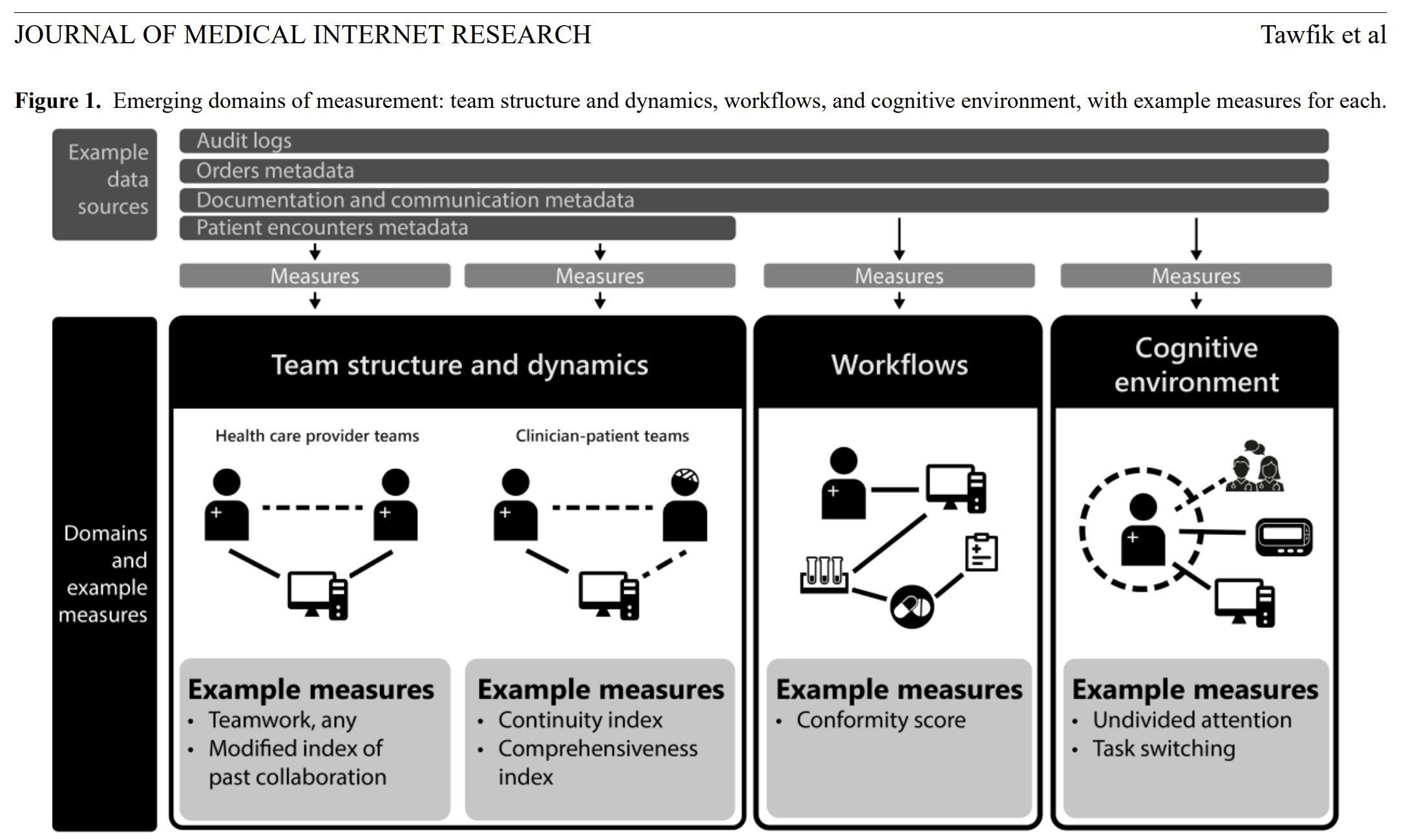
Usability questionnaires and their subscales from JBI #104822.
(HealthITUES)
1. Quality of work life
2. Perceived usefulness
3. Perceived ease of use
4. User control
(CSUQ) &(PSSUQ)
5. Interface quality
6. Information quality
7. System usefulness
(WIS)
8. Navigation
9. Functionality
3. Ease of Use
10. Workload
(SUS)
Andrew King retweeted

One underrated cool thing baked into the ambient copilot trend is that we'll getting a second shot at doing clinical decision support the right way. But what if we get a new form of fatigue as a result?
The cludgy clinical decision support that came out of the first cut (via Meaningful Use) was well-intended, but more often than not was interruptive to the provider workflow, breaking standard care operations in a way that was (and still is) fatiguing. There were workarounds - aggregating alerts and summarizing in dedicated sections, using interesting user interface elements to only signal high priority decision support, etc. But it still felt tacked on and led to alert fatigue.
But ambient tools change that. The provider workflow is now inherently one where the tool is queuing things up for approval - notes, diagnoses, orders. The early scribes are doing this just from passive listening, but the floodgates are open. In a world with this new workflow with that inherent pause to review and accept, the door is open to surface best practice care plan recommendations, evidence-based guidelines, clinical trials, and care gaps in a more natural way
So it's clear that's coming (and here in some cases), along with a lot of other convergence of AI use cases across the board. That addition pushes some of these tools potentially into FDA regulated territory. It also means that much of ambient's time savings in terms of note creation and other documentation might just get reallocated to practitioners simply reviewing and approving more things, which might be resented.
It's an opportunity and a challenge. Shifting clinicians from the tedious task of documentation to the more clinically valuable role of supervision and decision-making is good. Creating a new form of fatigue — approval fatigue — is not. At a minimum, it makes me wonder if the immediate promise of copilots, that technology should fade into the background, is just a mirage.
Andrew King retweeted

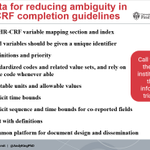
Outstanding leadership by @davidmurphymd creating this core data dictionary and wonderful to see the #MRCICU helping to improve medication data capture @rkamaleswaran @CUBiomedInfo @SCCM #SCCM2025


Andrew King retweeted

It's wild to me that this administration hates people from outside of the city so much that they now accuse them of causing the housing crisis here. I would love to have a mayor who actively encourages folks to move to our great city.

Pittsburgh’s Deputy Mayor Jake Pawlak: new housing makes the rent of older apartments go up. Also, filtering is fake and only benefits transplants.

ALT Pawlak addressed the YIMBY argument, that building more housing frees the housing market up for lower renters to move in. “What we see now happening is new expensive housing comes online, some people from Pittsburgh move into it and free up another unit. Some people from outside Pittsburgh move into [the old unit] and it doesn’t free anything up at all.” Rents at longstanding units often “go up because they see the higher prices that the new units are calling for and that lets them raise their price.”
Andrew King retweeted

Exactly this:
“To me the story of 2024 has been filling in those question marks in that illustration. The product overhang from the generative AI capabilities we have today are absolutely massive: there are so many new things to be built, and completely new application layer paradigms are at the top of the list. That, by extension, is the bridge that will unlock entirely new paradigms of computing.”

Love that @benthompson is starting to feel the AGI :)
"The product overhang from the generative AI capabilities we have today are absolutely massive: there are so many new things to be built."
stratechery.com/2024/the-gen…
Andrew King retweeted

Transdisciplinary perspectives for health systems science | New Journal accepting submissions now: npj Health Systems. @Nature @AMIAinformatics @HIMSS #healthsystem #systemscience @McWilliamsSBMI @UTHealthHouston nature.com/articles/s44401-0…