

Data, insights, and ideas around finance, sports and markets. Primarily India-focused. Momentum Investing. Follow us for more interesting research bytes!
India
Joined December 2025
- Tweets248
- Following268
- Followers52
- Likes60







Convince me otherwise, but I think all our devices have backdoors.
Mobiles, TV, fridges, cars, watches. Anything that can be connected to the internet - can be compromised. If Iran’s nuclear grid could be hacked by Stuxnet in 2000s, your devices are easy peasy.
The worst part is that not many non-tech people know how easy (although illegal) it is to create malware and trojans.
It’s not a 2026 thing, we are under mass surveillance since at least 2013-15 per me. Government agencies probably have risk profiles on all people on the internet along with their associated devices.

Life seems messier now, time feels scarce. And, Productivity never feels enough.
TV show/movie scripts are dumbed down. Attention spans are low.
There is always someone richer, fitter, more talented, better connected. Personal perceptions have got hit.
The local maxima doesn’t exist: the guy who was best sportsman in the area, the guitarist who could play very well, the girl who was very pretty.
They are also ‘meh’ now since we know of someone better on the internet.
The algorithm won long time back. And we’re hooked to it. 😂
Watching #5 ranked Brazil football team take on #138 ranked India.
The match up seems to be a social experiment at this point.
Hoping India get a draw or not lose by much as an Indian fan.
#INDvsBrazil
Very well written tweet on the academic skill gap/gulf when the reserved get paired with the meritorious.
Often people don't admit, but there are learning skill gaps/limits to understanding and contributing to advance texts in academia and the difference start showing early on.
Just because you sit in the same room with a lower score, it doesn't mean one you can contribute in the same capacity. Soon, having to survive becomes difficult including utilising unfair means.
This is not a case to be discussed even. Someone cheated, and went on to decided own consequences.
Why put false cases on the professor who held the academic integrity?
Victimizing the issue serves against top institutions such as IIT Bombay.

Reservation and the SC/ST atrocity act is a curse upon this nation. They took away the life of Sahil Wakode.
Let me explain why I say this.
I too have studied at one of India's premier institutions, and I saw something that people are often unwilling to discuss honestly. There can be an enormous academic gulf between students sitting in the same classroom. This does not necessarily mean that one group is hardworking and the other is not. Some of the students who struggled the most were also among the hardest-working.
The uncomfortable truth is that human ability has natural limits. The human brain, like the human body, differs from person to person. Exercise cannot turn every man into an Olympic athlete, and effort cannot give every student the same aptitude for mathematics, abstraction or rapid learning. Hard work can take a person a very long way, but it cannot abolish differences in innate ability.
Yet modern Indian society refuses to accept this simple fact.
Modern Indian parents are taught to believe that hard work is the answer to everything. When a child struggles, they do not ask whether the child has reached the limits of his particular aptitude. They tell him to work harder. They beat him, shame him, compare him with other children and make him believe that failure is a moral defect.
This becomes particularly vicious when education is treated as a matter of family honour and social status.
And then we take a student who might have been perfectly capable of succeeding in an ordinary college, place him in an extraordinarily competitive institution through a reservation system, and surround him with students selected from an entirely different academic distribution.
What happens next?
The student does not suddenly become stupid. He is simply competing in an environment in which the relative gap between him and his classmates may be enormous. He works harder and harder, yet continues to see others effortlessly doing what takes him hours. His marks remain low. His confidence collapses.
And because this is India, marks are not merely marks.
They become a public measure of intelligence, worth and family prestige.
The student begins to believe that everyone around him is discovering what his parents refuse to admit: that he cannot keep up.
That is where reservation becomes cruel.
Had the same student entered a college whose academic level was closer to his own preparation and aptitude, he might have been an average student instead of a perpetual failure. He might have competed with his classmates, made friends, succeeded at something and left college with his confidence intact.
Instead, our caste-based admission system can put him into an elite environment where the academic mismatch becomes a source of constant humiliation, while the surrounding culture tells him that there is no legitimate explanation for his struggle except that he has not worked hard enough. This constant humiliation makes him resort to desperate measures like cheating.
This is not compassion.
It is cruelty disguised as social justice.
And there is another poisonous consequence. Once caste becomes institutionalized in admissions and discipline, every academic dispute can acquire a caste dimension. The student sees himself as a victim of caste. The institution becomes afraid of appearing casteist. Teachers become conscious of the SC/ST machinery hanging over every interaction. Resentment grows on all sides. Reservation and SC/ST atrocity act is breaking India
What an unfortunate state of affairs in the premier institute of the nation.
The professor upheld academic integrity by catching a cheater, and is instead having to resign and face legal consequences via a fake SC/ST act.

That is crazy bad PR for India.
First, the whole debate went around Vegetarian food options at BRICS dinner. Now, leaders are falling sick..
Had it been another host, would it have gained this much traction?
How does a nation-state counter something like this?


Gave the entire lecture a listen. Would recommend.
It captures the dilemma of what value humans will provide in the AI age well.
Dr. Pratosh raises some important questions: How do we remain valuable? What should we pursue? How will AI reshape jobs- and what will the future of work look like?
Worth thinking about. But no one really has an answer yet. We can only ask the right questions as of now.

Dr. Pratosh at IISc Bengaluru tells his students that rapid advances in AI are commoditizing intellectual labour.
He raises an unsettling question: if companies stop recruiting on campus in the next 5–10 years—even at India’s top universities—what will the purpose of a university education be ?
A must watch video for everyone in tech
Excited that the momentum strategy will complete Y1 on 1st October '26.
Timeline and Performance so far:
1. 1st Oct '25 - went live and mistakenly added a modulus sign to the buy/sell engine code, so initial month performance was very poor due to the silly mistake.
2. Deploy a modulus fix asap, and a better strategy by Dec 1st week: fully automated buy/sell occurring - performance spikes.
3. SEBI introduced a static IP requirement for orders: Move back to the recommendation engine with manual buy/sell order placement.
4. Somewhere in months 4-6, I go all in with my investment amount for skin in the game.
NAV performance: ~83%
XIRR: ~54%
(Chat GPT explanation on the gap between the above two: The gap is because Zerodha’s 83.49% is a time-weighted NAV return, while your 53.65% XIRR is money-weighted—and your cash flows occurred at different points, so they can diverge substantially.)
~Still trying to wrap my head around this.
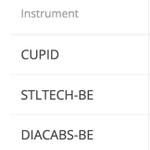
Notable winners: STLTECH, MTAR, CUPID, KIRLOSENG, SCHNEIDER (Last 2 sold)
Recent Entries: Ather, Welcorp, Bluestone
Losers: too many to remember, high churn/rotation
* That spike in middle is VEDL delisting/relisting
(No recommendation)

Comment on Future expectations:
Although backtests (with biases in data) have always been largely positive year on year since 2018.
This is too much of an over performance in a flattish year.
In a bull run, whenever that is, the over performance will not continue. Would expect the classic mean reversion to come into play. Time will tell..
Have done a rejig to my portfolio. Exited Schneider.
Added more Ather, entered WelCorp and Rubicon some time back.
August was okay at ~8-9%.
Sept has had a good start, thanks to STLTech 5x ing from my buy price. Also, re-entered MtarTech after exit last month for FOMO reasons. (So much for rationality, haha!)
(No recommendations)

After a horrible July (down ~6%), the momentum algorithm has started up by ~3.9% over the first three days of August so far.
Snapshot of today's top three winners. (No Recommendation)
Some learnings/insights (No Recommendation):
1. Exited MtarTech on the third consecutive lower circuit, which seems to be a mistake in hindsight. Cutting winners (had multi-bagged) and keeping losers is like cutting flowers and watering weeds. Lesson learnt!
2. Recent entry in BlueStone has done well in week 1. Rest, seems momentum fizzled out of STYL, BALAMINES, SCHNEIDER, KALYAN, and Cartrade. Let's see if August has some momentum runners because July had all momentum from the market sapped.
Looks like July was a step back before a grand leap in August-September?


Wow, openAI is training models on user session history?
No surprises there.

>math professor spends a year on one of the hardest unsolved problems in math
>"Navier-Stokes"
>his drafts for the whole project went through codex sessions
>openai had his logs in codex
>suddenly rumor leaks AI solved it
>he emails openai to ask what's going on
>openai calls within days
>"funny story, our model also solved it"
>using his exact approach
>asks openai: did you train on my sessions?
>no answer


The AI race, particularly OpenAI vs Anthropic is heating up!
Now, OpenAI may reveal that they have solved the Navier Stokes problem soon, a millennium prize problem.
Earlier, Claude made progress on the Riemann Hypothesis.
It just goes on to say that AI is gaining grounds every 6 months on problems that it takes a civilisation decades. Gear up!
With regards to the previous tweet on the Riemann Hypothesis. A guy who prompted 'you can do it' to Claude while jogging is responsible for the leap on the famous math problem.
Not a mathematician or an academician.
What comes next is what? SMEs stop existing, and we see AI as an expert. Exciting times to live in for sure.
#Riemann #ClayInstitute
Each day seeing similar news with changing company name is concerning as a day jobber.
But times have changed massively in the last 5 years.
Best one can do is build alternate income streams, learn to manage money, find ways to be AI ready or AI proof. And finally, don’t see your employer as safe even if layoffs are uncommon.
We’re soo back to the trenches and hunter gatherer life - just try to be productive in monetary sense each day.

BREAKING: Uber, $UBER, is laying off 10% of its employees in a massive restructuring effort aimed at reducing costs.
The layoffs will impact a total of 3,300 people and will reduce the number of managers in the company by 20%.
The move comes as Uber has vowed to commit more than $10 billion to robotaxi partnerships in the coming years.
Food for thought:
What do I know better than a Zomato/Swiggy/Doordash delivery partner in the game of life? (With all due respect)
Probably probability, betting heavily on education, investing well, and better financial habits.
But then the same question applies to us.
What does someone several levels above me in this chain understand that I don’t?
Probably entrepreneurship, building the right networks, taking asymmetric bets, leverage, ownership (esops, rsu, assets), and operating with higher agency.
Maybe moving up in life is simply about figuring out what the people one level above you understand - and learning it faster.
You can keep iterating this question, and maybe the topmost folks at this game are Warren Buffet, Elon Musk, and Sam Altman type of folks.
What do you think?
Anyone with enough life experience in India eventually realises that living here can feel like a survival strategy game.
That’s partly why so many of us optimise relentlessly for money. Not necessarily because of greed or luxury, but because money buys insulation. It removes friction, reduces dependence on broken systems, and gives you options when things go wrong.
Look at the typical middle-class Indian family: save aggressively, invest heavily in education, buy a house, push the kids toward stable careers. Much of it is strategy - an attempt to build buffers against uncertainty.
Because the downside risks are very real.
A tree can fall on your car. A bridge you’re walking on can collapse. A corrupt official can demand a bribe for a routine task. You can encounter a -40 marks surgeon in a system where merit is super-ceded by reservations. You can spend years dealing with institutions and governments that simply don’t respond to your interests.
And what mitigates a surprising number of these problems?
Money.
Why do people aspire to live in places like The Dahlias or The Camellias? Why spend enormous amounts on private schools, healthcare, security, reliable transport and gated communities?
You’re effectively trying to create a mini-Singapore for your family within India - especially for your children and elderly parents.
Cleaner surroundings. Better security. Reliable infrastructure. Better healthcare and education. Less exposure to everyday chaos.
You reduce the noise of the wild side of India so that you can focus your energy on actually living - and on fighting the battles that remain.
That’s why, in India, wealth isn’t only about network = net worth, status, luxury cars or expensive homes.
At a certain point, money becomes private infrastructure.
You buy your way out of problems that the public system was supposed to solve for you.
#ReservationReformआंदोलन
Yes, the goalposts will always shift, accounting for inflation, lifestyle inflation, and the time value of money.
A good rule of thumb for Indians is to aim for the grand prize on KBC.
It has gone up 7.5 times from 2000 to 2026, from 1 Cr to 7.5 Cr.
A decade from now, it should be at INR 15 Cr. #FIRE #Money
This Post is from an account that no longer exists. Learn more
The only recourse the general castes have is to consolidate as a vote bank - which seems suicidal seeing the opposition/alternatives.
There is no other way; try to reshuffle governments every 5 years. Establish vote bank credibility and then control their destiny/agendas.
If this protest fails, that is the only 10-15 year route for any success. #ReservationReformआंदोलन #ReservationHatao
The anti-reservation protests in Delhi present a difficult vote-bank Catch-22, but the underlying debate is important.
Merit-and merit alone-should determine opportunity. The US and China aren't marginally ahead of India; in many areas, they're miles ahead. We cannot afford to dilute merit by 50% year after year and expect to close that gap.
Economic reservation isn't a clean solution either, especially in a system where income criteria can be circumvented. Support disadvantaged students through better schooling, scholarships and fee concessions-but keep selection merit-based.
Reservation should be completely abolished.
#ReservationReformआंदोलन #ReservationHatao
Seeing interesting takes on potential Food shortages in the year 2027.
Hard to imagine in a society with abundance.

There we go. An investment bank confirms.
But the food crisis is not going to be just due to fertilizer shortage. I know India is already ramping up imports of urea etc.
Still it may not be enough. As I had outlined in my post, it will be a manufactured crisis blamed on natural factors and the supply chain.
The food crisis will be precipitated to weaken democracies like India by turning people against the government. Using personal issues like inflation and food scarcity amplified with narrative warfare.
This is why it is important for India to start preparing now.
Increase the already high buffer stocks, but more importantly prevent sabotages to them by 0.5 front commies and radicals, tighten loopholes in exports, prepare for better coast guard and customs to prevent smuggling out etc.
And the most important preparation India needs to do to maintain stability will be in narrative. Both in preemptive narrative and in fighting fake narrative & cognitive warfare once the crisis starts.

Asked ChatGPT to generate net income/exposure to the AI arrangements using previously shared image.
Looks like ChatGPT/Anthropic are at the net deficit while rest are net income positive.
Given ChatGPT/Anthropic make strides in revenue/profit against the innovation they do - it may not be a bubble.
Comes with caveats.
🤖 Made with AI

Image from Bloomberg: Circular nature of AI Investments.
Until the moat around AI becomes clearer and, more importantly, the economic value expands well beyond the companies building and financing the infrastructure, the argument that AI is a bubble isn't going away.
Models keep improving with every iteration, but much of that improvement is not meaningfully felt outside a fraction of users.
The AI race may not be running out of innovation. But it could be running out of time to prove itself legit?
#AI #AIBubble
