

Avicennian | Ḥanafī Sunnī | MB ChB
Joined July 2023
- Tweets13.3K
- Following221
- Followers2.3K
- Likes20.8K





Pinned Tweet
In sha Allah, once I finish my medical degree I hope to complete the Dars-e-Nizami at a local madrasah and fund the studies myself. I’ve had a look, and there are several madāris in my city that actually offer it, so hopefully I’ll have the opportunity to study it one day. And of course I plan to continue studying logic and philosophy alongside it.
Not a single response from any Taymiyyan. I think they silently acknowledge that creation ex materia is one of Ibn Taymiyyah's most rationally indefensible doctrines, on top of not even being supported by any scripture or Salaf.

Ibn Taymiyyah on Creation ex Materia
I remember reading this book a few years ago, and I have no doubt that Ibn Taymiyyah’s account of creation is confused and counterintuitive.
Ibn Taymiyyah holds that God perpetually creates, such that every temporally originated thing or hādith, is preceded by another originated thing or muhdath. Upon corruption, the preceding thing, including its matter and form, are annihilated, and God creates another thing. He rejects the philosophers’ doctrine of an eternal material substrate underlying generation and corruption.
He attempts to answer both the philosophers and theologians. To the philosophers, he says that no particular created existent is eternal, although the genus of creation is eternal, thereby avoiding what he considers their 'heretical' doctrine of eternal creation.
Against the theologians, he rejects their argument from the temporal origination of bodies or hudūth al-ajsām. The theologians maintain that the series of originated things or hawādith must be finite and terminate in a first creation, Ibn Taymiyyah maintains that this series extends infinitely with no first.
But his reasoning makes no sense for several reasons.
Firstly, his belief that matter and form are annihilated together upon corruption fails to answer the philosophers’ argument from the principle kullu hādith masbūq bil-māddah, every temporally originated thing is preceded by matter. The argument is that the possibility of temporal origination must either exist or not exist. If it does not exist, then there is no real possibility for the thing to originate, rendering its origination (metaphysically) impossible. But possibility, understood as real potentiality, cannot subsist independently, since it is an attribute requiring a subject, we call this subject matter. Therefore, every temporally originated thing requires prior matter.
If Ibn Taymiyyah holds that both matter and form are annihilated upon corruption, then the potentiality for the subsequent origination of another existent is also annihilated, making its origination metaphysically impossible. If he responds that its possibility is grounded in God’s creative agency and its intrinsic possibility, this is merely the theologians’ position, which undermines his own argument that creation must perpetually be generated and corrupted. His doctrine of creation ex materia is therefore redundant.
Secondly, there appears to be no compelling positive argument for perpetual creation within Taymiyyan metaphysics. One of the philosophers’ main arguments for the eternity of the universe is from divine immutability and the principle that a complete cause necessitates its effect, if God is eternally and immutably the complete cause of the universe, He must eternally necessitate His effect, viz. the universe.
But Ibn Taymiyyah rejects this. He holds that God undergoes real change, temporal accidents subsist in the divine essence, and that God acts in genuine temporal succession. The upshot of this is that he cannot use the philosophers’ argument from an eternally complete, immutable cause. He also can't use their argument from the necessity of prior matter.
What argument, then, remains for perpetual creation? Ibn Taymiyyah may appeal to divine perfection, in some places he claims that perpetual activity is more perfect than inactivity. But Ibn Taymiyyah's notion of perfection here is completely arbitrary and ad hoc, with no demonstration or burhan. In other works Ibn Taymiyyah makes similar ad hoc 'arguments from perfection', e.g. when he argues that the capacity to laugh is a perfection and therefore belongs to God because 'a being that can laugh is more perfect than one that cannot'. These 'arguments' presuppose a notion of perfection that is completely unjustified and asserted by Ibn Taymiyyah as 'self evident', when they are in fact not, and require burhan. Why is an eternally creating God more perfect than one that began creating? (1/2)


Armour retweeted

متن التحليلات الثانية للمعلم الأول لازال لليوم أفضل من أغلب كتب البرهان، و قد درست أغلب كتب البرهان، و طريقة ارسطوطاليس فيه عجيبة! بل لعله أكثر موضع يتجلى فيه عظمة ارسطوطاليس و تعرف حجمك أمام المعلم! عقل عجيب و ترتيب عجيب، كيف كل قضية مبنية على التي قبلها فيخطوا معك خطوة بخطوة نحو اليقين!
Ibn Taymiyyah on Creation ex Materia
I remember reading this book a few years ago, and I have no doubt that Ibn Taymiyyah’s account of creation is confused and counterintuitive.
Ibn Taymiyyah holds that God perpetually creates, such that every temporally originated thing or hādith, is preceded by another originated thing or muhdath. Upon corruption, the preceding thing, including its matter and form, are annihilated, and God creates another thing. He rejects the philosophers’ doctrine of an eternal material substrate underlying generation and corruption.
He attempts to answer both the philosophers and theologians. To the philosophers, he says that no particular created existent is eternal, although the genus of creation is eternal, thereby avoiding what he considers their 'heretical' doctrine of eternal creation.
Against the theologians, he rejects their argument from the temporal origination of bodies or hudūth al-ajsām. The theologians maintain that the series of originated things or hawādith must be finite and terminate in a first creation, Ibn Taymiyyah maintains that this series extends infinitely with no first.
But his reasoning makes no sense for several reasons.
Firstly, his belief that matter and form are annihilated together upon corruption fails to answer the philosophers’ argument from the principle kullu hādith masbūq bil-māddah, every temporally originated thing is preceded by matter. The argument is that the possibility of temporal origination must either exist or not exist. If it does not exist, then there is no real possibility for the thing to originate, rendering its origination (metaphysically) impossible. But possibility, understood as real potentiality, cannot subsist independently, since it is an attribute requiring a subject, we call this subject matter. Therefore, every temporally originated thing requires prior matter.
If Ibn Taymiyyah holds that both matter and form are annihilated upon corruption, then the potentiality for the subsequent origination of another existent is also annihilated, making its origination metaphysically impossible. If he responds that its possibility is grounded in God’s creative agency and its intrinsic possibility, this is merely the theologians’ position, which undermines his own argument that creation must perpetually be generated and corrupted. His doctrine of creation ex materia is therefore redundant.
Secondly, there appears to be no compelling positive argument for perpetual creation within Taymiyyan metaphysics. One of the philosophers’ main arguments for the eternity of the universe is from divine immutability and the principle that a complete cause necessitates its effect, if God is eternally and immutably the complete cause of the universe, He must eternally necessitate His effect, viz. the universe.
But Ibn Taymiyyah rejects this. He holds that God undergoes real change, temporal accidents subsist in the divine essence, and that God acts in genuine temporal succession. The upshot of this is that he cannot use the philosophers’ argument from an eternally complete, immutable cause. He also can't use their argument from the necessity of prior matter.
What argument, then, remains for perpetual creation? Ibn Taymiyyah may appeal to divine perfection, in some places he claims that perpetual activity is more perfect than inactivity. But Ibn Taymiyyah's notion of perfection here is completely arbitrary and ad hoc, with no demonstration or burhan. In other works Ibn Taymiyyah makes similar ad hoc 'arguments from perfection', e.g. when he argues that the capacity to laugh is a perfection and therefore belongs to God because 'a being that can laugh is more perfect than one that cannot'. These 'arguments' presuppose a notion of perfection that is completely unjustified and asserted by Ibn Taymiyyah as 'self evident', when they are in fact not, and require burhan. Why is an eternally creating God more perfect than one that began creating? (1/2)
The theologian can simply dismiss these 'arguments from perfection' and maintain that we know creation began temporally due to their proofs, and Ibn Taymiyyah does not have a rejoinder to that.
Finally, Ibn Taymiyyah rejects the philosophers’ belief that any particular created existent can be eternal, while accepting the eternity of the genus of creation. He believes this distinguishes him from the philosophers' 'heretical' beliefs. But he has no basis for this claim.
He appeals to scriptural evidences like the hadīth of Imrān ibn Husayn in Ibn Hibbān, transmitted with the wording that nothing existed ‘before’ Allah, as opposed to another narration stating that nothing existed ‘besides’ Him. The former is compatible with an eternal created order, whereas the latter supports the view of the theologians. But these same evidences are also brought by the philosophers to show that their views are compatible with scripture! So Ibn Taymiyyah cannot use scripture to save himself and charge the philosophers with heresy.
If he instead argues philosophically that creation must necessarily entail temporal origination, the philosophers can simply reject this premise. Creation is the instantiation of an essence through an efficient cause, and the eternally caused existent remains entirely dependent upon its cause, and there is no reason why this must involve temporal origination.
If he instead argues that eternal creation results in a creature possessing a divine attribute, viz. eternality, which is shirk, the philosophers simply say that the eternity of a created existent does not entail that, since eternity has no positive ontological status, it is simply the negation of temporal origination. Therefore no divine attribute is ontologically possessed by any creature, and thus there is no shirk.
Ibn Taymiyyah believes in an eternal succession of contingent existents while believing that the possibility of an individually eternal contingent existent is kufr, but, as we have shown, he has no scriptural or philosophical basis for this claim. Either he can relinquish the claim that the philosophers' view is kufr, or accept that his own view is kufr, as per the understanding of the theologians.
I believe Ibn Taymiyyah was sincere but he committed major blunders, in his own theology, in his arguments against the philosophers and theologians, and in his branding the philosophers as heretics. I hope that he repented for this and I pray that Allah forgives him. Ameen. (2/2)
13
1,078
Armour retweeted

You simply cannot dismiss the things around you as mere coincidence. The very structure and design of plants, animals, and the skies clearly point to the divine order established by God.
— Ibn Sina

Armour retweeted
In Ibn Sina's thought, every feeling is a sign for the Existence of God.
Consider feeling ashamed:
The soul realises how it has fallen from goodness and desires protection against human judgment. This makes it reach higher and long for the source of all goodness, the 𝑶𝒏𝒆.

Armour retweeted

By 20, you should've mastered Classical Arabic and Persian. By 25, you should've finished Dars-e-Nizami, gotten two PhDs, had 2 wives, and had 8 kids. Then disappear and practice tasawwuf in solitude for 20 years, followed by another 20 years initiating people into your tariqah.
Armour retweeted

I worry the Islamic tradition has been through something MacIntyrean.
That we've been left with fragments, we've tried stitching them together in isolation of the broader context in which they were originally situated in, and have made something incoherent and somewhat ghastly.


Which pedagogical approach is best for learning Arabic? Madrasah: Nahw, Sarf, Balaghah, memorisation, classical texts. University: Reading, writing, listening, speaking, through textbooks and exercises. A combination of both, or something else entirely?
29%Madrasah
17%University
42%Both
12%Alternative
24 votes • Final results 2
2
1,188
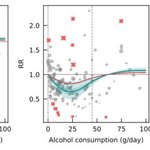
The relationship between alcohol consumption and RR of IHD, Imam Abu Hanifa and Shaykh Ibn Sina vindicated.

8
723
Armour retweeted

It's an objective fact that Christian apologetics against Islam is generally poor. Conversely, Islamic apologetics against Christianity is equally unimpressive. Anyone who thinks Salafis constitute the majority of Muslims clearly has no understanding of Islamic demographics.
This is the calamity and muṣībah of divine voluntarism. Not only does your theology leave the determination of the divine will without a sufficient reason, but it also leads to conclusions like this. Rather, God’s acts are necessarily good by virtue of proceeding from His perfect essence, in accordance with His necessary knowledge and wisdom. This preserves divine sovereignty (the sufficient reason of His act is entirely intrinsic), and divine justice, without reducing God to an arbitrary moral agent.

Armour retweeted
From the current Shaykh al-Azhar, Ahmad at-Tayyib, in the new Saudi edition of the Shaykh’s Metaphysics of the Healing:
“I believe that teaching metaphysics in the intellectual heritage of the Shaykh al-Ra’īs, Ibn Sīnā, along with the other minds of this great tradition, has become an utmost necessity from which there is no escape, in order to form an authentic Eastern awareness that confronts the incoming Western culture—a culture that is not satisfied to operate only within its own bounds in Europe and America, but has begun to impose itself forcefully and insidiously, step by step, on the Muslim household in the East, on the sons and daughters, men and women, of the Muslims.”

“A prophet, therefore, must exist, and he must be a human. He must also possess a special characteristic not present in other people so that people would recognize in him something they do not have, whereby he is differentiated from them. Therefore, he will perform the miracles about which we have been informed.
When this man's existence comes about, he must lay down laws about men's affairs by the permission of God, exalted be He, by His command, inspiration, and "the descent of the Holy Spirit" on him [Qur'an 16:102]. The first principle governing his legislation is to let them know that they have a Maker, One and Omnipotent; that "He knows the hidden and the manifest" [Qur'an 16:19]; that obedience to His command is His due, for "command must belong to Him who creates" [Qur'an 7:54]; that He has prepared for those who obey Him an afterlife of bliss, but, for those who disobey Him, an afterlife of misery, so that the multitude will hear and obey the decrees put in the prophet's mouth by God and the angels.”
📕 — Abū ʿAlī al-Ḥusayn ibn ʿAbd Allāh ibn Sīnā, al-Shifāʾ: Al-Ilāhiyyāt (The Metaphysics of The Healing), Book X, Chapter 2, “On the Proof of Prophecy; the Manner of the Prophet’s Call to God, Exalted be He; and the ‘Return’ to Him.”

Armour retweeted

Tekfircilerle aramızdaki temel fark şu:
Biz tekfircileri bazı konulara akılları ermiyor olabileceğinden dolayı tekfir etmiyoruz. Tekfirciler ise kendilerinin akılları eriyorsa bizim aklımızın zaten ereceğini düşündükleri için bizi tekfir ediyorlar.
The more I learn about Fakhr al-Dīn al-Rāzī, the more confused I become about where his loyalties lie.

Mehmet Yalçın nazikçe uyarmamıza rağmen bu paylaşımını hala kaldırmamış. Bu yüzden burada nelerin döndüğünü herkesin anlaması için durumu daha açık bir şekilde ifade edeceğim.
Bizim iddialarımızın aksine olarak Fahreddin Razi'nin tercih bila müreccih görüşünü savunduğunu iddia edebilmek için Mehmet Yalçın geçtiğimiz günlerde aşağıdaki pasajı paylaşmıştı. Paylaşırken herhangi bir cilt ve sayfa numarası da vermedi fakat Metalib neredeyse ezberimde olduğundan dolayı ilgili sayfayı biliyordum (Metalib 3/180). Sayfanın alt kısmında bir paragraf daha var fakat Mehmet Yalçın paylaşımında bu paragrafı kırpmış. Aşağıda paylaştığım fotoğraf sayfanın bu kırpılan kısmını da içeriyor.
Mehmet Yalçın'ın paylaştığı kısımda kelamcılar tercih bila müreccihi savunuyor. Fakat aynı sayfada hemen alt satırda konu devam ediyor ve burası kırpılmış. Kırparak gizlediği bu paragrafın hemen başında ise Razi "bu görüşe şu şekilde itiraz edilebilir" diyerek tercih bila müreccih görüşüne yönelik itirazı ortaya koymaya başlıyor. Bu kısım gizlenerek sayfanın sadece üst kısmı paylaşılıyor ve Razi sanki tercih bila müreccihi savunuyor gibi gerçeğin tam tersi bir izlenim oluşturulması hedefleniyor.
Bunu görünce Mehmet Yalçın'ın paylaşımını aynı gün nazikçe alıntıladım ve sayfanın devamındaki kısmın gözden kaçırılmış olabileceğini söyledim ve devamındaki paragrafı da sayfa numarasını vererek paylaştım. Kendisine hüsnü zannım olduğunu da belirttim ve işin altında bir art niyet aramadım. Fakat alıntıma herhangi bir cevap vermedi. Kendisine özelden yazan ve uyaranlar da oldu. Onlara da cevap vermedi ve sonrasında paylaşımını kaldırmadığı gibi tekrardan rt etti.
Paylaşımdan bugüne kadar aradan geçen 15 gün boyunca hala paylaşımını kaldırmadığını görüyorum. Üstelik gerçeği öğrenince hakka şahitlik edeceğini umduğum bazı kişiler de paylaşımını tüm uyarılarımıza rağmen rt etmiş. Büyük hayal kırıklığı oldular benim için. Eğer bu paylaşımımdan sonra da bu hatalarından dönmezlerse bundan sonra onları da açıkça hedef alacağımı söylemek isterim.
Bir hususu da açıklığa kavuşturayım. Siz tercih bila müreccihi savunabilirsiniz. İnsanlara yalan söyleyip onları aldatmadığınız müddetçe bu görüşü Razi'nin savunduğunu da iddia edebilirsiniz. Bunu ayrıca ilmi olarak zaten tartışırız. Böyle bir manzarada kimseye düşmanlık etmem ve kimseyi yalancılıkla itham etmem. Bana göre saçma ve çocukça bir şey savunsanız dahi ilmi zeminde kalırız ve düşmanlık etmeyiz. Bu yüzden Razi tercih bila müreccihi savunuyor diyen herkesi hedef tahtasına oturtmadım. Çünkü bazıları mesela Muhassal'a atıf yapmış. Bu kimseleri yalancılıkla itham edemem. Sadece metodolojik bir hataları olduğunu söylerim ve ilmi zeminde eleştiririm. Benim de böyle hatalarım olabilir ve ilmi zeminde eleştirilere her zaman açığım. Bu ayrı bir konu.
Fakat içinde bulunduğumuz durumlar çok daha vahim bir tablo ortaya koyuyor. Çünkü açık ve somut veriler üzerinden yalan ve saptırmalar yapılıyor. Bu ithamlarım Razi'ye tercih bila müreccih görüşünü isnat ettikleri için değil, bu isnadı yalan veriler üzerinden ilerlettikleri ve uyarılarımıza rağmen bu yalanları devam ettirdikleri için. Yoksa bir yerleri yanlış anlayıp (veya doğru anlayıp) Razi'ye bu görüşü isnat etseler itham etmeden ilmi eleştirilerimizi yaparız ve konu ilmi zeminde kalır. Fakat uyarmamıza rağmen yalan atıflara devam ediyorlar ve bu büyük bir problem. Çünkü yüzlerce, binlerce ilim talibini aldatıyorlar ve onlarla aramıza düşmanlık tohumu ekiyorlar. Üstelik bu yalanlar üzerine bir de tekfir silahını bina ediyorlar ve sizi korkutarak bizim iddialarımız üzerinde objektif bir şekilde düşünmenize engel oluyorlar. Size böyle en büyük meselelerde ve hatta üzerine tekfir bina ettikleri hususlarda bile büyük yalanlar söyleyen hocalarınız fıkıh, tefsir, hadis hususunda ne yalanlar söylüyor Allah bilir. Yalan söylemeyenler de şahitlikten kaçıyor. Gidip soruyorsunuz bir kelam, İslam felsefesi profuna, o konuyu tahkik etmedim bilemiyorum diye cevap veriyor. Onlar şahitlik etmeyecekse kim şahitlik edecek? Kimin vazifesi bu işler? Allah'ın farz kıldığı şahitlik kimin üzerine farz? (Nisa 135)
Bugün belki işinize geldiği için hocalarınızın yalanlarına göz yumarsanız yarın işinize gelmeyen yalanları söylediklerinde ruhunuz duymaz.
Bugün yalan söyleyen hocalarınızı utandırmazsanız yarın yalancılıkları ortaya çıkınca onlar sizi utandırır.
Rahatça tekfir edebilmek için yalanlara sığınmak ciddi bir sorundur. İnsanın kendi görüşünü desteklemek için yalan söylemesi bile -her ne kadar lanetli bir iş olsa da- yine de psikolojik olarak bir ölçüde anlaşılır. Fakat tekfir edebilmek için yalanlara sığınmak problem üzerine problemdir. Ben bu kadar tekfir hırsını asla anlayamayacağım. Kendi görüşünü şiddetle savun, başkasını şiddetle eleştir. Neden din dışına atmak istiyorsun insanları bu kadar? Bizi din dışına atabilmek bu kadar yalan söylemene ve insanları aldatmana sebep olacak kadar önemli mi gerçekten? Neden böyle bir psikolojiye sahipsin?
Son olarak şunu da ifade etmek istiyorum. Şimdiye kadar tartıştığım kim olursa olsun. Hakkı kabul ettikleri veya yalanlarından geri adım attıkları an kardeşim olurlar. Bütün meseleleri beraberce toparlarız. Hüsnü zannı da tahkim ederiz. Fakat uyarılara rağmen yalanda ısrar edenlerin elimizden çekecekleri var. Vesselam.

Zamboni, F. O. (2023). At the Roots of Causality. In BRILL eBooks. doi.org/10.1163/978900468487…

6
689