
Bought my 1st stock in '66 @ a secular top; Got an MBA/CFA & became an institutional investor in '82 .
Atlanta, GA
Joined February 2013
- Tweets12.1K
- Following6.9K
- Followers5.4K
- Likes15.9K






The moderators should have asked him what his tech $XLK valuation is based upon mid-cycle earnings, P/B, P/S, P/CF, capacity, inventory, etc. Also why the credit market spreads are widening and CDS [credit default swaps] are getting richer.

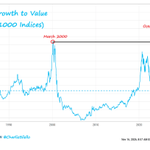
Evercore's Julian Emanuel says tech is trading at a discount to the S&P 500 for only the second time since the internet era began
"The S&P 500 at the trough was trading at 16.4 times forward earnings that are expected to grow by double digits"
"Technology for only the second time since we understood what the word internet meant is trading at a discount to the S&P 500"
"The kind of market action from Thursday and Friday was reminiscent of the kind of disconnect that we saw in 1987"
The S&P 500 jumped 4.73% Monday, its best day since April 2025, after $NVDA reinstated Jensen Huang, and futures are giving some of it back this morning ($SPY $QQQ $NVDA)
Emanuel's point is that the Fed didn't stop last week's panic, Jensen's return did
via @SquawkCNBC, featuring Julian Emanuel
1
4
506
Retail put +$3.5B into $NVDA since Nov 4 — and pulled -$893M out of every other US single stock combined. Last 10 days alone: +$3.2B NVDA, -$331M everything else. Meanwhile NVDA is down -24%. “Retail” that had made tons in AI may now be back to being "dumb money." Sigh!

This is absolutely INSANE:
Retail investors bought +$3.5 BILLION in Nvidia, $NVDA, stock since November 4th, according to Vanda Research data.
At the same time, they dumped -$893 million out of every other US single stock combined.
Over the last 10 trading days alone, they bought +$3.2 billion in Nvidia and sold -$331 million in other stocks.
Meanwhile, Nvidia is down -24% since November 4th.
Retail investors are all-in on Nvidia.

1
4
363
Dan Niles on Anthropic $ANT : "No clue what they're going to do in revenues." OpenAI cut prices, took the lead back. Two duopolists price-cutting for share should scare anyone. $900B committed vs. revenue 79% usage-based and cancellable = UNCERTAINTY you can't price.

Dan Niles with Deirdre Bosa, the same Friday show
Full interview: ceointerviews.ai/interview/3…

TV guests touting a lower P/E are judging a rollercoaster by its average height: technically true, practically useless. 🎢 Peak earnings make $QQQ look too attractive—a 30-second talking point, not analysis.
Real work: mid-cycle earnings, P/B, P/S, P/CF, capacity, inventory, spreads.
Im betting they and their clients are “long …and wrong”
AI isn't new. It's cybernetics' cousin — the family reunion started in 1948 (Wiener) and got its name in 1955 (McCarthy).
OpenAI didn't invent AI. It just made the cousin famous. 🧠⚙️
youtu.be/YovHdlRN7VM?is=11Tt…
#AI #Cybernetics
1
252


P/E is a mirage if earnings are inflated.
Look at this MS chart. Earnings growth expectations (blue) are holding up, but Hedge Fund Net Exposure (green) just collapsed.
The "smart money" isn't buying the earnings story anymore. Team Green > Team Blue.

A P/E of 20 looks cheap—until you realize the "E" is inflated.
S&P 500 earnings = ~8% of GDP vs. ~6% trend.
Mean reversion to trend = ~25% earnings cut.
Then that cheap 20x P/E is really ~27x.
If earnings are the “bubble.”

📊 𝗖𝗵𝗮𝗿𝘁 𝗼𝗳 𝘁𝗵𝗲 𝗗𝗮𝘆 📊
S&P 500 earnings have climbed to a record share of US GDP, near 8%, well above the 1995 to present trend of about 6%. Goldman expects S&P 500 earnings growth to slow from 36% in 2026 to a still robust 11% in 2027.
@GoldmanSachs
theideafarm.com/markets/mark…


The Jevons Paradox describes a counterintuitive economic phenomenon: Improvements in resource efficiency often lead to an increase, rather than a decrease, in the total consumption of that resource.

Ramp credit card spending data suggests recently Jevon’s Paradox broke for AI.
AI inference per unit of intelligence keeps coming down but usage is not spiking up accordingly of late
1
246
Ben Woodward, CFA retweeted

CREDIT MARKETS ARE STILL SCREAMING CRASH...
The Jensen returning trade is over. And the smart money is making it INCREDIBLY clear that more pain is likely coming down the road for equities.
qtrsfringefinance.com/p/cred…

Never confuse a dead cat stock bounce with financial health.
Yesterday CoreWeave equity ripped, but the bonds are still bleeding out at record lows with yields near 15%. Bondholders are pricing in real refinancing risk while equity holders are trading vibes.
Credit leads. Stocks follow. Credit > Stock price.
(Bloomberg) - Bonds backing cloud computing provider CoreWeave Inc. fell to record lows Tuesday, among the day’s biggest corporate bond losses, amid renewed concerns about the durability of the AI trade.
@business $CRWV
bloomberg.com/news/articles/…

Oversold + falling MA = trying to catch a falling knife 🔪. Don't buy the dip just because the oscillator says it's 'low'—wait for the trend to prove it's not just getting cheaper. Momentum says 'oversold, buy the dip!' Trend says 'that's a falling knife !🔪

Don't let the Stochastic trap you in a downtrend. For example, in Oct 2000, $CSCO flashed oversold, but the 10-week Simple Moving Average [MA] was falling. Only take Stochastic [& most other oscillator] buy signals when price is above a rising MA. Momentum ≠ Trend.

3
325
Ben Woodward, CFA retweeted

TRUMP REINSTATES HUANG IN PANIC: THE AI BUBBLE MAY ALREADY BE DEAD
Former British diplomat Alastair Crooke explains why Nvidia CEO Jensen Huang was really removed. Not the girlfriend story. Not a simple governance breach. According to Crooke, the China hawks went after the one man who had argued for years for tech and AI ties with Beijing.
THE HATCHET JOB
➡️ A press campaign framed Huang's girlfriend as a Chinese agent.
➡️ Crooke: that was never the real target.
➡️ The goal was to remove the man who kept arguing for good relations with China on tech and AI.
➡️ In his words, Huang was overthrown by Rubio, Colby and the China hawks.
THE COMPUTE CUTOFF
➡️ The hawks moved to cut all technical support from Nvidia and from data centers outside China feeding compute into the country.
➡️ China does not have enough compute of its own. Huawei has made clear it still needs that support.
➡️ The message to Beijing: you are the enemy, and we put a moat around our AI.
THE ISRAELI ANGLE INSIDE NVIDIA
➡️ Nvidia bought the Israeli firm Mellanox in 2019, bringing thousands of technicians into the company.
➡️ With the defense bill from 9 December, the fusion of tech and intelligence would give a new CEO from that Israeli side a huge say over who gets advanced compute.
➡️ Huang stood in the way because he favored ties with China. The proposed replacements all came from the Mellanox side.
THE PRETEXT
➡️ No evidence has been produced that Alice Wong is a spy. Spies don't post pictures of themselves.
➡️ What actually moved the board was an old arrangement with an Nvidia employee, labeled a corporate-governance breach.
➡️ Crooke: that gave them the opening to say he must go.
MY TAKE: THE BACKFIRE
➡️ I think the ouster helped puncture the AI bubble. Markets crashed hard on Friday and did more damage to the US than the original policy fight.
➡️ In full panic, Trump reinstated Huang. The market answered with an unprecedented surge.
➡️ But it may already be too late. I think the bubble has burst.
THE BOTTOM LINE
The hawks removed Huang to seal AI off from Beijing. Instead they cracked the story holding the AI trade together. Reinstating him bought a bounce, but the damage may be done. Political knives just cut the AI trade in both directions.
Was Friday's crash the moment the AI trade lost its story?
HT: YouTube Judge Napolitano - Judging Freedom @AWCrooke
#Nvidia #JensenHuang #AIBubble #ChinaHawks #Crooke #Napolitano #AI
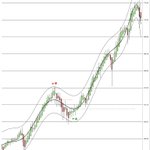
A picture is worth 1000 words for the S&P 500 $IVV. 🤓 The 10th-order polynomial has turned down. The bands are your new playground: buy the lower band, sell the upper band. The era of "buy and hold" is paused until that central curve bottoms out. ⏳📉 #ChartOfTheDay #SPX500

Risky ≠ return.
"Volatility is a feature, not a bug" explains why stocks beat bonds over decades. It says nothing about whether the recent volatility is compensated — at stretched valuations, with concentration and leverage lurking.
27 up days and 27 down days just means high variance. Symmetry in count ≠ symmetry in drawdown.
Long-run truisms don't answer near-term risk. That's not reassurance — it's a motte-and-bailey.


The big question is how much of the AI credit boom is funded by bank lines that get drawn when valuations fall? That's where the systemic risk lives this cycle.

.@realsteveeisman does an excellent job laying out the current state of AI on @StevenBartlett's Diary of a CEO & I agree with most of it. AI is a real technology, like the internet, but mania, lack of moats, capital intensity, political & local frictions & concentration create a plethora of significant near term risks that could easily tip the US into a severe financial crisis, after which the economy would eventually adapt. Where we part ways is the banks. He isn't worried about them. I am. People assume banks are insulated from an AI bubble because big tech firms & private credit funds sit in front of them, but whenever money is involved, banks end up holding the loans, the credit lines & the ultimate exposure. The buck literally & figuratively still stops at the banks.
1
6
1,441
Big up days are a symptom of stress, not strength. Investors often mistake them for bullish signals, but history says they're more often found in the middle or end of bear markets. A few takeaways:
1. +5% days are panic-rebound days, not bull-market days. They tend to follow crashes or capitulation, which is why they cluster in bear markets.
2. The Great Depression dominates — 49 of 73 (~67%). That reflects both the severity and the frequency of 1930s swings (including 1933).
3. "Mostly near the end" of the GFC is consistent with the March 2009 bottom, when huge up days marked capitulation.
4. COVID's 5 came in a tight window (March 2020), again a volatility spike.
5. "Liberation Day Week" — presumably April 2025 tariff-related turmoil — would be the most recent addition.

Nvidia $NVDA is the AIG of AI: financing customers to buy its chips with billions in off-balance-sheet guarantees. If AI demand slows, it's not just lost chip sales—it's losses on those guarantees. The "picks and shovels" seller has become the bank of the gold rush.

Excellent piece in the FT about the similarities of AIG playing the role of linchpin with CDS during the GFC ("free money") and Nvidia's role as a quasi central bank to Neoclouds with billions in off balance sheet commitments

1
6
558

