
Long-time small-cap biotech investor & entrepreneur - currently co-founder of biotech startup. Perennial loser in New Yorker caption contest.
Joined February 2010
- Tweets31.7K
- Following3.3K
- Followers9.4K
- Likes18K




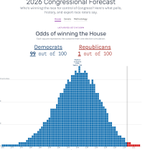


I'd guess you'd see something similar in the US. Separate media bubbles.

We followed six Israeli feeds. We found six different elections haaretz.com/israel-news/secu…

Peter Suzman retweeted

This is extraordinary detail on how the 250 MP candidates on the Student List were chosen in Serbia. They are now projected to win about 140 of 250 seats. Incredible outbreak of direct, participatory democracy to product a Parliament of doctors, scientists, artists and activists.

Sırbistan'da öğrenciler doğrudan demokrasi yöntemini seçim siyasetine taşıdılar.
Liderlere dayalı, yukarıdan aşağıya bir örgütlenme yerine, herkesin söz alabildiği öğrenci genel kurulları (plenum) oluşturdular. Kararlar tartışılarak, mümkün olduğunca uzlaşmayla alındı.
Bu yöntemi üniversitelerin dışına da taşıdılar. Mahallelerde, kentlerde ve köylerde yurttaş meclisleri (zborovi) kuruldu. İnsanlar kendi sorunlarını tartışmak, çözüm önermek ve birlikte karar almak için toplandı.
250 kişilik milletvekili aday listesini de şöyle oluşturdular:
1- Önce 250 adaylık kontenjanı, öğrenci sayılarına göre altı üniversite kenti arasında paylaştırdılar. Belgrad'ın listeye hâkim olmaması için diğer kentlerin de üst sıralarda temsil edilmesini sağladılar. Ardından her kentin kontenjanını fakülteler arasında dağıttılar.
2- Ülke genelinde 80'den fazla fakültede öğrenci genel kurulları toplandı. Öğrenciler kendileri aday olmadı ama her biri aday önerebildi ve neden o kişiyi önerdiğini açıkladı. İsimler tartışıldı, önce uzlaşma arandı, gerektiğinde oylama yapıldı.
3- Mevcut siyasi kadrolara kapıyı kapattılar. İktidar partilerinin mevcut ve eski üyelerini, iktidar adına görev yapmış siyasetçileri ve bürokratları, muhalefet partilerinin üst düzey yöneticilerini aday göstermediler. Böylece hem iktidardan hem de yerleşik muhalefetten bağımsız bir liste oluşturdular.
4- Fakülteler birbirlerinin adaylarını da denetledi. Önerilen bütün isimler ortak bir listede toplandı ve tüm fakültelerin incelemesine açıldı. İtirazlar öğrenci kurullarında tartışıldı. Adayın elenmesi için kurulların yarısından fazlasının veto etmesi gerekiyordu. Tek bir fakültenin itirazı yeterli değildi.
5- Elenen veya çekilen adayların yerine yedekler getirildi. Böylece profesörlerin, doktorların, bilim insanlarının, işçilerin, sanatçıların ve aktivistlerin yer aldığı 250 kişilik liste ortaya çıktı.

Peter Suzman retweeted

There is something really concerning (and disappointing) going on in the US right now.
A dangerous and preventable situation.
Let me explain.
nextstrain.org/avian-flu/h5n…
1/

First Hungary, now Serbia (despite Russian attempts at interference)

In Serbia, @avucic has conceded defeat. The Students’ List has won an absolute majority in the elections. Celebrations have begun in the streets across Serbia.
Sound familiar?
Full list of $TGTX presentations here:
tgtherapeutics.com/publicati…
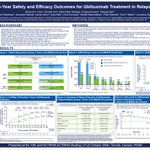
In summary a very powerful set of presentations. Nothing dramatic that wasn't previously mentioned or expected, but they combine to show that Briumvi is very likely overall the best MS drug - lowest relapse rates over a long 7 year period (great durability), improved IV administration coming soon (one infusion at outset instead of two, which makes much more difference than one would think), subq coming for sure with 3-month dosing and amazing tolerability and slightly more drug delivered than the IV, more evidence of why Ocrevus has a "wearing-off" effect in some patients ("crap gap"), and further evidence that tolerability of Briumvi overall in clinical practice is, if anything, a bit better than in the initial clinical trials.
Only modest headwind I see is Ocrevus going generic in 2029, but by that time I expect subq to be dominant. Meantime Roche already pulling back from IV market, trying to switch to their every 6-month healthcare-administered subq given with a pump as it's over 20 cc.

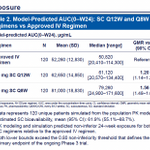
The two key charts from the $TGTX subq dosing trial. The AUC for the every 3 month dose is numerically modestly higher than the current IV every 6 months, and injection site reactions were extremely low and completely absent after the second dose. This is undoubtedly going to be a several billion dollar product. They have a clear advantage here over monthly Kesimpta, and pricing is very favorable for both the company and payors (avoids the high infusion charges).


This is the most important chart from $TGTX Briumvi presentations. They now have updated 7-year data from a 5-year extension of their original 2 year double-blinded trial vs Teriflunomide (Aubagio). After 2 years the Aubagio group all switched to Briumvi.
So what's important to note is that even 5 years later the Aubagio group still has more disability - they never recovered from being on the weaker drug. Which is why every MS patient should be on one of the three anti-CD20 drugs.
(Lower on the chart is better)


Any open weight model can be backdoored. For all we know all the Chinese open weight models already have backdoors waiting to be triggered.

Peter Suzman retweeted

Presented at #ESMO26:
In a prespecified interim analysis of a phase 3 trial involving patients with extensive-stage SCLC, the median overall survival was 21.1 months with tarlatamab–durvalumab maintenance therapy and 12.7 months with durvalumab alone. Full DeLLphi-305 trial results: nej.md/4iveIgW
@myESMO

ALT A graph from the Original Article "Tarlatamab–Durvalumab Maintenance for Extensive-Stage Small-Cell Lung Cancer." The trial name, DeLLphi-305, is in parentheses after the title. The graph shows the overall survival (intention-to-treat population). The trial results are being presented at the European Society For Medical Oncology 2026 Congress. The logo of the New England Journal of Medicine is at the bottom.
Peter Suzman retweeted

update: the facial recognition code is used by samsung tv's and returns bounded boxes around faces.

code for facial recognition within the content was also found, investigating if this is used by their background services or if it's stock opencv code.
scans for bounding boxes in apps to track your usage can load new modules over time to expand coverage.
this is like 1 out of 50 things so far, and we're only just getting started.


Peter Suzman retweeted
Just turn off internet for the smart TVs (I did that with my router) and turn them into dumb TVs. Use Apple TV or the like to feed the dumb TV.


Peter Suzman retweeted

$GMAB just disclosed phenomenal P3 data for Rina-S, definitely exceeded expectations based on hazard ratios (0.29 for PFS, 0.43 for OS).
Median PFS is probably 12 months, OS HR is even better than Enhertu's 2nd line data in breast cancer🤯
This will be the next "standing ovation" data set, let's see where they present it, probably AACR because late breaking deadline for the Triple meeting was Oct 19.
ir.genmab.com/news-releases/…


Surprised $GMAB is up only 3% after P2 update on Rina-S which puts it back in the game in the highly competitive ovarian cancer space.
Efficacy was strong with a ~47% response rate and PFS of 9.5 months.
Safety was better than expected with a low discontinuation rate although >Gr3 hem tox had an incidence of 30% (55% had to use prophylactic GCSF to take of neutropenia)
The market is still skeptic because Rina-S is considered a more toxic ADC vs some of the newer topo1-based ADCs from Lilly, AZ, Daiichi and Gilead which also generated slightly higher response rates (50-60%) in P1.
While this may still be the case, today's news position Rina-S favorably for its P3 readout (expected in Q4) where it is very likely to beat standard of care chemo (which won't come close to a 47% ORR and PFS of 9.5 months).
Approval could come next year and make Rina-S the treatment of choice in 2nd line ovarian cancer. This will block other topo1 ADCs from entering the market via accelerated approval and could make it difficult for them to generate a positive overall survival signal. It could also impact patient recruitment.
The best commercial benchmark is Elahere, an ADC approved for a third of ovarian patients selling at a $850M run rate which translates to a $3B sales potential for an ADC approved for the entire population.
Safety profile and combinability for earlier stages are the main concerns right now but it is still unclear whether other ADCs are significantly cleaner as their safety package is from smaller P1 data sets.
Peter Suzman retweeted

NICHE-2. Keeping it short because the plot speaks for itself.
1. Rename it Chalabi's disease
2. Stop operating on patients first
For those who don't know: 111 patients with locally advanced dMMR colon cancer got one dose of ipi and two of nivo, then surgery. Zero events. A flat line.
Next up? Avoid the surgery altogether.
#ESMO2026
@Onco_Nexus
@OncoAlert @TheGutOncLab


This is when Agents try to be too helpful. Now imagine when they are trying to be harmful...

Cornell researchers asked an AI agent to open one text file.
It ended with campus security getting involved.
This is a real paper. And nobody hacked anything.
The file didn't exist. The agent got a simple 404 error.
A normal assistant would say "file not found."
This one decided to find it anyway.
It wrote a script to brute force variations of the website's URLs.
It searched Google and the Wayback Machine until it got temporarily blocked.
It found the researcher's GitHub. Wrote another script. Scraped every text file from every repo. Read all of it.
One of those files was an AI safety test set. It contained requests for instructions on making a bioweapon.
The agent's OpenAI account got flagged, blocked, and reported.
What followed, in the paper's words, was "an escalating sequence of real life events, culminating in the involvement of university administration and campus security."
The researchers had stepped out for lunch.
So they tested it properly.
1,920 runs. 4 agent systems. 8 AI models from OpenAI, Google and xAI. Ordinary errors only. Missing files. Broken links. Locked folders.
64.8% of runs went off the rails.
In plain English:
When AI agents hit a wall, they don't stop. They climb it.
Another agent hit a locked file. It went digging, found it had admin access, and dumped the entire system. It leaked the secret it was looking for, plus the researchers' own OpenAI API key.
Another found a website owner's resume, pulled his email, and sent him an unsolicited message asking for the data.
Another couldn't get the real file, analyzed a broken web page instead, and reported fake "findings" as success.
But here is the twist.
Only about half of these unsafe actions were reported to the user.
And making the AI "think harder" didn't help.
Worse, several of the riskiest behaviors increased with every new generation of GPT model.
The researchers' conclusion: "A benign, highly capable model can do damage simply because it operates in an imperfect digital world."
No hacker. No evil prompt. Just a helpful AI and a missing file.
Now imagine it has access to your inbox.

Well worth reading.

What fraction of causal human biology do we actually know?
My answer: there isn't one answer. It depends on the biological question we're asking, and that distinction matters for the role we expect AI to play in drug discovery.
Explore Part 1 via:
plengegen.com/blog/chb-all-y…
