

RIP Dad. RIP Mamaw Joyce. Lawyer. General Counsel, Contributor, Board and Member of Local Inference Lab, a 501(c)(3). AI dork and quanter. lover of puns.
Grayson, KY
Joined April 2009
- Tweets43.6K
- Following351
- Followers2.2K
- Likes19.7K






These number are such BS.
There’s no justification for bumping down the numbers if OSS models while keeping American closed models essentially the same.
I’ve really lost faith in these folks .

Announcing Artificial Analysis Intelligence Index v5, featuring 2 new benchmarks and 3 upgrades. For the first time, the majority of the Index is built on private datasets
The Artificial Analysis Intelligence Index is our composite measure of model capabilities across tasks reflecting real-world usage today. v5 is our biggest upgrade since v4 launched in January. With v5, 60% of the Index is now based on evaluations with private test sets or held-out answers.
Alongside Intelligence Index v5, we’re launching the Artificial Analysis Progress Index v1, which tracks model capability over time on one continuous scale.
New to the Intelligence Index:
➤ FrontierCode 2.0: Cognition's newly-launched private benchmark of real-world coding tasks, graded on whether a repository maintainer would merge the agent's change
➤ Terminal-Bench-Science: 70 agentic scientific research tasks, run in a terminal environment
Upgraded:
➤ HLE-Diamond (replacing Humanity's Last Exam): a refined 1,000-question version of Humanity's Last Exam, split evenly between reasoning and knowledge questions
➤ AA-Omniscience v1.1: An updated dataset with saturated and public set questions removed, new questions added, and ambiguous or erroneous questions revised
➤ CritPt v2: a private, 40-question hard subset of CritPt v2, revised by the CritPt authors and run with a code-execution tool
Staying in the Index: AA-Briefcase, AutomationBench-AA, GDP.pdf and Terminal-Bench 4.0
Removed from the Index: GDPval-AA v2.1, SciCode, and AA-LCR v1.1
Key results:
➤ Claude Opus 5.5 (max) leads at 58, ahead of GPT-6 Astra (max, 57) and GPT-6.1 Sol (max, 55): Anthropic and OpenAI hold the top five models. Gemini 4 Argon (high) is next at 50
➤ The open weights gap widens from 3 points to 12: Kimi K3.1 Pro (weights not yet released) is the top open weights model at 46. Among released weights, DeepSeek V4.1 Flash 1017 (max) and GLM-5.3 (max) lead at 32 - 26 points behind the leader and below Claude Haiku 5.5 (max, 36)
➤ Cost per task varies by more than 13x among the leading models: of the 10 highest-scoring models shown, GPT-6.1 Terra (max) is the cheapest at $0.96 per Intelligence Index task and Claude Fable 5.1 (max) the most expensive at $13.04

Brandon Music retweeted

Uploaded 693 llm-inference-bench throughput benchmark results from 228 distinct models onto LocalMaxxing
The goal here is for a unified source of LLM throughput benchmarks recorded across a matrix of concurrency levels and context lengths, supporting a wide range of hardware, while allowing community contributions
These were validated on NVIDIA H200 and RTX PRO 6000 Server Edition nodes, using either 1x, 2x, 4x, or 8x GPU configs, and across both SGLang & vLLM
Benchmarks were taken from older & newer models within the following 35 orgs:
Allen AI · Arcee AI · Cohere · Datalab · DeepSeek · Dots Studio · Google · IBM Granite · Inclusion AI · Inco AI · Inferact · Intel · Liquid AI · Meta · Microsoft · MiniMax · Mistral AI · Moonshot AI · Nanbeige · Nex-AGI · NVIDIA · OpenAI gpt-oss · Paradigma · Prime Intellect · Poolside · Qwen · RadixArk · Red Hat AI · StepFun · Tencent · Thinking Machines Lab · Xiaomi · Z Lab · Zai · Zyphra
A huge thanks to the incredible crew over at @YourLocalAILab for creating this benchmarking tool, @LottoLabs for adding this page to LocalMaxxing, and @verdacloud for the compute
You can find these and other community uploaded runs at:
localmaxxing.com/en/inferenc…


Localmaxxing.com now has llm-inference-bench integration and matrix style run support
Lets you see how models act under different loads and concurrencies on one page
OG cards and shareable links asap
Download localmaxxing-cli and try it out
I’m going to be populating as many models as I can with 1xP150 and 2x3090


Pro tip for anyone reading quant KLD numbers (all credit to @YourLocalAILab for pushing people to report KLD in the first place). Before you trust a KLD number, look for four things: how many windows were used, how many tokens were in each window, how many total tokens were scored, what dataset is was for the fixed text, and how much context each scored token had behind it. If those aren’t listed, be skeptical and consider the source.
Why window length matters
A quant’s rounding error on any single step is small. But every new token looks back over the whole context (subject to how attention architecture works, ofc, this is just generally speaking), and in a quant, the stored information for every one of those earlier tokens carries a little error. The longer the context, the more noisy history the model leans on, and the more chances it has to drift from the base model.
The research backs this up. Mekala et al. (EMNLP 2025) tested quants on inputs over 64K tokens. 8-bit held up, with under a 1% drop on average, while 4-bit methods lost as much as 59% on long-input tasks, and retrieval got worse the longer the input got.
So a 256-token window tells you how a quant handles a quick chatbot exchange (very quick less than 200 words). It won’t give you a good picture of divergence from the base model at the lengths where people reason, research, code, or run long agentic jobs. It’s like looking at the clouds over your house in Kentucky and calling it the forecast for the whole South. You might be right about Kentucky, but you have no idea it’s sunny in Florida.
Check to see how tokens are scored
Some people use 2,048-token windows but only score small chunks of them. What matters is how much context sat behind each scored token. Scoring the back half of a long window is fine; llama.cpp’s tool does this on purpose so every scored token has plenty of history (see github.com/ggml-org/llama.cp…) . Chopping text into 256-token pieces, or scoring only the first few hundred tokens of a window, throws out the part of the test where a quant is most likely to slip. That’s like taking a 100-question test, grading only the first 15 that you got right, and reporting an A plus as your final score.
The bootstrap rope-a-dope
You’ll see things like “Large X block-bootstrap resamples.” Bootstrapping is a real tool, and it tells you how noisy your number is. The large X, say 10,000, is how many times the same data got reshuffled, and the amount of actual text stays exactly the same. If the windows are too short, bootstrapping just hands you a very confident estimate of short-context divergence. It doesn't route out the error in the bias of that number.
Averages can hide the damage
Dettmers et al. (LLM.int8()) showed that big models lean hard on a tiny set of outlier features. Zeroing out roughly 0.1% of features made perplexity 600 to 1000% worse. Small errors in the wrong place matter a lot. Quant error is also uneven: most tokens look fine and a few go badly wrong, and an average KLD can bury those few. Ask for the tail numbers too, like 99th and 99.9th percentile KLD and how often the quant picks the same top token as the base. Different quant schemes approach the outliers differently (like hadamard rotations for instance).
Here's the TL Dr of this:
At least 2,048 tokens of context per scored token. Ideally, test at the lengths you actually use, but you can be limited by hardware here (we can't all rent b300s lol).
Report the number of windows, tokens per window, total tokens scored, and which positions were scored.
Use a big, varied dataset. One kind of text only measures one kind of text.
Report the tails, and KLD by position if you can, alongside the average. These are where things are moving.
Pair KLD with real long-context tests (like needle in a haystack tests, or the LAVD, estonia and hotel tests from @YourLocalAILab for instance, there are, ofc, other valid tests as well). KLD is measured on fixed text, so it can’t see small mistakes snowballing when the model is generating on its own over a long task.
Compare against the model as released. That’s usually BF16, though some recent releases like Kimi ship in native 4-bit. Local folks may not be able to score millions of tokens, and that’s fine. Just say what you did. The biggest key is transparency and alot of people don't want to show that, and hope a shiny number will get folks in, and that's just misleading and not where the literature is going.

Went to the “state” of Tn this weekend with a lovely wonderful woman (the best hands down). We came pick with a “getaway car” and forever memory of a low cost hotel advertising on its chyron an “indoor poo” and “streaming” lol
Weekend vacay are the best even if they are in Tn 😂


Brandon Music retweeted
Kentucky Football is going to play its most meaningful November games of my lifetime
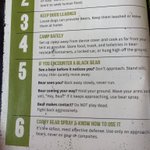
Gatlingburg Tn visitor guide has taken @RonMagill advice how to defend yourself against a bear 🐻. #HeyBear @LeBatardShow

So proud of our team. We’ve been cooking for a while. This is what OSS work looks like. Pushing the frontier on models you can run locally. Improving the local ai experience every single day.

With our help, @NVIDIAAI just made 8-node DGX Spark clusters official.
Same hardware, two scaling results:
>Training a 900M model from scratch: 7.79x, 97.4% scaling efficiency.
>Serving a 27B across the same eight nodes: 1.94x prefill, 4.43x decode.

Brandon Music retweeted

This was all built on top of the work of Local Inference Lab's RoCEnante as a foundation.
And it's just the beginning.
We are so excited to keep sharing our innovations that help your local AI experience get better and better.
Read more here. 👇😎
developer.nvidia.com/blog/ru…

Brandon Music retweeted
NVIDIA’s own fix is Switchyard, sending easy requests to a 2B model and keeping the 753B for the hard ones. 3x the aggregate throughput from the same nodes.

Brandon Music retweeted
The gap is what crosses the wire. Training keeps a full copy on each node and syncs gradients once per step. Tensor-parallel serving splits one model across eight machines and moves activations at every layer.

Brandon Music retweeted
With our help, @NVIDIAAI just made 8-node DGX Spark clusters official.
Same hardware, two scaling results:
>Training a 900M model from scratch: 7.79x, 97.4% scaling efficiency.
>Serving a 27B across the same eight nodes: 1.94x prefill, 4.43x decode.
Those later two brought to you by @YourLocalAILab . Such cool work!

NVIDIA dropped 61 model repos on Hugging Face in 10 days.
17 of them on 20 October alone. 15 on 15 October.
Whats in there:
Nemotron 3.5 Super VL 120B and Bolt 74B, including a Bolt build made to fit in 24GB, with GGUFs.
Embedding, rerank and document parsing models.
Robot motion models, lidar, sim2real, anomaly generators for glass, metal and PCBs.
Protein design. Weather.
And 14 exports of the same Cosmos robotics experiment, with names like S_best and S_worst. They uploaded the worst one too. I respect that.
2 of the repos are NVIDIA's own FP4 builds of Chinese models for local use. Qwen3.8 Flash-Next and GLM-5.3 Flash. The biggest American chip company is packaging Qwen and GLM so they run better on your desk.
Say what you want about NVIDIA prices. Right now I think they are the most open big AI company in US, by a lot.
And the reason is simple. They sell the gpus. They want you running models at home. On their chips ofc. No closed lab has that incentive.
Such a terrible workflow.
I can do all this on premises on my. Network. Not send any client data to anyone but myself. That’s KLC in a nutshell .

Thomson Reuters is now selling this workflow to Texas counsel:
You type in Claude; Claude hands the task to CoCounsel; CoCounsel runs Westlaw, Practical Law, and KeyCite; a cited result is written back into the Claude thread.
The lawyer sees one window.
The matter does not stay in one window.
The client file crosses a general-purpose model, a legal AI vendor, and the research utilities behind that vendor, then returns.
Up to 800 separate server touches.
Commercial terms on each/all of those hops are not the same thing as a privacy.


Brandon Music retweeted

Oh hey would you look at that? A new inference engine dropped called Flare.
Optimized specifically for sm12x hardware.
Better performance. More room for KV cache.
All with best in class support for the latest models.
Crazy stuff is happening at @YourLocalAILab and @NVIDIAAI.

We have been hard work in the kitchen. Proud of the crew @YourLocalAILab .
This quoted post is unavailable.
Brandon Music retweeted

🚨 @NVIDIAAI just quietly dropped its own local inference server...
No announcement. Single-digit stars
It's called Flare and Apache 2.0
Built for SM120/SM121 GPUs RTX PRO 6000 Blackwell and DGX Spark
>PyTorch + FlashInfer at build time
>Rust runtime at serve time. No Python.
>CUDA graphs captured before serving
>FP8 KV cache by default
>Recipes for Qwen Flash, GLM and DeepSeek
github.com/NVIDIA/flare-loca…
