

Having fun with microbial genomic and machine learning @TelAvivUni
Israel
Joined September 2022
- Tweets230
- Following360
- Followers645
- Likes602




Pinned Tweet
Fellow microbial immunity, mobile elements, and plasmid enthusiasts: the paper of our wonderful @BruriaSamuel on anti-defense genes in plasmids is now published in @Nature!!!
Check out her thread below for highlights of our new results.
1/2

Meet The Shielded Plasmid🛡️🧬
Our new @Nature paper reveals how plasmids outsmart bacterial defenses during conjugation.
It's all about being in the right place at the right time! The positioning of anti-defense genes boosts transfer efficiency🧵(1/7) nature.com/articles/s41586-0…

ALT Illustrated by @Irisburstein
Burstein lab retweeted

Viruses have parasites too. Our new preprint shows how phages use VIPR to silence parasitic satellites, and how the satellites fight back with its own decoy VIPR RNAs that redirect VIPR to DNA REP elements in the host genome!!
biorxiv.org/content/10.64898…

Burstein lab retweeted

For all phage defence pholks - registration for the Symposium on the Immune Systems of Bacteria 2027 is now open! 20-22nd July, 2027, Churchill College, Cambridge, UK. See you there! sisb2027.info/

Burstein lab retweeted

Check out recent work:
Artificial genetic augmentation of T6SS activity affects effector repertoire and host toxicity | Microbiology Spectrum journals.asm.org/doi/10.1128…
In collaboration with @GerlicL

Burstein lab retweeted

1/5 Telomerase has long been linked to chromosome maintenance in eukaryotes. Now, we show that telomerase-like activity is also present in bacteria, shedding new light on its ancient origins.
Excited to share that our work on DRT10 is now out in @Nature!
nature.com/articles/s41586-0…
Burstein lab retweeted

The most important briefings of the day.
Karl Deisseroth, professor of bioengineering and of psychiatry and behavioral sciences, shares the news of his Nobel Prize with his kids.
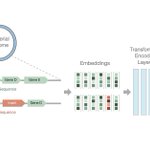
So many bacterial genomes are being edited… Could we spot them in the wild even without obvious markers??? Worry not! Our @EdanGabay has you covered. In our new preprint, she pinpoints such genes disrupting the natural genomic "grammar": biorxiv.org/content/10.64898… 1/4

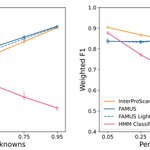
No unified large dataset of engineered bacterial genomes. So we built scalable simulations of random and potentially harmful gene insertions. We trained a classifier on those, along with natural sequences and natural occurrences of the inserted genes as hard negatives. 3/4
After fine-tuning on potentially malicious insertions, the model reached 0.95 AUROC and 0.95 AUPRC. This indicates that such edits do leave detectable genomic-context signatures, without relying on marker genes or predefined databases. Congrats @EdanGabay!!! 👏👏👏 4/4
Burstein lab retweeted

Genomes are full of dark matter of unknown functions.
We present Minerva, a new method for discovery guided by genome language models. Minerva reveals the interactions hidden in non-coding DNA, pointing to hundreds of new putative RNAs and repetitive elements per bacterial genome. Minerva allows us to find and study elements invisible to traditional methods at orders of magnitude greater scale than before.
Burstein lab retweeted

Excited to share Minerva, our approach using genome language models for biological discovery! Using Minerva, we find that UG27 reverse transcriptase systems encode variable arrays of diverse ncRNAs with a shared structure, each templating a short DNA hairpin. With @garykbrixi.

Burstein lab retweeted

ʙɪɴᴅᴄʀᴀꜰᴛ2 is out, and we're not waiting for the paper. The full code drops today, free for academic and industry use.
We're releasing it early so you can start designing right now, and bring its full power to the current Adaptyv competition.
github.com/PacesaLab/BindCra…
Burstein lab retweeted
VIPR is now out in @ScienceMagazine!
What started with a mysterious RNA led us to an unexpected way of recognizing DNA, as well as some clues to CRISPR’s origins.
So happy to share these two papers with an incredible team. Links below; original discovery thread here ↓


Burstein lab retweeted

Chromatin structure controls defense island expression!
Why do some systems defend on plasmids but fail natively? H-NS is key. Removing it boosts defense and beats anti-defense proteins but raises toxicity. Lab strains still hide novel immunity modules!
biorxiv.org/content/10.64898…

Burstein lab retweeted

Also a highly experimental port of these models into WebGPU, allowing direct prediction on your 💻: localfold.org
WARNING: will drain battery🪫, overheat 🔥💻 & eat your data plan 📱
Started by Martin Steinegger as AF2 port to WebGPU martin-steinegger.github.io/…
(3/3)

Burstein lab retweeted
ColabFold 1.6.3 is out! 2.5x faster, pip-installable, ipSAE+pDockQ2 scores. Thanks Choonghwan Lee, Marielle Russo, Gyuri Kim, Martin Steinegger, Milot Mirdita
🐍 pip install colabfold[alphafold]
(1/3)

Burstein lab retweeted

Published now in @Nature - "Long-read sequencing reveals pre-meiotic gene conversion in sperm".
We show an unexpected source of new genetic variation in human sperm, occuring earlier in development than previously thought. Check it out here: nature.com/articles/s41586-0…
Thread: 1/

Burstein lab retweeted

The leading region of many plasmids is adapted for translational efficiency
doi.org/10.1093/nar/gkag810
Burstein lab retweeted

Toxin-Antitoxin systems are thought to induce death or dormancy under some stress conditions.
Focusing on the well studied MazEF system, we now show that this is not always the case.
biorxiv.org/content/10.64898…

Burstein lab retweeted

Riboseek encodes RNA and DNA sequences as overlapping di-mers and detects homologs more sensitively than BLASTN and nhmmer. It produces alignments 250-fold faster than nhmmer and 376-fold faster than rMSA. doi.org/10.64898/2026.07.31.…