

female from Ireland in a world full of hate be kind
Joined December 2022
- Tweets4K
- Following253
- Followers204
- Likes10.8K




Taise Cecil retweeted

This is really next level ignorance by the EU. Kaja Kallas chastises THE IRISH for not understanding what occupation feels like and how scary it is to feel like you're losing a nation's language and land. As if the Irish didn't have that for 600 years.
Taise Cecil retweeted

A wintering female Grey wagtail is back in my garden. I’m not sure whether it’s the same one as last year or a different one.


Taise Cecil retweeted

EL OVARIO POLIQUÍSTICO Y LA ENDOMETRIOSIS SIGUEN SIN CURA.

Yakında erkek göbeği tarihe karışacak.
Yeni bulunan CBL-514 molekülü, enjekte edildiği bölgede yağ hücrelerini programlı ölüm (apoptoz) ve lipoliz yoluyla ortadan kaldırdığı gözlendi.
Cerrahi liposuction’ın yerini alabilecek bu yöntem insülin iğnesi kadar basit.
Faz 2 çalışmalarında katılımcıların yaklaşık %70’inde 8 haftada en az 150 mL deri altı yağ kaybı elde edilirken, MRI ile doğrulanan bu etki şu anda abdominal yağ azaltımı için başlatılan Faz 3 SUPREME denemelerinde test ediliyor ve şimdiye kadar yalnızca hafif enjeksiyon yeri reaksiyonlarıyla sınırlı kalan güvenlik profiliyle, herkesin ameliyatsız, bölgesel olarak “fit” olabileceği bir dönemin kapısını aralıyor.


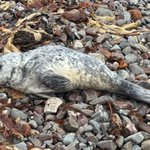
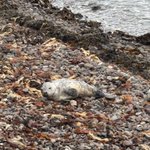
Came across this poor little seal on my walk I hope it’s okay and people with dogs leave it alone it was shivering and soaked…


57





Peggy, queen of the bins, loves lying in the sun on top of the bins and always keeps one eye open for mice.

13
Taise Cecil retweeted

Armoy plus Knocklayde Mountain @bbcniweather @UTV @deric_tv @R_Faragher @linzilima @bbcweather @LoveBallymena @WeatherCee @Louise_utv @WeatherAisling @barrabest @Ailser99 @angie_weather @geoff_maskell @Ali_Totten


Taise Cecil retweeted

Please, not this shit again. There's no way I'm going to be able to spend vouchers in all the places I need to. Please allow me to live my life and manage my pain with dignity! 😤😡🤬

Taise Cecil retweeted

o mundo não está pronto pra um James Bond marrento de 1,70!!!
teapawt.net/kakabbju/status/203081…


Taise Cecil retweeted

The coffin of the Unknown Warrior lying in state inside Westminster Abbey in November 1920....
Four unidentified British soldiers were exhumed from temporary battlefields on the Western Front (Ypres, the Somme, Arras, and the Aisne). One body was selected to symbolize all British servicemen who lost their lives with no known grave during the First World War. On Armistice Day, the Unknown Warrior was laid to rest with full military honors in the west nave of Westminster Abbey.
. . . .
On November 7, 1920, under a shroud of secrecy, four British soldiers were exhumed from the mud of Flanders—one from Ypres, one from the Somme, one from Arras, and one from the Aisne. No one knew their names, nor from what regiment or shire they hailed. The men who dug them up were not told why. Their task was silent, their faces grim beneath the weak glow of lanterns.
Each body, wrapped in canvas and anonymity, was placed in a wooden coffin and borne by field ambulance to the headquarters at St. Pol-sur-Ternoise. There, beneath a pale November sky, the coffins were draped with the Union Jack. Sentries stood rigid as Brigadier General L. J. Wyatt and Colonel Gell entered the small chapel where the four lay side by side. After a moment’s pause, Wyatt pointed to one at random.
That soldier—known to no one but God—was chosen to represent all.
The other three were quietly reburied in the French soil where they had fallen. A French honor guard took position beside the chosen coffin, standing vigil through the night, their bayonets gleaming in the candlelight, as though guarding the memory of a million dead.
At dawn on November 8, an oak coffin, hewn from timber grown on the grounds of Hampton Court Palace, arrived at the chapel. Into it the unknown soldier was placed. Upon the lid rested a Crusader’s sword and a bronze shield engraved with the words:
“A British Warrior who fell in the Great War 1914–1918 for King and Country.”
The symbolism was deliberate, the knightly blade recalling the long lineage of English arms, now consecrated by the anonymous dead of modern war.
The next morning, November 9, the coffin was drawn by a team of black horses through lines of saluting troops and the tolling of muffled bells. As bugles sounded, it reached the quay, where Marshal Foch, commander of the Allied armies, bowed in salute. The coffin was placed aboard the destroyer HMS Verdun, its deck strewn with wreaths and watched over by French sentries. When the ship reached Dover, guns roared a nineteen-shot salute, an honor reserved only for field marshals.
Soldiers wept openly as the coffin was carried ashore.
From Dover, a special train bore the Unknown Warrior to London’s Victoria Station, where he rested overnight beneath the vaulted iron roof. On the morning of November 11—Armistice Day—he was taken through silent crowds to Westminster Abbey. There, before King George V, veterans, widows, and orphans, the Unknown Warrior was laid to rest among England’s kings. Beneath the black marble stone would be inscribed:
“They buried him among the kings because he had done good toward God and toward His house.”
The idea had been born in the trenches, in the heart of a padre named David Railton, who once used a tattered Union Flag as an altar cloth over makeshift graves. It was that same flag, frayed by smoke and mud, that now draped the coffin of the Unknown Warrior. For the half-million families who never received a body, he was theirs—their husband, father, son, or brother returned home at last.
And so, each November, as poppies bloom on lapels and silence falls at the eleventh hour on the eleventh day, Britain remembers not only one man, but all who vanished into the mud and smoke of the Great War. Not in triumph, but in humility. Not to glorify war, but to recall its cost. At the going down of the sun, and in the morning—we will remember them.
#archaeohistories

