

Instead of moaning about British political governance, read Reinventing Democracy and learn how to fix the mess https://teapawt.net/t.co/TK1BaBX5wS +3 other books
Joined January 2016
- Tweets2.6K
- Following757
- Followers1.4K
- Likes16.5K




Pinned Tweet
How is the UK ever going to force a Brexit rethink on an unwilling establishment? Labour, Tories and Reform will never face facts, so only @TheGreenParty and possibly
@LibDems provide a chance under the present system.
Greens are enthusiastically pro-EU. Lib Dems used to be, but hid their interest near the back of the last manifesto and are now talking about a "bespoke" customs union. There are two problems with this:
1. There is no evidence that they have asked the EU, and
2. It would have little benefit with the common standards of the single market.
Hoping for change is like hoping to win the lottery. Campaigning can take a century, witness women's emancipation. The present system of political governance will only deliver rejoining the EU if the Greens and LibDems make common cause with SNP, Plaid Cymru and Alliance, and attract enough support to deliver a hung parliament. Is that really democratic?
Should we rely on such happenstance to get Britain out of its hole?
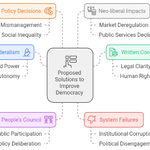
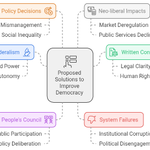
Only a written constitution can end the absolute power of the governing party to do as it likes. How about a proportion of the electorate having the RIGHT to force a referendum? Answer: written constitution.
How about a federal UK (like the LibDems own structure, I believe)? Answer: written constitution.
How about stopping the hard right stripping Brits of their rights? Answer: written constitutution.
How about stopping the greedy extracting cash from the pockets of the people? Answer: written constitution.
Nothing will change without fundamental reform. Are you for it or would you rather maintain the status quo? If you are for a democratic written constitution, then at least read the one on offer at £1 for discussion at payhip.com/b/CWyrc or read the book (e-book £4.99 ISBN 9781907230226, or print) And if you can't be bothered, or think having an unwritten constitution that gives absolute power to the state and steadily erodes our rights is just fine, then don't ever complain about any government policy again.
The scandals will keep coming until there is serious constitutional reform

SHAME ON PAULA VENNELLS
Paula Vennells cried at the inquiry. Read her emails before you feel sorry for her.
Paula Vennells ran the @PostOffice from 2012 to 2019. Its computer system, Horizon, showed money missing from branches when none was missing. More than 900 postmasters were prosecuted between 1999 and 2015. Some went to prison. Families lost homes, savings and reputations. The inquiry @PostOffInquiry says at least 13 people are thought to have taken their own lives because of the scandal.
Now look at what was happening at the top.
In July 2013 Paula Vennells asked her husband for a less emotional word than bugs. He suggested exception or anomaly. The inquiry's lawyer called it Orwellian.
In August 2013 she wrote that the hope of the mediation scheme for postmasters was to avoid or minimise compensation. At the inquiry she agreed it was possibly her hope.
After a row with her top lawyer, Susan Crichton, Paula Vennells wrote that Susan Crichton was possibly more loyal to her professional rules and put her integrity as a lawyer above the interests of the business. A lawyer with integrity. Terrible for business.
In September 2013 Paula Vennells asked for a Horizon risk reference to be removed from the Royal Mail @RoyalMail share sale prospectus, then told the Post Office chair she had earned her keep.
Around the same time postmaster Martin Griffiths attempted suicide. Paula Vennells emailed that such cases usually have several contributory factors. Martin Griffiths died 3 weeks later.
Former general counsel Chris Aujard told the inquiry that in November 2013 the executive team favoured ending prosecutions and Paula Vennells interjected that the Post Office should keep taking some. His notes recorded reluctance to stop because prosecutions acted as a deterrent. Prosecutions carried on for another 2 years.
In December 2014 a @BBC One Show film showed postmasters fighting to clear their names. Paula Vennells wrote that Jo Hamilton lacked passion and that the rest of the film was hype and human interest. She told colleagues she was more bored than outraged.
Jo Hamilton had been accused of stealing £36K. Her conviction was quashed in 2021.
In February 2015 Paula Vennells told MPs the Post Office had won every Horizon case in court. In 2024 she admitted that was false and said it was unintentional.
In March 2015 she wrote to Post Office minister Jo Swinson that there was no reason to conclude any prosecution was unsafe. Jo Swinson later said the letter misled her.
@guardian reported she collected more than £4.5M in pay and bonuses as chief executive. She was given a CBE for services to the Post Office and charity while 555 postmasters were suing the Post Office.
She left the Post Office during that court case. From April 2019 she chaired Imperial College Healthcare NHS Trust (@imperialNHS) for £60K a year.
A document shown to the inquiry says the government shareholder asked in 2014 whether she was still the right person to lead, citing lack of knowledge.
Lesley Sewell, her former head of IT, told the inquiry that Paula Vennells contacted her 4 times in 2020 and 2021, hoping preparation might help avoid an independent inquiry.
Lesley Sewell blocked her number.
In January 2024 Dame Moya Greene, former Royal Mail chief executive, told Paula Vennells she thought she knew and could no longer support her. Paula Vennells denied it.
Then came May 2024.
3 days at the public inquiry.
775 page witness statement.
7 months to prepare it.
Tears.
Apologies.
She said she had been too trusting. She said information had been kept from her. She named 5 former executives as having let her down. She apologised to Jo Hamilton for being rude in her email.
The inquiry lawyer asked if she was the unluckiest CEO in the UK.
Unlucky.. is one word for it.
There is another way to look at the record.
A CEO who wrote that mediation was meant to avoid or minimise compensation.
A CEO who told MPs something she later admitted was false.
A CEO who wrote to a minister that she saw no reason to conclude any prosecution was unsafe.
A CEO who collected a reported £4.5M while postmasters lost everything.
A CEO who later told the inquiry she had been too trusting.
More than 1.2M people signed a petition for her to lose the CBE. The King forfeited it on 23 February 2024.
As far as I can find, nobody at the top has been charged and nobody has reported her repaying a bonus. The final inquiry report is not out yet. Police are still investigating.
Jo Hamilton, the woman Paula Vennells wrote off as lacking passion, said afterwards she is in two minds on whether the apology was genuine or came from being so publicly ashamed.
The emails are public. Read them. Then decide who in this story deserves your sympathy.
Share this. Postmasters were ignored for years while the people above them were paid, decorated and given new jobs.
Sources
@itvnews @DailyMail @ComputerWeekly @Independent @PostOffInquiry
Radical thoughts about politics and economics retweeted

Christopher Harborne has matched Ben Delo's £36 million donation to Reform UK.
This is the super-rich buying political power. It is an attack on our democracy.
Big money political donations subvert democracy, and are intrinsically corrupt. They must be banned and classed as serious criminal offences. Burnham needs to start defending our democracy. He had the opportunity but caved in to the union bosses. Now he must act. Democracy is for the people. It must not be a plaything of the super-rich.
Please repost if you agree. – at Brighton, England

"Someone's got to do something" - right at the end of the second article
theguardian.com/commentisfre…
and
theguardian.com/politics/202…

Privatisation, the private finance initiative, austerity, now data centres ... guess what the outcome will be in ten or twenty years
theguardian.com/commentisfre…

A book whose time has come. 2nd edition due November

BREAKING: HOW ENLIGHTENED PM!
'Devolution plans strengthen case for WRITTEN UK CONSTITUTION, says Andy Burnham. The PM argues for a codified model of decentralisation that would fundamentally change centuries-old workings of State'. (for info David Kauders @DavidKauders)
citizens2022committee.pin.co…
'As clearly shown in recent times, Government is not listening to us. It has had every opportunity in the last 100 years to reach out on its own accord to all Citizens but has failed to do so properly. It is showing itself as being outdated, not best suited for purpose and sadly lacking in the areas of achievement, performance, efficiency, governance, planning, policy making, implementation, reliability, transparency and accountability. We can no longer trust Government to get it right by themselves. Governments wheels turn too slowly to achieve success'.
Parliament is as outdated as a floppy disk with poor functionality.
theguardian.com/politics/202…
Tech firms are too powerful
From Monday, the Bank of England has been handed powers to regulate important tech firms including Amazon and Google, amid fears that system failures could threaten financial stability and harm consumers.
theguardian.com/business/202…

Radical thoughts about politics and economics retweeted

c22cuk OPINION: Concerning? Not the start WE would have expected or wanted to see, provisional of course? @AndyBurnhamGM @andyburnhamHQ @DavidKauders (Democratic and Political Technical Adviser - Citizens2022Committee)

Meet James Purnell. Andy Burnham's chief of staff.
He supported Iraq invasion; ex chair of Labour Friends of Israel; said that Winter Fuel Allowance and free bus passes should not be sacred; supported PFI, lie-detector tests for benefit claimants.
Next?
theguardian.com/politics/202…


There are sound reasons that explain why many young people have turned to left-wing extremes - Letter to The Economist goo.gl/alerts/pXvzjn #GoogleAlerts

1
23
Should be obvious to every voter
Brexit cost 6% of UK economy, Bank of England company data suggests.
That is a catastrophic loss of £180bn a year. It means a loss to the government budget of around £80bn a year. Imagine what Reeves could do with £80bn every year. Without Brexit this country would be a far more prosperous, happy, and optimistic place.
The disastrous Brexit experiment of imposing sanctions on ourselves must be ended ASAP. It is time to reap the Rejoin dividend.
bbc.co.uk/news/articles/cvg7…

Surveillance never goes away

🚨 THE DIGITAL PRISON IS ALREADY HERE.
Good morning to the millions of hardworking Brits waking up to a brand new surveillance state.
55 million adults will soon need to hand over their passport or face scan just to use X, Instagram and YouTube.
Every single adult. Not just teenagers.
450,000 people signed a petition to scrap it in days. The government said no!
The same government that cannot track 224,700 failed asylum seekers wants your biometric data before you are allowed to post a tweet.
This was never about children. Screenshot this before they bury it. RT if you refuse. 🇬🇧🔥
How much more evidence do we need of the disaster caused by Brexit?
GDP hit by 6%+ thanks to lost trade.
Tax revenues down.
UK cannot afford public services, pensions, now defence.
Radical thoughts about politics and economics retweeted
c22cuk OPINION: CORRUPTION RULES UK!
It's time the CITIZENS of the UK knew what is and has been going on!
It's endemic, UK CITIZENS need OVERSIGHT without obfuscation, cover-up and penalty.
Helped by Lord Cameron no less.
It's time to air the dirty laundry!
After 2021 scandal Lex Greensill banned from UK company directorships for 9 yrs.
Left £1.6bn debt.
Greensill can control offshore companies, trade with UK.
Former PM David Cameron was adviser, secretly lobbied to get public money for Greensill.
independent.co.uk/news/uk/ho…

Been off X for a few days and not bothered with TV news, so only just seen a photo of Southamption rioters running towards police.
Now I understand why we say in English, that farmers "run" sheep.
Radical thoughts about politics and economics retweeted

Lawyers for Liz Truss have asked me to stop saying Liz Truss crashed the economy. I only said Liz Truss crashed the economy because Liz Truss did crash the economy. If she wanted me to not say Liz Truss crashed the economy, she shouldn’t have crashed the economy.
Please don’t RT
Radical thoughts about politics and economics retweeted

If a man is a Trans Ally, he's a fool.
Must have missed out on Biology at school.
If he really thinks a woman,
Has a penis but no bosom,
He shouldn't expect less than ridicule.
And if a woman is ally, that's not cool.
It's opposite of tolerance. It's cruel.
If you're being a handmaiden
To these men and their invasion
Of safe spaces, then let's face it,
You're a tool.
🤷🏻♀️
This was always inevitable

One of Leave’s greatest achievements was to throw away the UK’s privileged position on Schengen, the single currency & the rebate (the ‘opt-outs’). The EU will be hard to budge on these 3 in any application to rejoin. And polls have shown the current UK majority in favour of doing so disappears unless the opt-outs are reinstated. Brilliant!

This is a fascinating summary of the deeper British political problem

Westminster may finally be about to have the argument it has spent 40 years avoiding.
If Andy Burnham returns to Parliament, the political class will know how to cover it. A leadership drama. Who is up, who is down, whether Keir Starmer can survive, whether Labour is once again turning inward. The familiar machinery of Westminster psychodrama will whirr into life.
That framing misses the larger point. Burnham’s possible return matters not because of what it says about Labour’s leadership, but because of what it reveals about the British state: what it can still do, what it has forgotten how to do, and what kind of country it must become if it is serious about resilience.
Britain is finally having a more serious conversation about national security. The Strategic Defence Review, the pivot back towards Europe, the recognition that hybrid warfare turns citizens, infrastructure and civic institutions into part of the front line: all of it marks a real shift in how the state thinks about its own survival.
But at the centre of that conversation lies a question that the defence establishment, and most of Westminster, still does not want to answer. What kind of society do you need to be before resilience is possible?
Finland is now the model everyone cites. Comprehensive security. Whole-of-society defence. Civilian preparedness woven into military planning. British strategists admire the Finnish system and ask how it might be copied. But the admiration stops short of the uncomfortable question: why does it work there?
The answer is not geography or history or some mysterious quality of Finnish national character. It is structural. Nearly 80% of Finns say they would defend their country if attacked. In Britain, the figure is closer to 33%. That gap is not an accident. It exists because Finland has spent decades building a society in which people have a genuine stake in what they are being asked to defend. Energy is affordable. Housing is available. Public services function. Institutions command trust. The Nordic welfare state is not a sentimental add-on to Finnish security policy. It is the foundation of it. You cannot ask people to defend a country that does not work for them.
Britain has spent 40 years building the opposite. The privatisation of essentials – energy, water, transport, housing – transferred wealth upwards from households to shareholders while making the basics of everyday life more expensive. The state, stripped of the tools to control costs at source, has been reduced to compensating after the fact.
Out of every pound the Government spends on housing, 88p goes to subsidising private rents. Just 12p goes to building homes. When energy prices spiked in 2022, the Government spent £40bn in a single winter cushioning the blow, not because it had a resilient energy system but because it lacked one. Debt interest now consumes more than £100bn a year. Britain has the highest debt servicing costs in the G7: the compounding price of financing failure rather than eliminating it at source.
This is what bond market dependency actually looks like. It is not an abstract fiscal condition. It is the consequence of a state that has been stripped of the supply-side tools that would let it cure the problems it now pays, indefinitely, to manage. And here is the paradox the Treasury refuses to confront. The countries that borrow most cheaply are often those that have retained the public investment model Britain abandoned. The spread between UK and Dutch borrowing costs has widened sharply not because markets fear public investment, but because they have lost confidence in a model that borrows to subsidise private failure while never addressing its causes.
This is the connection Britain’s defence debate is missing. The familiar framing, that social spending is what must be sacrificed to meet the NATO target, is not merely politically toxic. It is strategically illiterate. Cutting the foundations of social cohesion to fund the hardware of national defence is self-defeating. You end up with planes and no pilots, submarines and no crew, an army that cannot recruit because the society it is meant to protect has stopped believing in itself.
I think Burnham understands this. That is why his programme is more interesting than the leadership gossip suggests. What he has been building in Greater Manchester – public control of transport, expanded social housing, investment in the productive foundations of the city economy – is not a nostalgic rerun of postwar nationalisation. It is a proof of concept for a different kind of state.
The Bee Network is the most visible example, but the argument behind it travels. A state that can shape markets is not condemned to subsidise their failures. A state that produces affordable energy through public generation does not need to spend tens of billions cushioning every price shock. A state with a serious public housebuilding programme does not need housing benefit to rise endlessly in line with private rents. A state that builds institutions people can see, use and trust begins to restore the civic confidence on which resilience depends.
The real constraint on Britain is not money. It is capacity: the workers, institutions, supply chains and public purpose needed to turn national will into national renewal. Britain’s tragedy is not that it has run out of money. It is that after 40 years of hollowing out the state, it has made itself less able to act.
Burnham’s critics will reach for the familiar warning. Borrow more, spend more, spook the gilt markets, repeat the Truss disaster. But this misunderstands both the problem and the opportunity.
Bond markets do not have ideological preferences. They have functional ones. They prefer clarity, credible revenue streams, productive investment, and a state with a plan. What they punish is not public ambition but incoherence. A properly designed productive state programme would not be a leap into fiscal fantasy. It would be an attempt to end the much costlier fantasy that Britain can keep borrowing to compensate for broken markets while refusing to repair them.
The defence conversation and the economic conversation need to become the same conversation. Finland did not build national resilience by choosing between welfare and security. It built resilience by understanding that they are inseparable: that a country in which the basics work, where people trust one another and the institutions around them, is one that can face danger with something more than anxiety.
That is the deeper argument Burnham represents. Westminster will be tempted to treat him as a leadership story. It should resist the temptation. The question is not whether Burnham can return to parliament. It is whether Britain can return to the idea that the state should make life work. Because a country that cannot command the confidence of its people cannot truly defend itself.
Radical thoughts about politics and economics retweeted
The Ungovernable Country? Why Britain keeps losing Prime Ministers.
"Starmer’s problem, however, is that he has ceased to be a credible answer to the chaos. Just like May’s early promise of “strong and stable leadership,” his vow to “end the chaos” has become a sour joke".
theguardian.com/politics/202…
