

stand out of my light
Joined April 2016
- Tweets52.8K
- Following439
- Followers1.2M
- Likes355



Pinned Tweet
Public Announcement. I am not a revolutionary. I do not aspire to lead. I am not interested in public office. I engage in politics, public affairs out of self-interest, personal fulfilment, to advance my own freedom. If you see me as fighting for you its a coincidence. Thank You
David Ndii retweeted

Why Ruto Speaks “Usawa ni Sawa” to His Elephant
suzie-mugwe-3f9e47.netlify.a…
@DavidNdii @KihikaSamuel @muchey @OWALLARay @HManyora @BenjiNdolo @DavisMwendaK @KangetheWakanya @Waweru_Kibera @SakajaJohnson @oyugibenjy @MashKim9 @EqualityFreed @OwidiOdoyo

David Ndii retweeted

🌍 20 Least urbanized countries in Africa (2026) — Village Life Dominates
•🇲🇼 Malawi — 17.6%
•🇳🇪Niger — 18.4%
•🇸🇸South Sudan — 21.7%
•🇪🇹Ethiopia — 24.1%
•🇧🇮Burundi — 25.7%
•🇸🇿Eswatini — 26.7%
•🇹🇩Chad — 27.6%
•🇧🇫Burkina Faso — 28.9%
•🇷🇼Rwanda — 30.9%
•🇺🇬Uganda — 31.9%
•🇲🇱Mali — 32.2%
•🇰🇪Kenya — 32.2%
•🇲🇬Madagascar — 32.9%
•🇰🇲Comoros — 33.9%
•🇪🇷Eritrea — 34.5%
•🇸🇩Sudan — 34.9%
•🇹🇿Tanzania — 36.9%
•🇲🇿Mozambique — 37.2%
•🇬🇳Guinea — 38.5%
•🇲🇺Mauritius — 39.0%
Source: (WorldStats / World Bank)
David Ndii retweeted

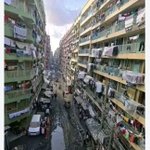
Watu hufikiria whenever we say 60% of the population in Nairobi lives in slums/informal settlements ni tu Kibera/Mathare etc.
If you live in parts of Eastlands, Kawangware etc don’t I have news for you…

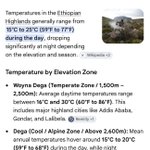
Wheat is a temperate crop. How many tropical countries do you see there?


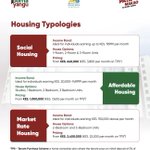
Correct. It’s affordable housing for all. This is how we did the math 4yrs ago. Our target was to deliver a 2BR flat costing 40k+ pm at Sh13k pm. At 30% of income, AHP brings affordability of this unit from Sh120k pm to Sh40k. Costs have changed but we are still on target.


It doesn’t matter how many times you distort we will explain. 1. AHP is not for the poor. Our goal is to make quality housing affordable by all. 2. Many people seem to equate slums to informal settlements. Pipeline is a slum. Zimmerman is slum. We aim to eradicate all slums.


Ruto: Affordable housing, closing down slums!
@DavidNdii: Affordable housing, not for the poor pipos
Me: who resides in the slums?
@nderi_j , come running!!!
The same was said of the American”Robber Baron” industrialists of the Gilded Age, Japanese Keiretsus and Korean Chaebols. I should hasten to add your benefactor George Soros. Capitalism is not for children. Stick to your human rights Sunday school.

@DavidNdii, bookmarking this for you.
.... because you seemed unconvinced that your government is recklessly mortgaging public power (pawa not umeme - but i guess even umeme) to unconscionable investors without any plan on how to rein them in.
xitter.cf/kiruti/status/21133683…
Yet every high cost private school has one. 😳

Swimming pools are very dangerous for children. In fact, in populations with routine exposure to open water, drowing is the leading cause of child death outside infancy, rivalling or exceeding infectious diseases such as Malaria.
In the specific 5 to 19 bracket, the leading global causes of child mortality were road injuries (about 116,000), cancer (95,000), malaria (82,000), drowning (77,000), and diarrhea (73,000).
I pray and hope not but this is going to be a catastrophe.
Affordable Housing is not for the poor. It’s inclusive middle class housing that enable low income people to enjoy same standard of living with the rest of us, including enabling their children to swim. That’s what we mean by middle class society. Usawa ni sawa.


We are transforming Kenya into a middle class society. Usawa ni sawa.


CHEMICALS, electricity for the pump, a cleaner, water top-ups, and repairs don’t care about your neat division by 2,000. A community pool is a middle-class amenity not for the vulnerable under article 43 (1) (b).
Yet in this case the approx 552 social households who won’t use, can’t use regularly, or will use far less than the market-rate units are expected to subsidize maintenance.
That’s not “shared lifestyle”; that’s the poorer households funding a status symbol for the better-off ones. There is a reason those who think better avoid this amenities for affordable/social houses.
Service charge collection will be a me
Cost of maintaining a pool is ~50k p.m. Pioneer Eldoret is 2000+ units, princely sum of Sh25 per house.

1. RMLF is a shadow toll, a user charge. In fact, it replaced toll booths on our highways. If we define it as tax then we ought to also include school fees as tax.
2. There is no recourse to exchequer. The investors have taken full demand risk.
3. Pricing was < sovereign.

1/
The Road Maintenance Levy securitisation is, in my view, the clearest test of the government's "off-balance-sheet" financing model. It therefore deserves far more scrutiny than it has received.
Under Phase I, Sh7 of the Sh25 per litre fuel levy was pledged to raise KSh 175bn for road pending bills. Phase II pledges a further Sh5 per litre. Parliament's Budget Committee placed its target at about KSh 120bn, whereas the Roads CS reports KSh 139bn raised (Aug 2026). If the two phases are cumulative, Sh12 of every Sh25, that is 48% of the levy, now belongs to investors. Even on the most conservative reading, no less than 28% is already committed.
The levy was created to maintain roads. Consequently, every shilling pledged to past arrears is a shilling withdrawn from future maintenance. This is all the more worrying given that road spending had already declined from KSh 208.2bn in FY21/22 to KSh 133.2bn in FY23/24 (KNBS, cited by the PBO). Maintenance is therefore squeezed twice: by a smaller budget today and by a smaller levy tomorrow.
Furthermore, the Parliamentary Budget Office observed in February that the 2026 Budget Policy Statement contains no measures to prevent new pending bills from accumulating. It follows that securitising arrears without such a rule does not resolve the problem. It merely refinances it, and the next round of arrears will inevitably claim the next slice of the levy.
Finally, there is the question of classification. The underlying cash flow is a statutory tax, and the obligor is, in substance, the State. On what basis, then, is this not public debt? Calling it an asset-backed security alters the balance sheet on which it is recorded. It does not alter who bears the risk. Should fuel volumes fall or the levy be reduced, the shortfall returns to the Exchequer regardless.
None of this is to say that securitisation is inherently wrong. It is, however, to say that it must pass a test the government has yet to publish.


✅


The latest on the RMLF securitisation. The National Treasury and the Kenya Roads Board (KRB) have executed long-term legal and trust agreements to formalize a KES 156.97 billion Asset-Backed Securities (ABS) Programme, permanently encumbering future fuel levy receipts to retire short-term contractor debt.
According to transaction documents finalized between September 14 and October 1, 2026, the Special Purpose Vehicle, OAK SPV Assetco Limited, entered into an Onshore Trust Deed with NCBA Bank Kenya PLC (as Note Trustee) and a formal Placing Agreement with a banking syndicate led by Absa Bank Kenya, KCB Investment Bank, and the Eastern and Southern African Trade and Development Bank (TDB).
These newly executed documents mark the formal long-term "take-out" refinancing phase.
Under the agreement:
The Instrument: Up to KES 156.96 billion in Asset-Backed Notes are being placed with institutional subscribers (pension funds, commercial banks, and regional development lenders).
The Yield Benchmark: Key intercreditor terms anchor the internal yield on the underlying asset purchase at a fixed 12.72% per annum payable to the Kenya Roads Board on its Originator Note.
The Proceeds: Cash raised from the long-term notes will be used to pay off the initial bridge facilities provided by commercial lenders.
Mortgaging the Fuel Levy: To guarantee repayment to noteholders under NCBA’s trust deed, a dedicated slice of the Road Maintenance Levy Fund—scaling up to KES 12 per litre—is legally ring-fenced and continuously routed into escrow accounts before reaching state road agencies.
Maintenance Budget Squeeze: While the structure resolves immediate contractor litigation and clears historical balance-sheet arrears, it locks in a massive fixed debt-service obligation over the next decade, sharply curtailing unencumbered cash available to agencies like KeNHA, KeRRA, and KURA for routine road maintenance.
Private Placement vs. Public Oversight: By relying on off-balance-sheet SPV issuing structures and target placements restricted to "limited or qualified investors," the multi-billion-shilling transaction bypasses conventional parliamentary debt caps, raising ongoing questions regarding long-term fiscal transparency and public participation.
Or to monetize #KenyattaCronyCapitalismStateCapture

So why did the Kenyattas and Ndegwas sell NCBA to Nedbank?
They sold to escape the state overeach. Keeping away their assets from future Kenya Governments
By offshoring their interest into the wider Nedbank Group, they completely removed that portion their wealth from Kenya Government sovereign control.
Thats the main impact of that transaction.
In this article, I wrote about the vision and queit calculation behind this decision
open.substack.com/pub/boardl…


