

Associate Professor and William Dawson Scholar @mcgillu, focused on understanding the relation between #diet and #ProstateCancer.
Montréal, Québec
Joined September 2017
- Tweets336
- Following753
- Followers727
- Likes1.2K

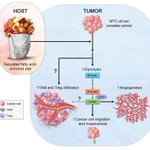

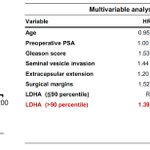
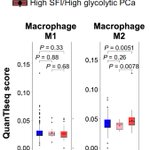

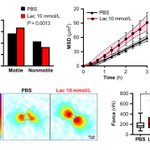
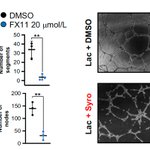
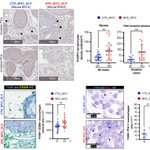
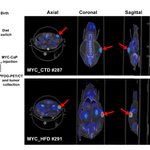
Now out in Cell Reports Medicine! 🚨
An exciting collaborative effort uncovering a therapeutic vulnerability in aggressive, phenotypically plastic prostate cancer.
Congratulations @BeatrizGerFalc, @BoufNadia, @EllisLab_ and the entire team! 🔬🎯
@RIMUHC1 @mcgillu
unavailable
🔟 Funds: Congressionally Directed Medical Research Program, @NIH, @FRQS1
@McGillDeptSurg @UrologySBUR @mcgillu @McGillMed @cancersociety @PCF_Science @SRC_CRS @MUHCFoundation @CedarsCancer @cusm_muhc
9⃣ Their message is balanced and pragmatic: dietary-fat modification is not currently a proven prostate cancer-directed therapy, but it represents an important opportunity to promote overall health when patients are motivated to act.
8⃣ Our study was accompanied by an invited commentary from Nguyen, Iyer & Wallis, placing the findings in the broader context of whole-person prostate cancer survivorship.
bit.ly/4xa7PWt

7⃣ This observational study identifies associations and cannot establish cause and effect.
Proud of this collaboration between the @RIMUHC1 and @HarvardChanSPH, and grateful to the participants who made decades of research possible.
6⃣ The message is not simply “eat less fat,” nor is it to eliminate animal products.
It is to consider simple substitutions that favour plant-based and unsaturated fats while supporting cardiovascular and overall health after prostate cancer.
5⃣ Replacing 5% of calories from saturated fat with monounsaturated fat was associated with a 20% lower rate of death.
Practical sources include olive oil 🫒, avocados 🥑, nuts, and seeds.
4⃣ We also modelled dietary substitutions while keeping total calorie intake similar:
🌱 Replacing 10% of calories from animal fat with plant-based fat was associated with a 16% lower rate of death from any cause.
3⃣ Importantly, this association was driven mainly by cardiovascular deaths and, to a lesser extent, deaths from other cancers.
We found no clear association between dietary fat intake and death specifically from prostate cancer.
2⃣ We studied 4,884 men with nonmetastatic prostate cancer and followed them for a median of 12.8 years.
Men with the highest saturated-fat intake after diagnosis had a 24% higher rate of death from any cause than those with the lowest intake.
What can men do to support their long-term health after a prostate cancer diagnosis?
Our new study suggests that when it comes to dietary fat, the type and source may matter more than simply eating less fat.
Published today in @JAMANetworkOpen. 🧵
bit.ly/4gQbFhj

5⃣ The key takeaway: targeting MYC-driven metabolism requires the right pathway, in the right tumor, and in the right metabolic context.
Kudos to Aliaa Alamoudi, Yiming (Tina) Mao and @ZadraGiorgia!
#MYC #CancerMetabolism #TME
4⃣And the metabolic context extends beyond the tumor.
Diet, obesity, acetate, insulin signaling, and other systemic factors can influence MYC activity, metabolic dependencies, immune suppression, and disease progression.
3⃣ The tumor microenvironment adds another layer.
Hypoxia, stromal cells, immune pressure, and metabolite exchange can all modify MYC-driven metabolism, while MYC can reciprocally remodel the surrounding microenvironment.
2⃣ In liver and lung tumors, MYC can promote strong glycolytic phenotypes. In prostate cancer, its metabolic footprint is more closely associated with lipid metabolism.
Even glutamine metabolism can move in different directions depending on the tissue.
Is there such a thing as a universal “MYC metabolic program”?
Probably not.
In our new Cancer Research review, we examine how tissue, the tumor microenvironment, diet, and host metabolism shape MYC-driven tumor metabolism. 🧵
doi.org/10.1158/0008-5472.CA…


Now online: From Tissue Specificity to Systemic Cues: Shaping MYC‑Driven Tumor Metabolism doi.org/10.1158/0008-5472.CA…

Merci beaucoup à @RIMUHC1 , au @McGillDeptSurg de @mcgillu et au @FRQS1 pour ce soutien. Je suis honoré de faire partie de cette cohorte et reconnaissant envers mon équipe, mes collaborateurs et organismes subventionnaires.
Félicitations à toutes et tous les lauréats!

🎉 15 chercheuses et chercheurs de L'Institut ont reçu une subvention salariale du @FRQS1 — plus de 2,5 M$ pour des travaux couvrant le cancer, les maladies infectieuses, la santé des enfants, la neurologie, la santé maternelle, et plus encore!
👉 rimuhc.ca/fr/-/concours-frq-…

Many thanks to the @RIMUHC1, the @McGillDeptSurg of @mcgillu and the @FRQS1 for this support. I’m honoured to be part of this cohort and grateful to my team, collaborators and funders.
Congratulations to all the awardees!
🎉 15 researchers at The Institute have received @FRQS1 salary awards — more than $2.5M for work spanning cancer, infectious diseases, child health, neurology, maternal health, and more. Congratulations to all recipients!
👉 rimuhc.ca/en/-/frq-competiti…
