

UCLA-Caltech MD/PhD student. Stanford '16.
Los Angeles, California
Joined December 2018
- Tweets537
- Following502
- Followers291
- Likes936





Delaney Sullivan retweeted

1/13
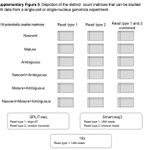
The human body runs on one genome—but every cell reads it differently. How?
To find out, we need to know both gene expression and chromatin accessibility in the same nucleus.
So we did, across 21 adult tissues and nearly half a million nuclei. 🧵
🔗 biorxiv.org/content/10.64898…

Delaney Sullivan retweeted

Introducing Synthetic Hospital: an open, fully synthetic longitudinal EHR benchmark with verifiable ground truth!
1,268 patients, 5,602 encounters, zero PHI. Physicians could not reliably distinguish its charts from real ones.
📄 arxiv.org/abs/2609.30027
💻 github.com/sparkcpark/synthe…
✍️ sparkcpark.github.io/posts/f…

Delaney Sullivan retweeted

The MoTrPAC consortium has been studying the molecular effects of exercise. In a new paper with Conrad Oakes, we take a careful look at their rat dataset, leading to discoveries that highlight the importance of proper bioinformatics & stats. 1/ link.springer.com/article/10…

Delaney Sullivan retweeted

Malva out in @Nature! 🚀
RNA sequences make cells different from each other. Single-cell data captures much of this, but most stays in the dark because of “gene counts”.
Malva makes the world's single-cell data searchable. What took days is now one query in seconds.
Delaney Sullivan retweeted

UMAP makes useful pictures, but what structure does it destroy?
Daan H. de Groot and coauthors introduce Bonsai, a Bayesian method that represents high-dimensional data as a tree rather than forcing it into a conventional two-dimensional embedding.
The motivation comes from single-cell biology. Methods such as UMAP and t-SNE are extraordinarily useful for visual exploration, but their geometry is not a faithful representation of the original high-dimensional space. Local and global relationships can be distorted, and changing visualization parameters can change the apparent biological story.
Bonsai takes a different approach. Each cell is treated as a noisy point in high-dimensional gene-expression space, complete with uncertainty estimates. The method then reconstructs the maximum-likelihood tree connecting those points under a probabilistic model of how expression states can change.
Because a tree can always be drawn in two dimensions, visualization no longer requires projecting the data onto two artificial coordinates.
On synthetic benchmarks, Bonsai almost perfectly reconstructs structures that PCA and UMAP largely fail to recover. It also preserves cell-to-cell distances much more faithfully.
And the biological payoff is not only prettier visualization.
Applied to cord-blood single-cell data, Bonsai recovers established differentiation relationships and identifies an apparently previously undescribed subset of natural-killer cells associated with the myeloid rather than lymphoid lineage. The method also scales through a backbone implementation to datasets exceeding one million cells.
There is a broader scientific lesson here.
Dimensionality reduction is not a neutral preprocessing step. When ML changes the representation of scientific data, it can also change which hypotheses become visually plausible.
Paper: de Groot et al., Nature Biotechnology (2026), CC BY 4.0 | DOI: 10.1038/s41587-026-03220-2

Delaney Sullivan retweeted
Proof of the 40-year old Bandelt-Dress conjecture on the maximum quartet distance between phylogenetic trees (and an interesting connection to independence testing). arxiv.org/abs/2608.03542
Delaney Sullivan retweeted
One of the major pains of academia is having to click through labyrinths of webpages to submit papers.
Now, thanks to @Josephmrich (and AI), problem solved!
His tool is called PaperPush and is available at github.com/pachterlab/paperp…
It's super easy to use!
1/🧵

Delaney Sullivan retweeted

New pre-print out describing seqproc, a DSL for pre-processing of genomics protocols (e.g. single-cell protocols). It comprises a descriptive syntax (EFGDL) and a processing backend (ANTISEQUENCE) to provide concise, efficient & flexible pre-processing!
biorxiv.org/content/10.64898…

Delaney Sullivan retweeted
Arguably the most boring step in genomics is the first one: normalization. Settled science. Scale + log. Move on.
Except that here's been a huge blind spot in the field. And it matters for AIxBio. A 🧵about what I think may be one of the most important papers I've written. 1/
Delaney Sullivan retweeted

To all folks dealing with biological data:
do you ever need to check if your reads contain barcodes/adapters/primers/...? Or off-target matches?
Sassy is the tool to use! A super fast implementation of "approximate string matching" with a grep-like CLI.
curiouscoding.nl/posts/sassy…
Delaney Sullivan retweeted

Our paper is finally out in Cell! Years of work on one of biology's most beautiful tissue clocks, and finding an intrinsic oscillator that helps organize tissue dynamics. From my PhD work at @LongCai_Lab, with Shosei Yoshida and Ben Simons!
🧵(1/10)
cell.com/cell/fulltext/S0092…
Delaney Sullivan retweeted

Thrilled to share our @CellCellPress paper with Shosei Yoshida & Ben Simons, led by @ChakraArun:
1) spatial geometry can resolve temporal dynamics
2) Sertoli cells run an intrinsic cycle coupled to germline, suggesting oscillator coupling as a principle of tissue organization

Our paper is finally out in Cell! Years of work on one of biology's most beautiful tissue clocks, and finding an intrinsic oscillator that helps organize tissue dynamics. From my PhD work at @LongCai_Lab, with Shosei Yoshida and Ben Simons!
🧵(1/10)
cell.com/cell/fulltext/S0092…
Delaney Sullivan retweeted

It's widely accepted that hantavirus transmits from rodent excreta to humans via inhalation of aerosolized virus, so I don't understand why we're so reluctant to acknowledge the inhalation route for human-to-human transmission.
nytimes.com/2026/05/14/healt…

Delaney Sullivan retweeted
The snap, crackle and pop of AI rewrites of bioinformatics tools are all positive. @lh3lh3 with a thoughtful essay on the matter. lh3.github.io/2026/04/17/the…
Delaney Sullivan retweeted
If you use dim. reduction, you may be interested in two recent preprints we've posted on contrastive PCA:
The Rayleigh Quotient and Contrastive Principal Component Analysis I & II
w/ @MariaCarilli & Kayla Jackson. They cover a lot of ground from theory to practice. 1/🧵
Delaney Sullivan retweeted

Excellent post by Rachel Thomas in the ways AI hype is outrunning reality in life sciences
linkedin.com/feed/update/urn…

Delaney Sullivan retweeted

The empty drops you threw out in your single-cell RNA sequencing analysis might be hiding mysterious things 👀 check out our bioRxiv preprint!
The empty drops do not contain cells. Yet we can still use them to learn interesting things about biology and technology. 1/

Empty drops in scRNA-seq uncover the surprising prevalence of sequestered neuropeptide mRNA and pervasive sequencing artifacts biorxiv.org/content/10.64898… #biorxiv_bioinfo
Delaney Sullivan retweeted
Ambient RNA & barcode swapping is a serious issue in single-cell genomics. Tools such as CellBender, scAR, DecontX & SoupX. We have developed CellSweep which is faster (in some cases by a lot) and much more accurate. Extensively tested and benchmarked. biorxiv.org/content/10.64898… 1/

Delaney Sullivan retweeted

Excited to share this preprint that describes my latest work on using GPUs to accelerate processing of RNA-seq data.
The title says it all: "RNA-seq analysis in seconds using GPUs" now on biorxiv biorxiv.org/content/10.64898…
Figure 1 shows they key result
